Home (eventually!)

It was clearly time to come home when we woke up to a dull, cloudy sky on Saturday, October 10. We had only an hour’s drive through the mountains from Bermeo to Bilbao. The car park/aire we had stayed in was perfect as it was quiet, had waste disposal so we could empty everything before getting on the ferry and was on hard standing so didn’t need to worry if it rained. The only downside had been that it was yet another app that needed to be downloaded before you could arrive as you have to reserve your space ahead of time. Being Spain, you also have to enter all the relevant information about yourselves as well, assuming you have good enough reception! Whilst in France, we only needed the previously downloaded France Passion and Camping-Car Park although we did download Qipeo as it had been recommended but we didn’t use it in the end. Previously, in Spain we had just used Park4Night but found we needed new apps like PVerde and TripStop as towns have now regulated their park ups more and realise there is money to be recouped for the investment in facilities.

Anyway, back to Saturday morning. Whilst having breakfast, we were entertained by the number of cars who came up to the barrier thinking it was the car park next door. They would then quickly reverse and go down the road to the height restricted entrance. However, two cars in a row managed to slam, at speed, straight back into a lamppost they hadn’t seen behind them. The first car couldn’t believe it as there was much wringing of hands and choice words. The second one was so embarrassed that he drove off despite his rear light hanging off which then fell to the ground.

We left around 10.15 and had a lovely drive through the countryside to the ferry port. We had set our sat nav to “No Toll Roads” at the beginning of the trip and it has meant that we have seen lots of wonderful countryside as well as lovely villages. Generally, it’s added maybe 30-60 minutes on a longish journey but well worth it. We arrived at the port around 2 hours ahead of the sailing time of 13.00 but we literally didn’t drive on until 12.50. We aren’t quite the last but pretty close. However, our friends, Sue and Sheila were one of the first on so they had nabbed seats at the front of the Commodore’s Lounge for us. As it was an overnight crossing, we had booked a cabin and, on their advice, the lounge. It was brilliant as there was plenty of seating, drinks and food all day just like an airport lounge. Given we would have had to buy our own food and drink for the 28 hour crossing, it pretty much paid for itself and was also a very pleasant environment. It also had the added advantage of being an excellent place to spot dolphins which we did on Sunday morning.
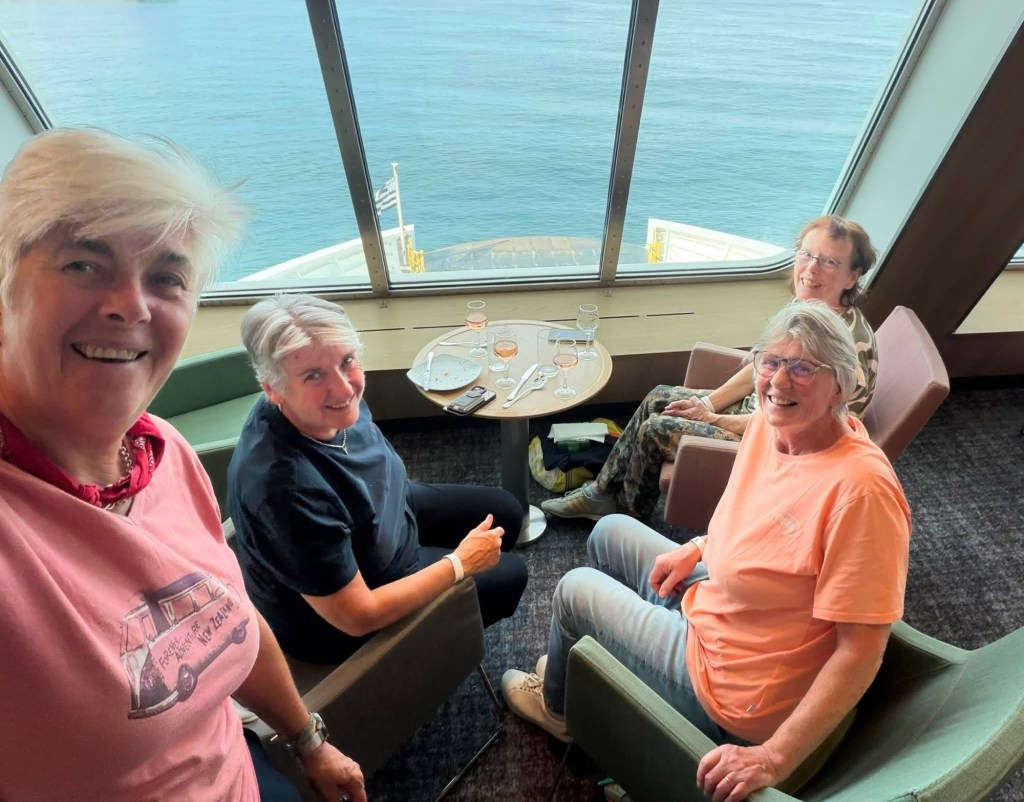
It was probably just as well we had paid for the lounge as our arrival time was delayed by over 6 hours due to engine trouble. We finally arrived at Portsmouth at midnight so got home at 02.30 and to bed at 03.30. Exhausted but happy to be home.

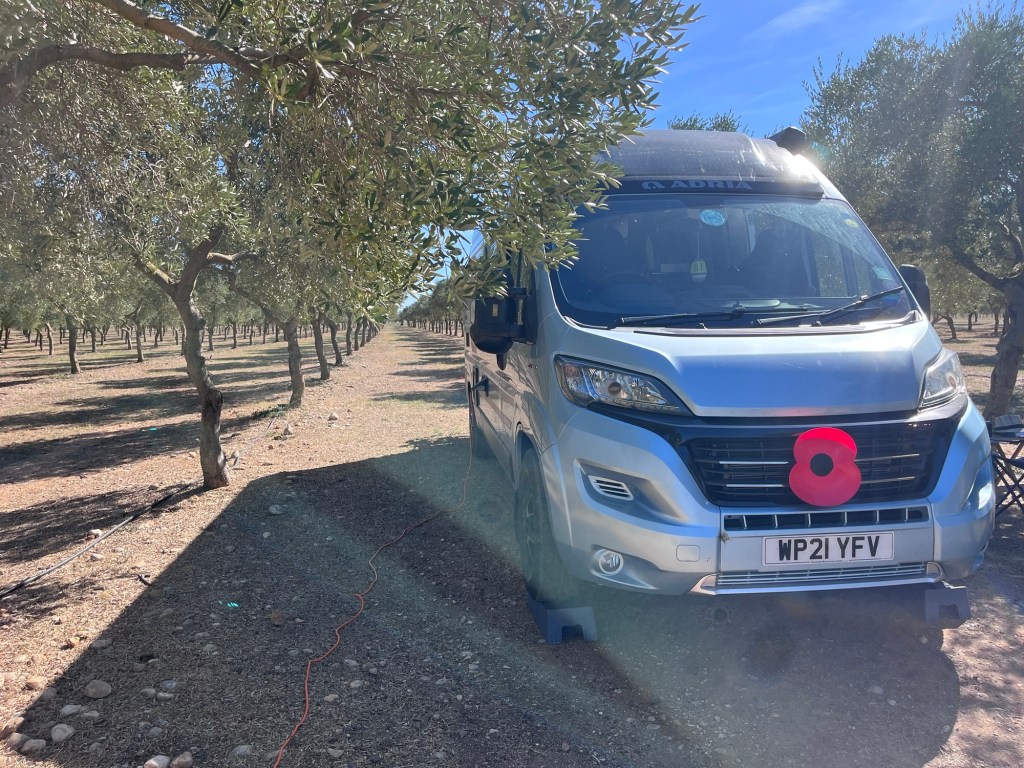
We drove over 2,600 miles, visited 5 different countries excluding the U.K. in just short of 6 weeks. We used over 430 litres of fuel costing us nearly €900 so perhaps it wasn’t the best time to go on a road trip. The Netherlands was the most expensive at €2.46 per litre and Andorra the cheapest at €1.73. We spent 18 nights in proper campsites (11 of those were in Holland where they don’t really offer aires). We ate out 10 times in total over the 41 days. We had a great time visiting places we had not been to before as well as returning to old favourites. Dora will now be put to bed for the winter but, who knows, maybe we will take her out for a cheeky little trip over the coming months.

Miles since last blog: 118

Miles this trip: 2,661

Our road trip courtesy of Travel Boast and Wildertrips.
Basque Spain

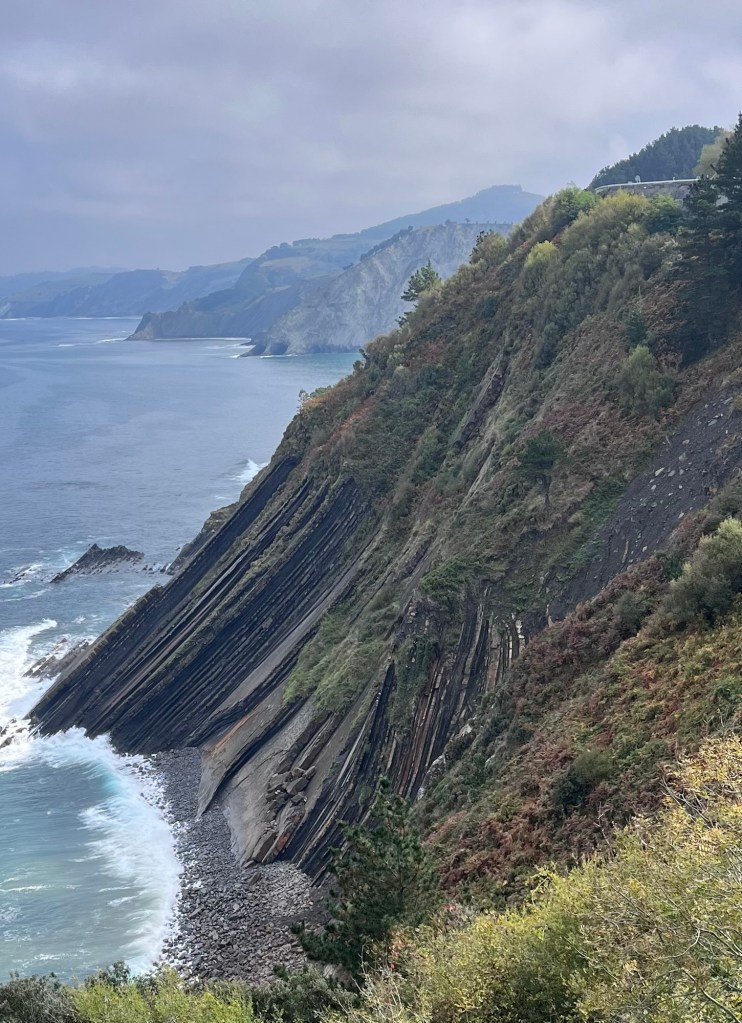
We left our lovely campsite by the sea on Monday, October 5 to make our way into Spain for the final leg of our trip. First stop was Lekeitio via the Flysch Rocks at Zumaia. These rocks look more amazing at low water but sadly, it would be dark!

Zumaia

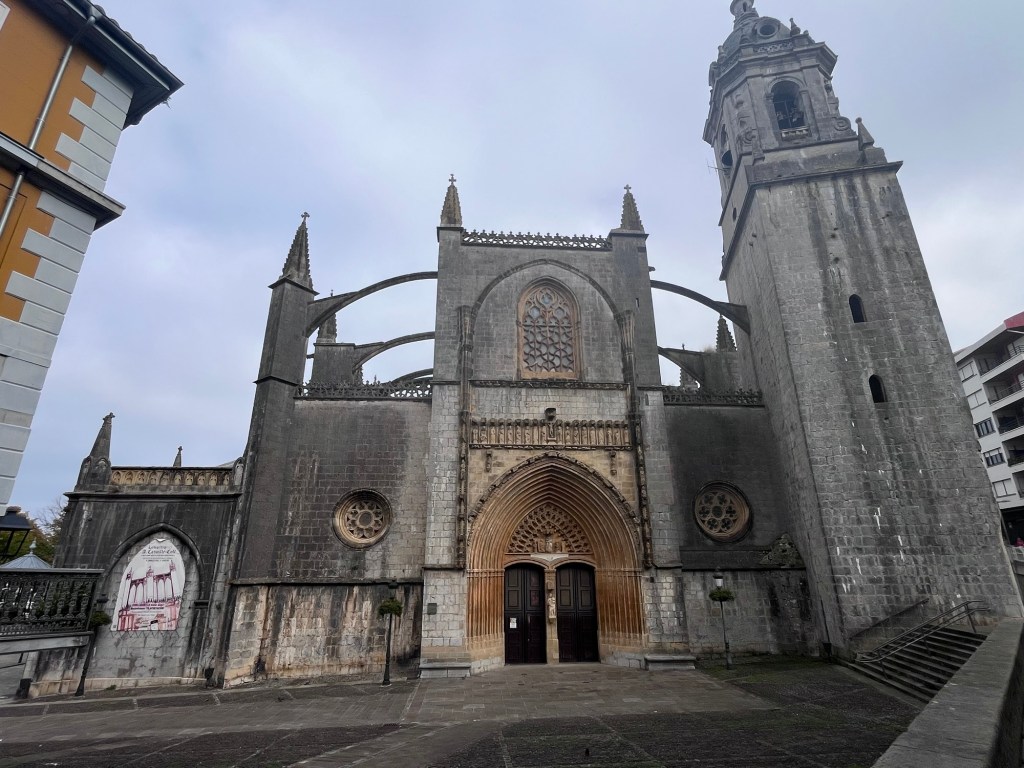
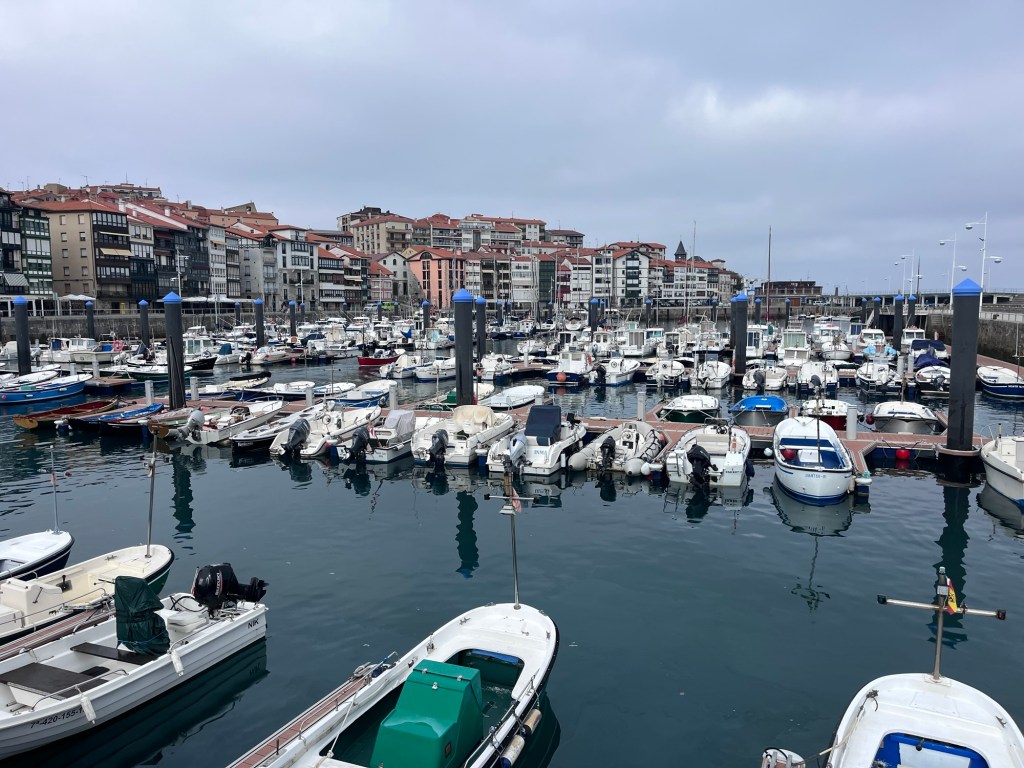
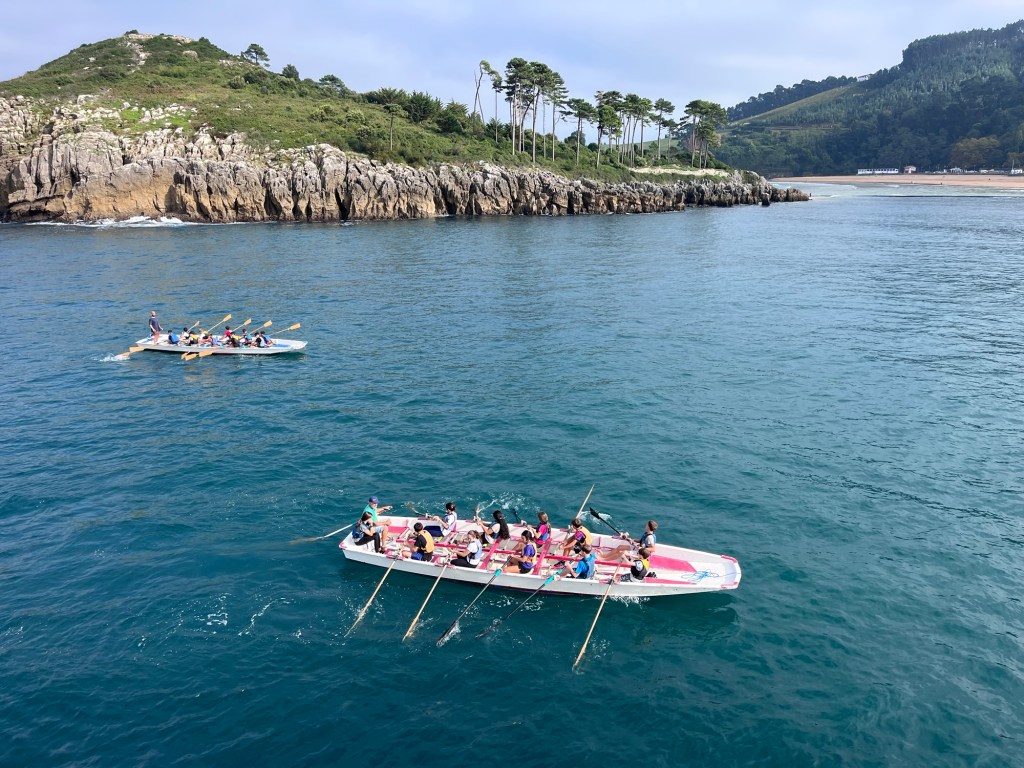
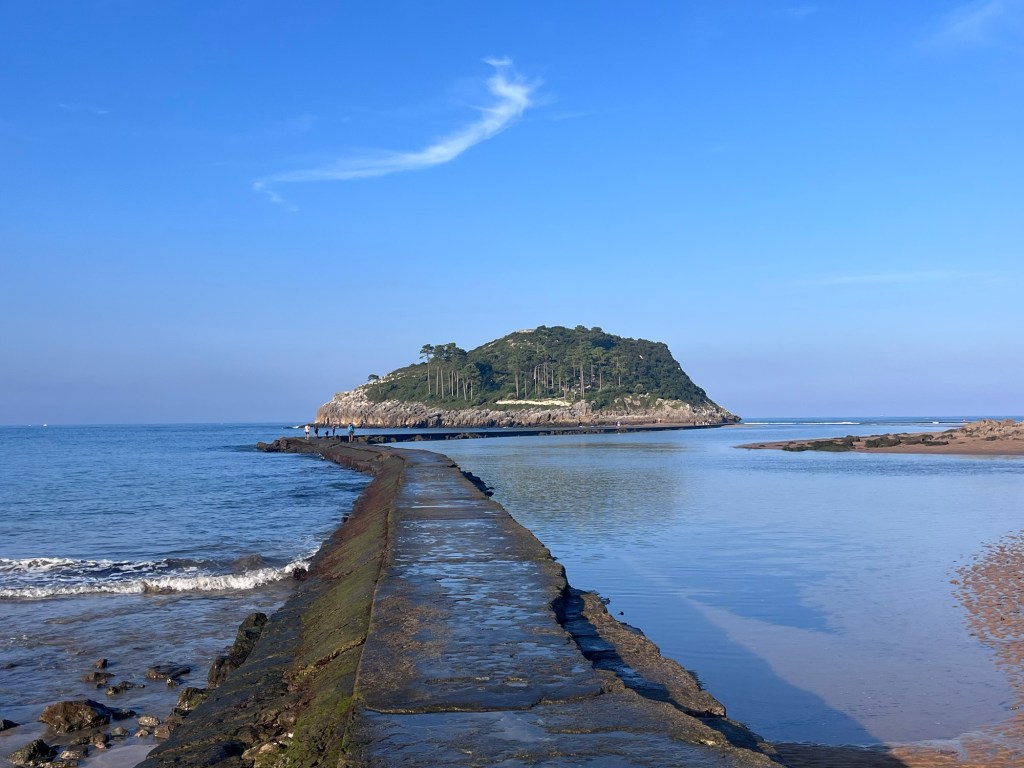
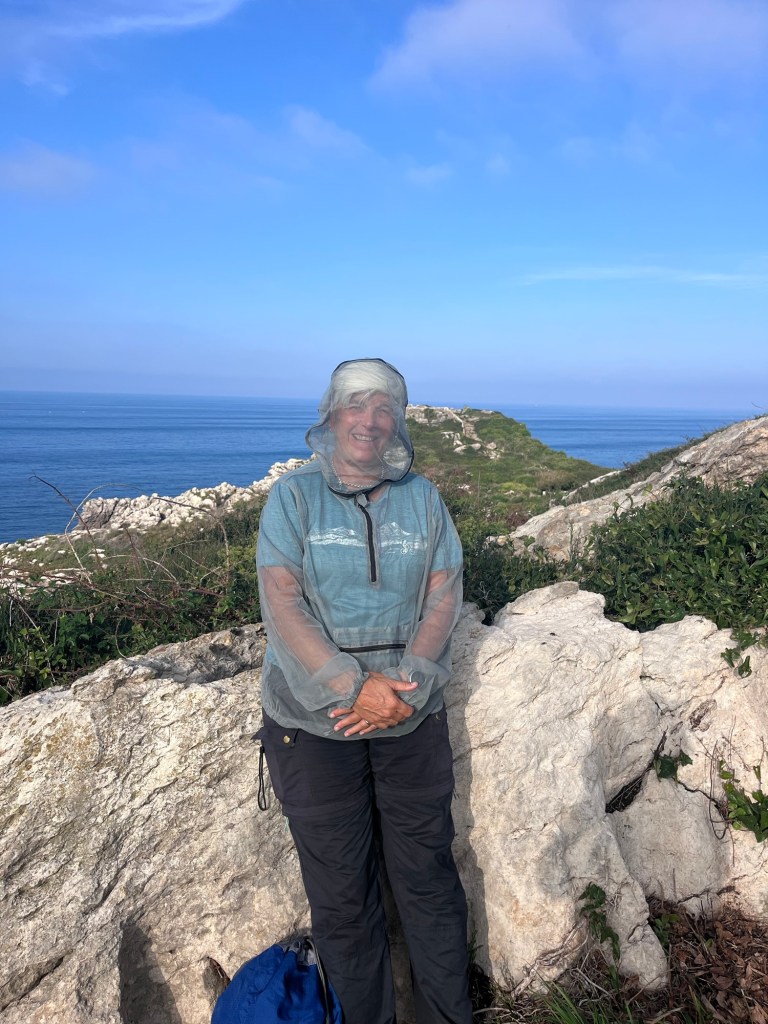
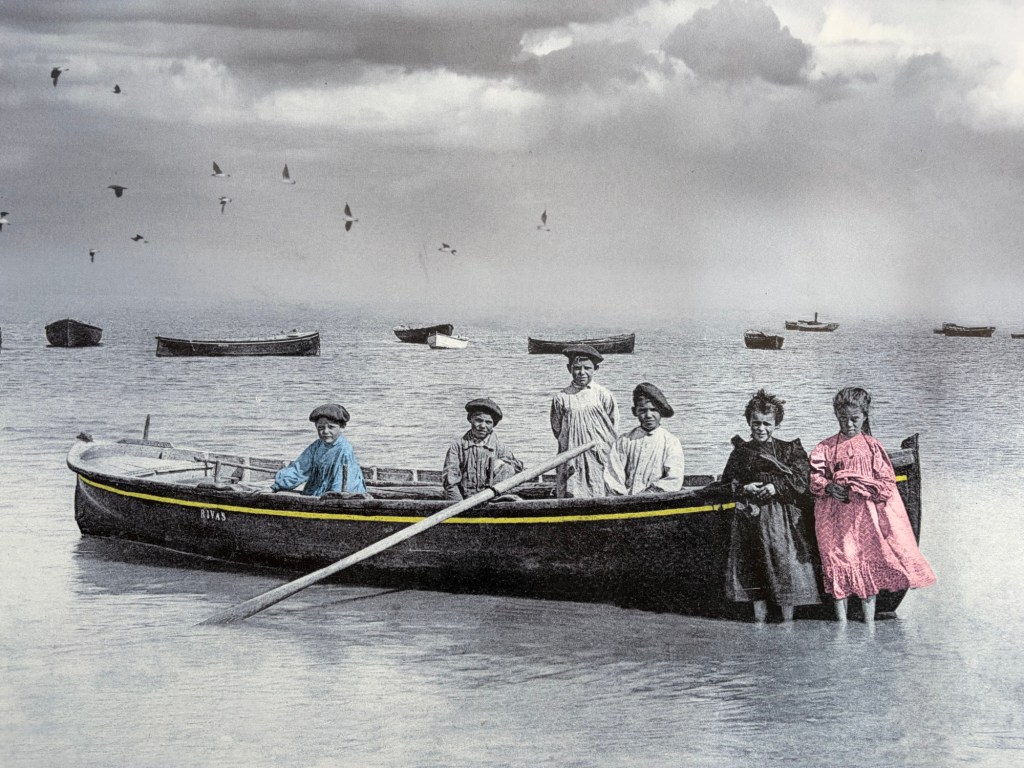
Onto a very convenient and free site in Lekeitio (P4N#12848) which was just outside of the town. The car park has designated motorhome spots as well as discharge points but no electricity. However, with Dora’s solar panels, we really don’t need it that often. The town itself grew on us. It’s been described as a little San Sebastián but I think that’s pushing it a bit. The harbour area is busy with restaurants and bars and it has an island that is accessed via a causeway at low water. When we walked over it, a rogue wave decided to hit the causeway so we ended us with very wet feet. We climbed up the island to get a lovely view of the town. We also saw young school kids out rowing. Sea rowing is a very big thing all around the Basque area so it was fun to see the youngsters learning a new skill. Liz was convinced that she would be bit to pieces by mossies so she donned an over jacket that whilst it wasn’t exactly sartorial elegance, it worked!

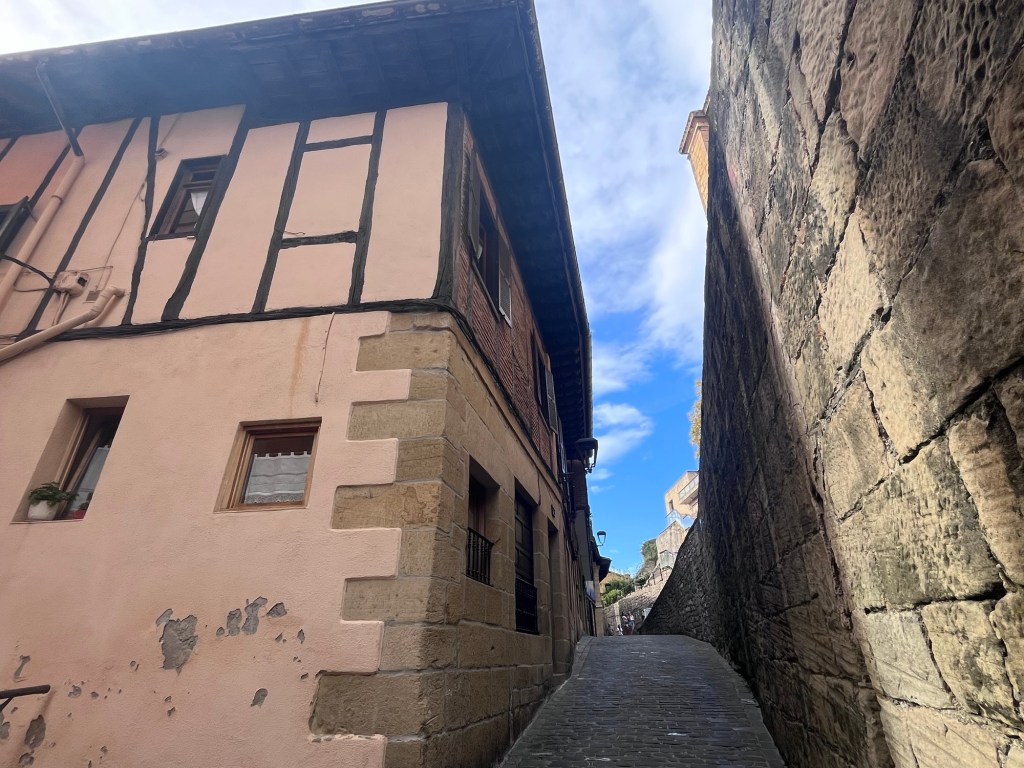
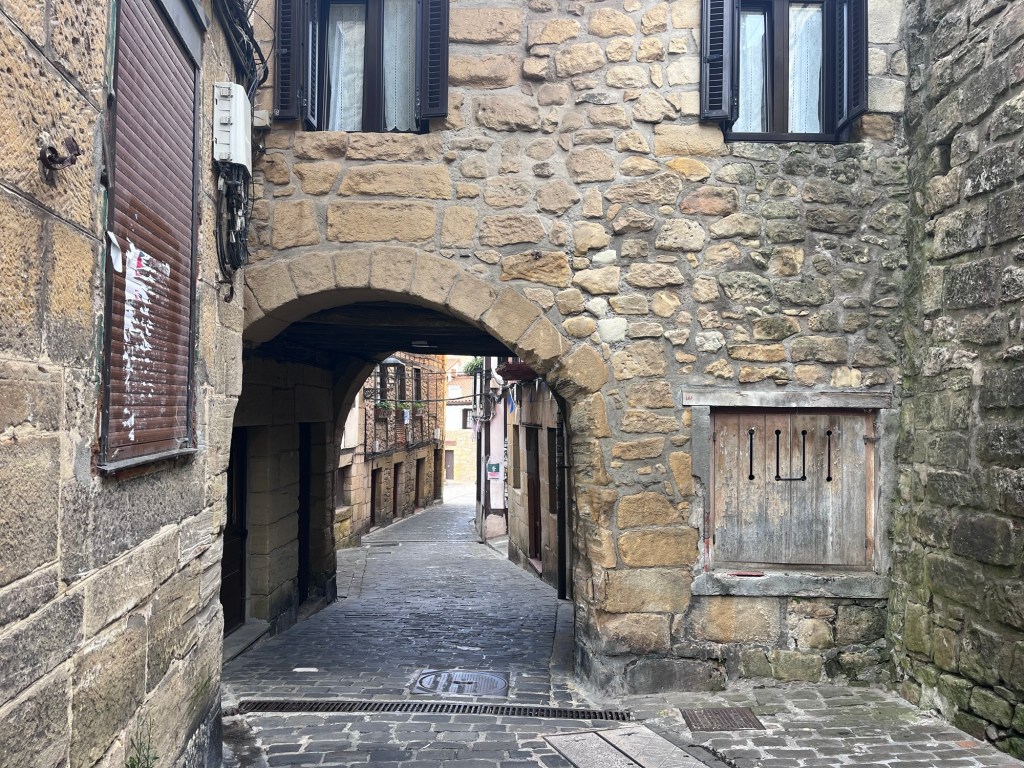
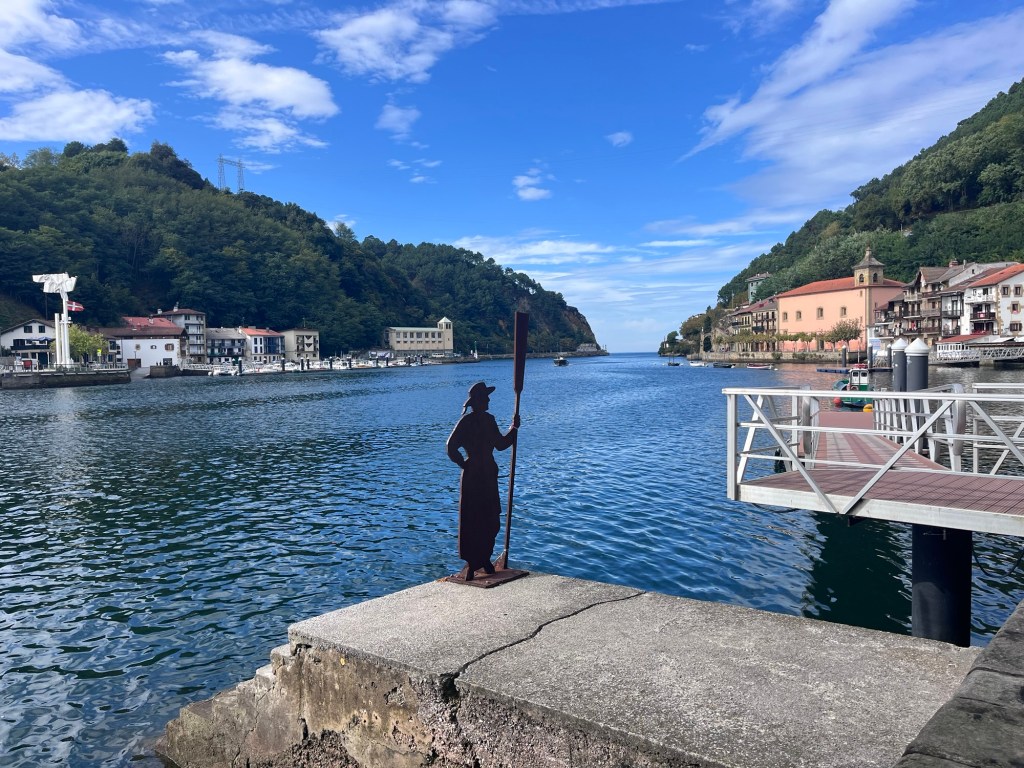
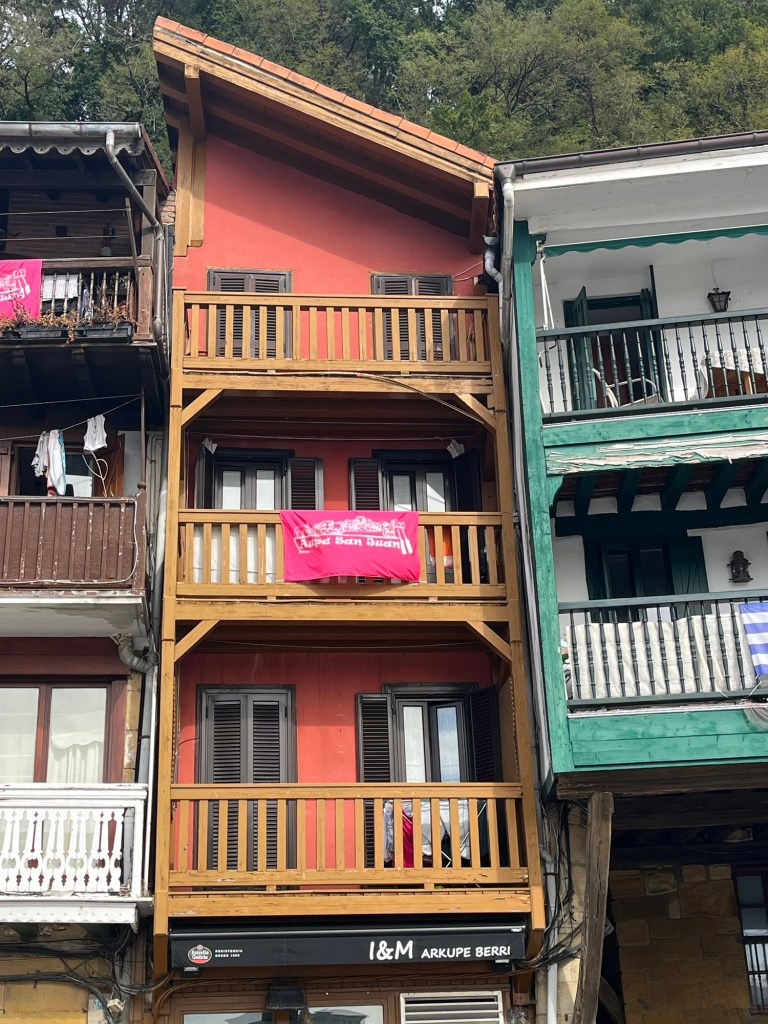
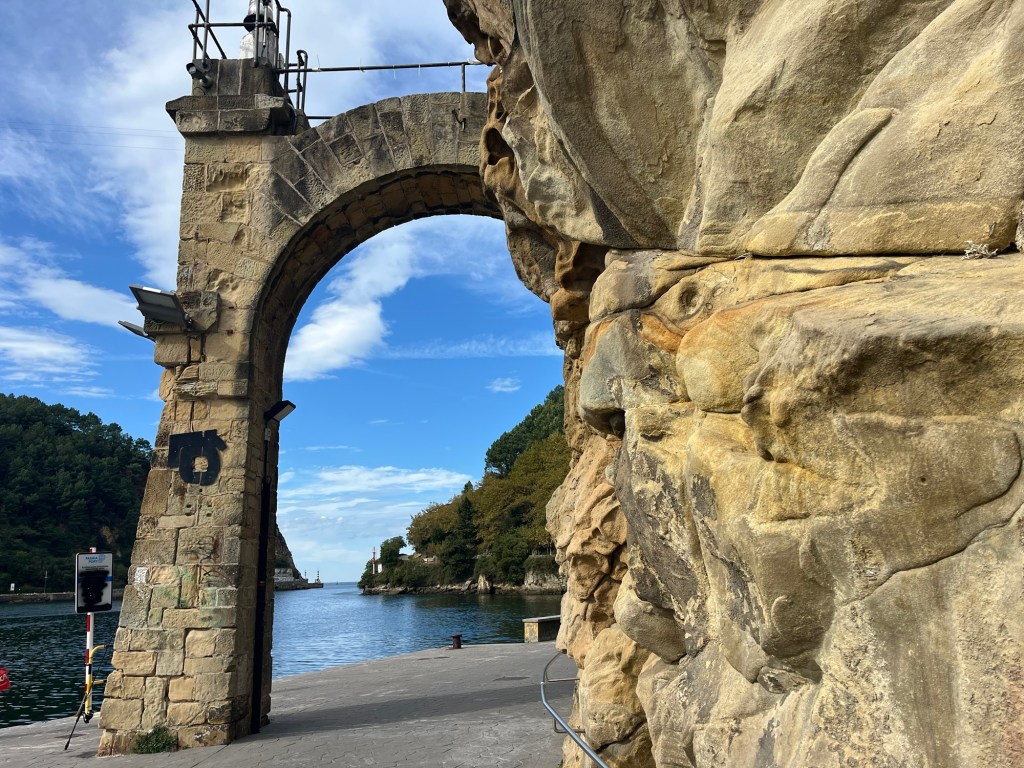
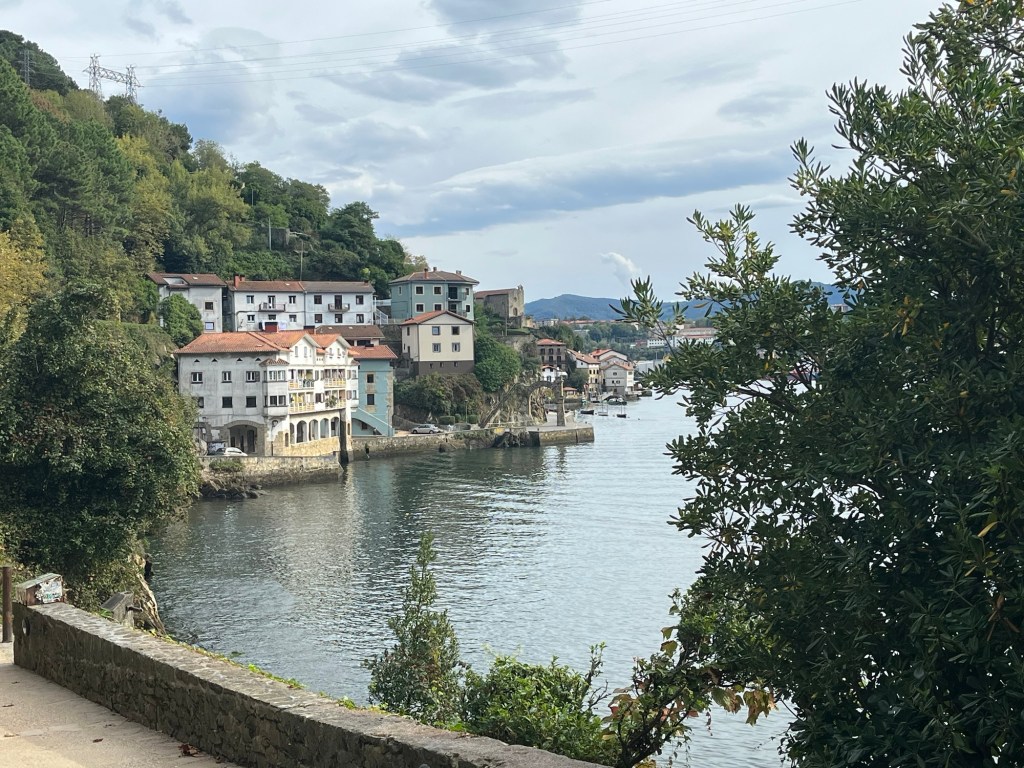
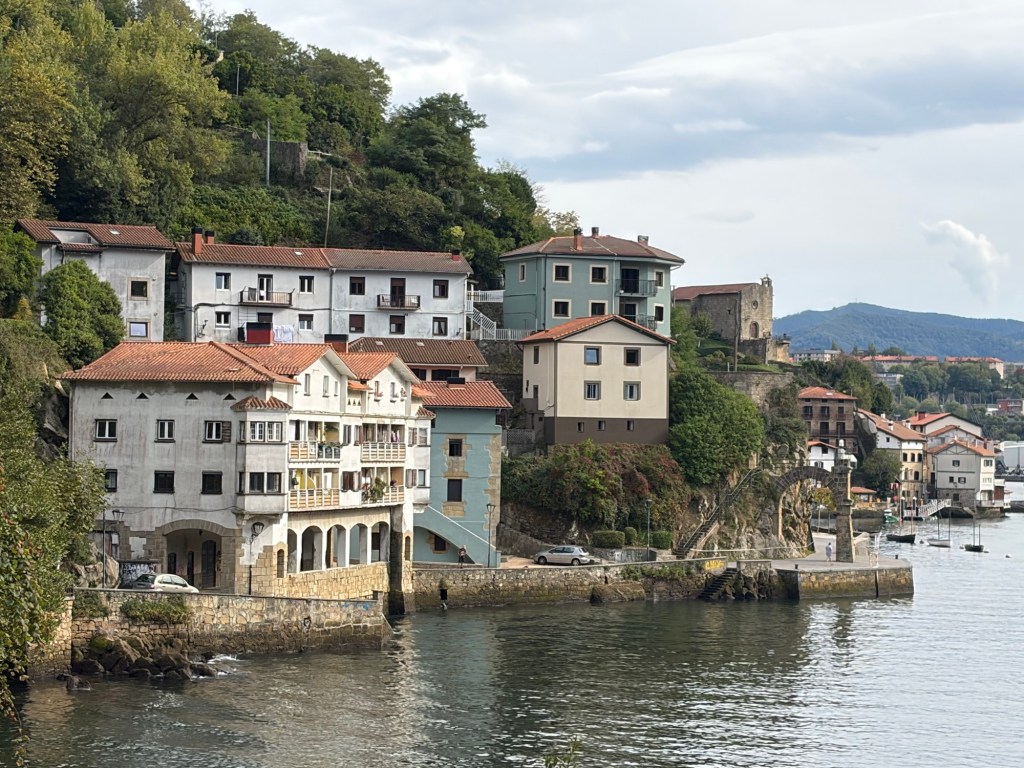
The next day, Tuesday, we left around midday to head back towards San Sebastián as we had a dinner reservation at a Cider Farm restaurant just outside. However, we first of all stopped off at Pasaia Donibane as we had heard it was cute. We weren’t convinced as it seemed to be a major shipping port but as we walked away from the harbour along the estuary, a delightful old town emerged.

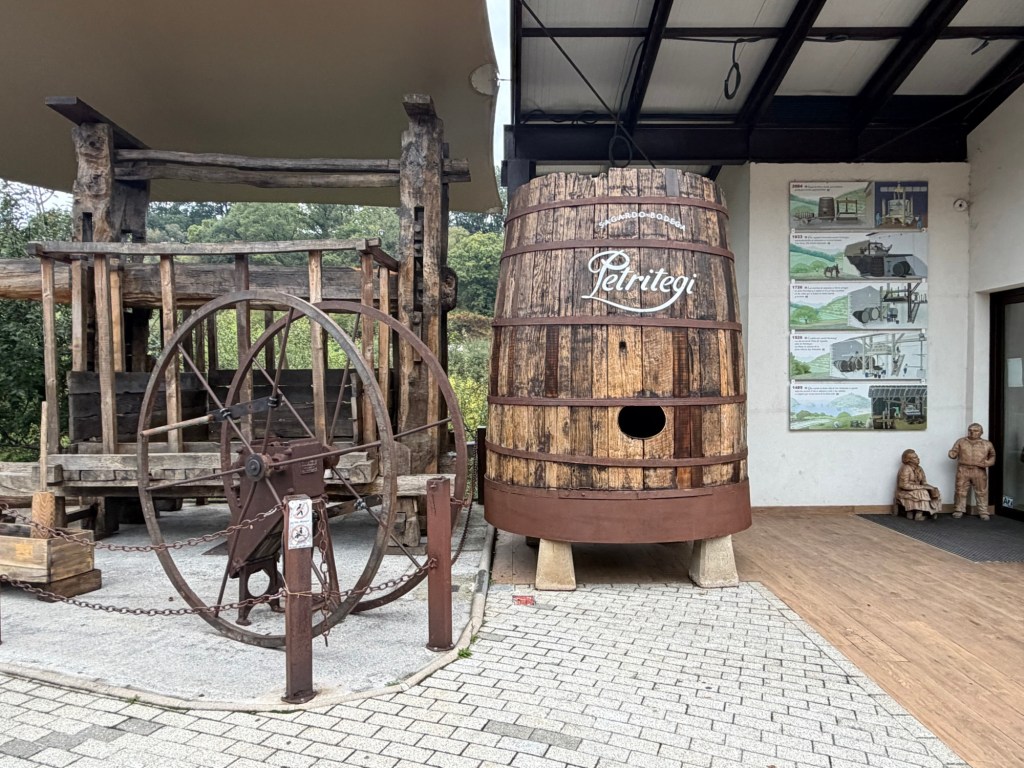
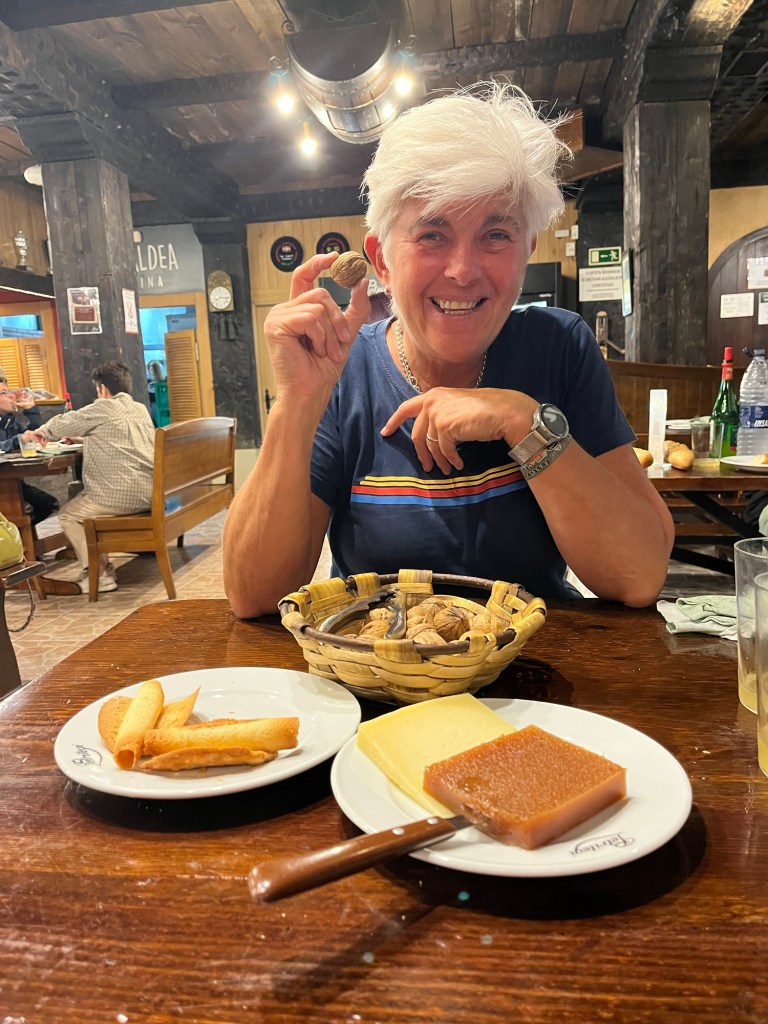
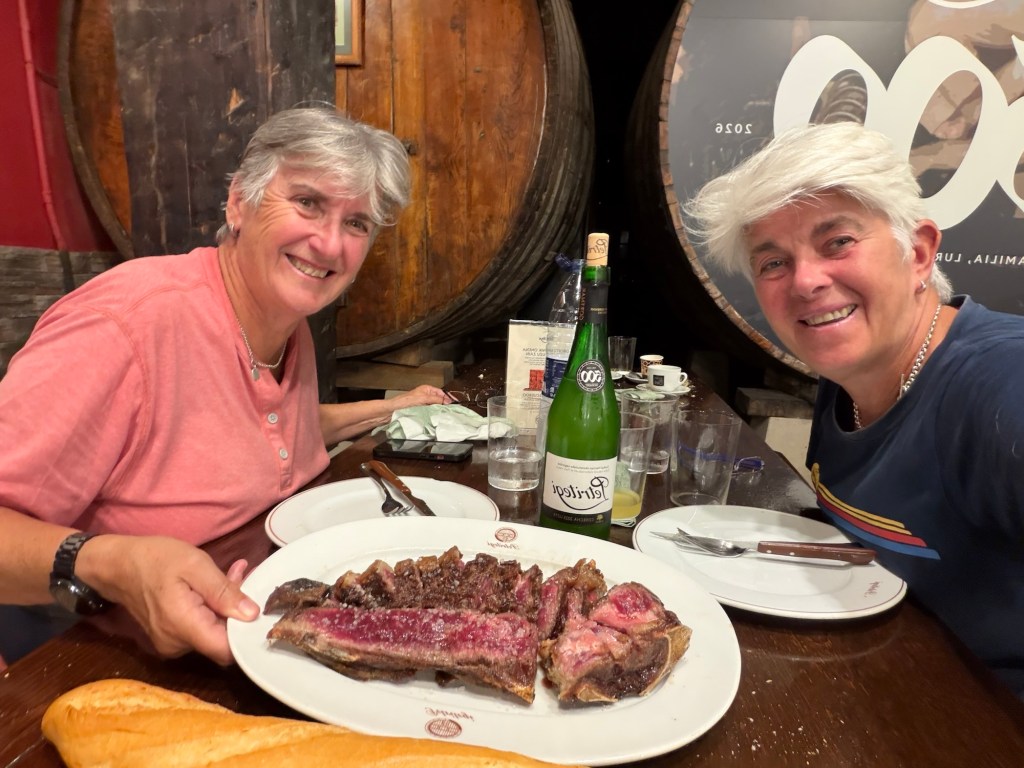
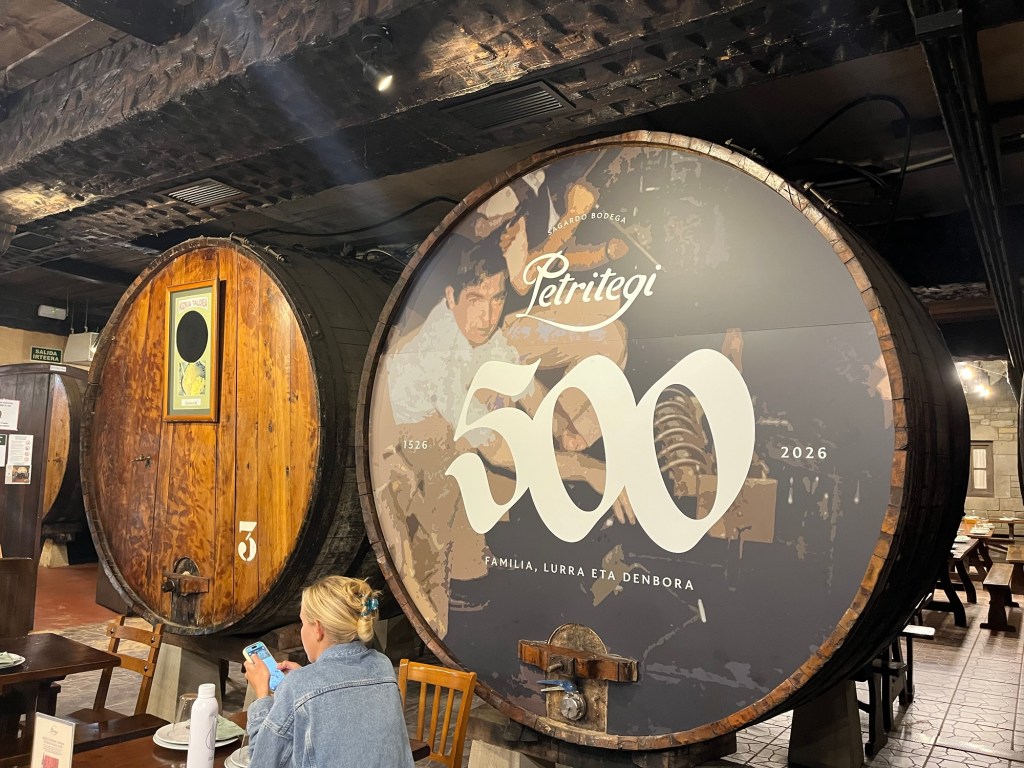
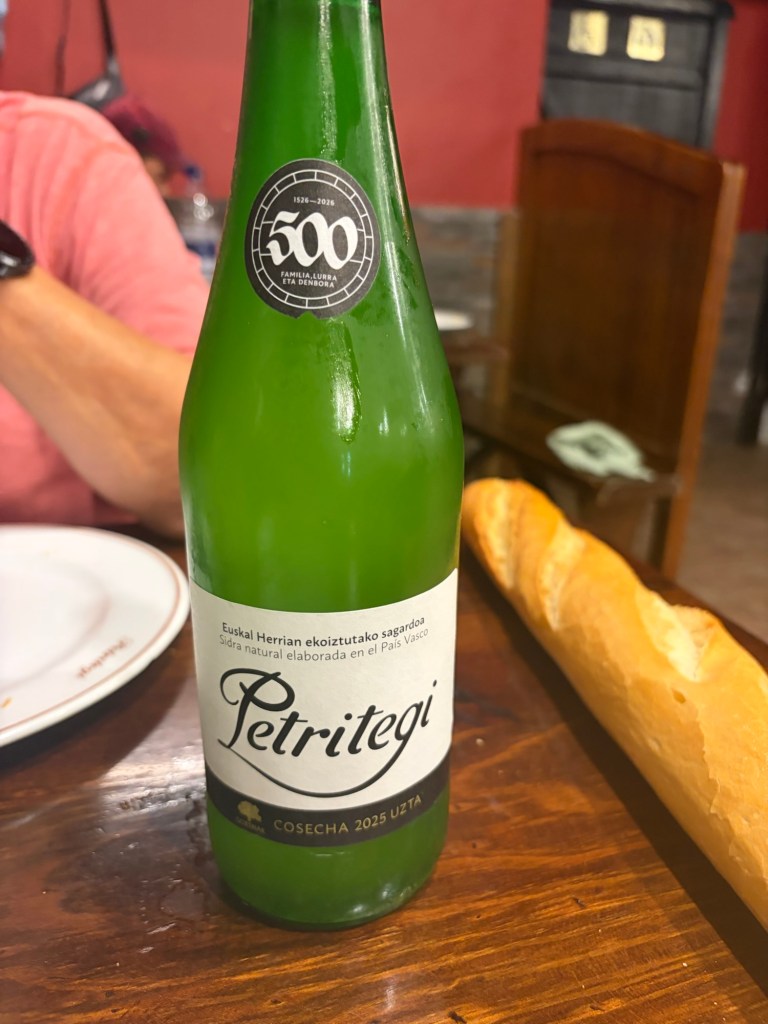
The restaurant we had booked, Petritegi, has been a Sagardotegia for 500 years. Cider making is a part of the Basque culture around San Sebastián and there are many cider houses to choose from. The cider is very sharp and cloudy. You are supposed to drink it direct from the barrel and aerate it for the best experience.

The meal is standard across the houses: cider braised chorizo, salted cod omelette, cod with peppers, T-bone steak. All served with a baguette and copious amounts of cider! It was such a fun evening and the restaurant allows campervans to stay overnight.

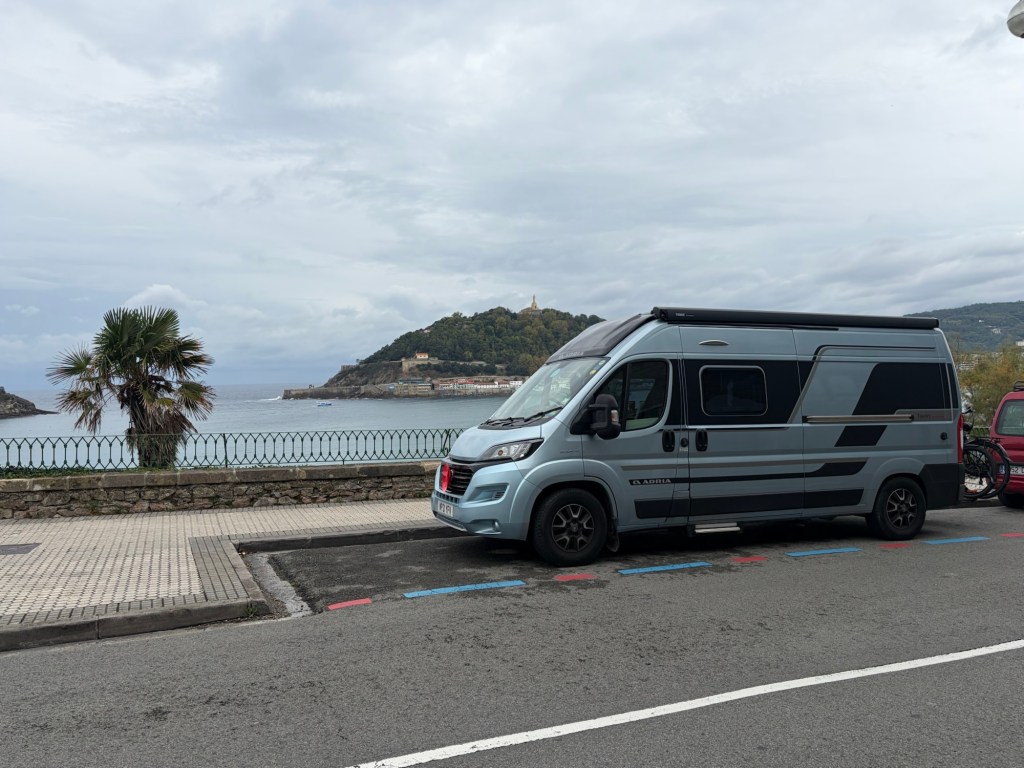
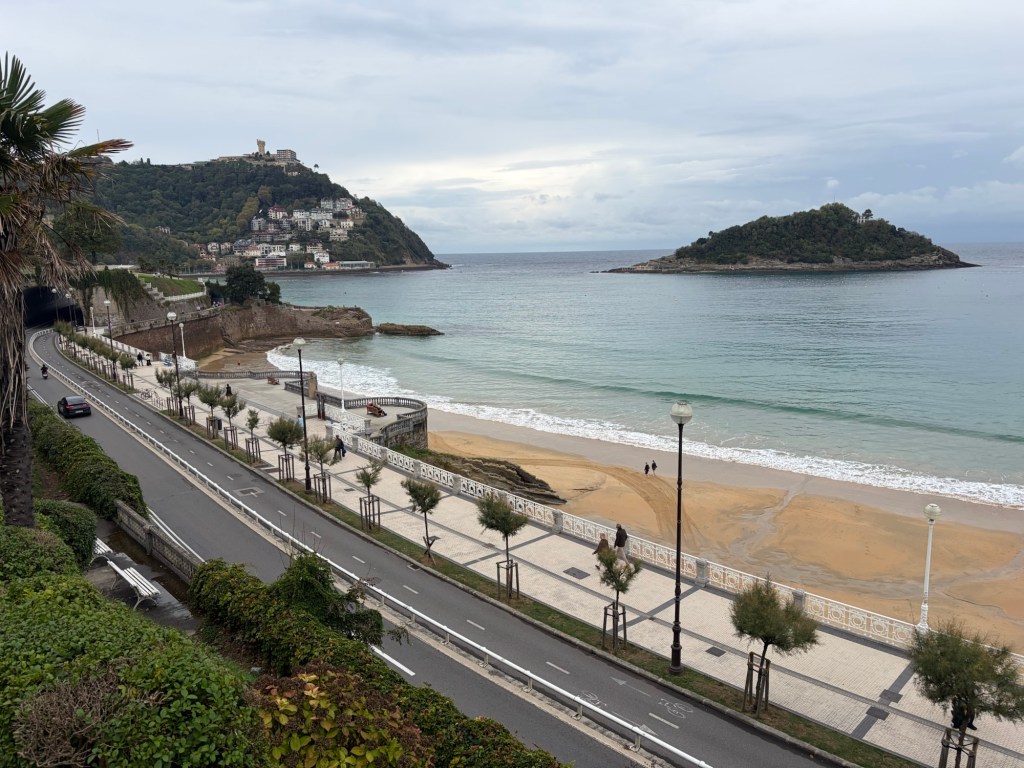
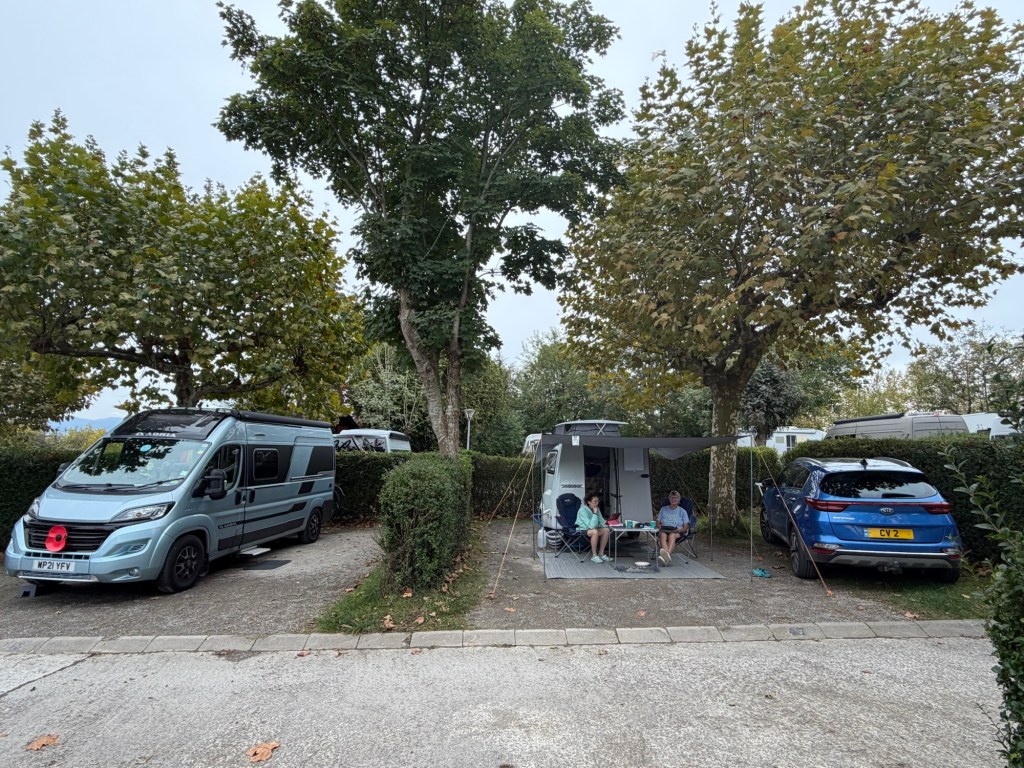
The following day, Wednesday October 7, we made the short distance from the Cider House to San Sebastián and our campsite for the next couple of days, Wecamp San Sebastián (P4N#21410) to meet up again with our friends, Sue and Sheila. We stopped on the front at San Sebastián for an hour not realising that we needed an ULEZ type documentation to do so. Jo quickly did it online and we are hoping that it will be sufficient for the authorities!

We spent the next couple of days chilling in the campsite during the day and going into the town early evening.

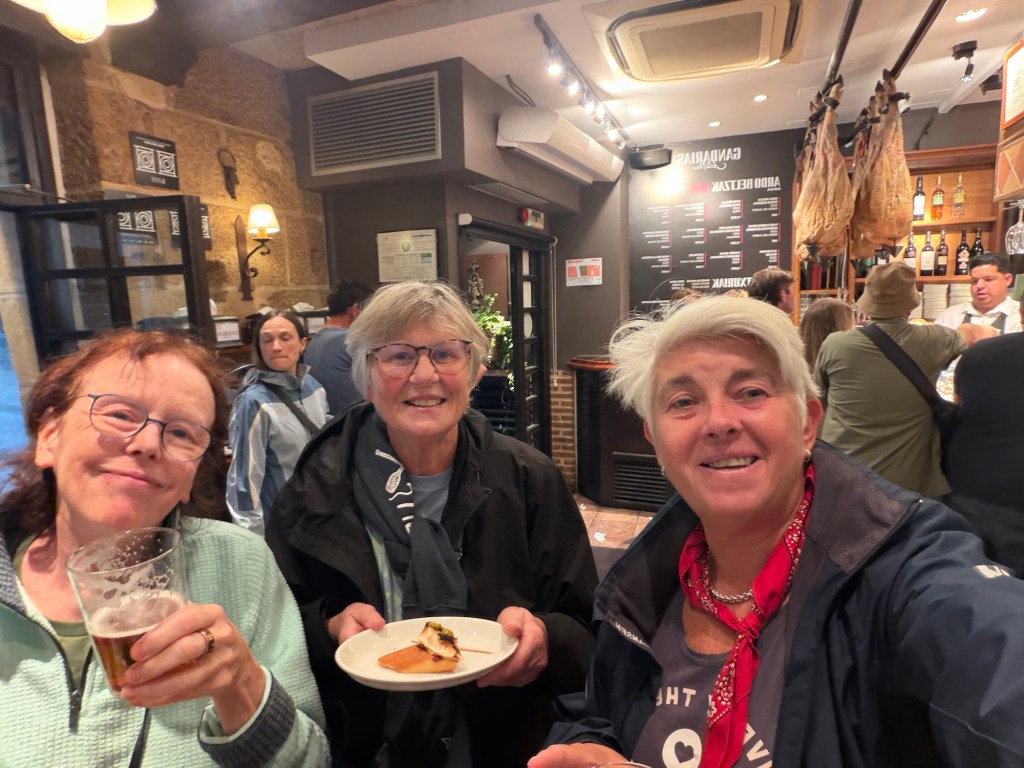
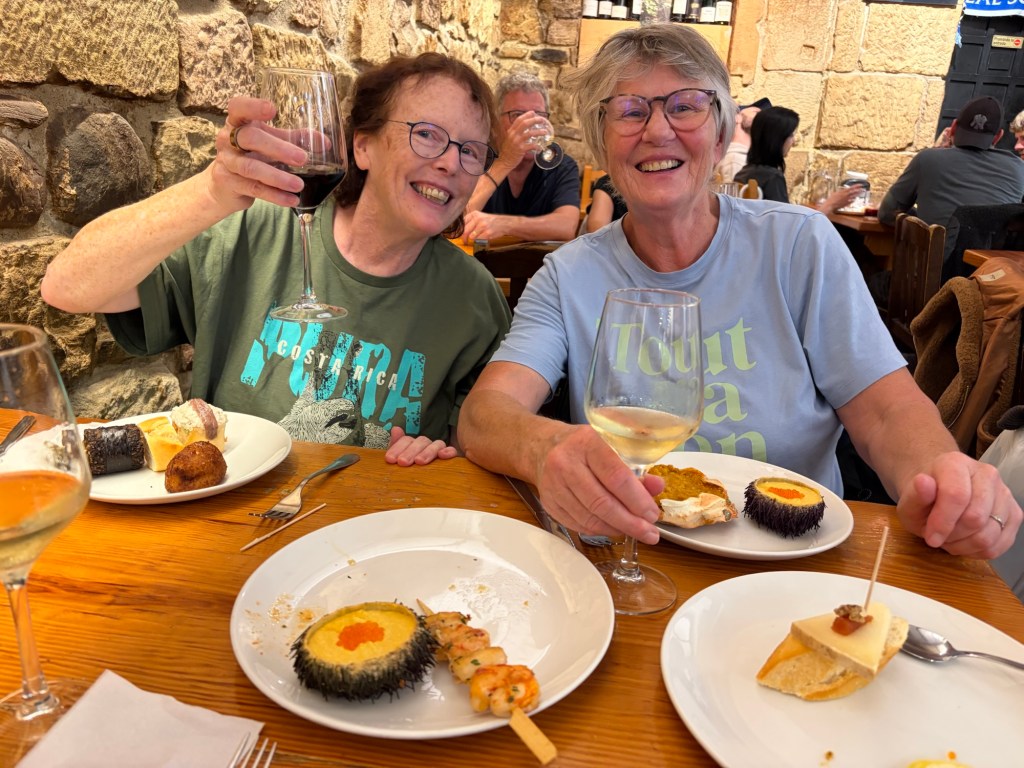
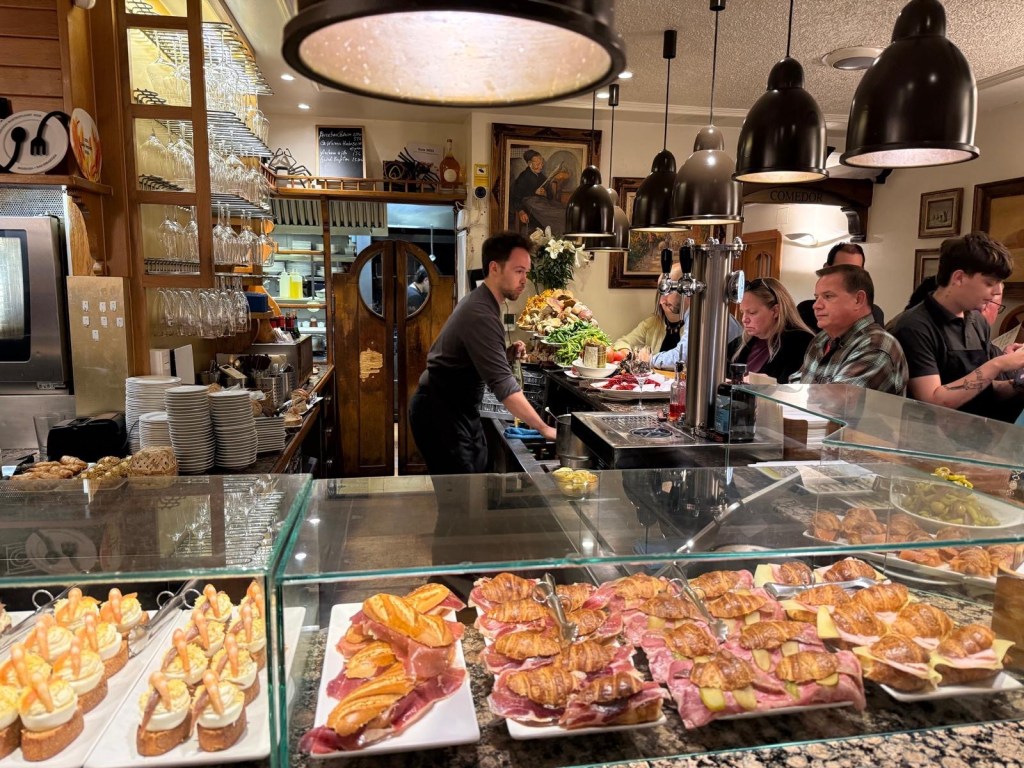
There’s a fantastic bus service from outside the campsite to the centre every 30 minutes for €1.50 so it makes it all very easy. Jo had caught Liz’s cold so was feeling pretty miserable and decided not to go in with the others. They had a lovely time trying various Pintxos bars, Gandarias and Baztan, with the Basque equivalent of tapas but with a culinary twist.

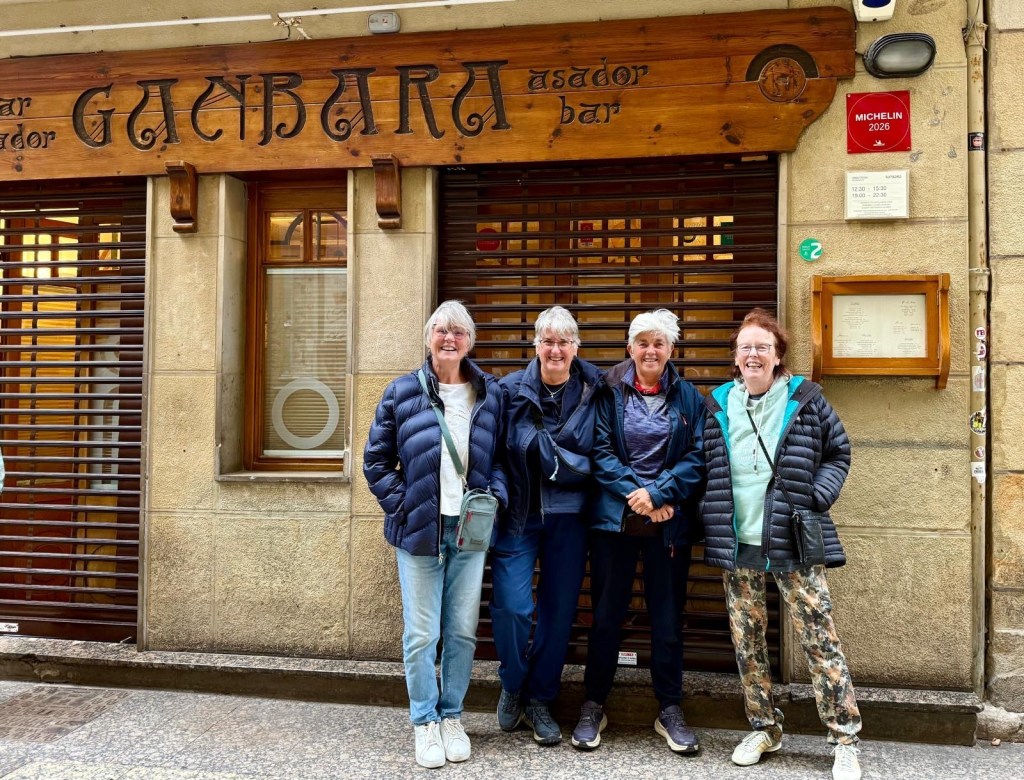
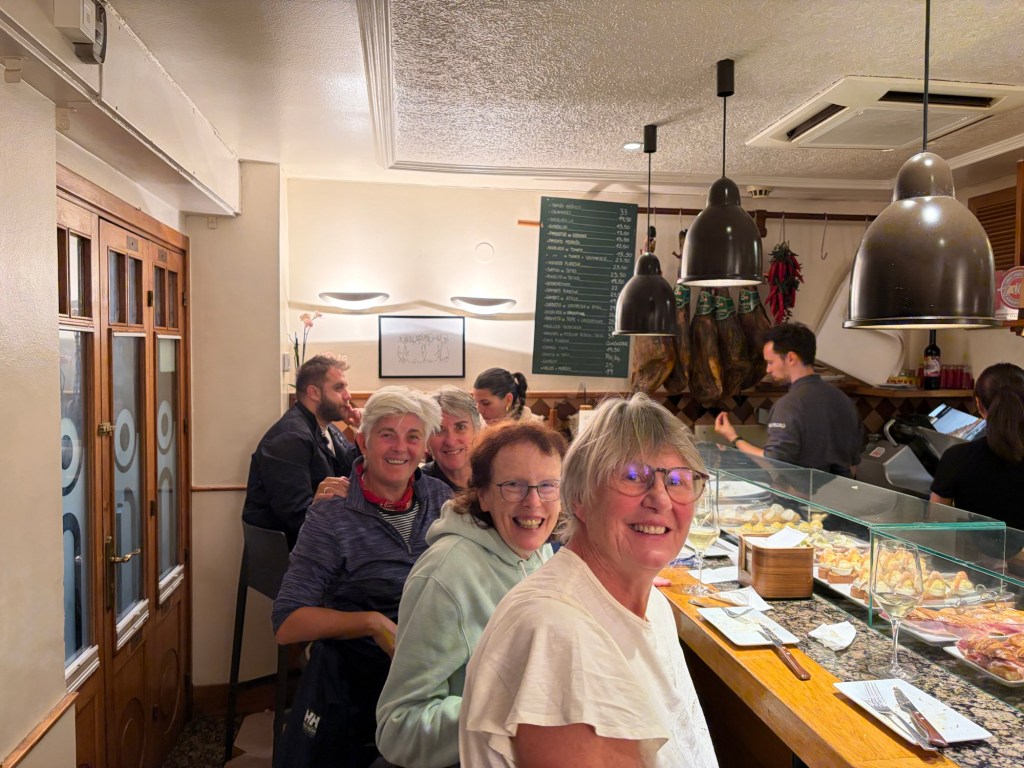
We all went in together on the Thursday evening and queued up outside a favourite of ours, Ganbara, so we could get a seat at the bar. We started queuing 30 minutes before it opened and were the 3rd group in. The queue was down the street for the whole evening. The food was sublime and the wine excellent, even though your choice is white, red or rosè.

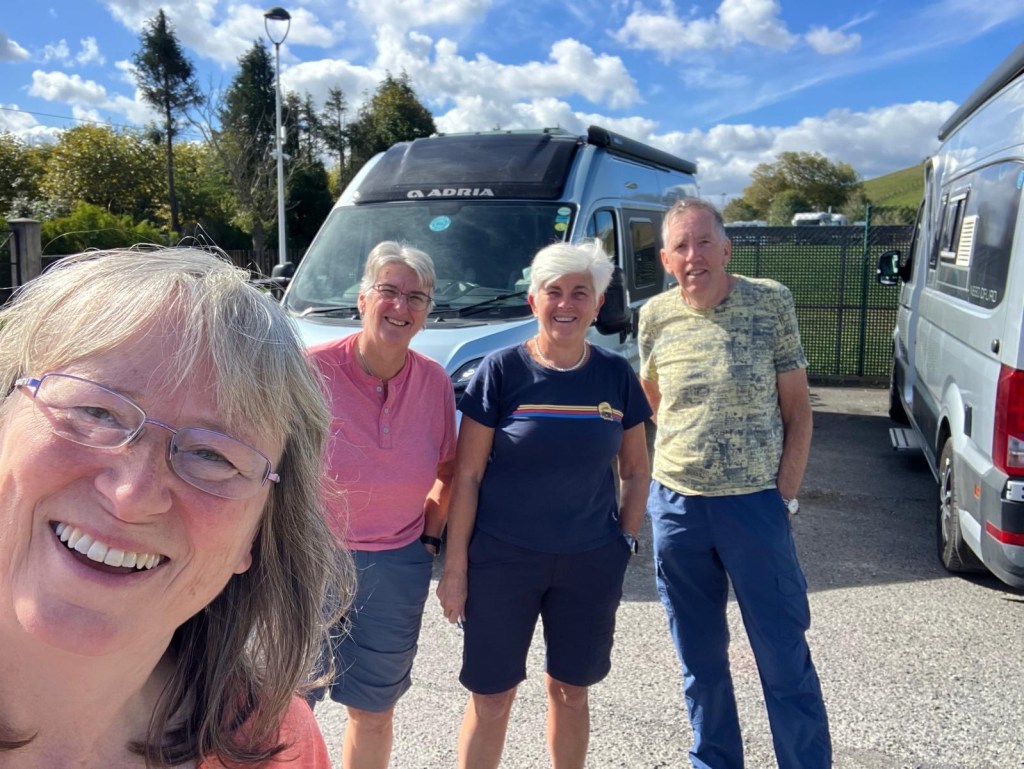
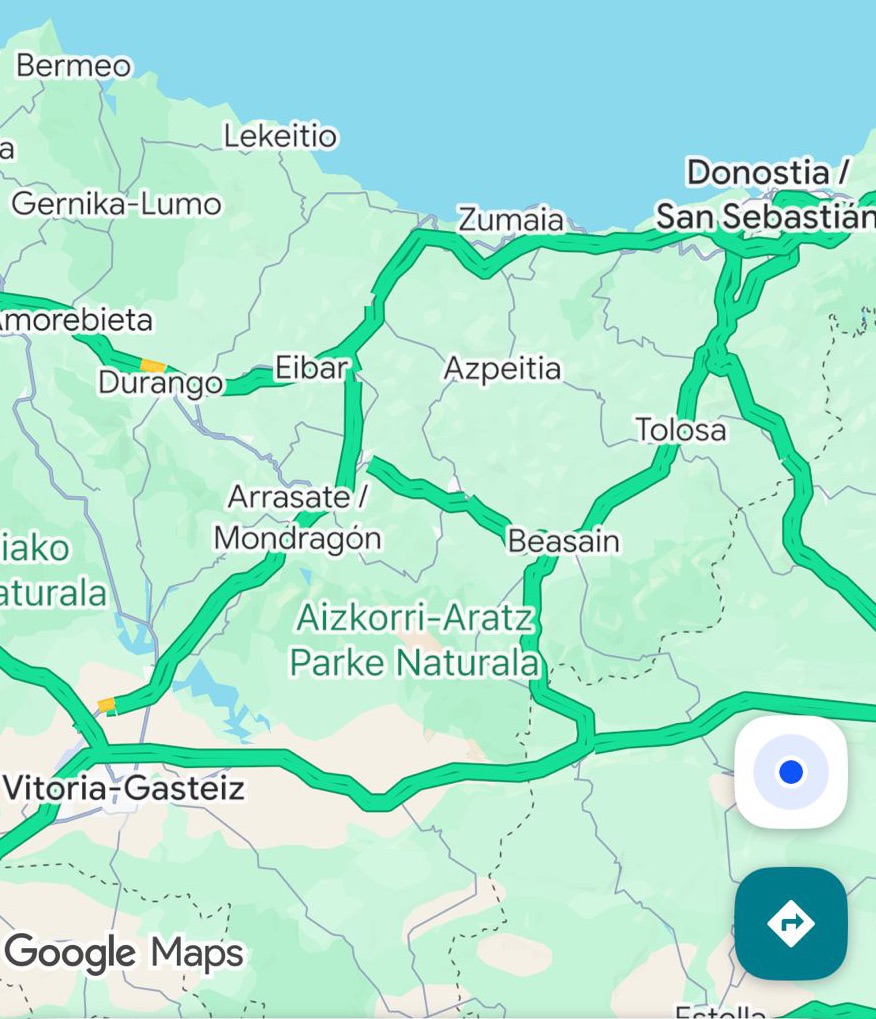
After a lovely couple of days, we were keen to explore more of the Basque Country between San Sebastián and Bilbao, where our ferry was departing from on Saturday. We left the campsite around 13.00 on Friday, October 9 but not before meeting up briefly with our neighbours in Harpenden, Stuart and Wendy, who are in their own campervan, Hetty, touring around France and Spain.

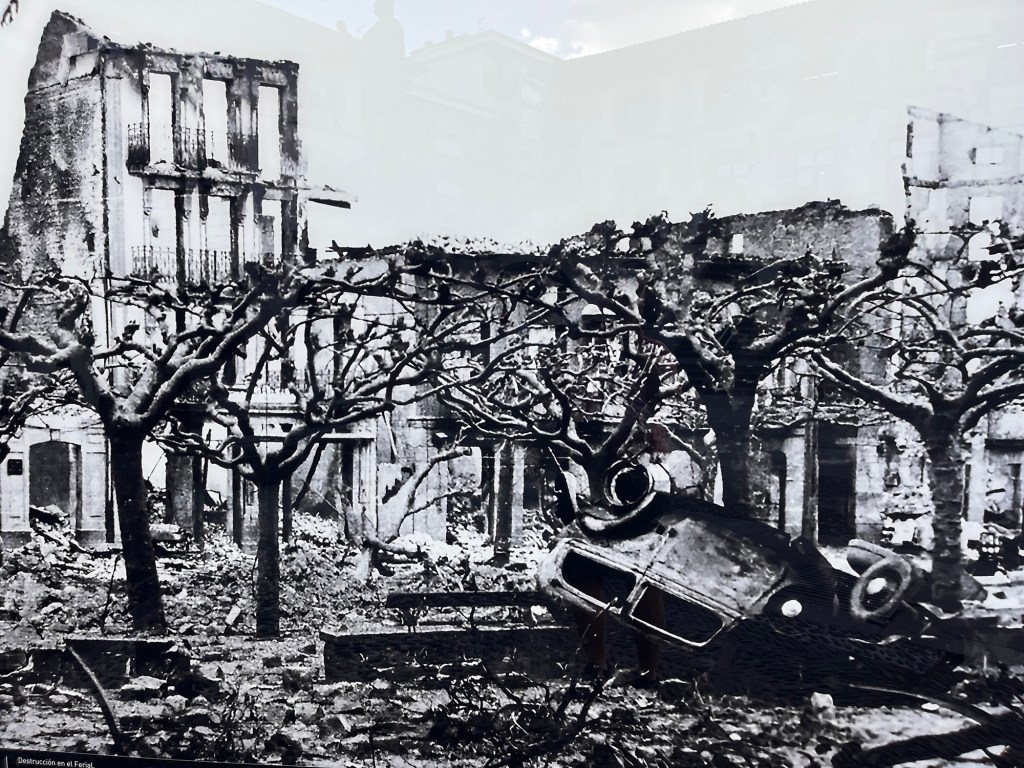
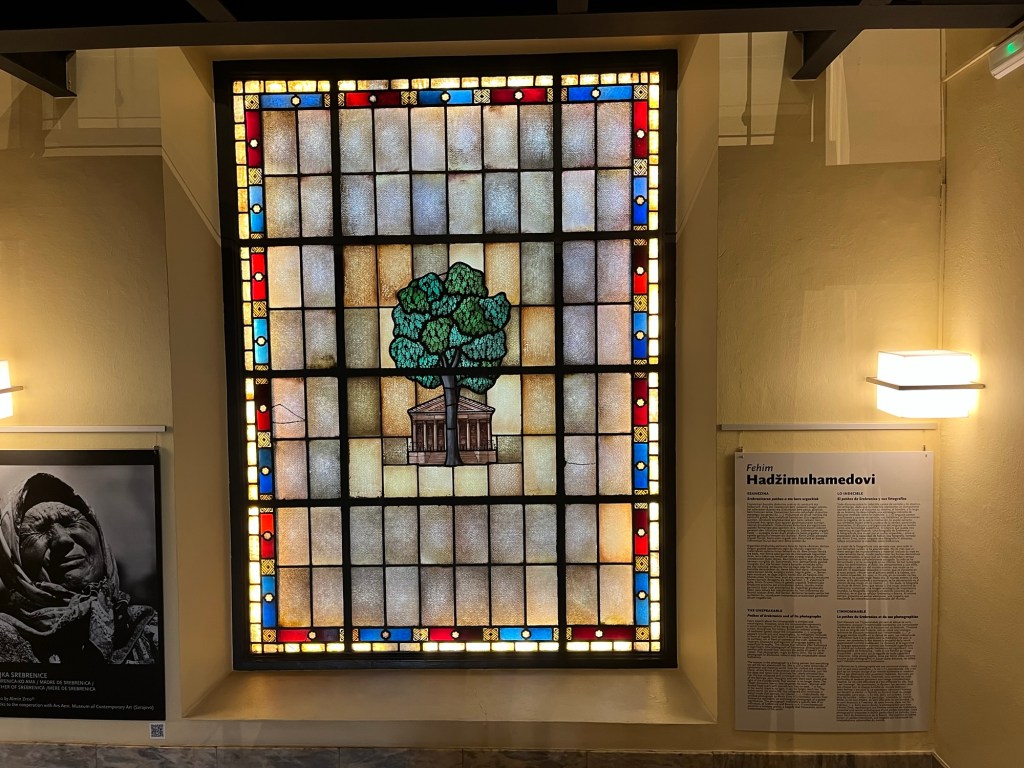
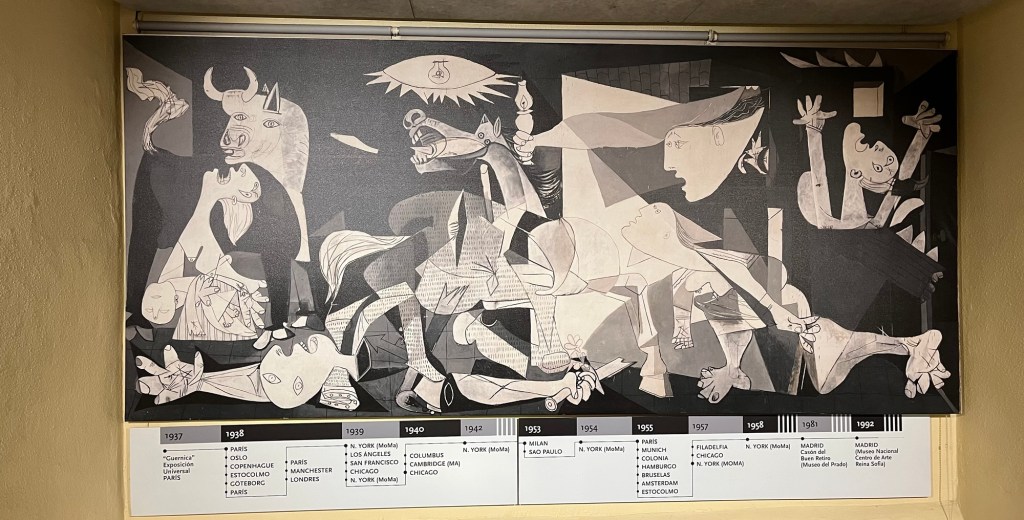
We wanted to go to Guernica (Gernika in Basque) where there is a peace museum following a horrendous event on April 26, 1937. In the height of the Spanish Civil War, Gernika was a Basque and Republican stronghold. France, as leader of the Rebel army, colluded with Germany and Italy to bomb the town. Not only did they bomb it but they destroyed 85% of all the buildings. After 3 hours of bombing, fighter planes arrived to mow down those fleeing to the countryside. It was the first example of total war. It was not until 1997 that Germany admitted its role in the affair and the truth did not come out in Spain until after Franco’s death in 1975. The museum was fascinating and horrendous in equal measure. Picasso’s painting of Guernica makes more sense now.

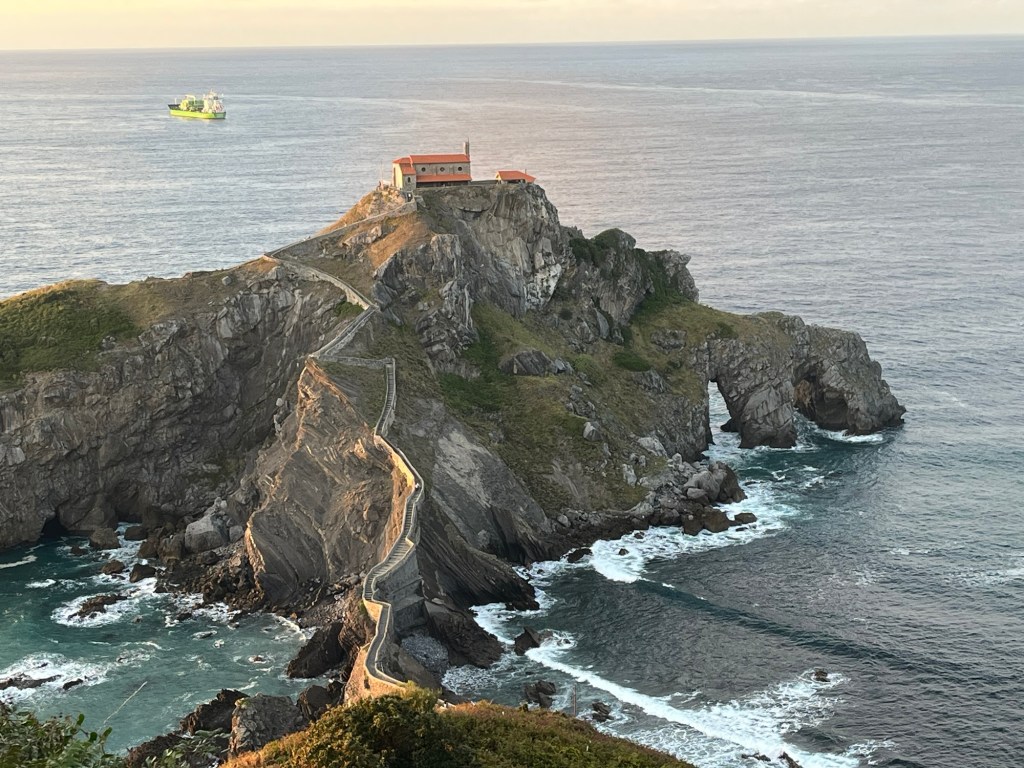
From there we drove for about 30 minutes north to San Juan Gaztelugatxe to see the hermitage on the peninsula. We arrived after 19.00 so we were able to park at the site and wander down. We figured that there was no one around to tell us off!

San Juan Gaztelugatxe

Our park up for the night was an aire in Bermeo, a small town nearby for the princely sum of €6 (P4N#660108).

Total miles since last blog: 248

Total miles this trip: 2,543

Biscarrosse, Bayonne, Biarritz and Basque

We left Gavarnie on a very wet morning (Thursday, October 1) with very low cloud so we decided against visiting other cols en route as we wouldn’t see anything!

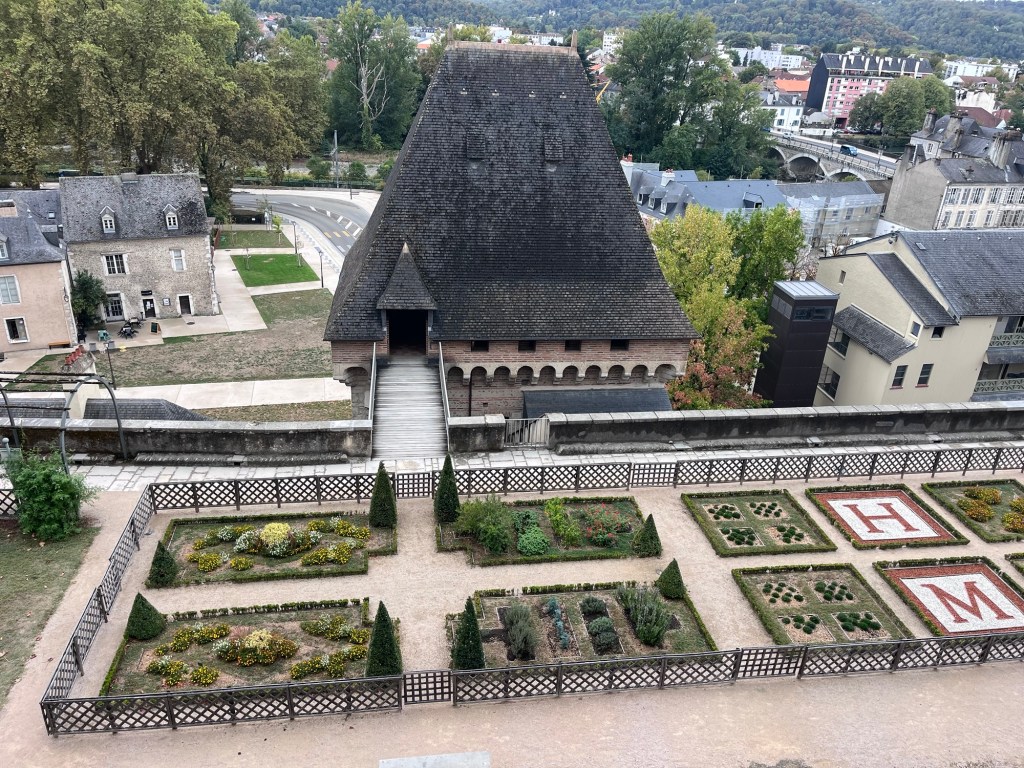
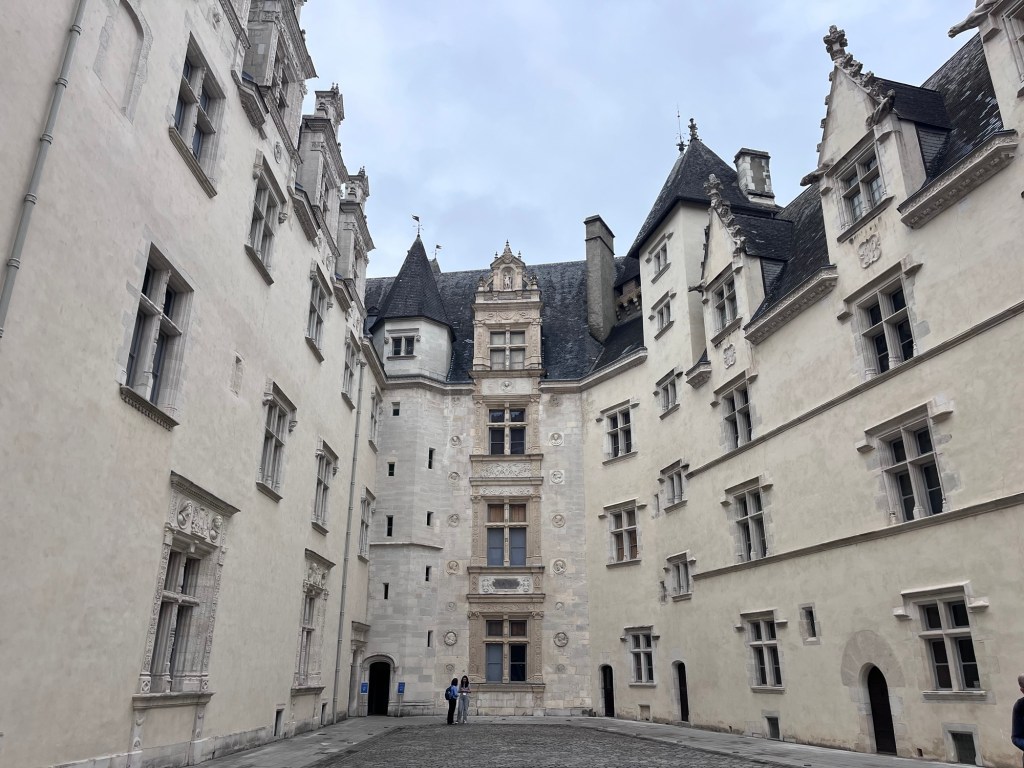
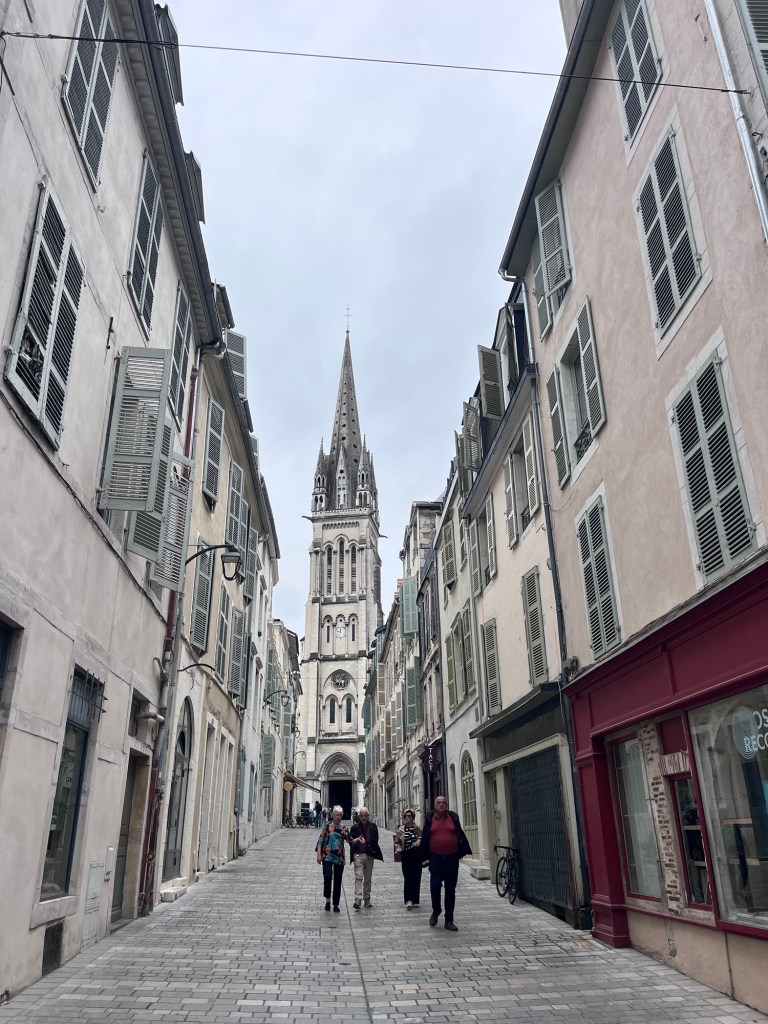
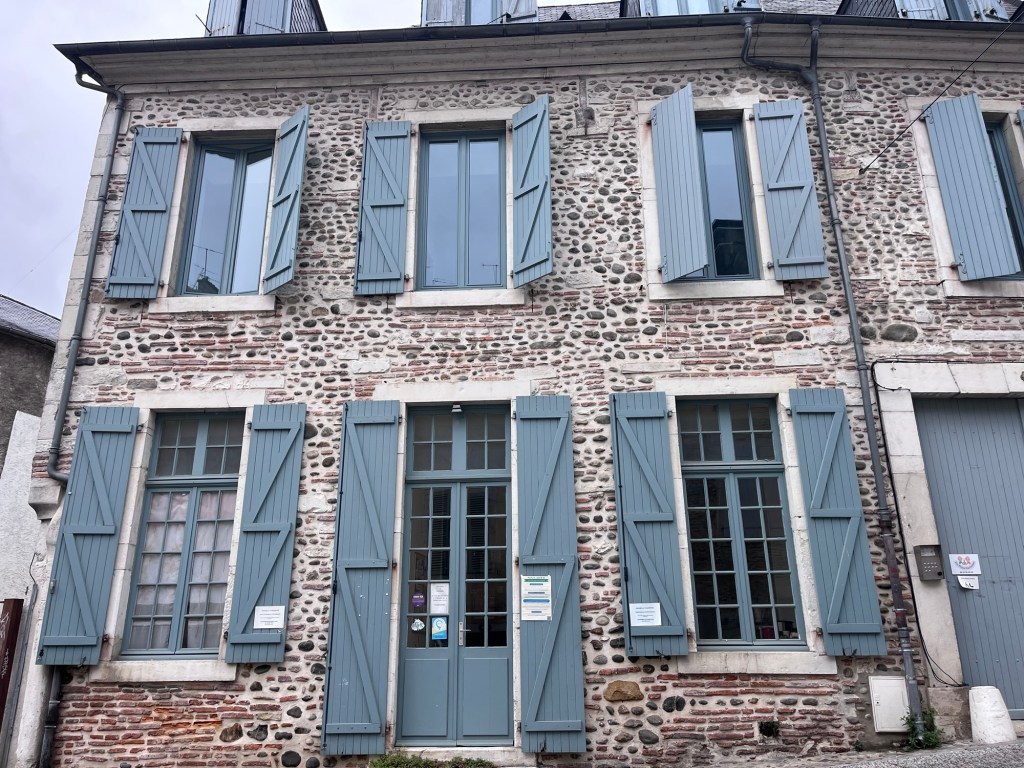
Our first stop was Pau to see the chateau and the medieval town. Naturally, the chateau was shut for lunch when we arrived but we could wander around the outside of it before exploring the city itself.

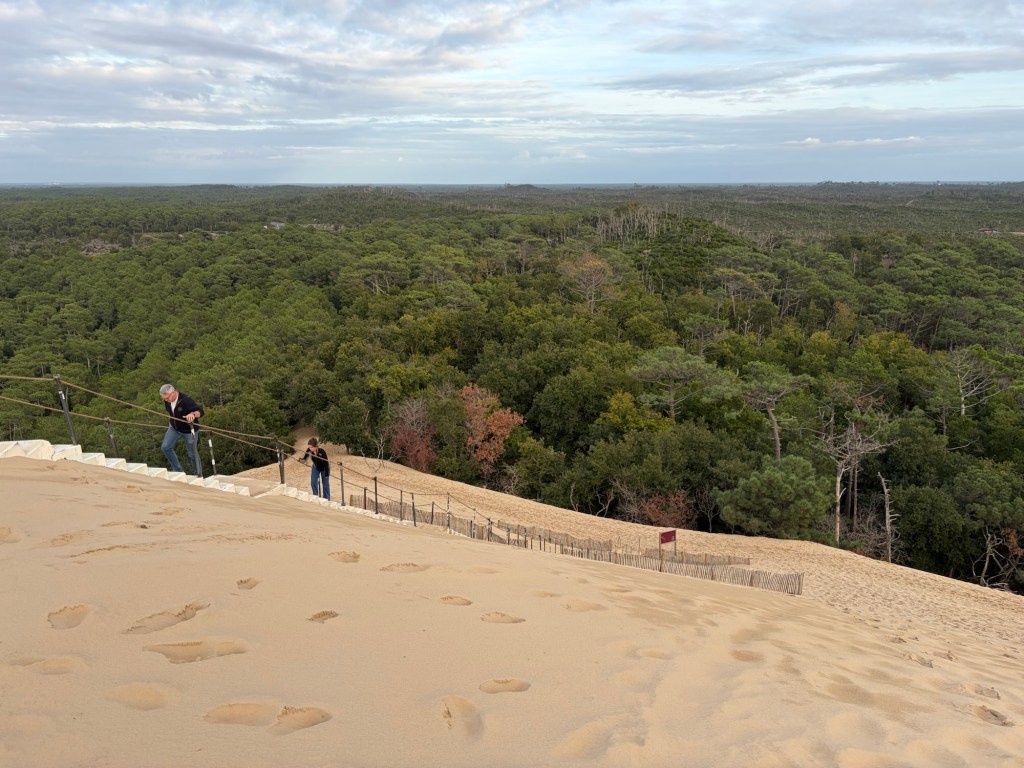
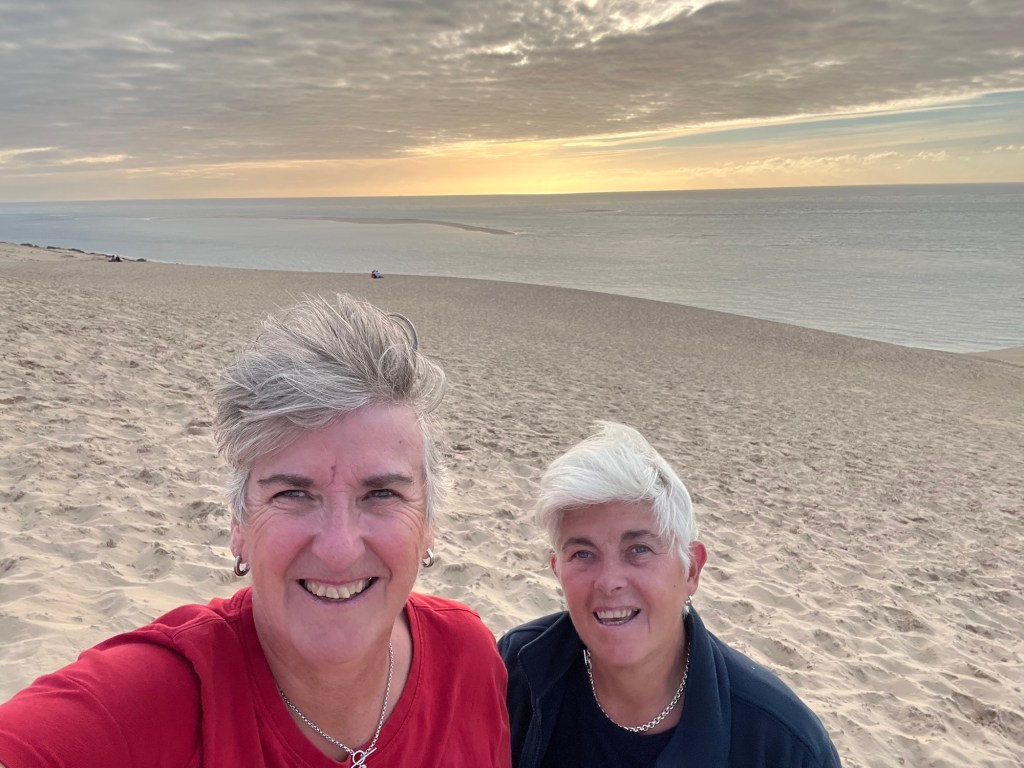
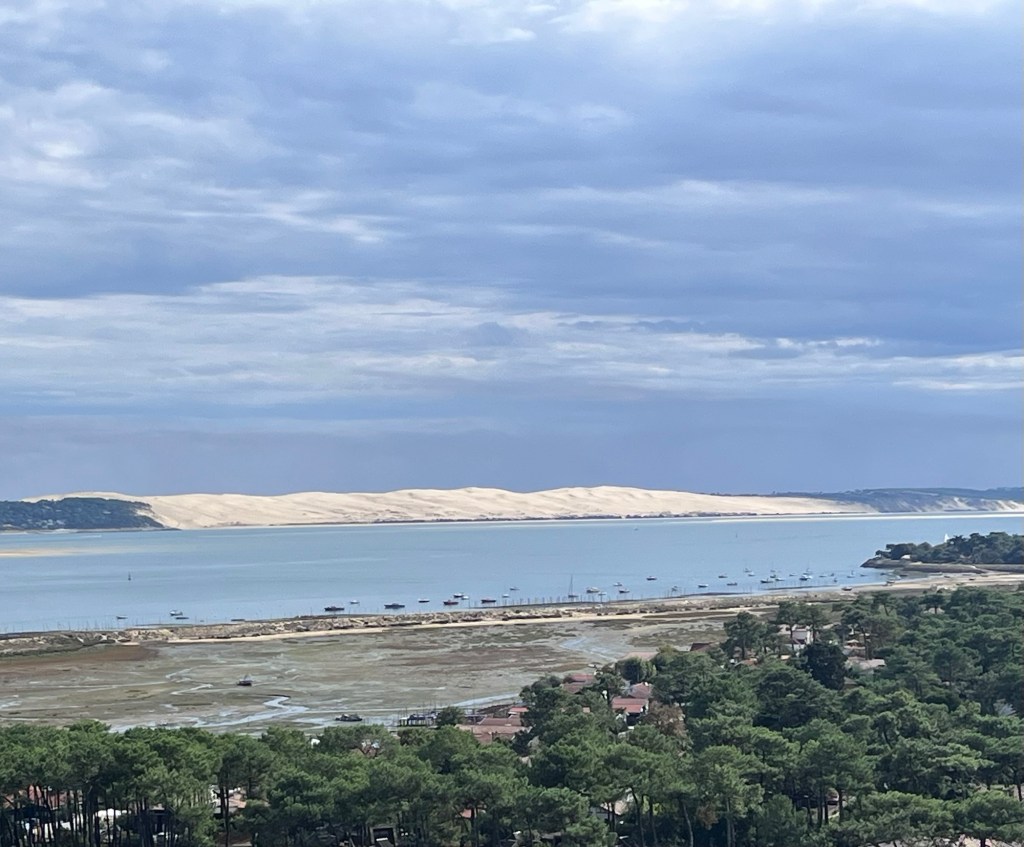
It was a long driving day as our destination was the Dune de Pilat near Biscarrosse, not that far south of Bordeaux. We had planned to visit it last year but the weather had turned so we changed our plans. The dune itself is 100m above sea level and covers an extraordinary area. We parked up and walked to the top of it. Photos don’t do it justice regarding the sheer scale of it.

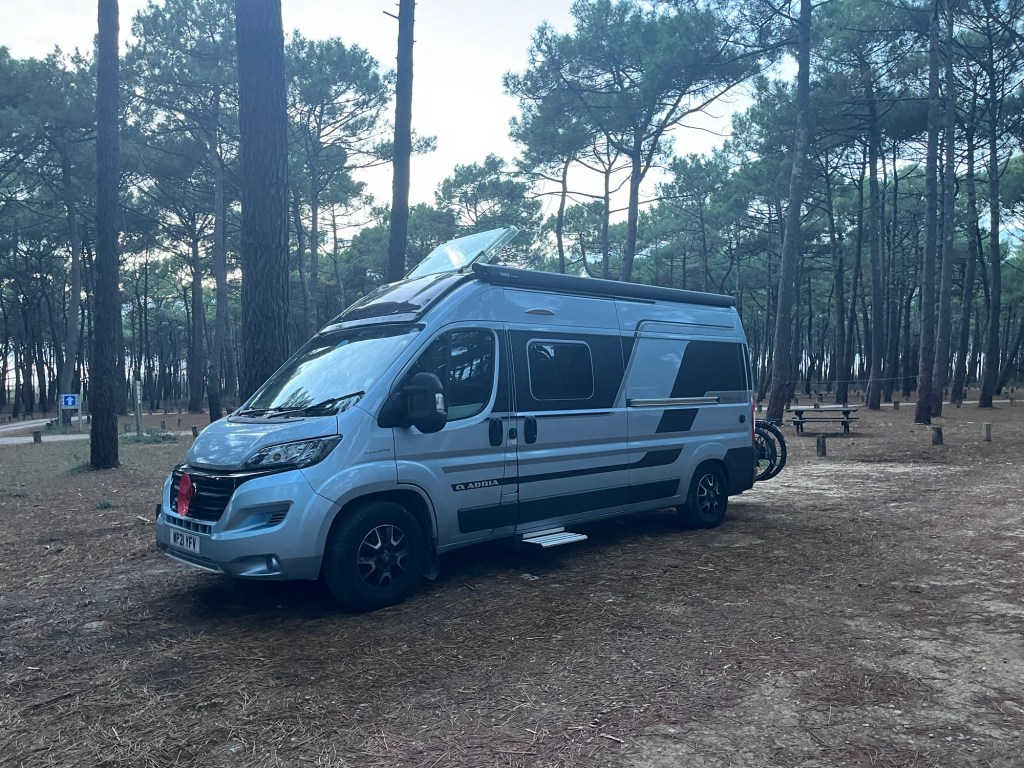
We then drove onto our park up for the night which was a Camping Car Park aire (P4N#3694), nestled in a pine forest less than ten minutes to Les Viviers beach. It was so idyllic that we booked in for an extra night.

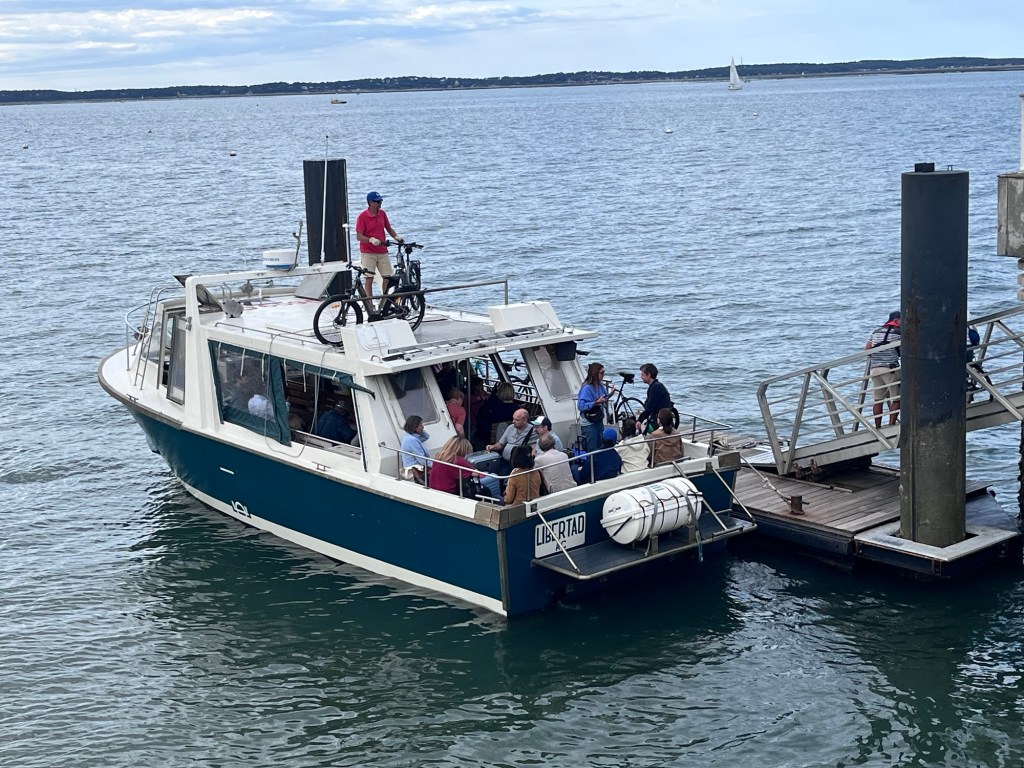
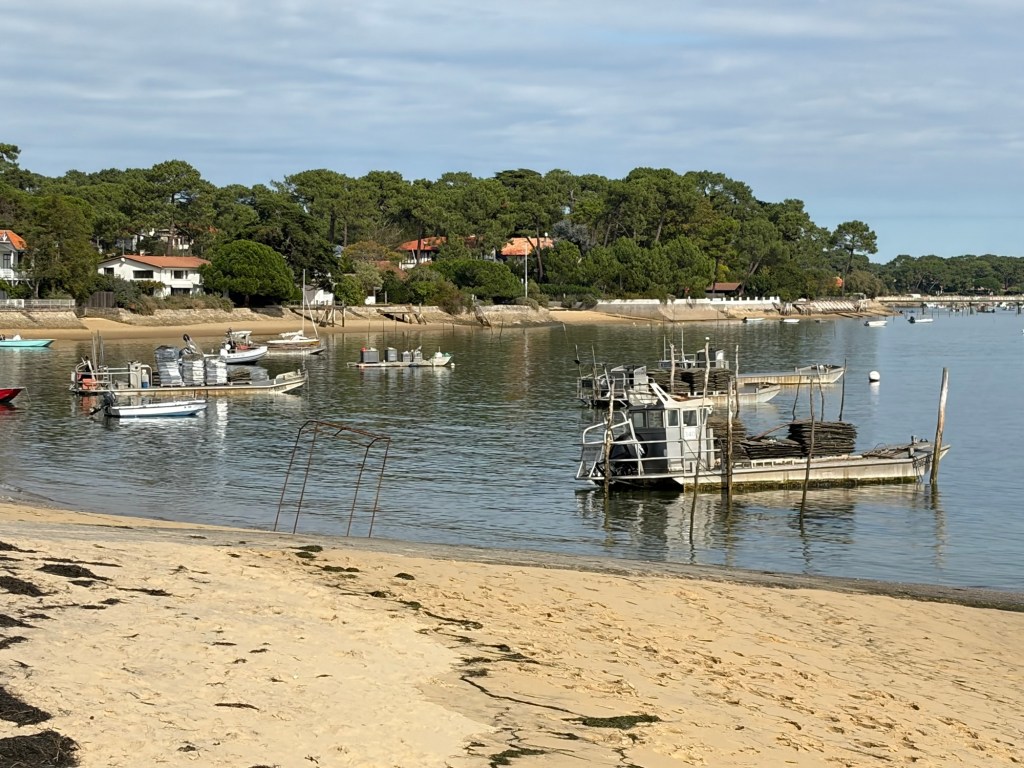
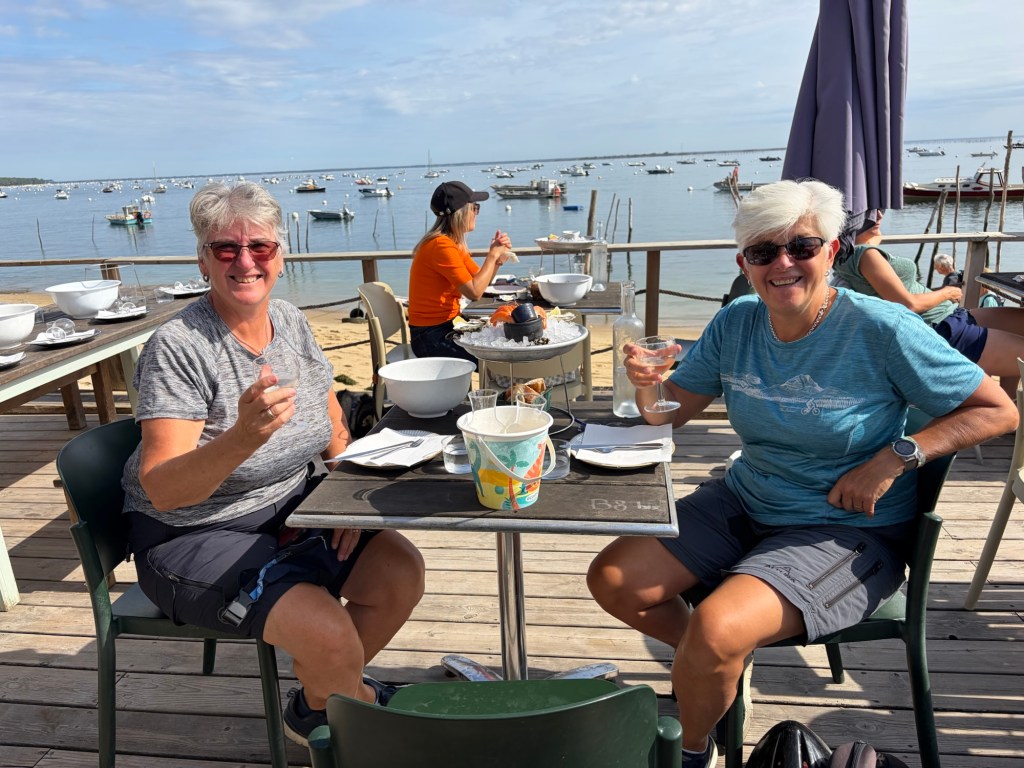
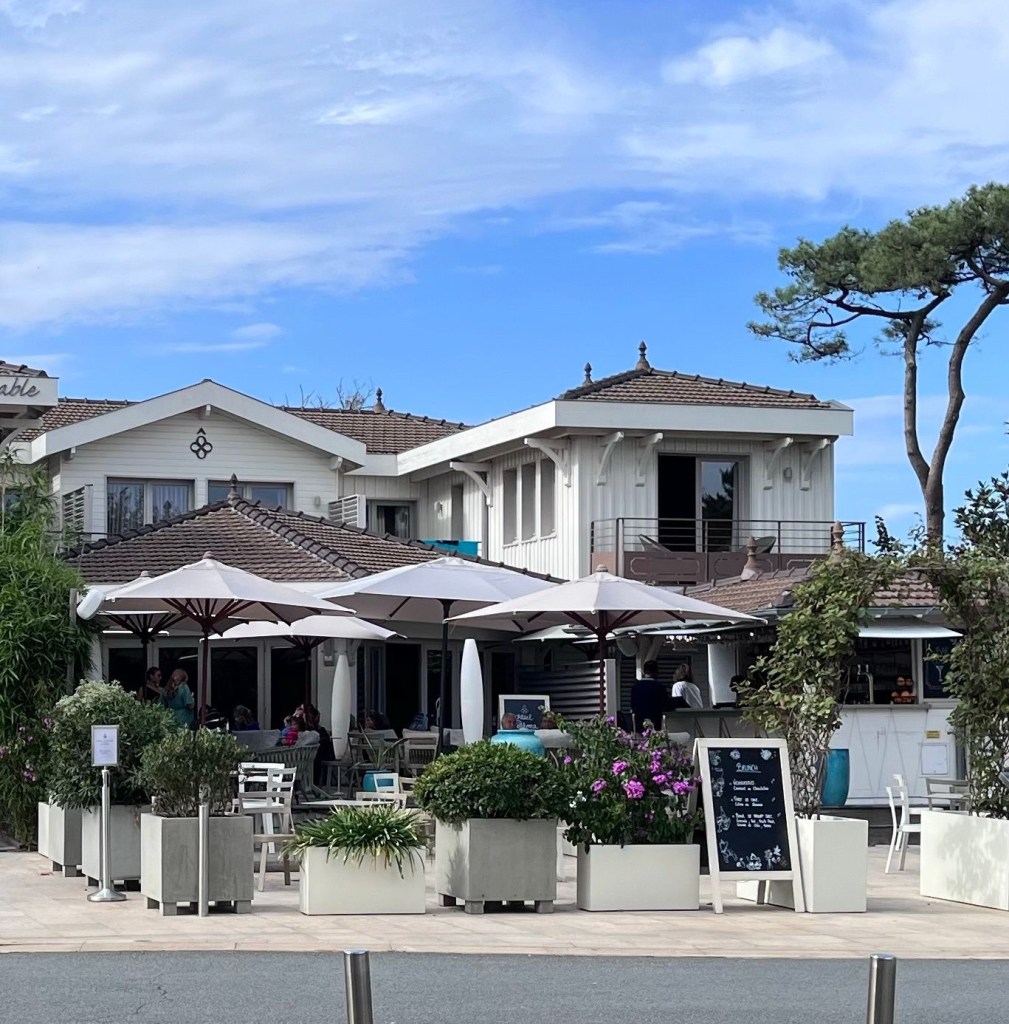
The next day we drove up to Arcachon to catch the ferry to Cap Ferret. It took us the best part of an hour to find somewhere to park that would allow us to stay for more than two hours. Nightmare. Finally, found a spot outside of town and cycled to the ferry port. Caught the midday ferry over, (where bikes are put on top of the boat!) and then cycled up to the village of L’Herbe to have oysters and crevettes for lunch at a seafood shack, Chez Guillaume, washed down with a wee glass of wine. Although Cap Ferret isn’t an island, it sure feels like one – Ile de Re meets Nantucket. Great cycle paths and upmarket shops in the main town of Bélisaire.

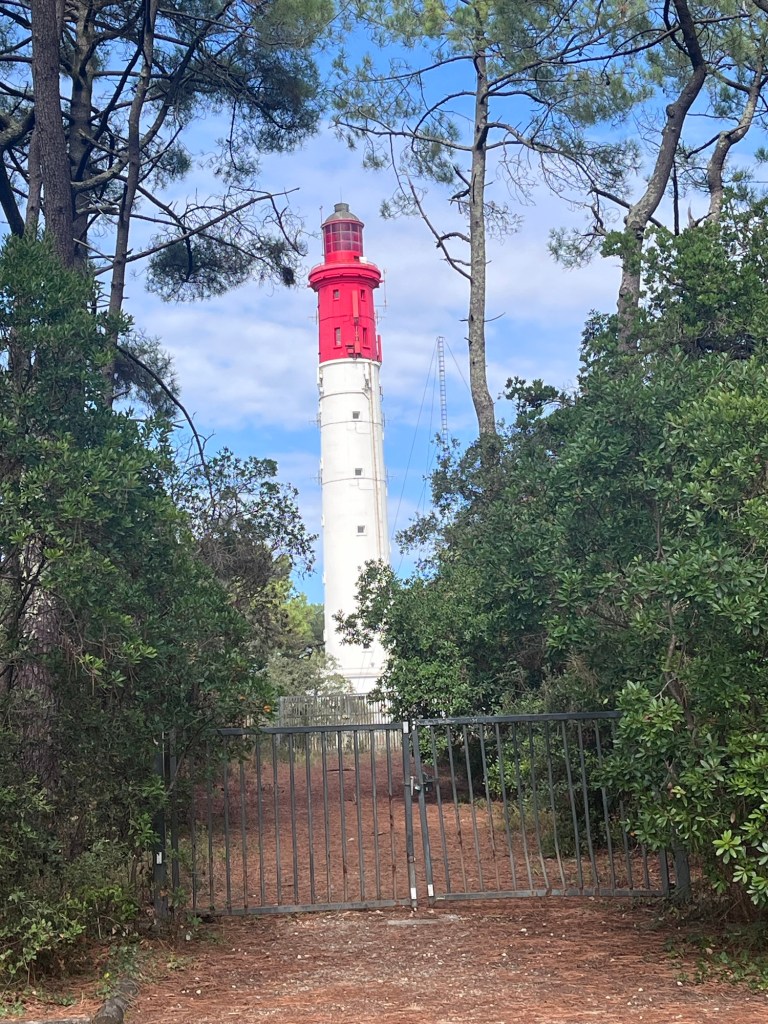
After lunch we cycled down to Cap Ferret point but the dune was closed to visitors so we cycled back to the lighthouse and climbed its 200 plus steps to the top. We were rewarded with fantastic views of the dune.

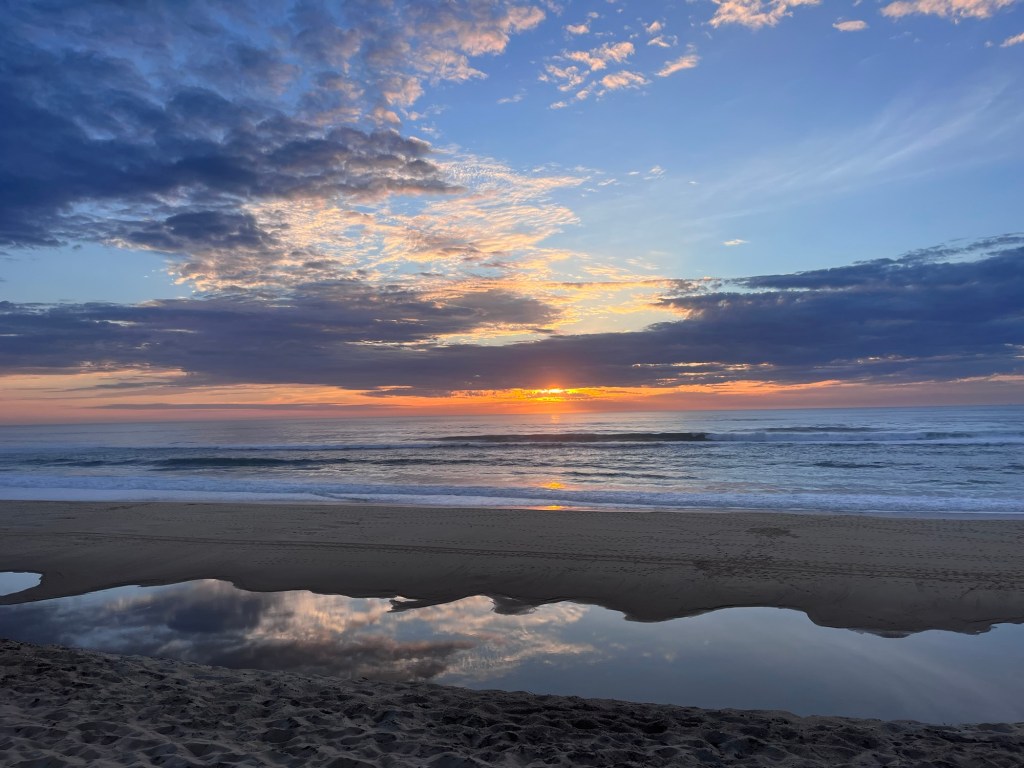
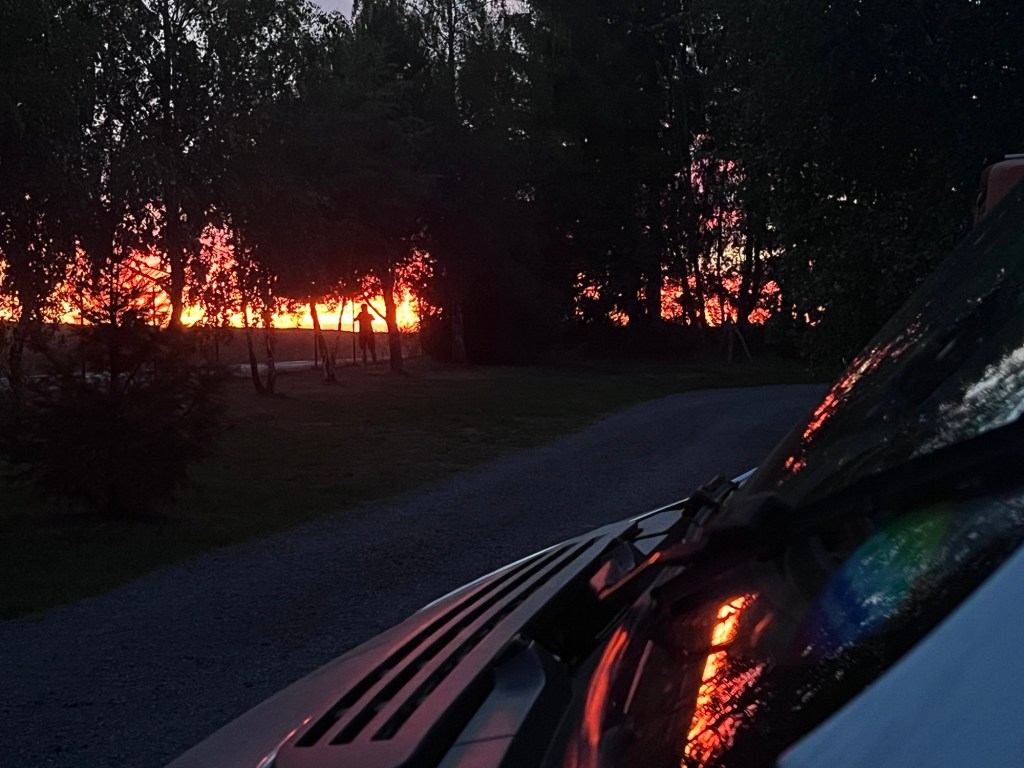
Back to our camping car park aire to watch another sunset with a beer.

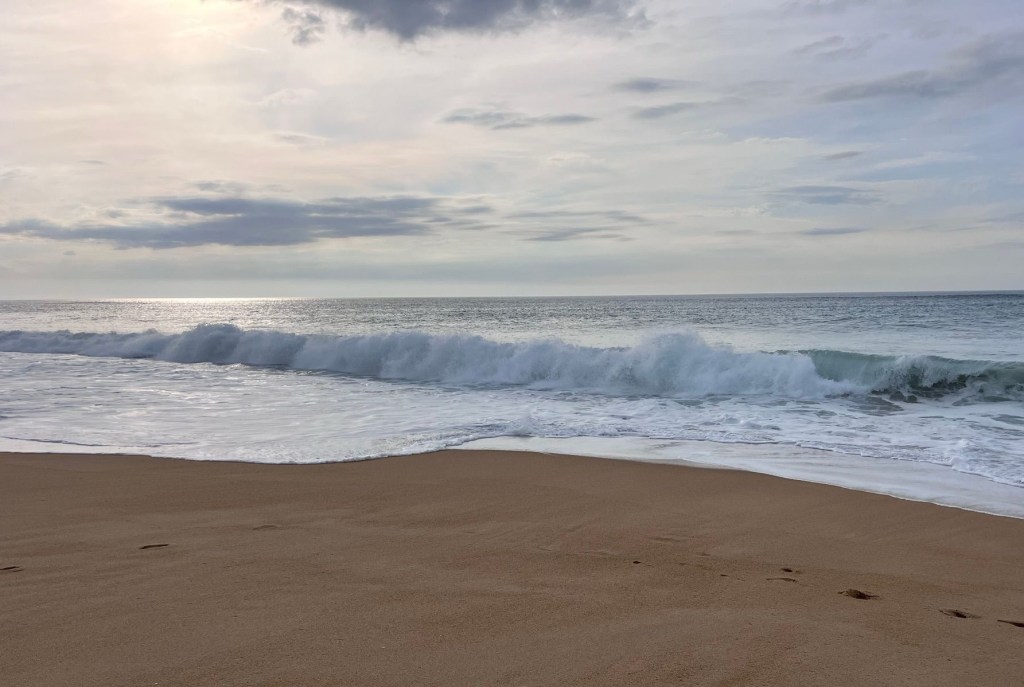
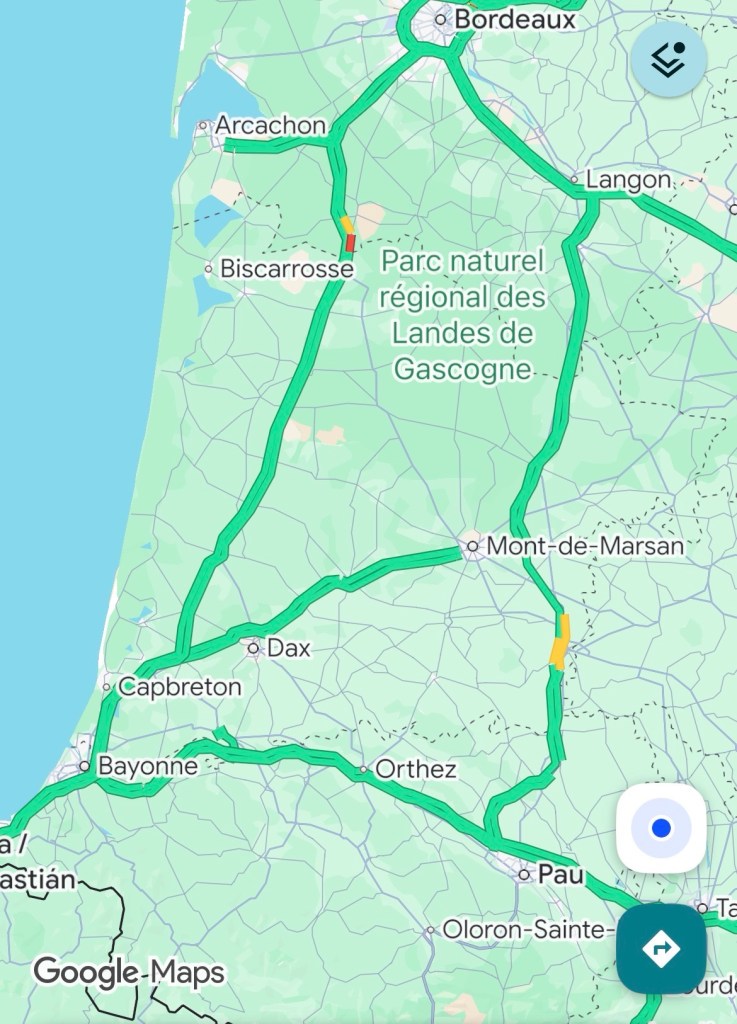
The next morning, Liz’s cold was getting worse so we had a leisurely morning chilling before leaving our campsite just before 14.00 to drive 86 miles to Ondres Municipal Camping Car Aire (P4N#132008), just north of Bayonne and right on the beach. This cheered Liz up being next to a beach.

On Sunday, October 4, we had tickets to the refurbished Musée Bonnat-Helleu in Bayonne as all museums are free to entry on the first Sunday of every month. We drove the short distance to Bayonne around 10.00 and managed to find a place to park near the station on the northern side of the river. It was incredibly busy for a Sunday morning so we were very lucky to find a space.

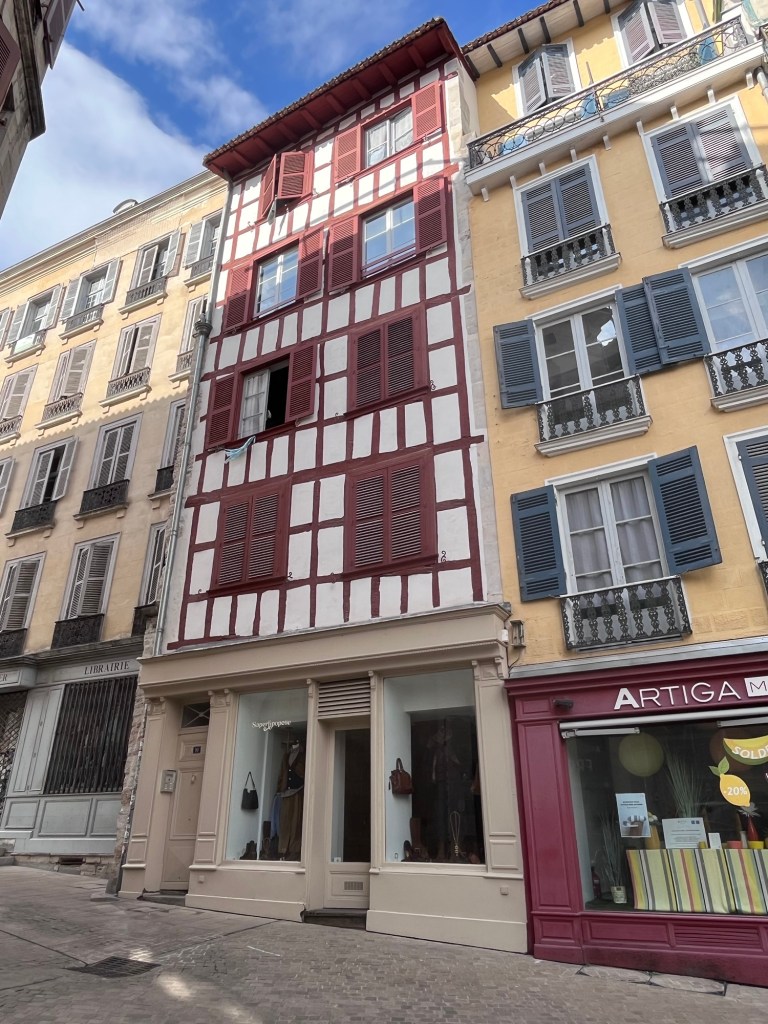
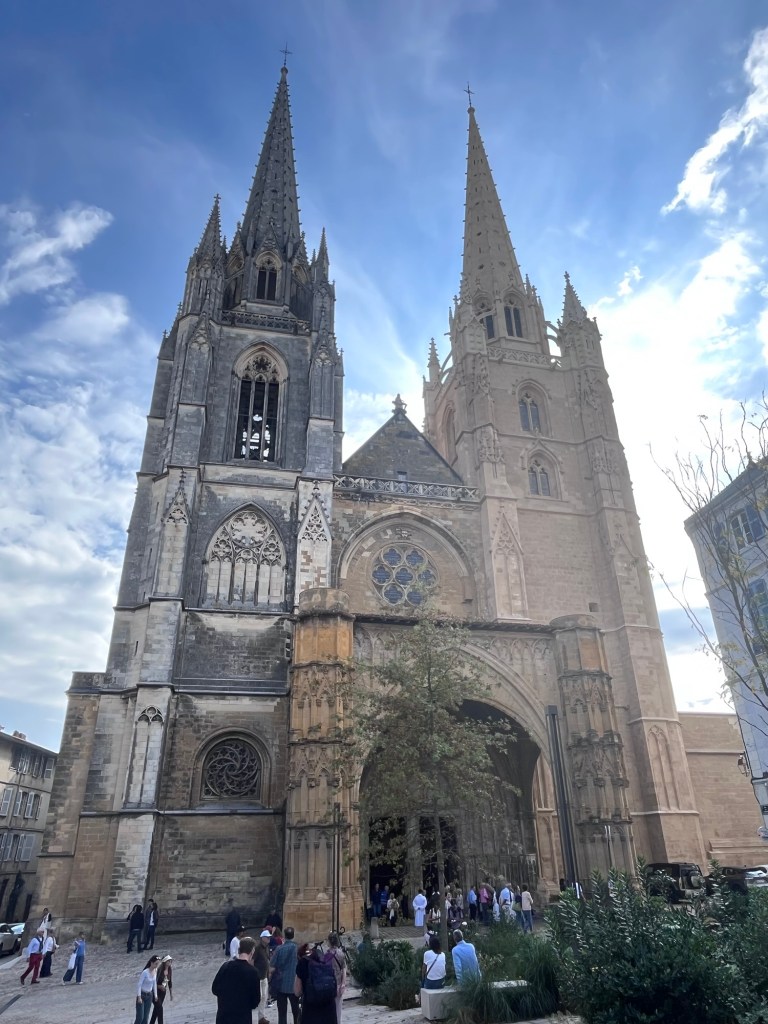
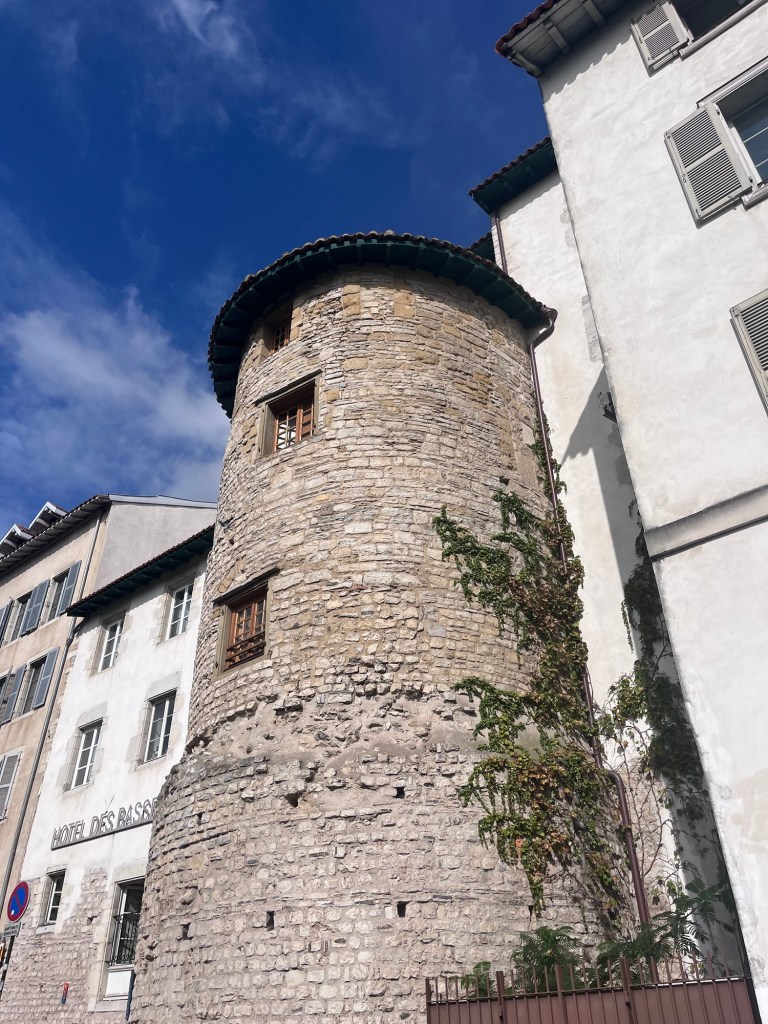
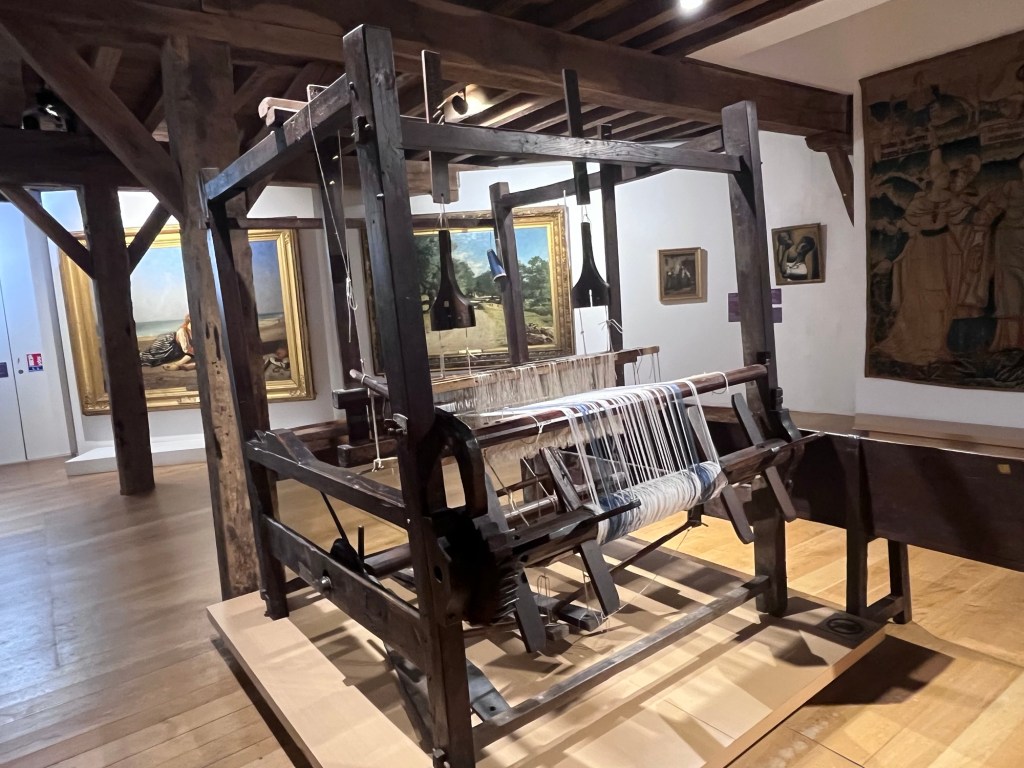
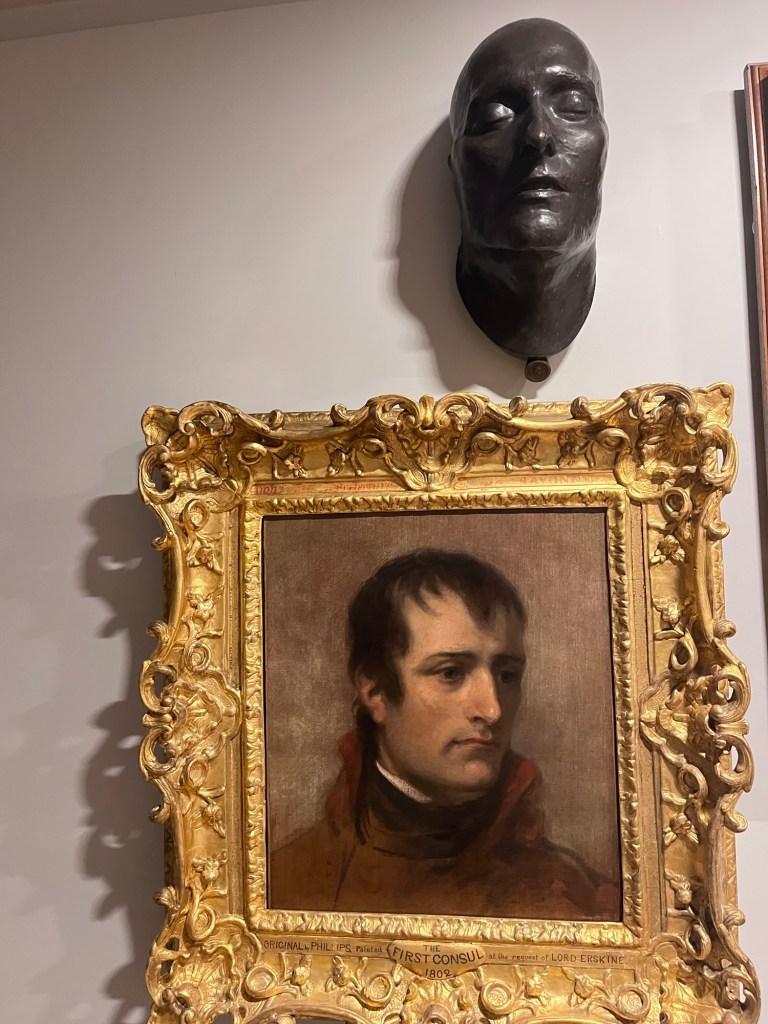
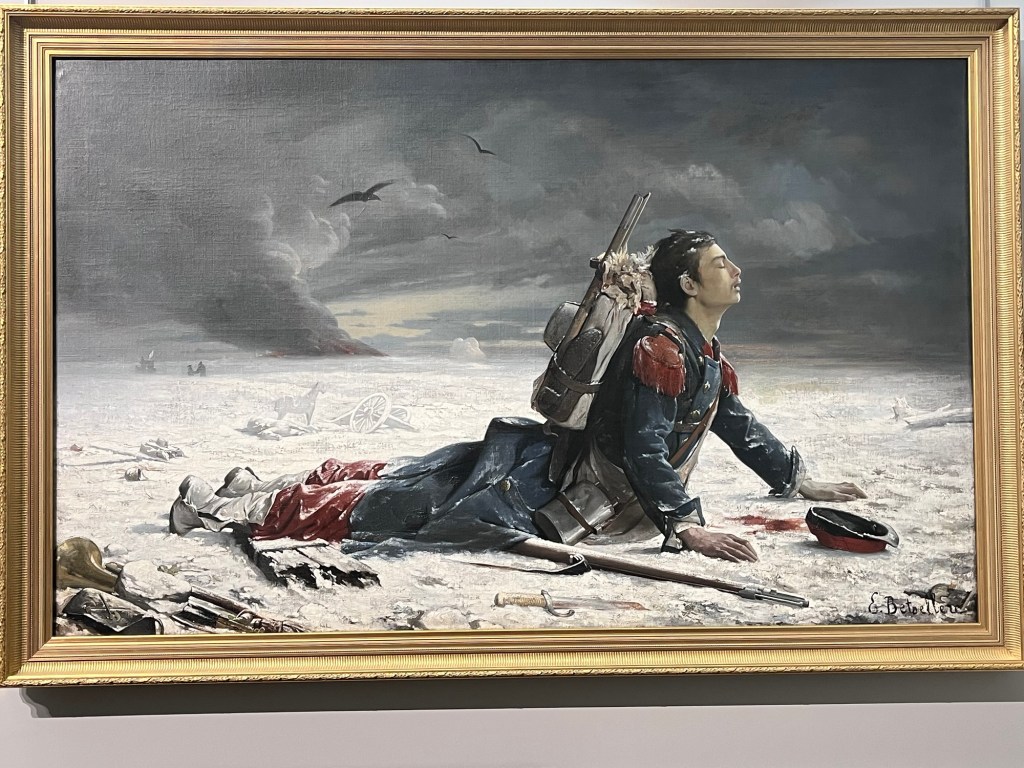
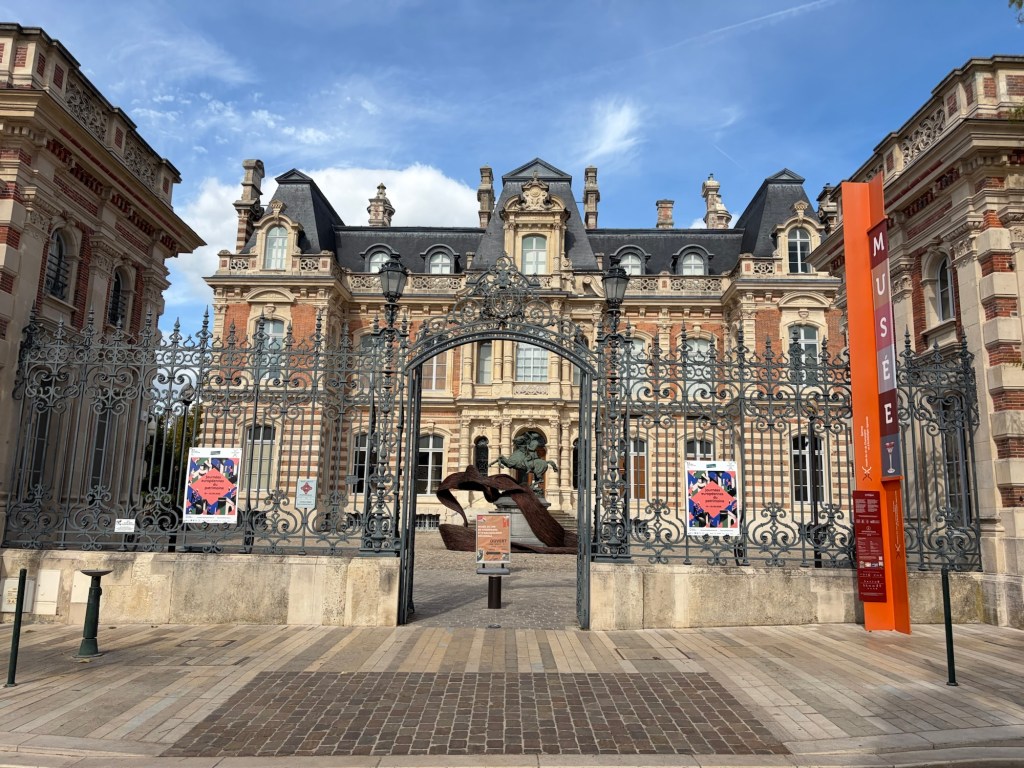
Bayonne has an interesting history, having been around since at least Roman times. There are still Roman towers around the town that were converted into homes, one of them known as the Executioner’s House!It is the French Basque capital and was once even under English control after Eleanor of Aquitaine’s marriage to Henry II. It was a lovely city to wander round and we popped into the Basque museum that ensured that the Basque culture, history and traditions were recorded. Bayonne became famous for its chocolatiers as Jews fled to the city following their expulsion from Spain in 1492 bringing their chocolate making skills with them. The Bonnat-Helleu museum had a number of masters’ paintings in there, including Constable, Reynolds, Degas as well as Léon Bonnat himself. Overall, though, it was slightly underwhelming. Bizarrely, the cathedral is known for its two steeples, only one of which is kept clean!

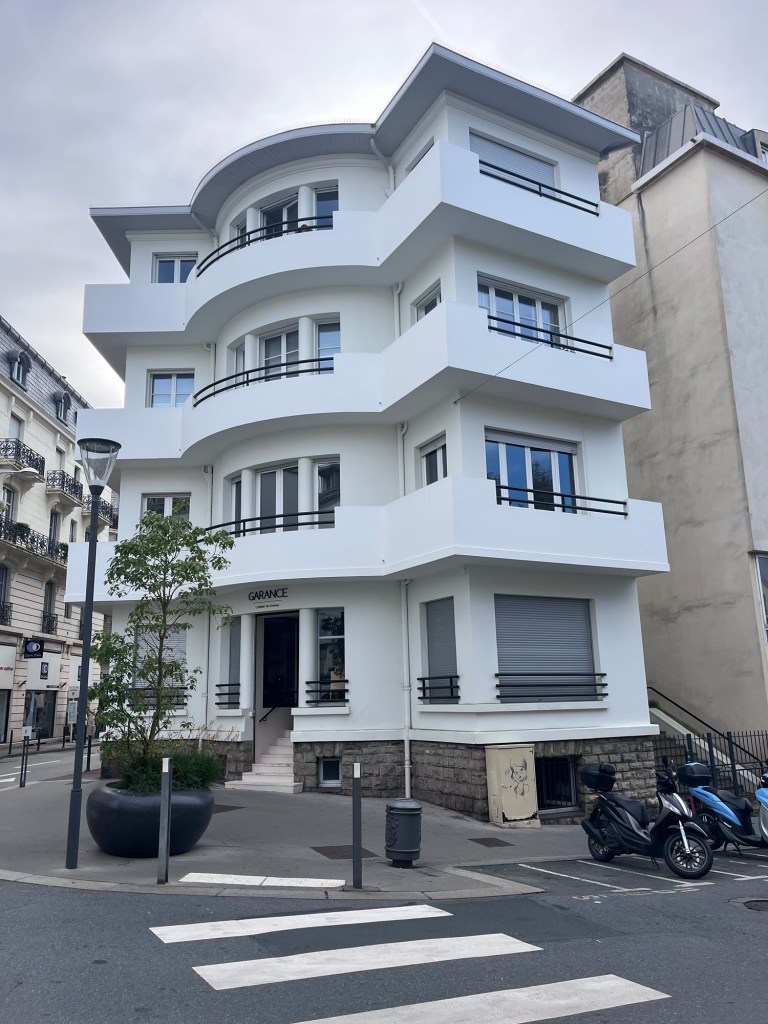
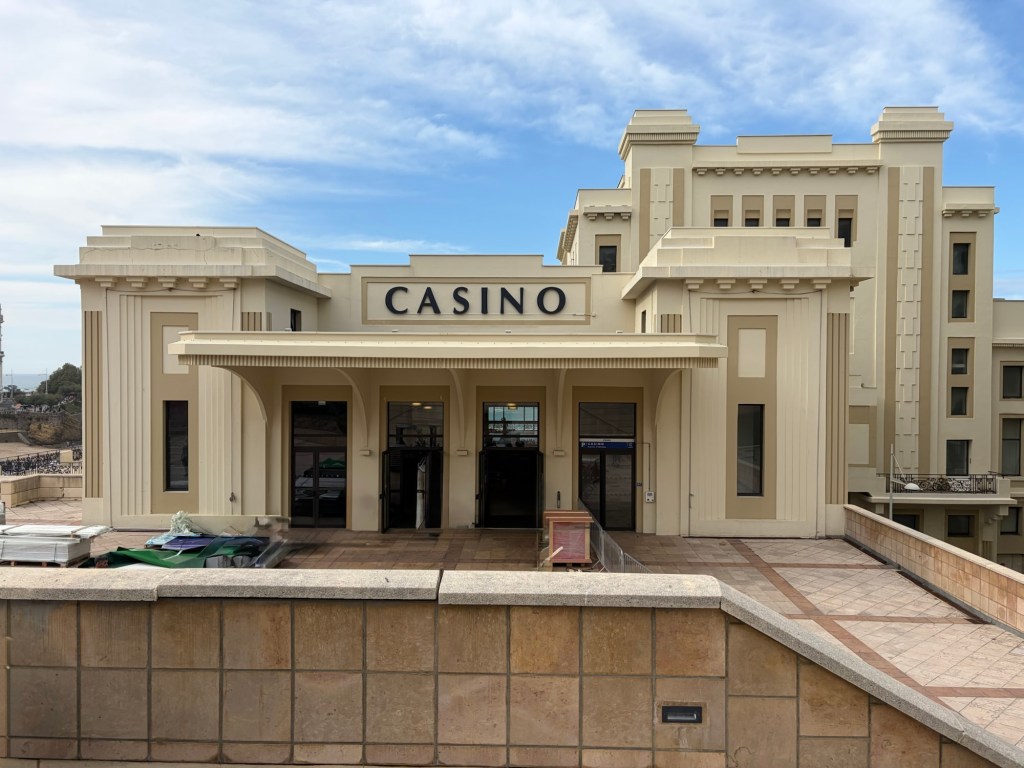
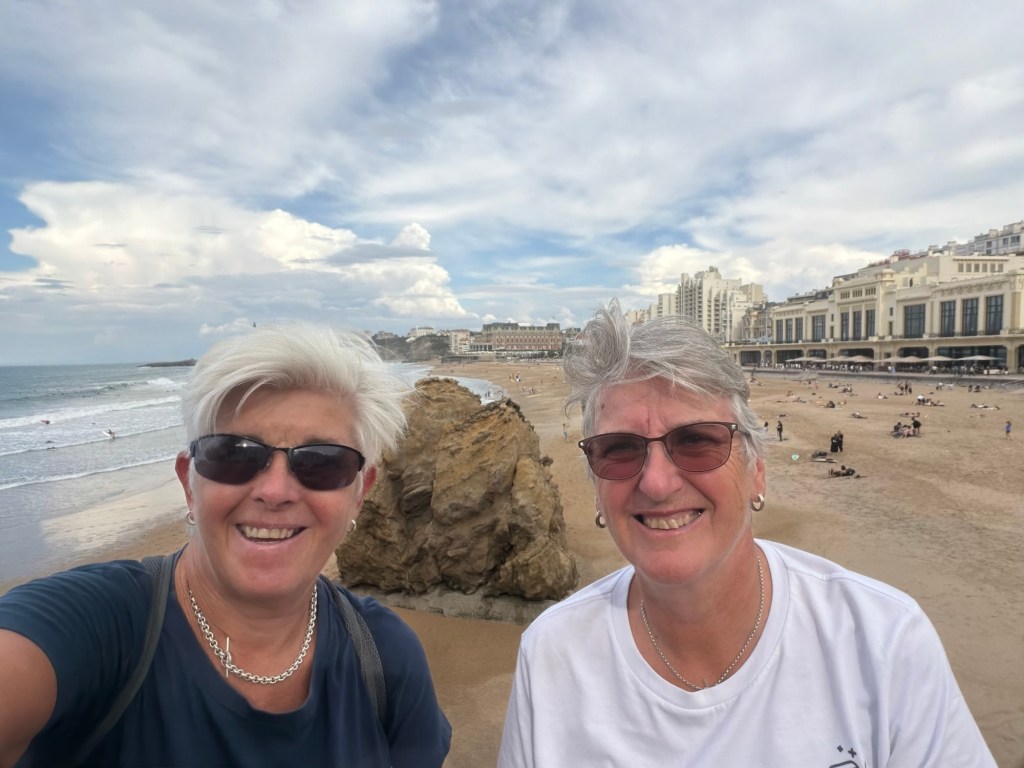
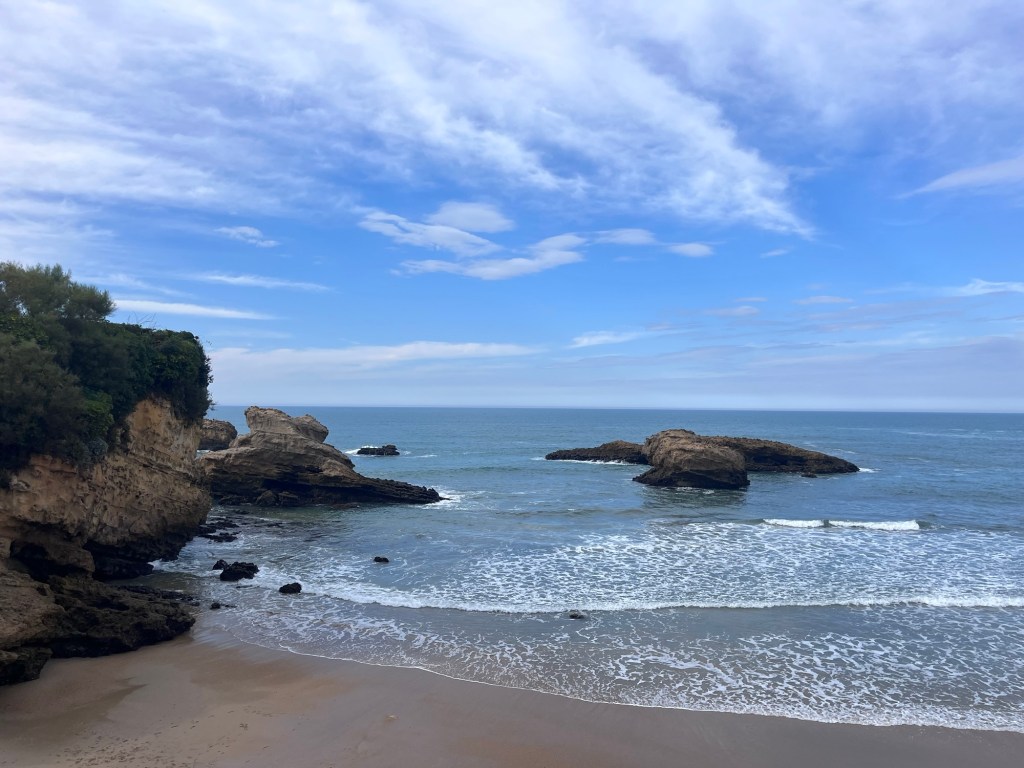
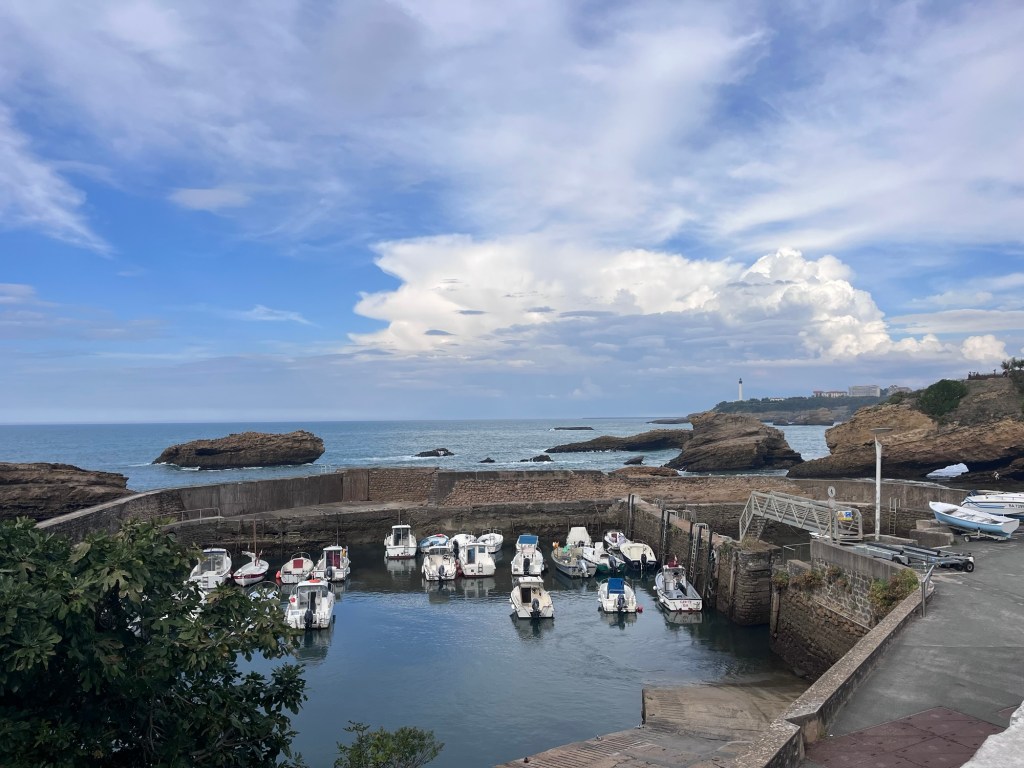
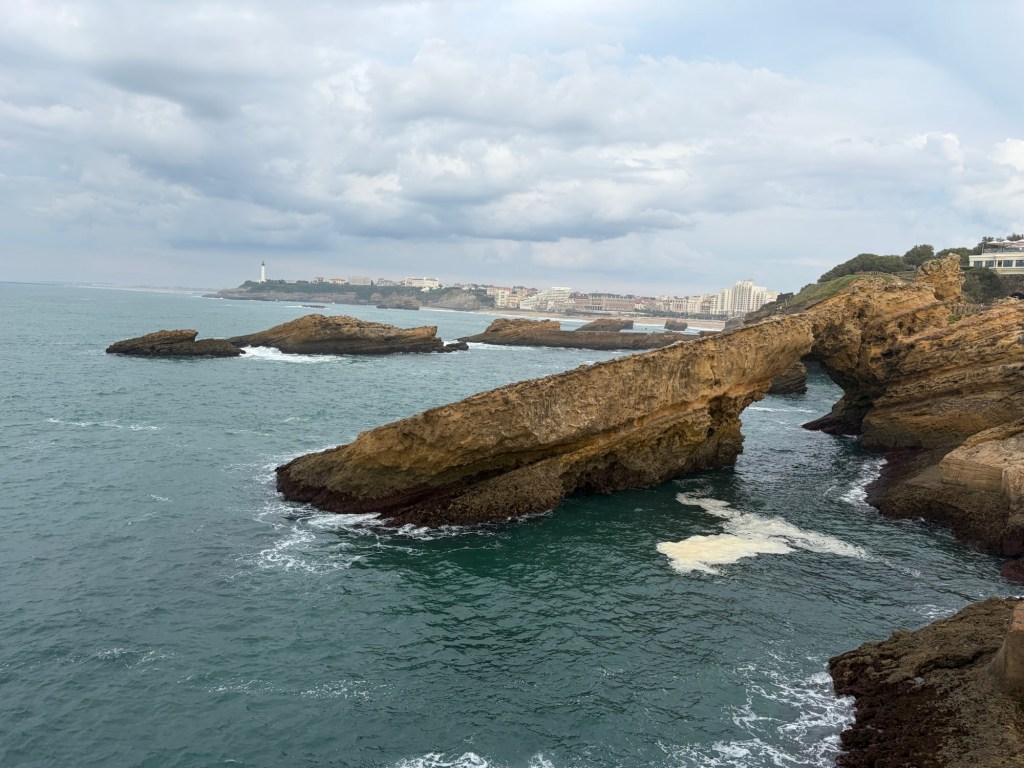
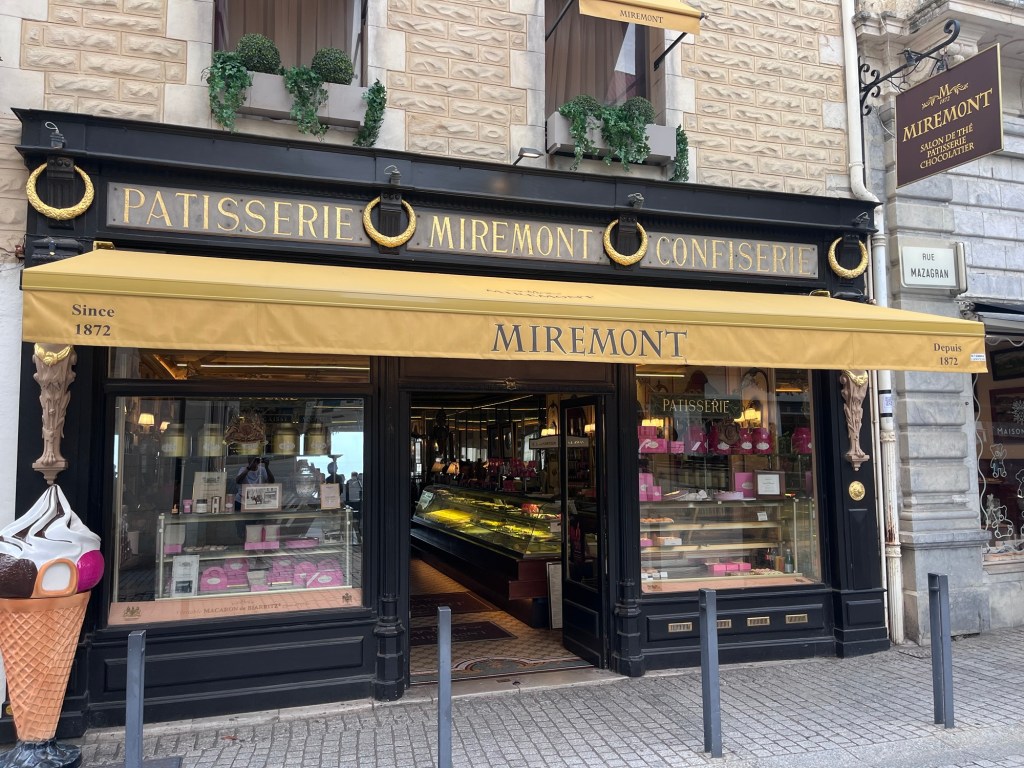
We then drove onto Biarritz some 30 minutes away on the coast, still very much in the Basque region. We didn’t know quite what to expect as reviews had differed. We found a lovely seaside town that was once very glamorous but now was still quite sweet mixed with lots of surfing dudes as the waves and beaches were perfect for it The town was very busy on a Sunday afternoon but definitely not motorhome friendly as we had to park over a mile away from the town centre as all the main car parks had height restrictions. We enjoyed the mix of art deco and early 20th century architecture with promenade walks and sandstone rock formations. We even found the chocolatier, Miremont, where Queen Victoria apparently loved their caramels.

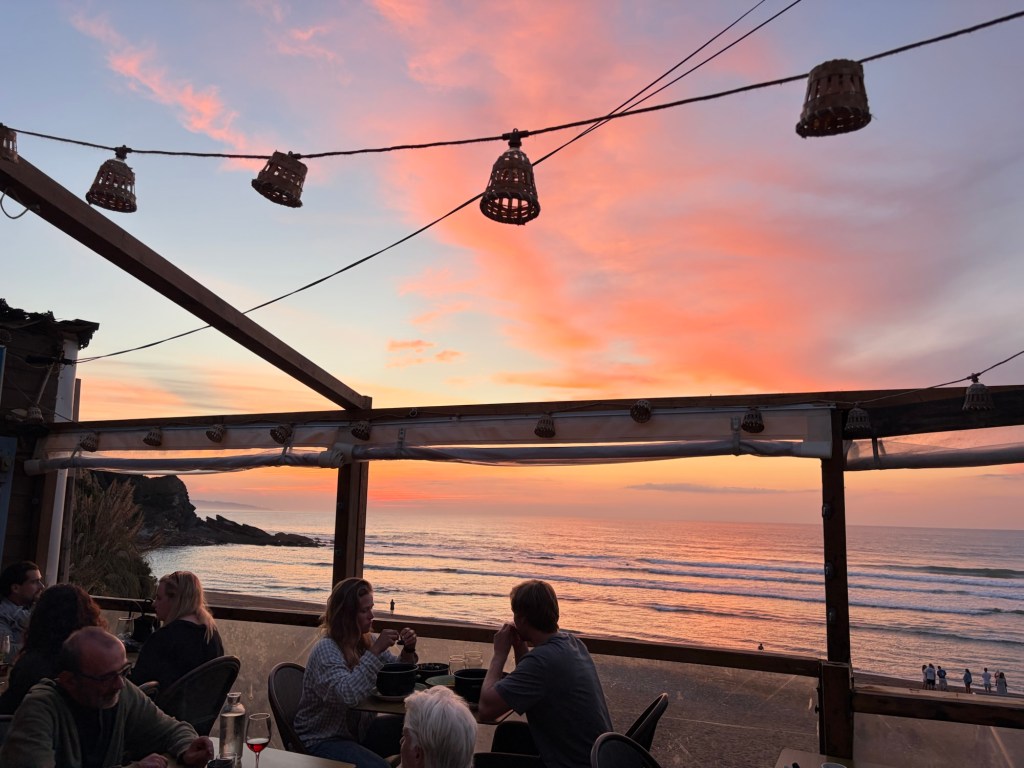
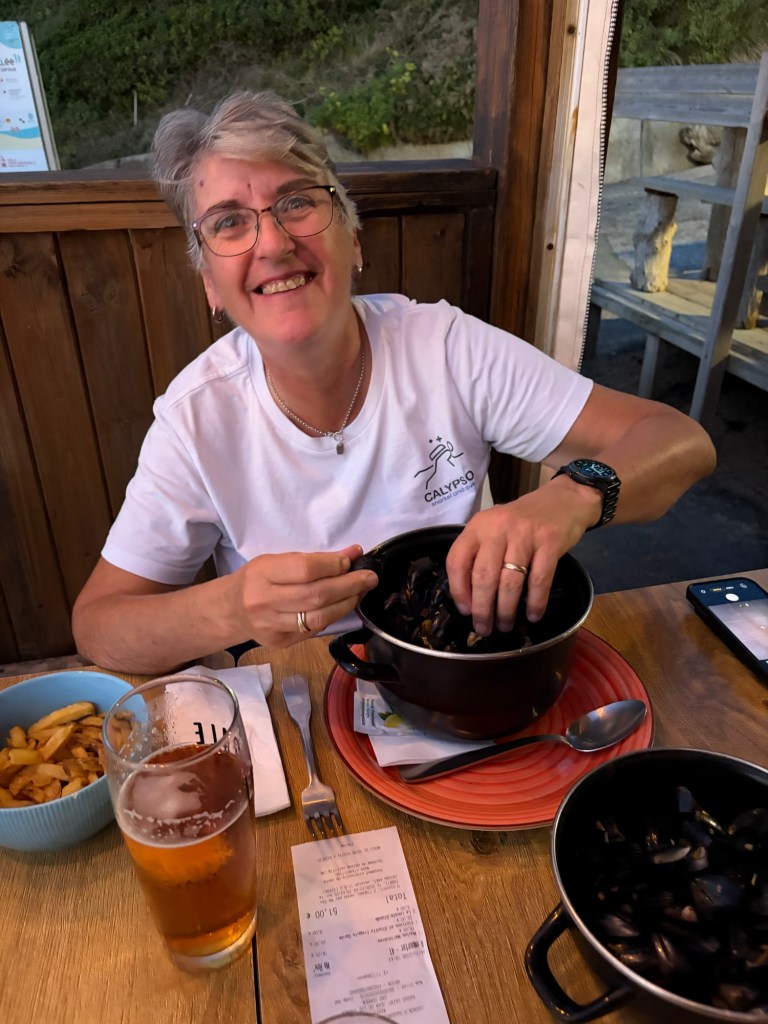
We left Biarritz around 18.30 as we needed to find somewhere to stay for the night and had no plan! Again, a number of places had height restrictions or low bridges. We eventually found a lovely campsite, Camping Soubelet (P4N#201165), near Guethary, right by the Mayarco beach that both had space, was open at 19.30 and was charging less than €20. Once parked up we quickly walked to the Ti Cabanon beach bar and had an incredible meal of Moules Marinière and squid risotto whilst watching a lovely sunset.

Miles since last blog: 357

Miles this trip: 2,295

The Pyrenees

We said goodbye to Sue and Sheila on Monday, September 28 as they were staying in Spain whilst we wanted to explore the Pyrenees. We left around 10.30 after refilling our water tank and emptying the other stuff as we expected to be wild camping for the next few days.

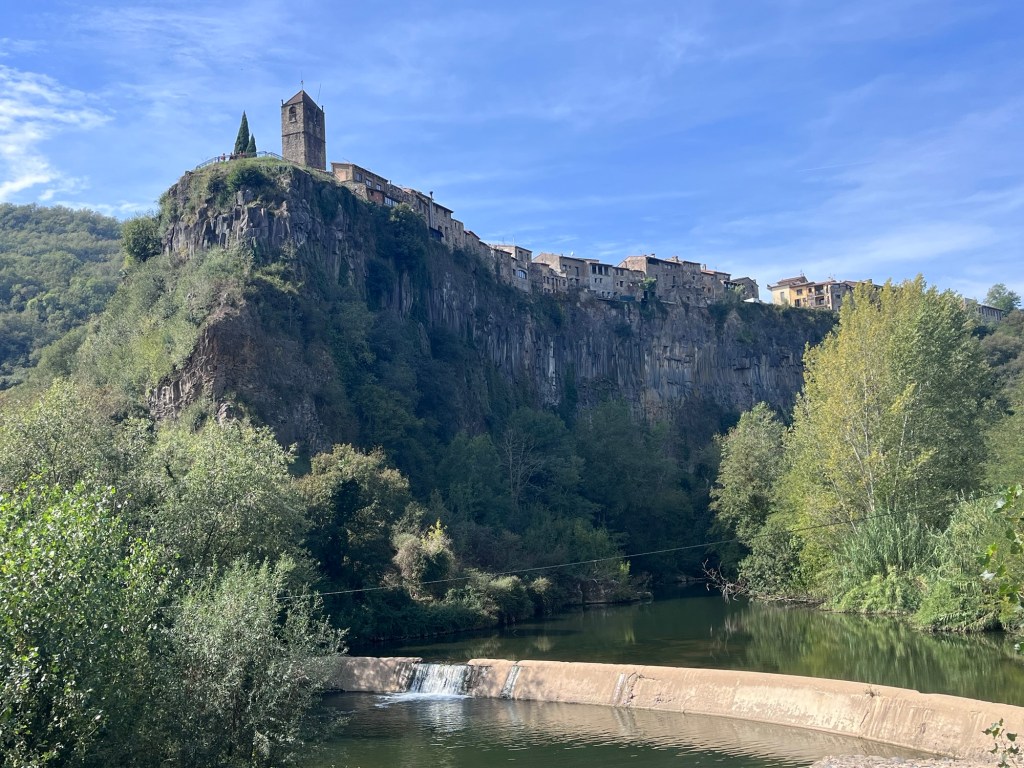
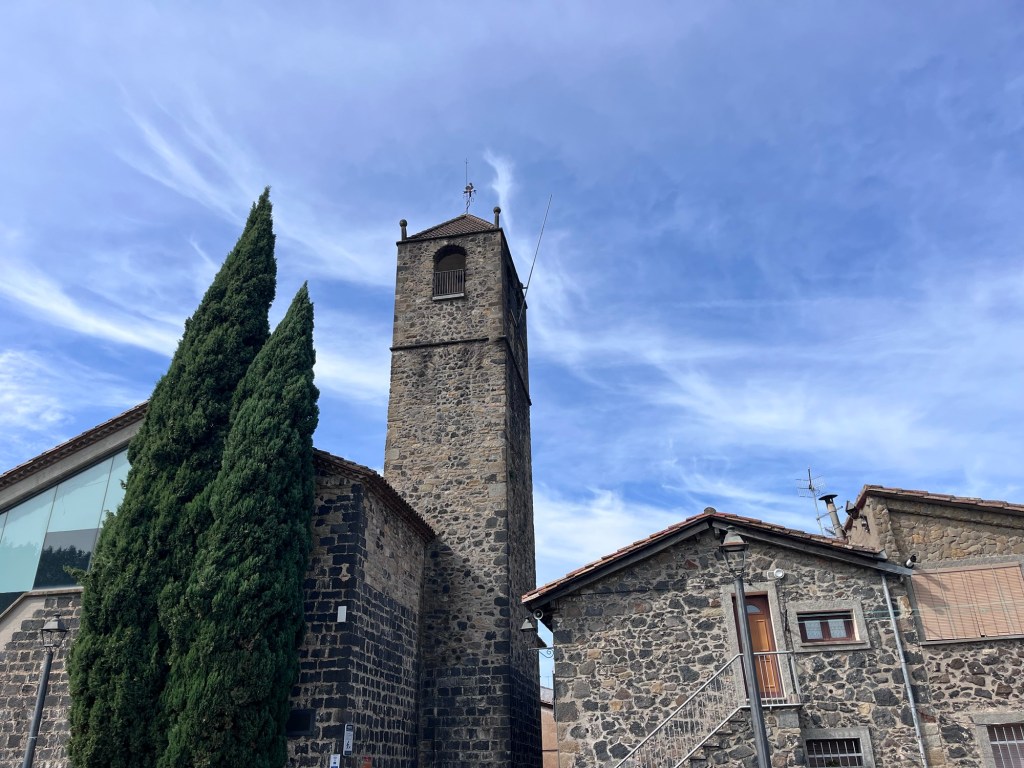
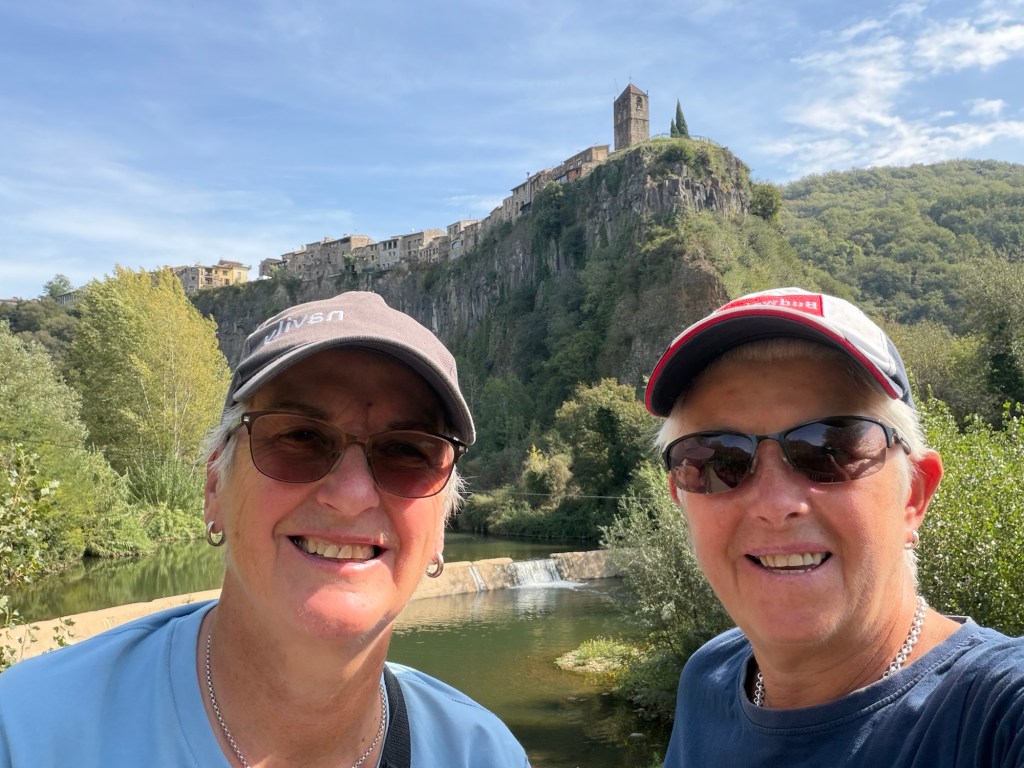
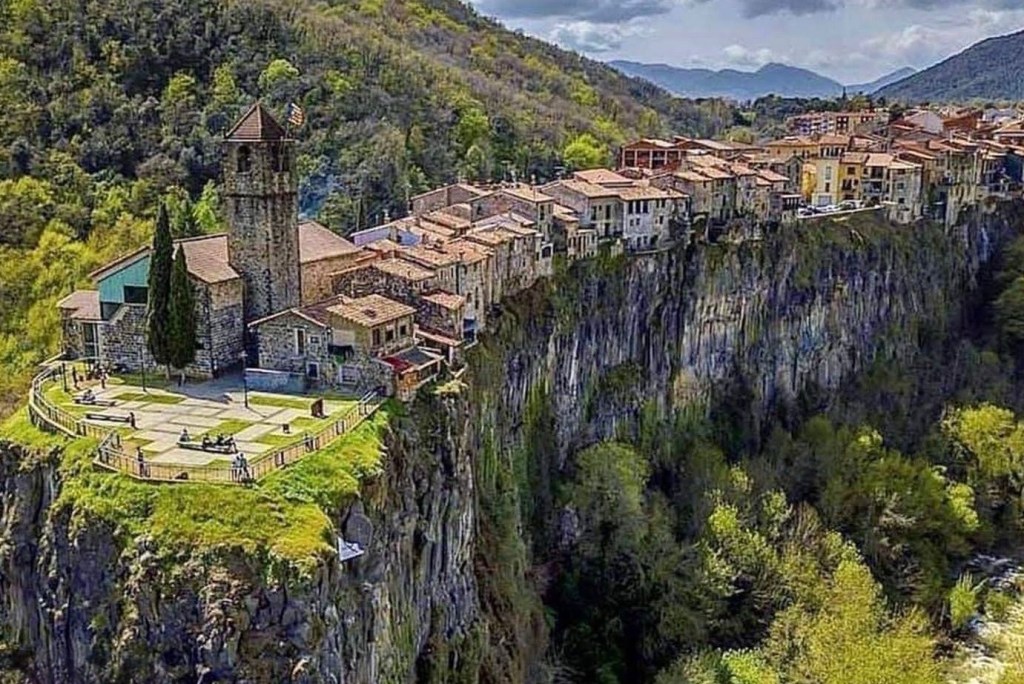
Our first stop was at Castellfollit de Roca. This had the potential to be as stunning as Bonifacio in Corsica. The town was set on a cliff face high above the surrounding area. Sadly, on closer inspection, it was rather dilapidated with half the shops closed and a lot of TLC required. Looked good from a distance though.

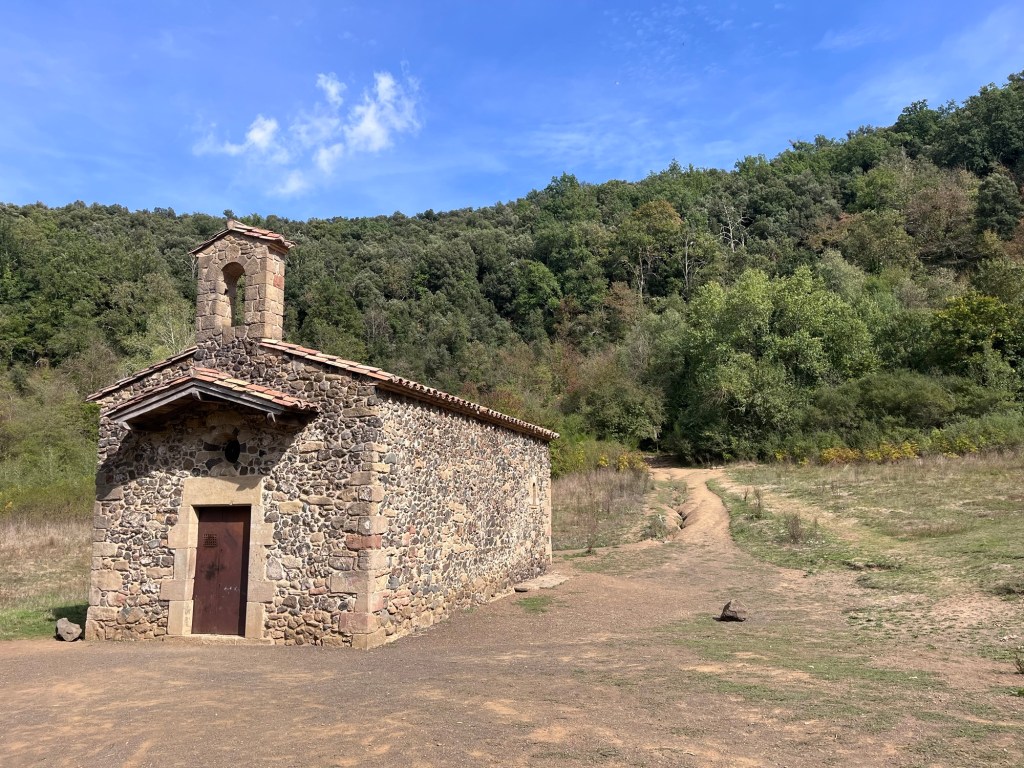
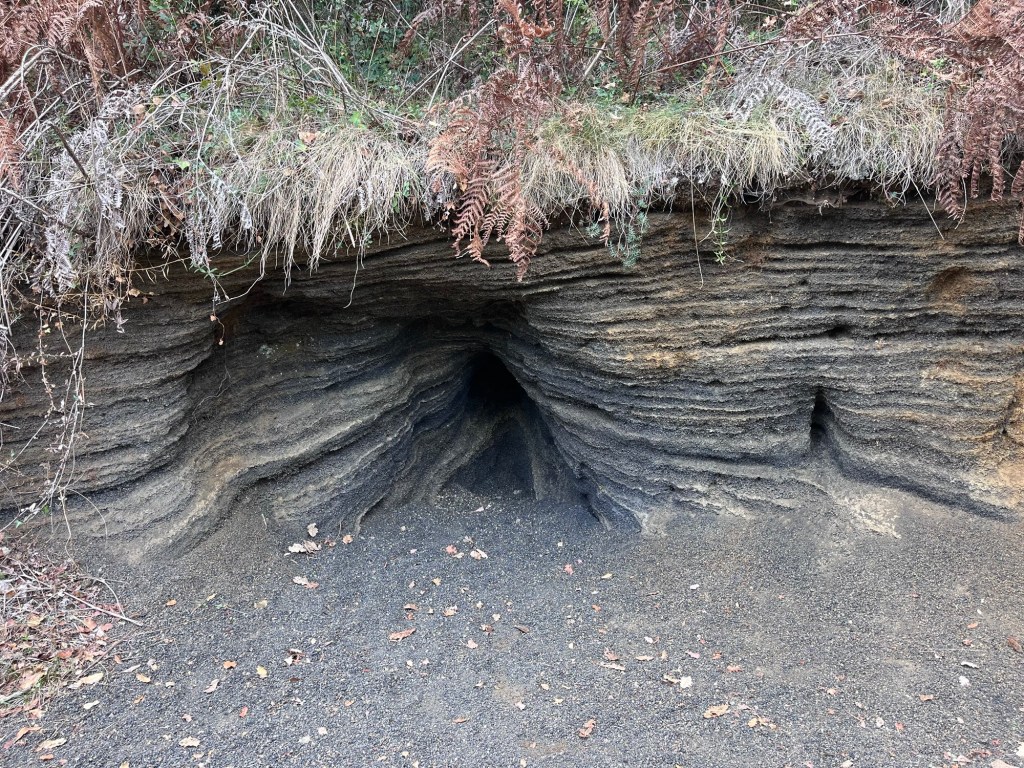
Onto Sant Margarida volcano which is part of a national park. We walked from the car park to the crater where Sant Margarida’s chapel was. Goodness only knows why you would built a chapel there, in the middle of nowhere but they did. Lovely walk but very steep in places and you could see the volcanic strata in places. Jo was pleased her new knee held up well.

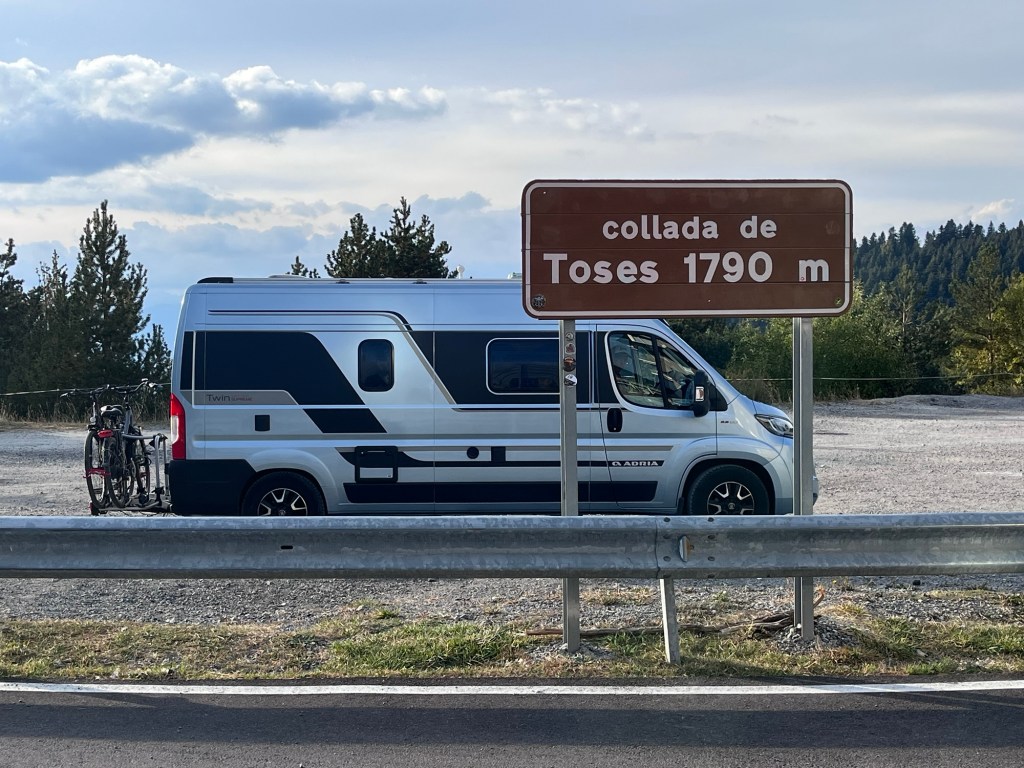
We then decided to drive through Andorra as it sits in the foothills of the Pyrenees and Liz had never been there. On the way up we got to the top of a number of Cols which seem to be the destination point of quite a few cyclists. Madness.

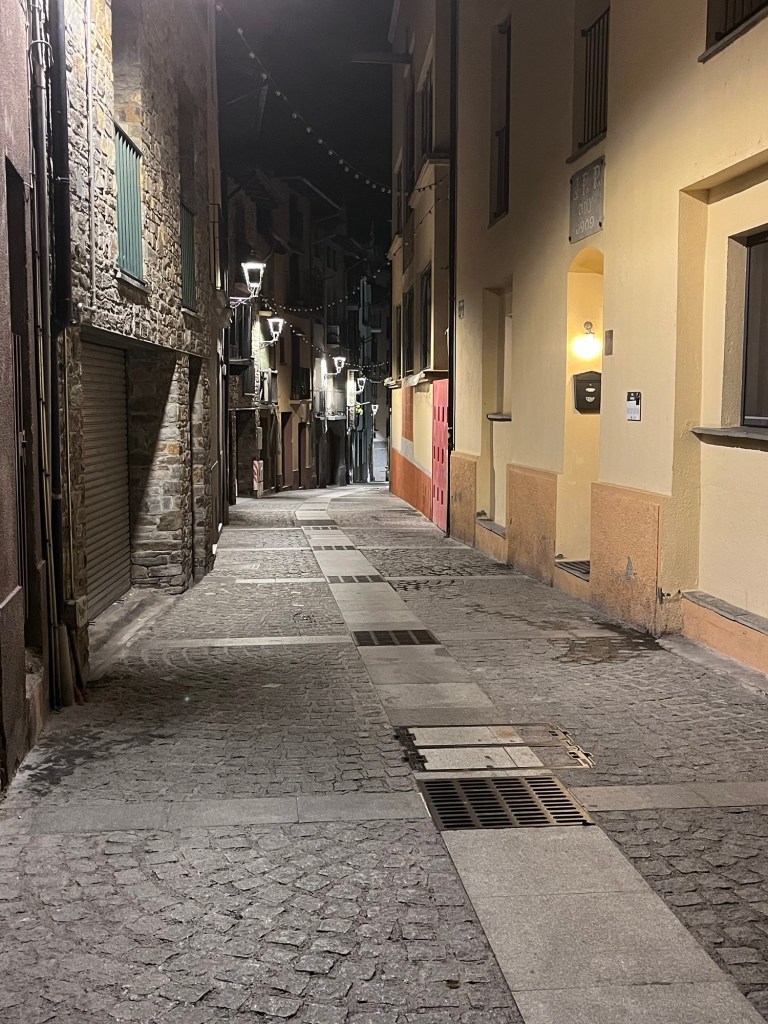
Jo had been to Andorra many years ago when learning to ski and wasn’t impressed then. It hasn’t improved. Even the duty free shops aren’t that great but at least the fuel was cheap at €1.73 per litre. Apparently, Andorra is the only country in the world where Catalan is the official language. We stayed overnight in a municipal car park (P4N#13272) near to the city centre in Sant Julia de Loria that provided bays for campervans with electricity and grey/black water disposal. The charge for the whole night was €2.80! Granted the car park was on a slope but at that price we weren’t complaining!

Sant Julia de Loria

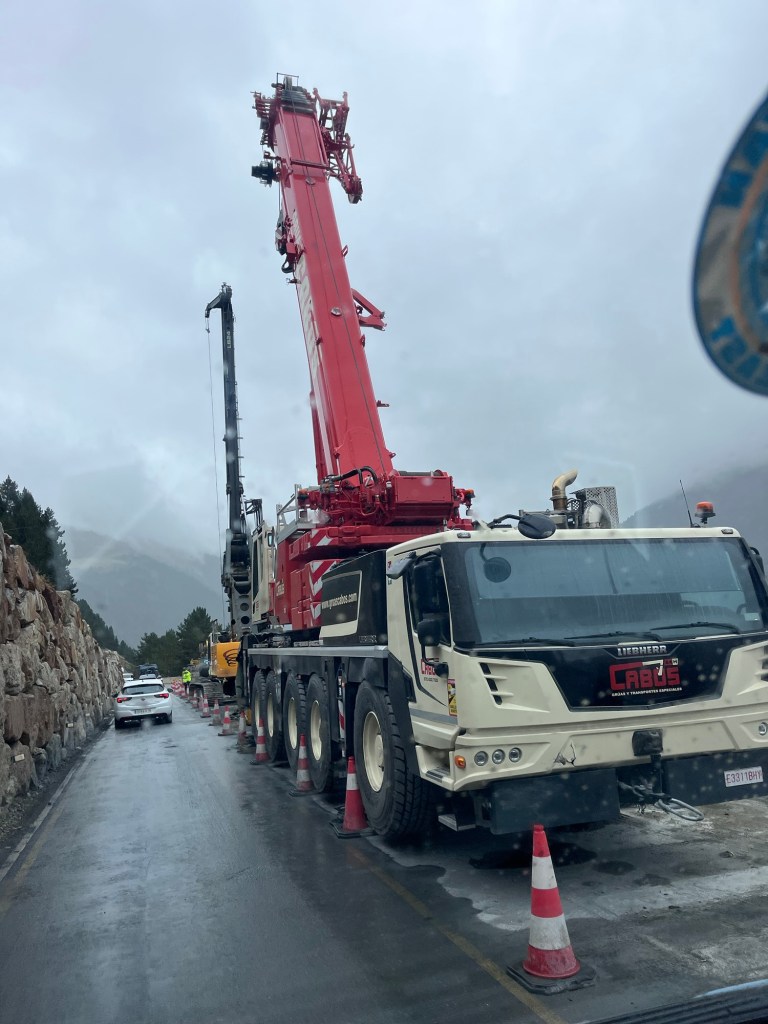
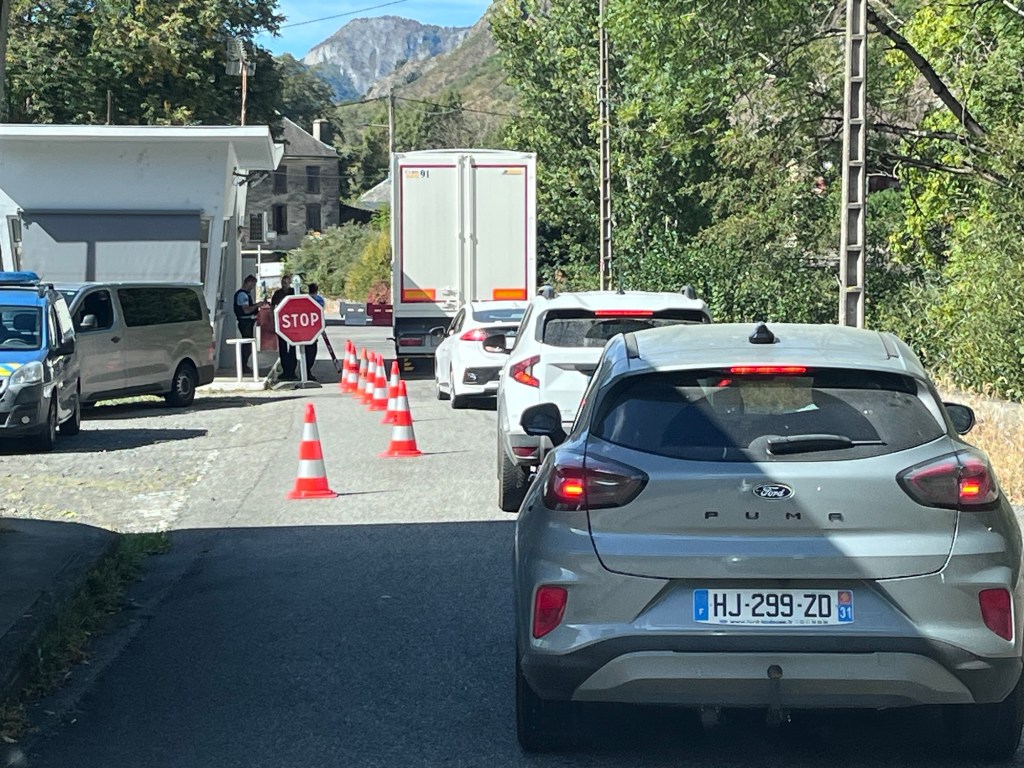
We set off the next morning in rain and low cloud so decided to go the long way round to Lourdes on the French side of the mountains rather than over the top through Andorra. This took us all day as the roads were very windy and we came across some roadworks on the mountain where they stopped the traffic for 45 minutes so they could work and then let it through. At the border with France, French Customs had everyone stop and divert into an inspection channel. Not sure what they were looking for but they weren’t interested in us.

Our destination for the night was Lourdes, renowned as a place of pilgrimage since Bernadette Soubirous had her apparitions. Liz last went there when she was 21 and Jo had never been so we decided to have a look. We found a great aire just above the town for €10 a night (P4N#610778). Electricity and water were extra but we didn’t need them and could empty the toilet cassette for free.

Aire overlooking Lourdes

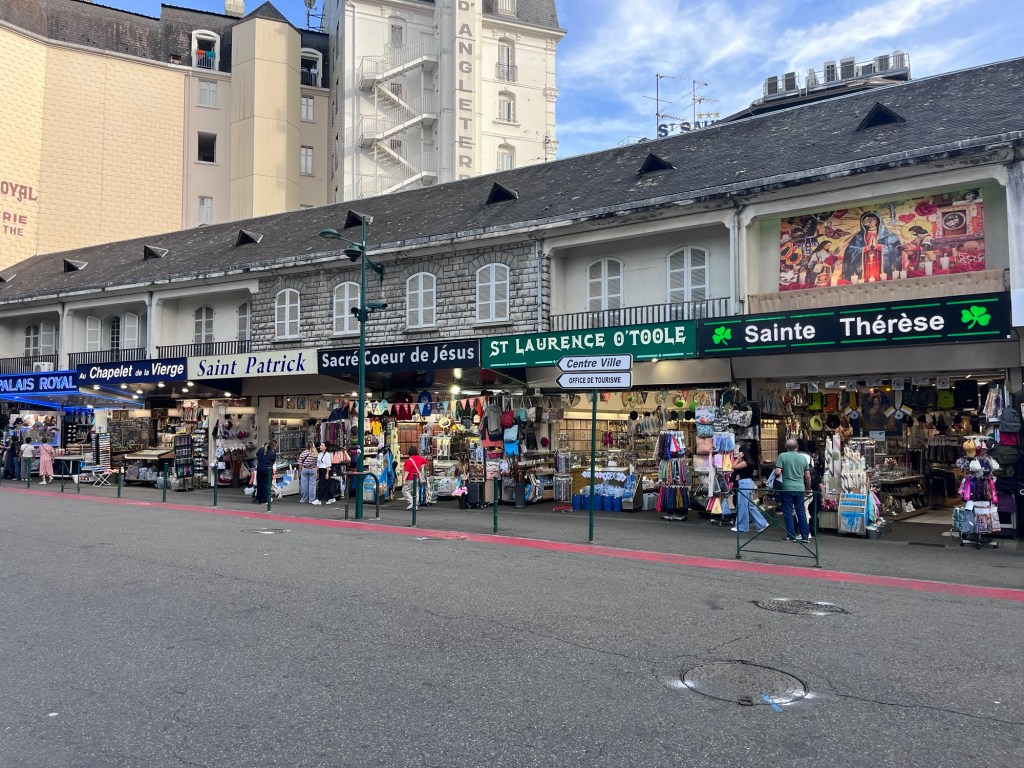
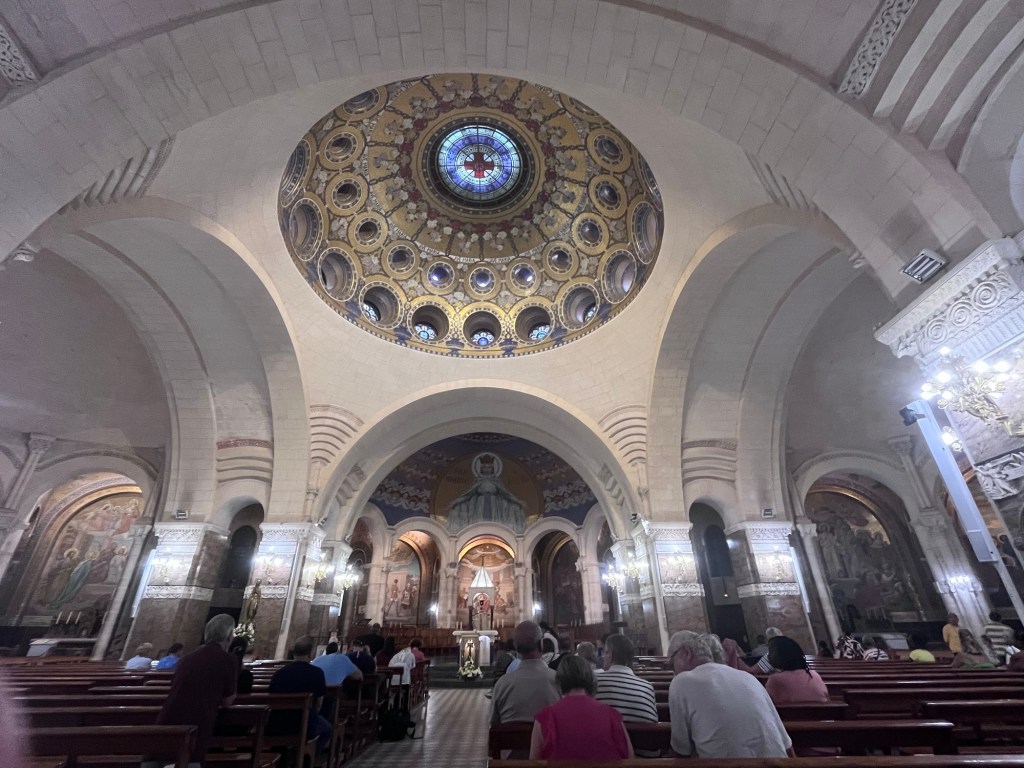
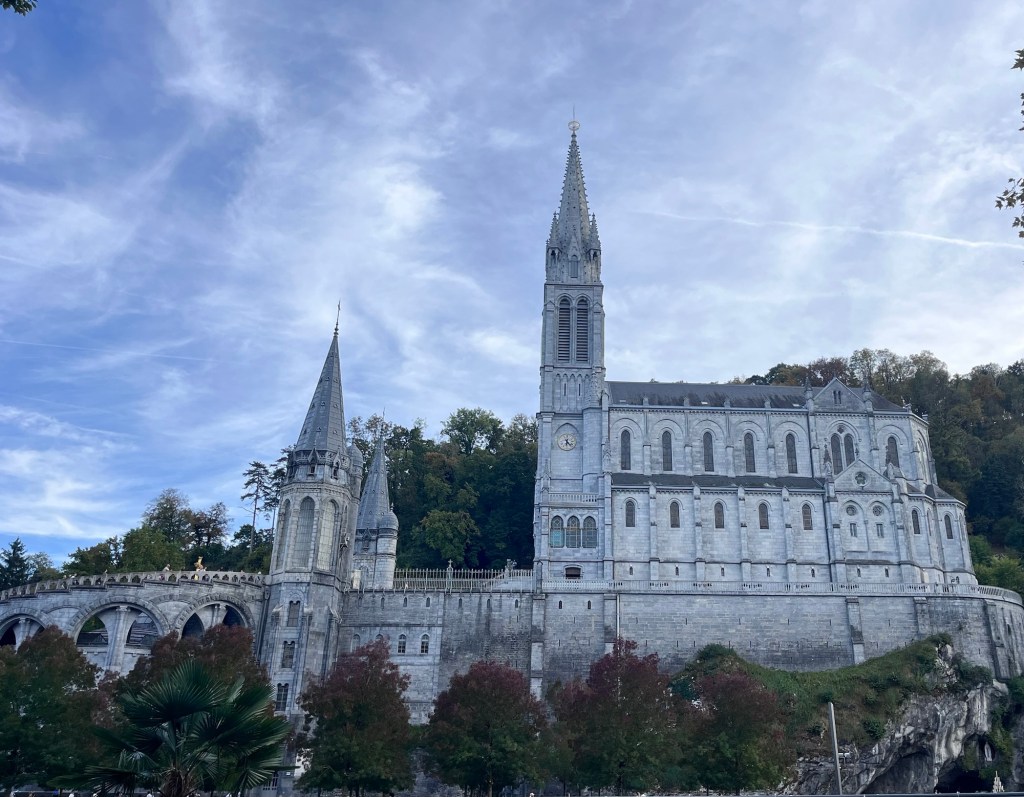
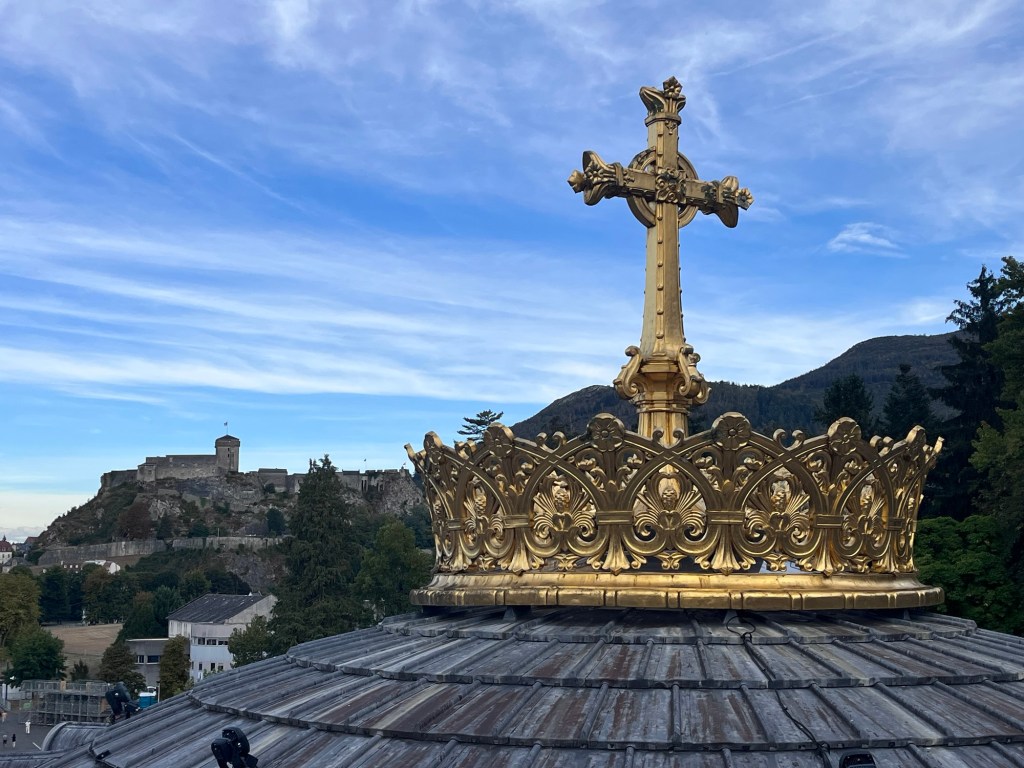
We wandered into town around 18.00 to find that various services had started in the Sanctuaire complex including one outside the grotto where Bernadette had her first apparition. It was very bizarre that you could still visit the grotto whilst a service was going on in front of you. Did mean there were no queues! The town itself has taken full advantage of the millions of pilgrims who travel there each year with a lot of very tacky shops. The Sanctuaire is enormous and very ornate inside showing the wealth of the Catholic Church. Pope Leo had visited a couple of days before so the banners celebrating his visit were still draped everywhere. After 90 minutes of wandering around, we made our way back up to our aire for dinner in the van before a fairly early night.
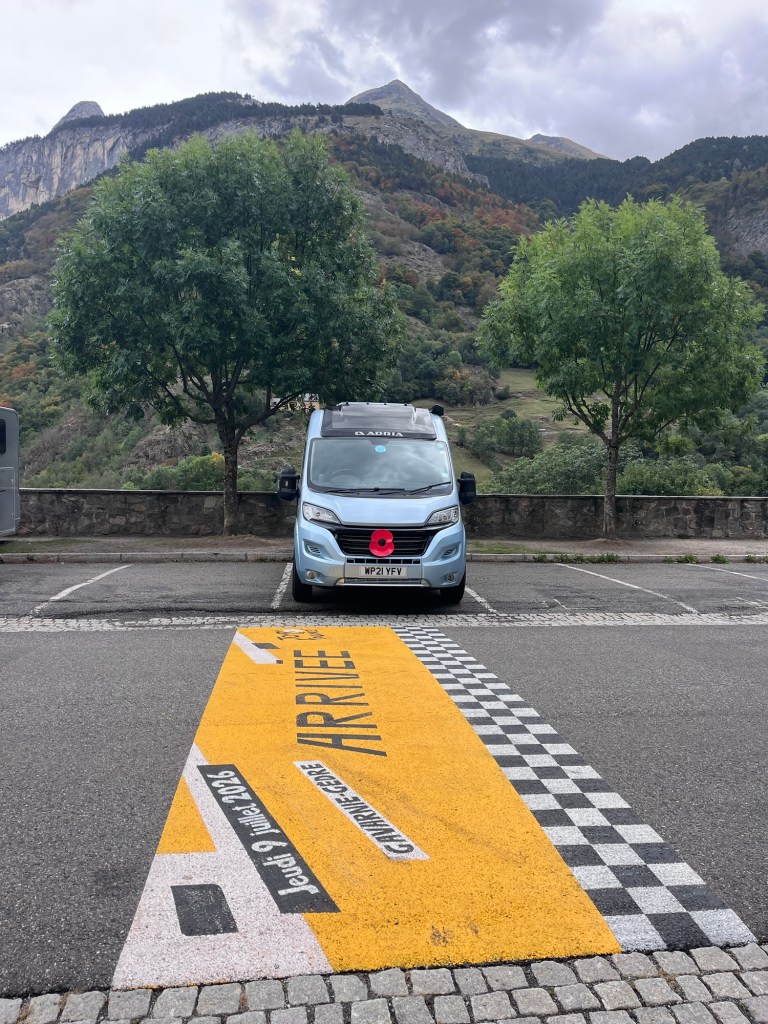
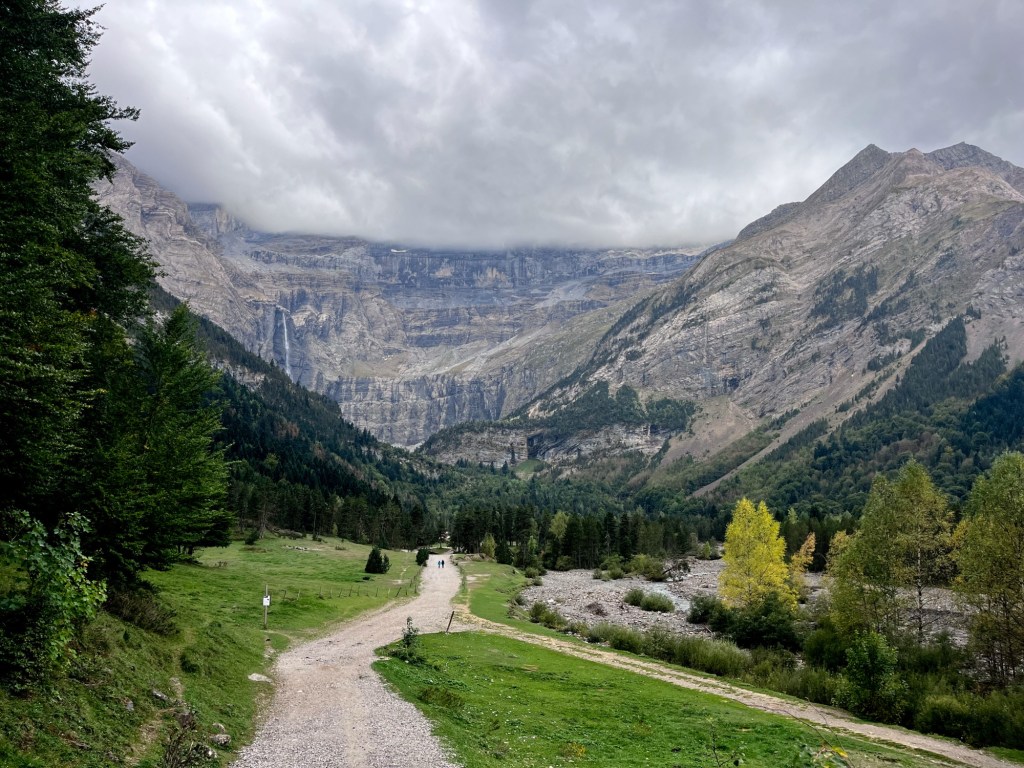
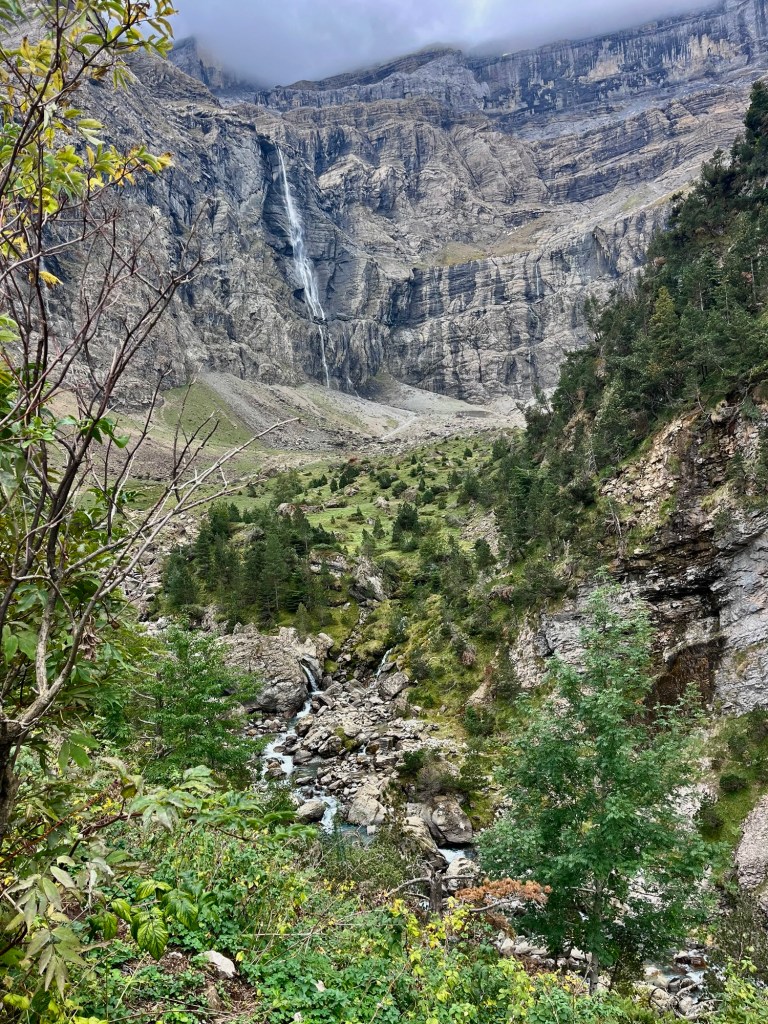
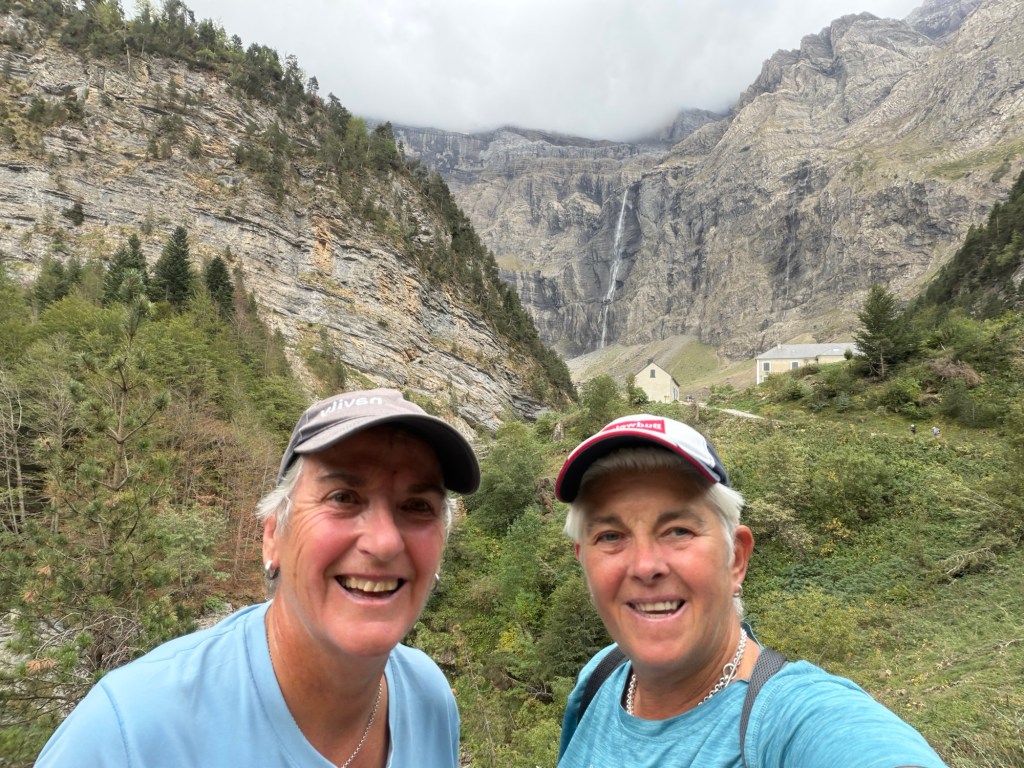
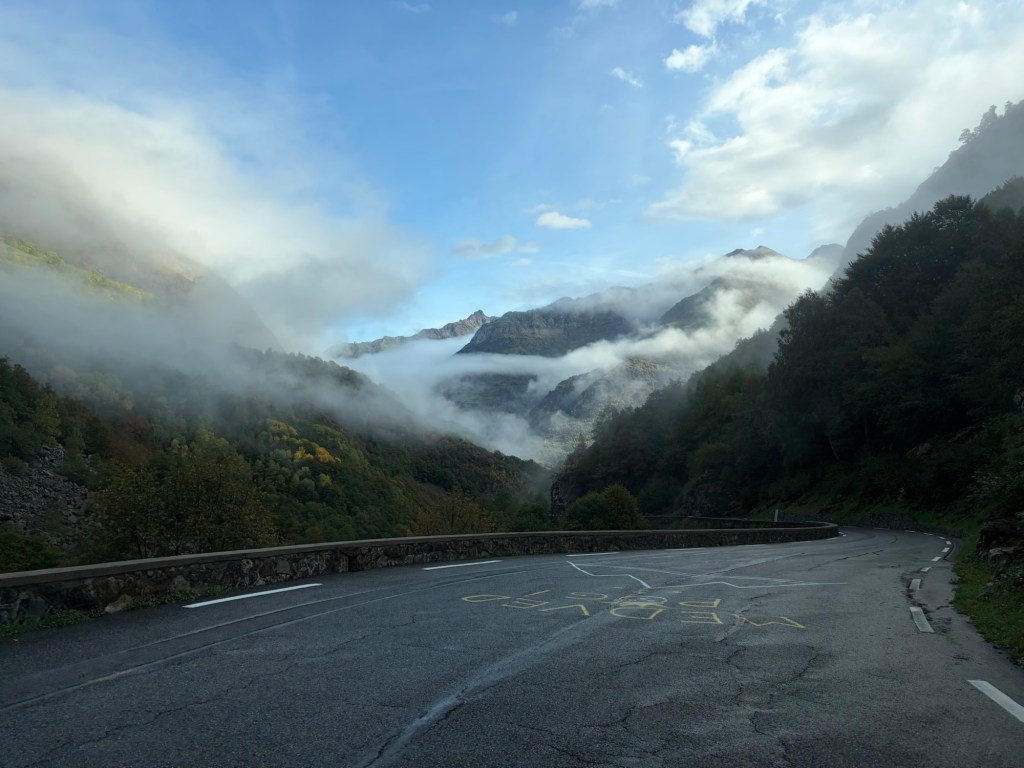
On Wednesday morning we drove south to Gavarnie, around 30 miles, as we wanted to hike the Cirque de Gavarnie. It’s a natural amphitheatre with one of the longest waterfalls in Europe. The town itself is very sweet, high up in the mountains and still fairly busy despite the late season. We were able to park just outside the village for €10 for 24 hours. No facilities but there was an aire about 3km away that you could use to empty your waste water. We parked on the finish line of the 6th stage of this year’s Tour de France. The incline was hard enough in a van! We made sandwiches to take with us on our 3 hour hike and once the rain had stopped started off. It’s probably just under two hours there, all uphill, and just over an hour back. The scenery was spectacular and the photos don’t do it justice. It rained on and off the whole time but that didn’t dampen our enjoyment. On the way back, we passed a shack where a local farmer was selling his Bebris sheep’s cheese. After tasting it we had to buy some. Once back in the van, the heavens really did open but we were cosily tucked up in Dora so we didn’t mind.
Miles since last blog: 330

Miles this trip: 1,938

Dali Triangle

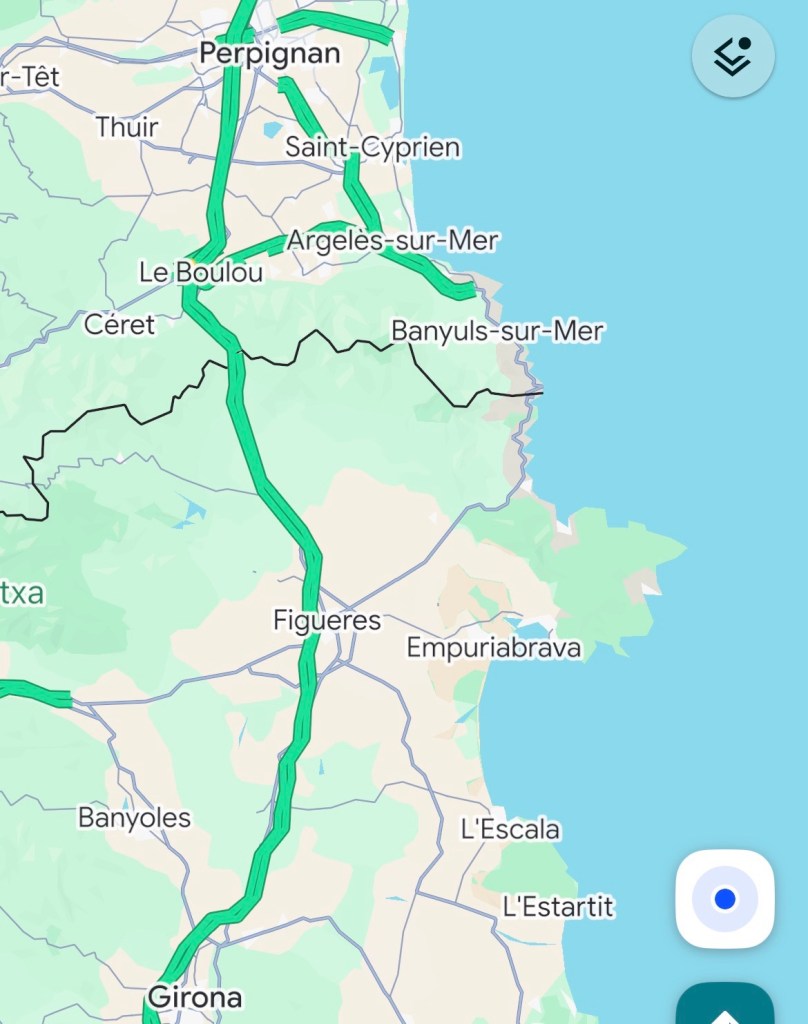
We left our aire in Carcassonne on Friday, September 25 at 10.30 to drive the 120 miles to our next stop near Figueres in Spain. This should have been a simple enough task even though it would take three hours as we object to paying the French tolls. The campsite we were heading for was set in an olive grove with 9,000 organic chickens. They shut for lunch between 14.30 and 16.00 so leaving ourselves four hours should have been plenty of time.

We needed to do a shop and the only decent supermarkets we found were hyper markets that took ten minutes to find the entrance in the shopping centre let alone find our way around the store. Next, we wanted to get more diesel but in France it is astronomically expensive at around €2.40 per litre. However, we had found one provider, Total Energies, who had capped the price at €2.25 so we were on the hunt to find one that still had some fuel left. We found one near Lezignan but the queues were long. We decided it shouldn’t take too much time as there were several pumps. What we hadn’t reckoned on was the fact that everyone had to prepay for fuel before filling up and then go and get their receipt before driving off. It took the best part of 30 minutes! To add insult to injury, we found more Total garages en route with no queue and that fuel in Spain was much cheaper anyway! To be fair, we needed some fuel to get there but certainly not a full tank. Consequently, we didn’t arrive until 14.45 but our friends, Sue and Sheila had already checked us in.
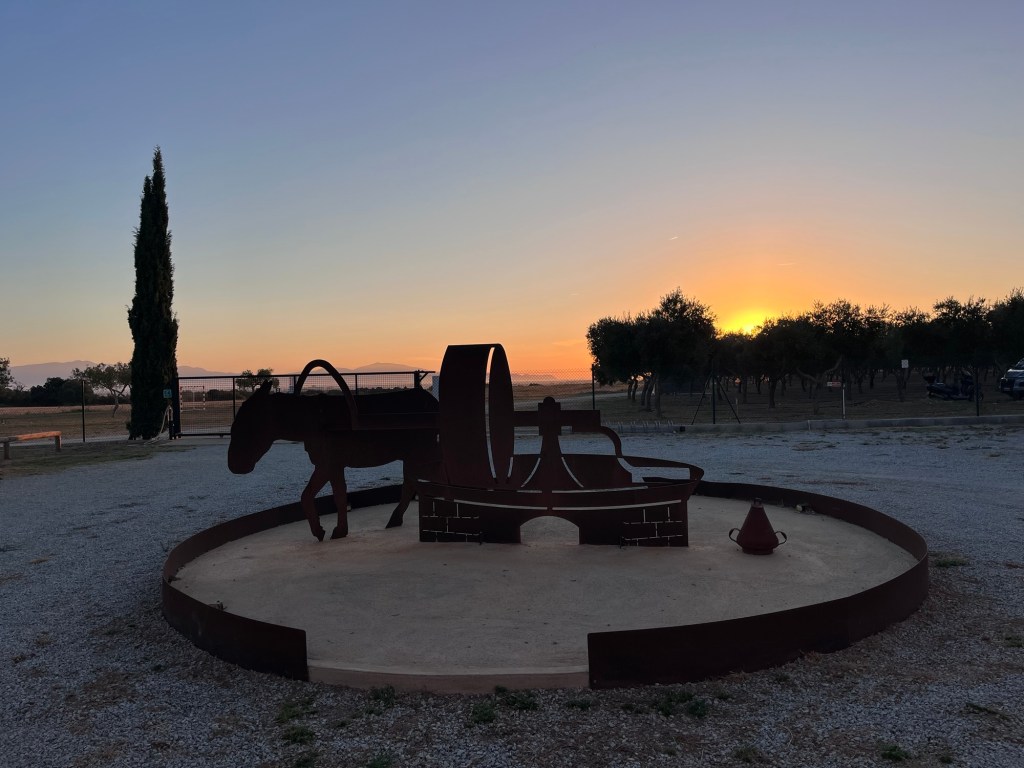
The campsite was delightful, nestled amongst the olive groves with only the farm animal noises. We spent a very lazy afternoon in hammocks chilling and watching the world go by before a pasta and pesto dinner al fresco.
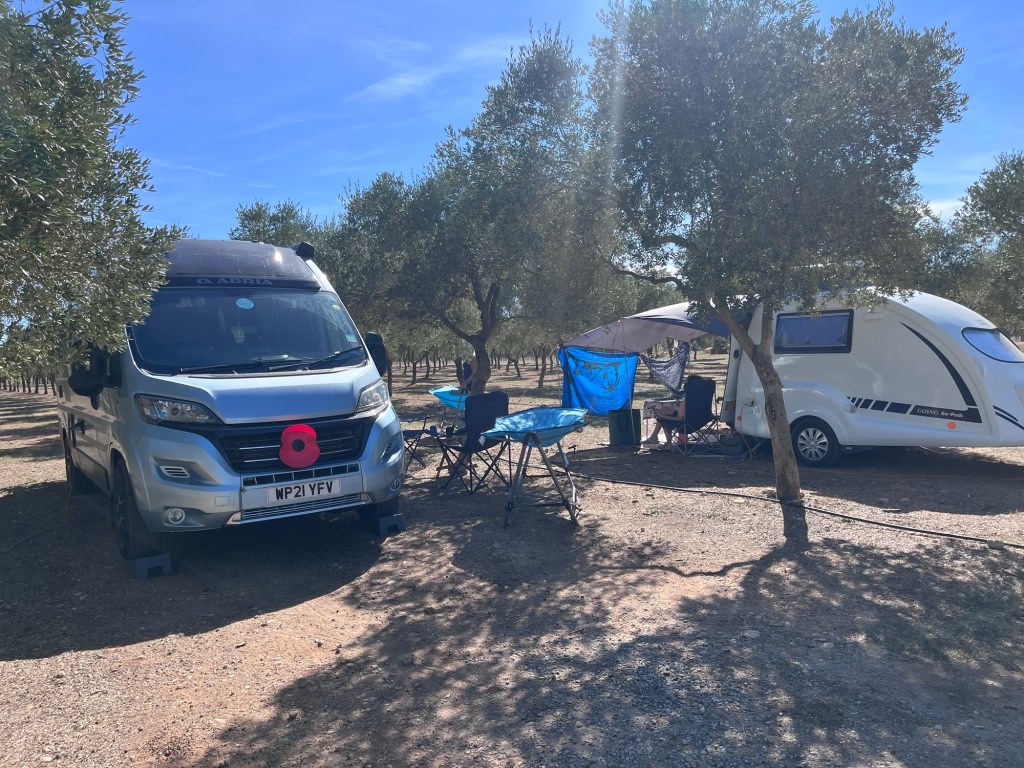
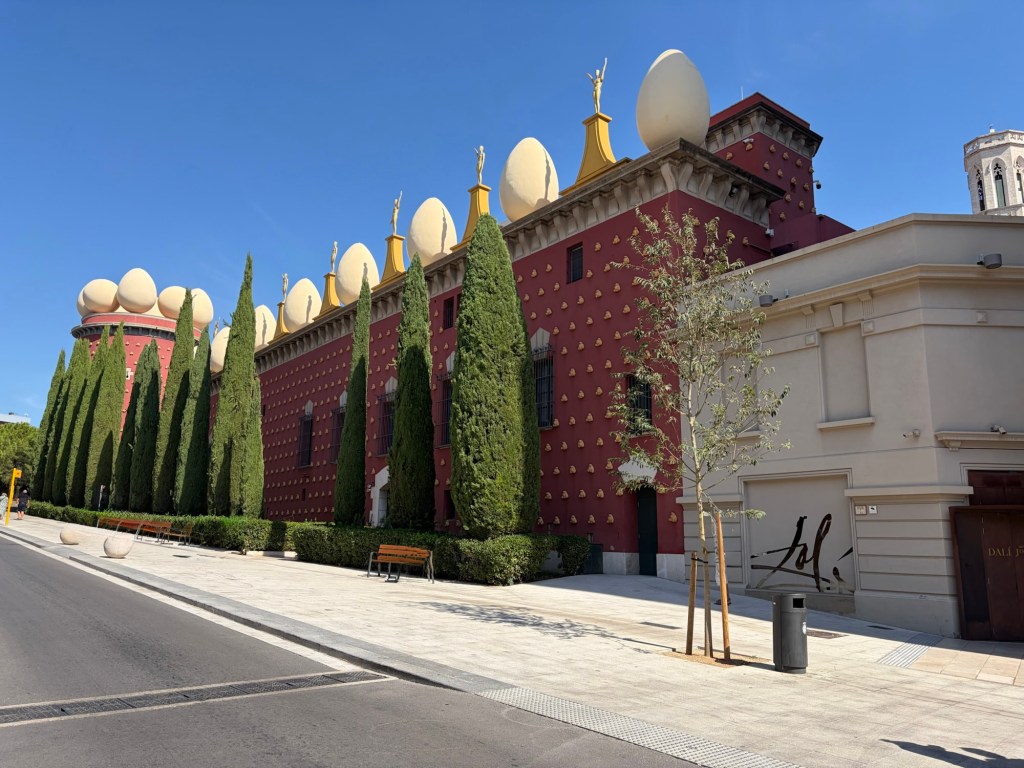
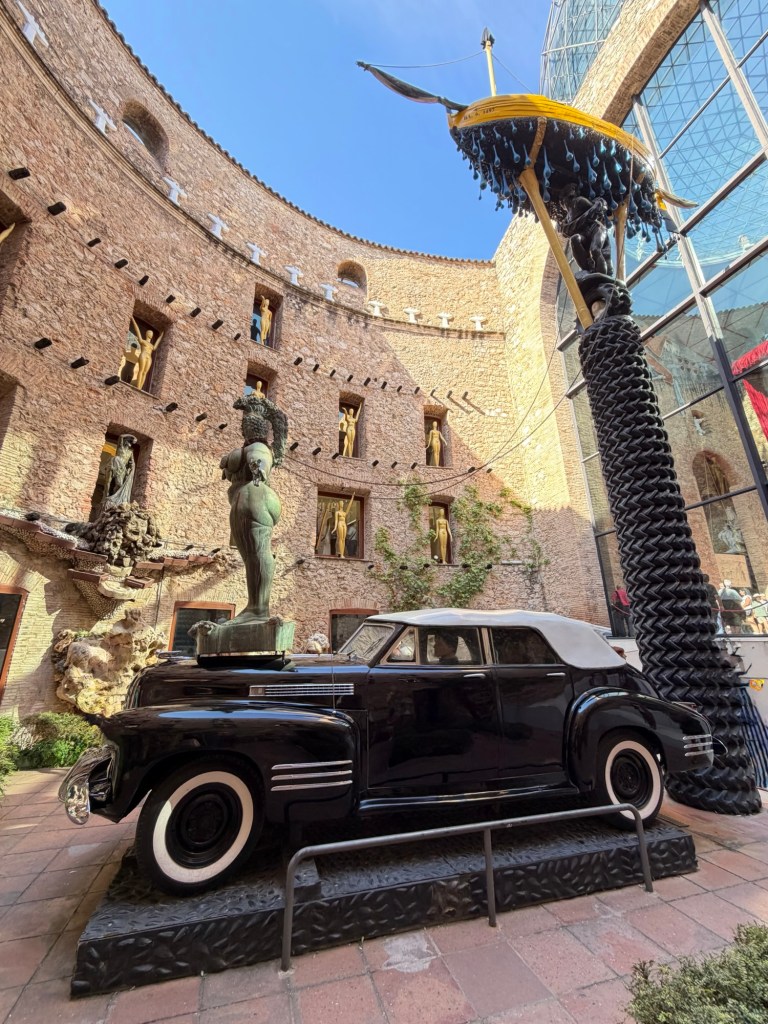
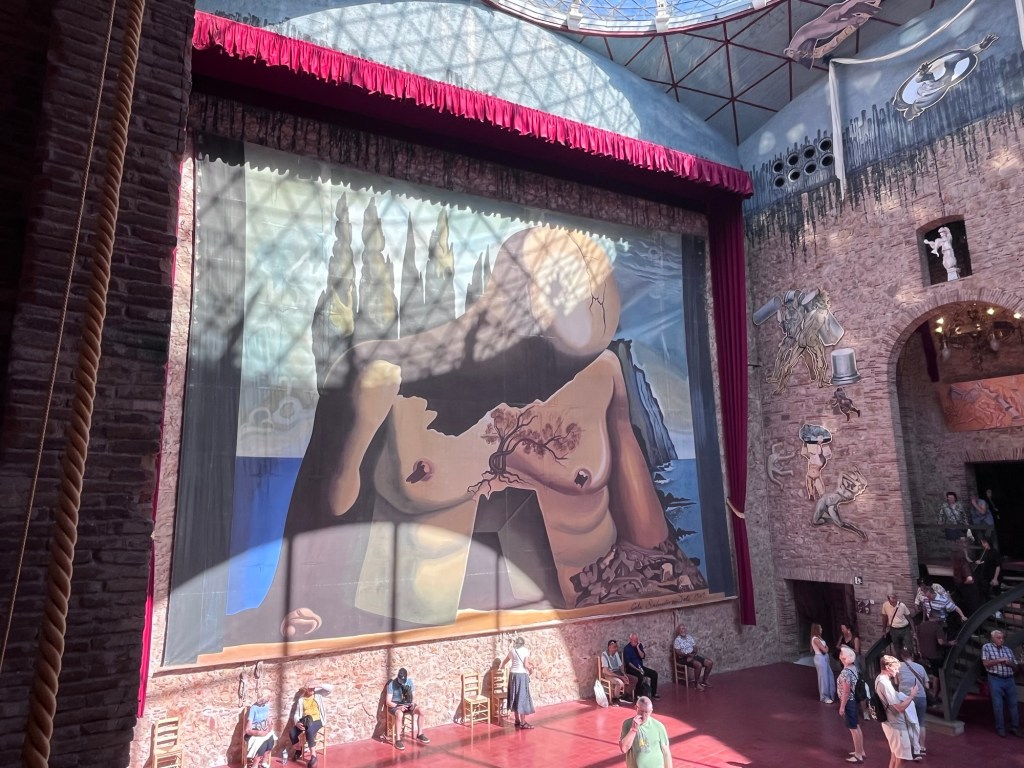
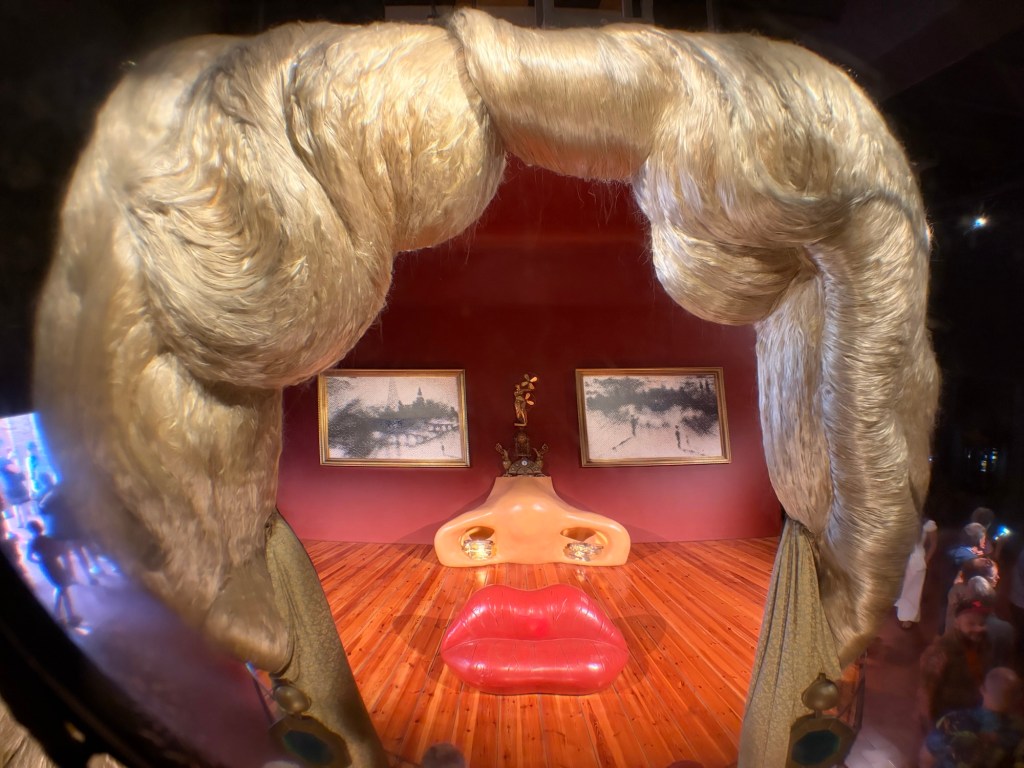
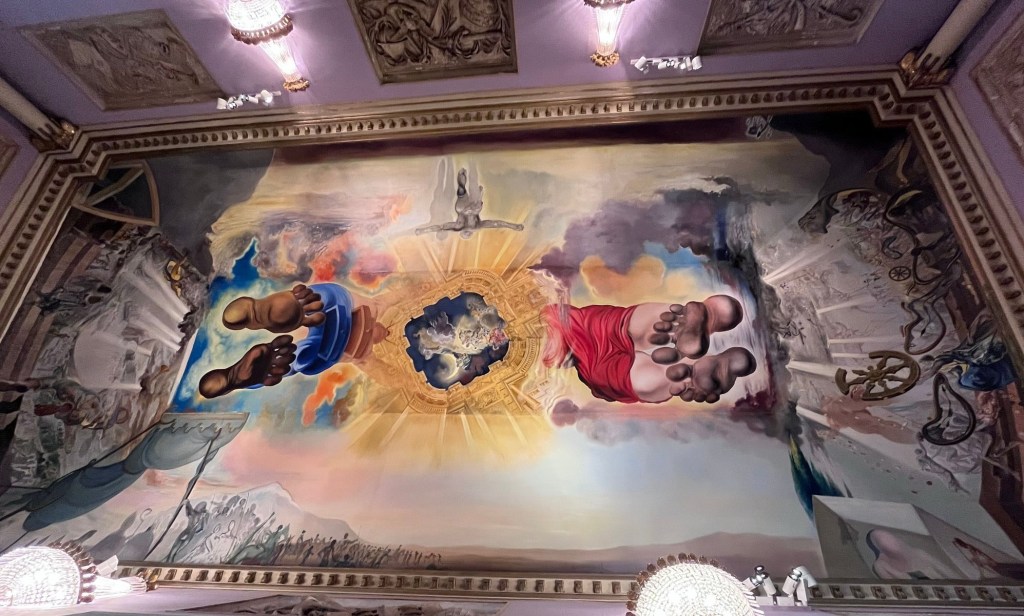
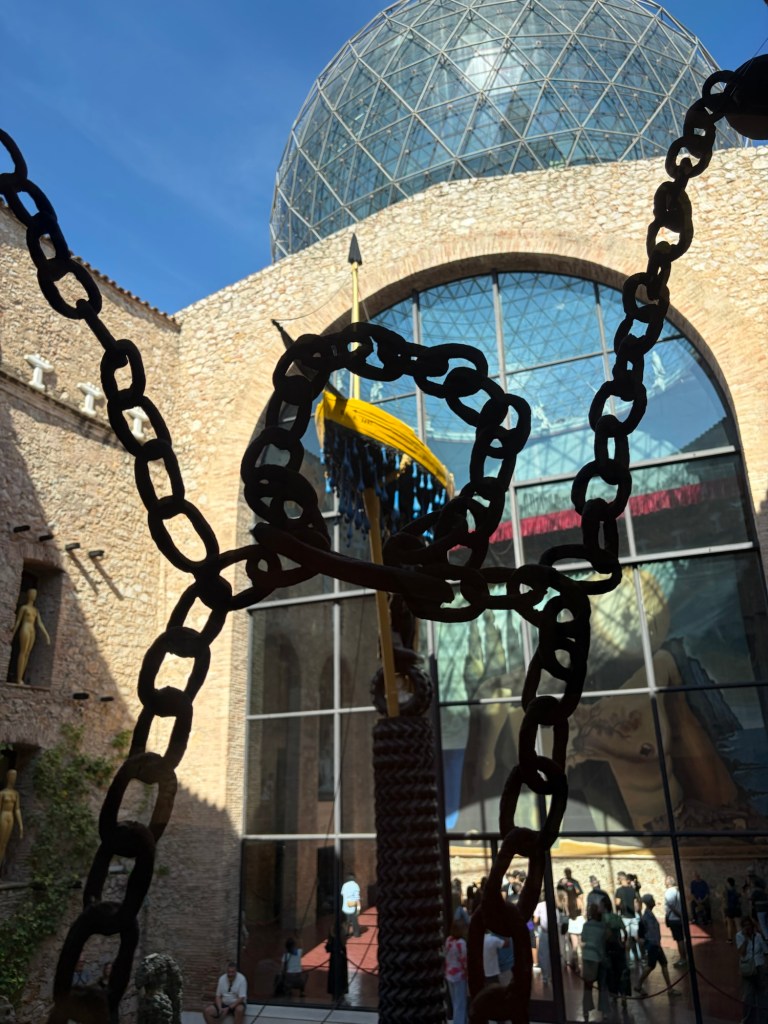
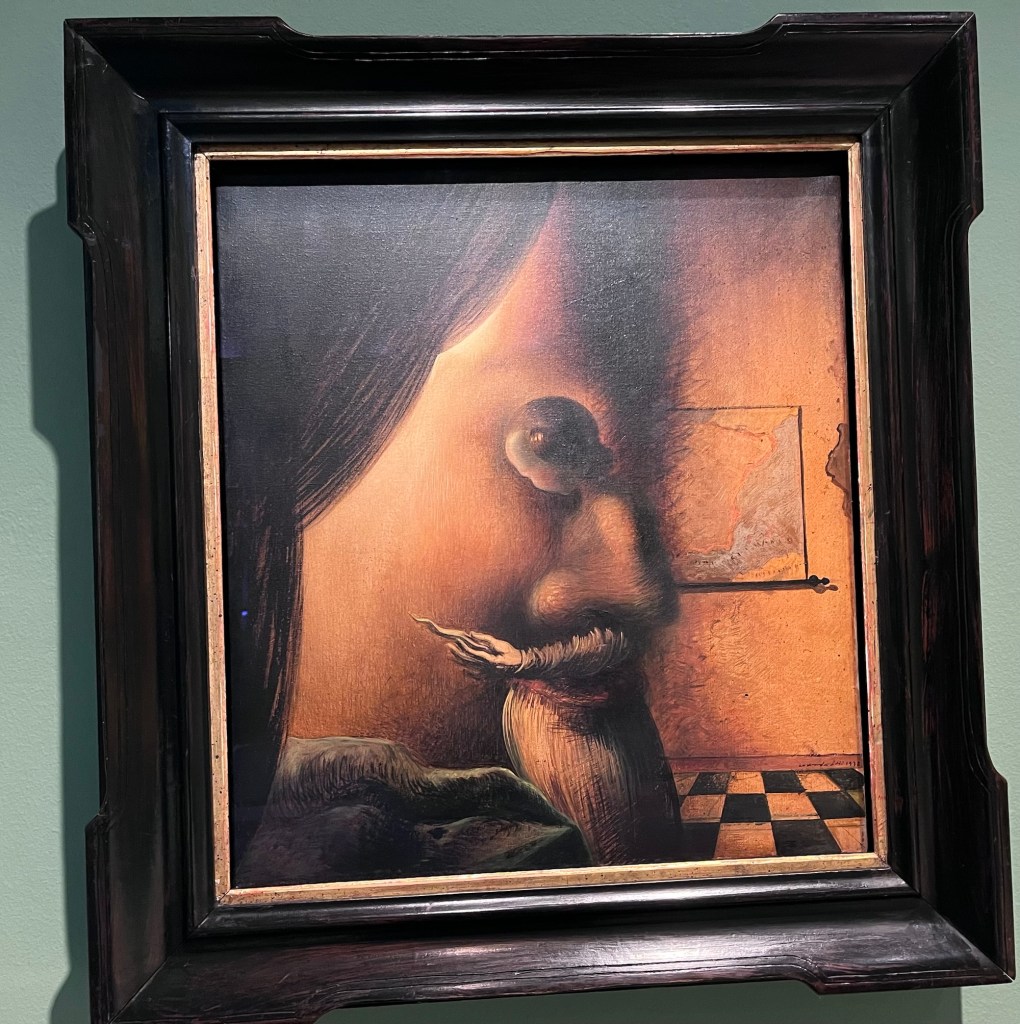
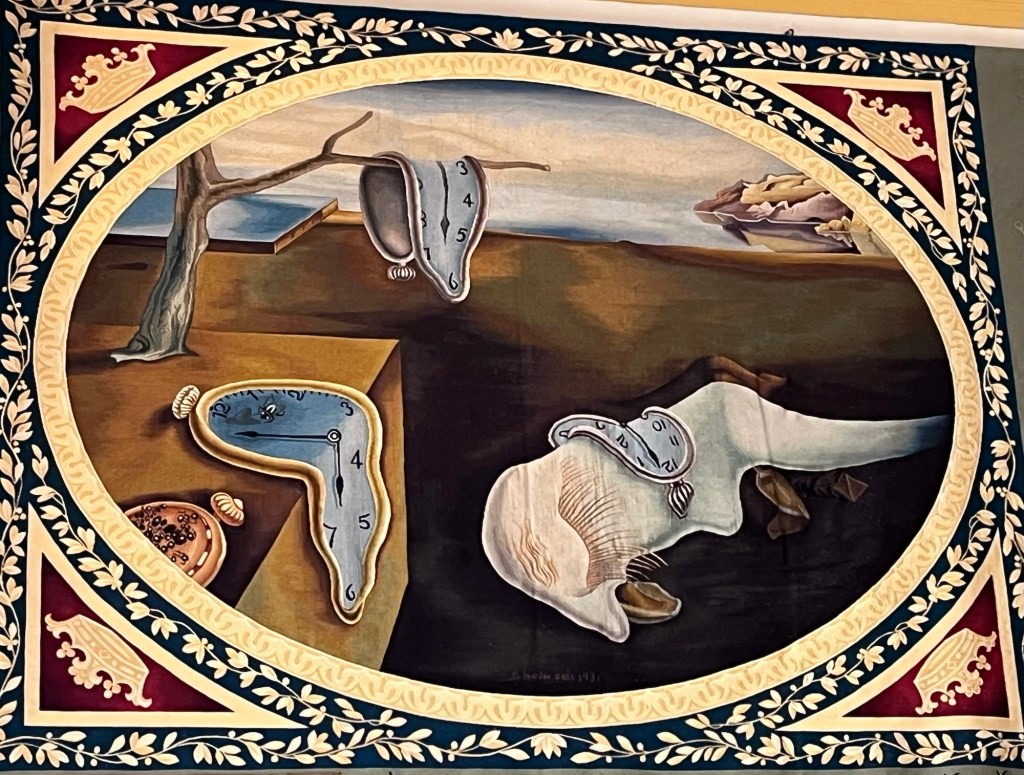
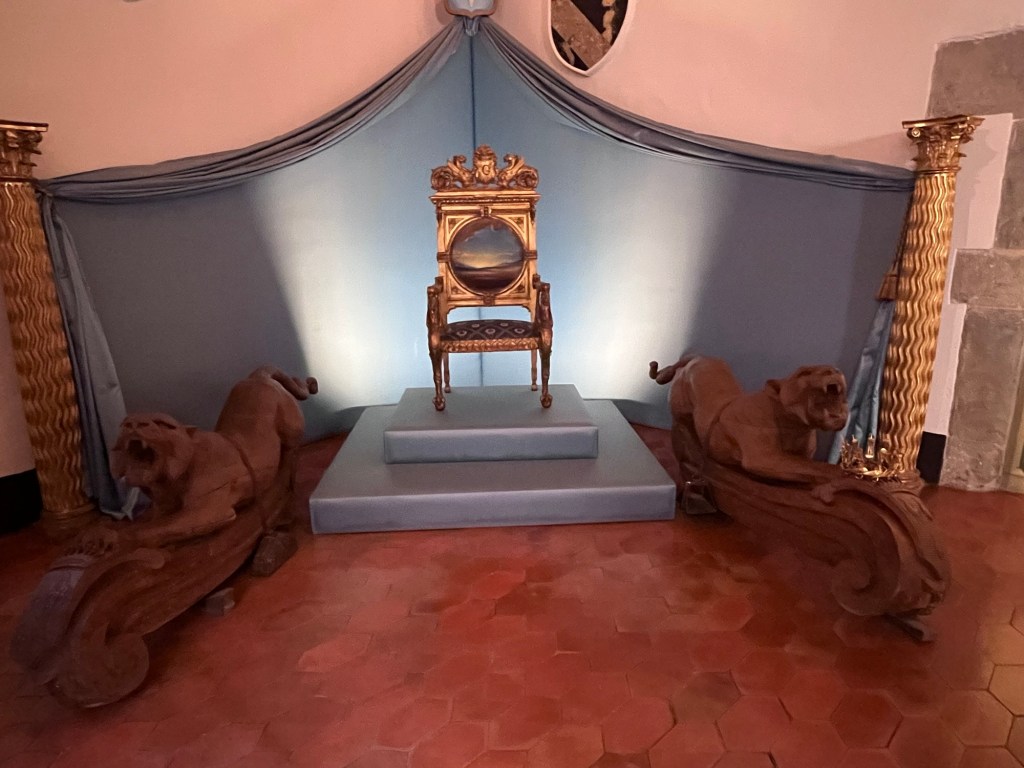
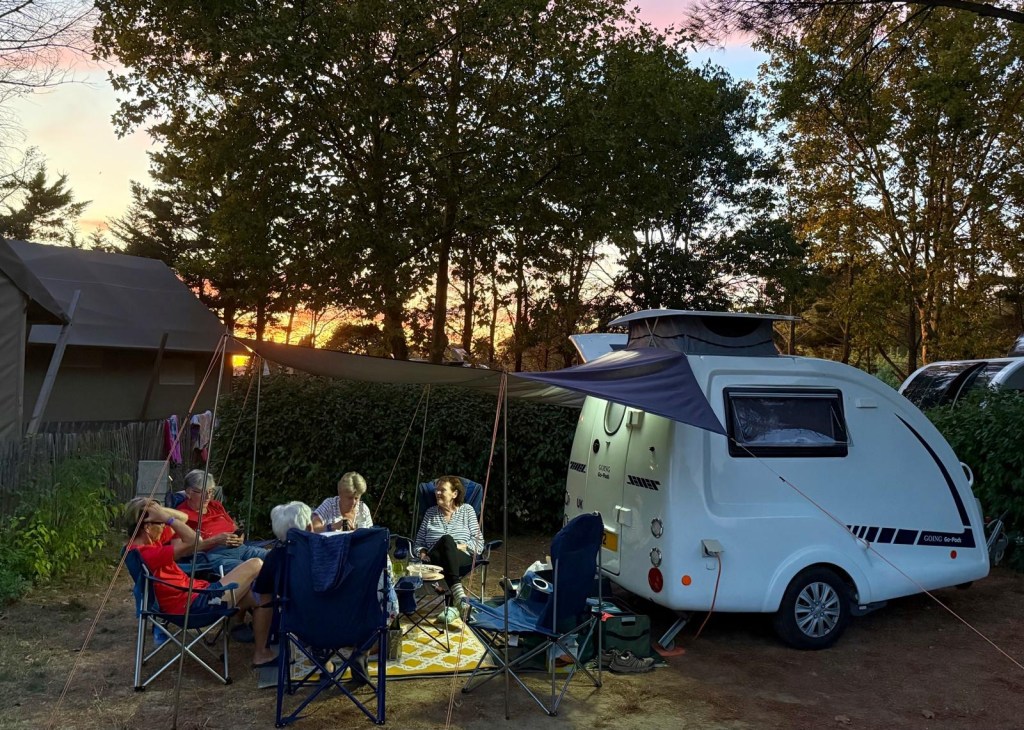
The reason we had chosen Agricola Siurana (P4N#385095) was the fact that a) it was an olive farm and b) only 20 minutes from Figueres and the Dali Theatre Museum. So, Saturday morning we left the campsite around 10.00 to get to the museum on plenty of time for our timed entry. As Sheila and Sue have a Go Pod (think very small caravan) we were able to have the luxury of being in a car! The museum was interesting and confusing at the same time. There wasn’t much in the way of information unless you’d prebooked a guide so it was fairly chaotic.

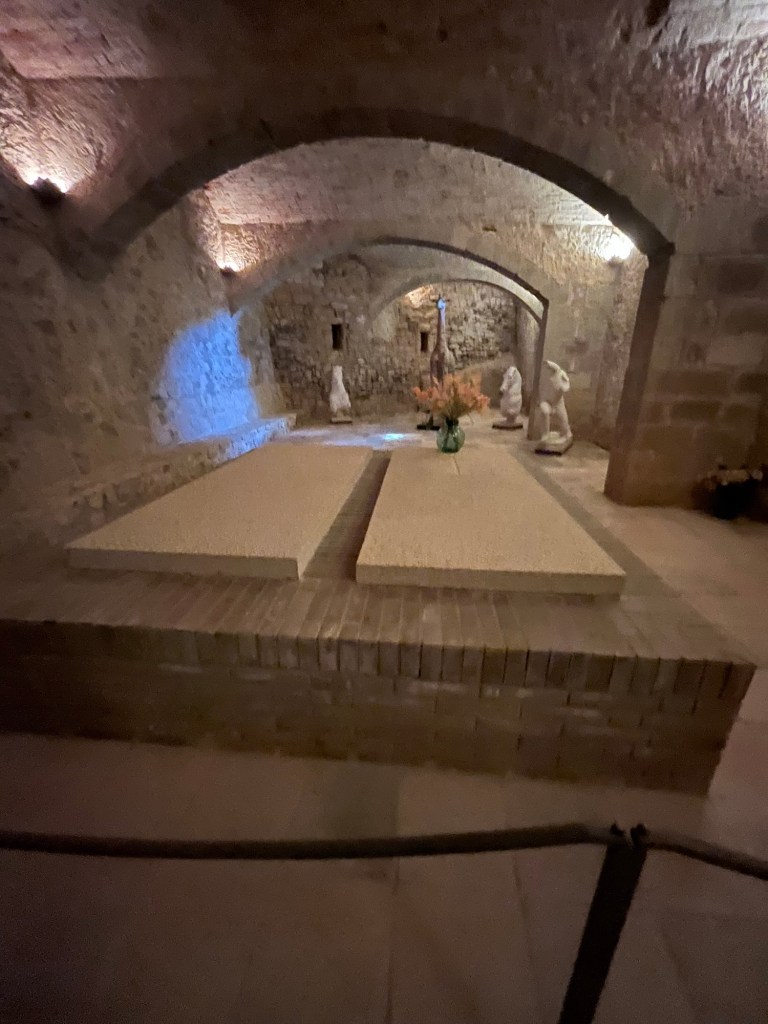
After that we meandered the streets and went in search of his birthplace, a house about ten minutes walk away. This was much quieter and gave a real insight into the man himself. It was a very immersive experience with doors opening and closing automatically to guide you through. Back to the campsite for a spot of lunch before making our way to Gala’s Castle in Pubol. Gala, Dali’s wife, was a talented writer herself but also an astute businesswoman who understood celebrity, marketing and PR. She ran his career and also had a huge input into his many projects from film sets to advertisements. Fascinating. A lovely BBQ to end the day.

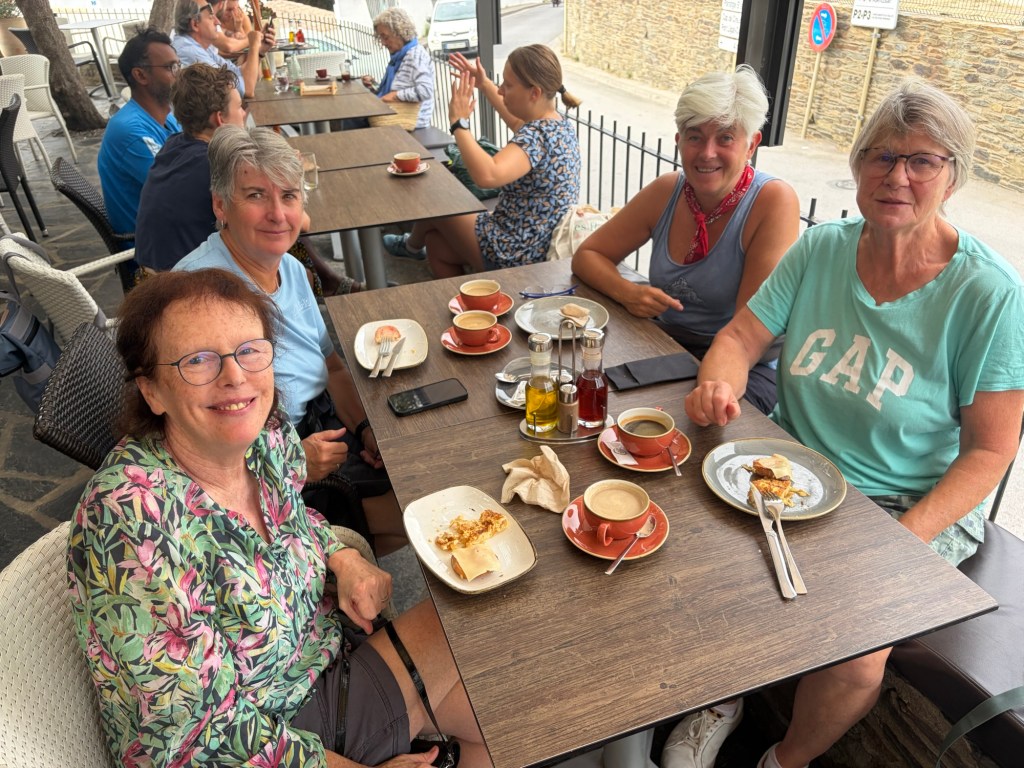
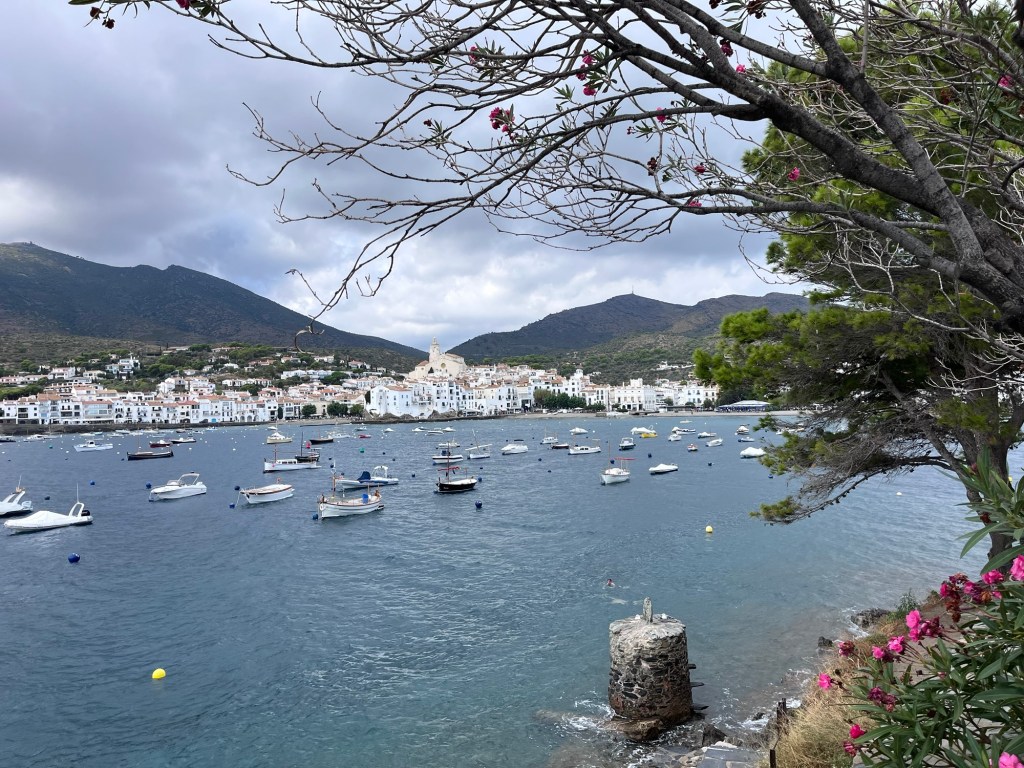
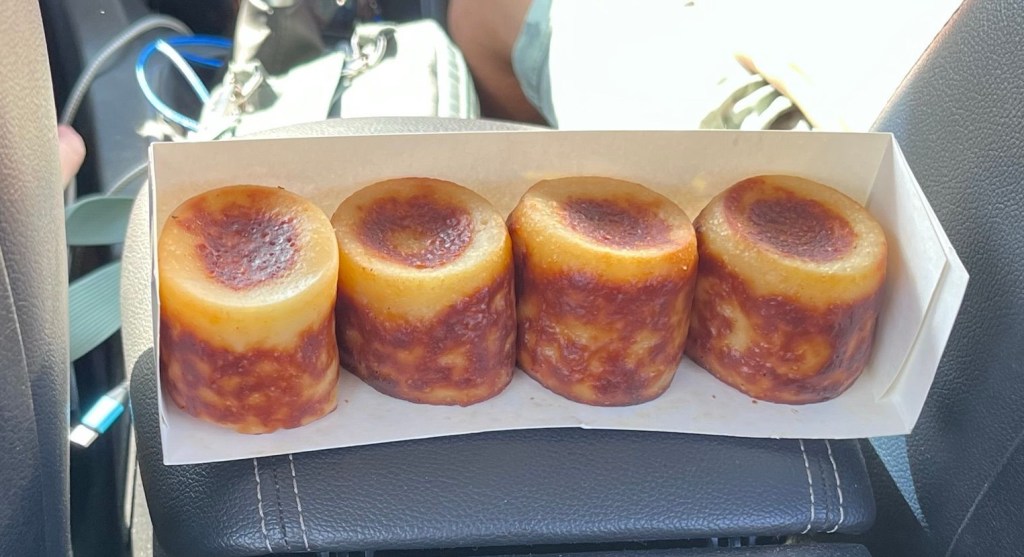
The following day we drove to the town of Cadaques on the peninsula. About an hour away though only 50km but over mountain passes and windy roads. Cadaques itself was a lovely place and we spent several hours wandering around it after a lovely brunch at a local cafe. Whilst there, we came across a local delicacy called Millasson, which is a Spanish version of Pastel de Nata.

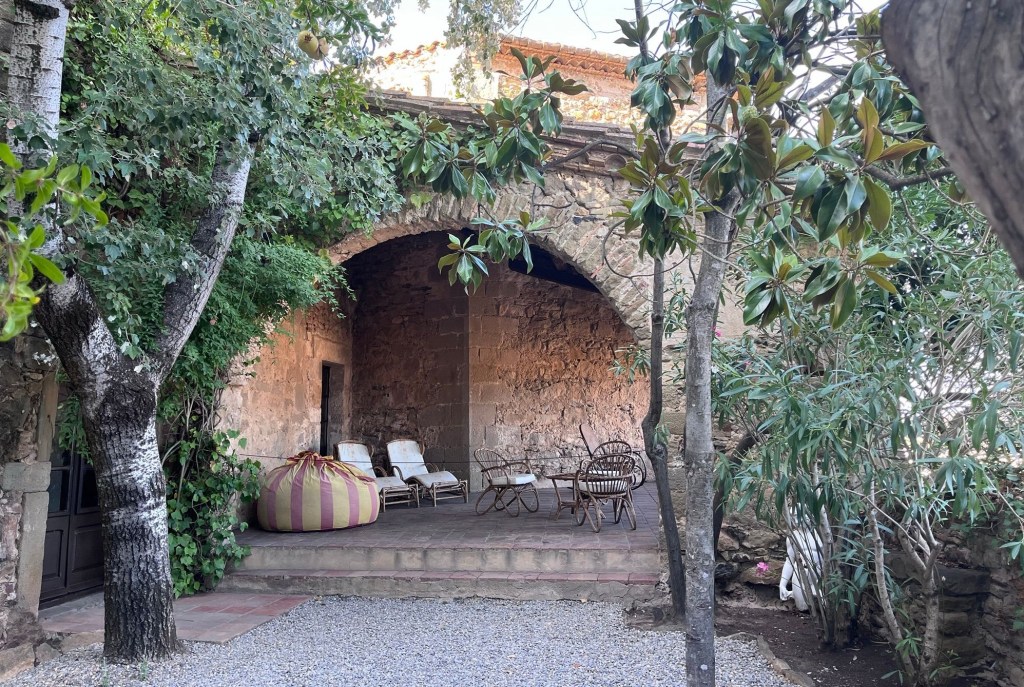
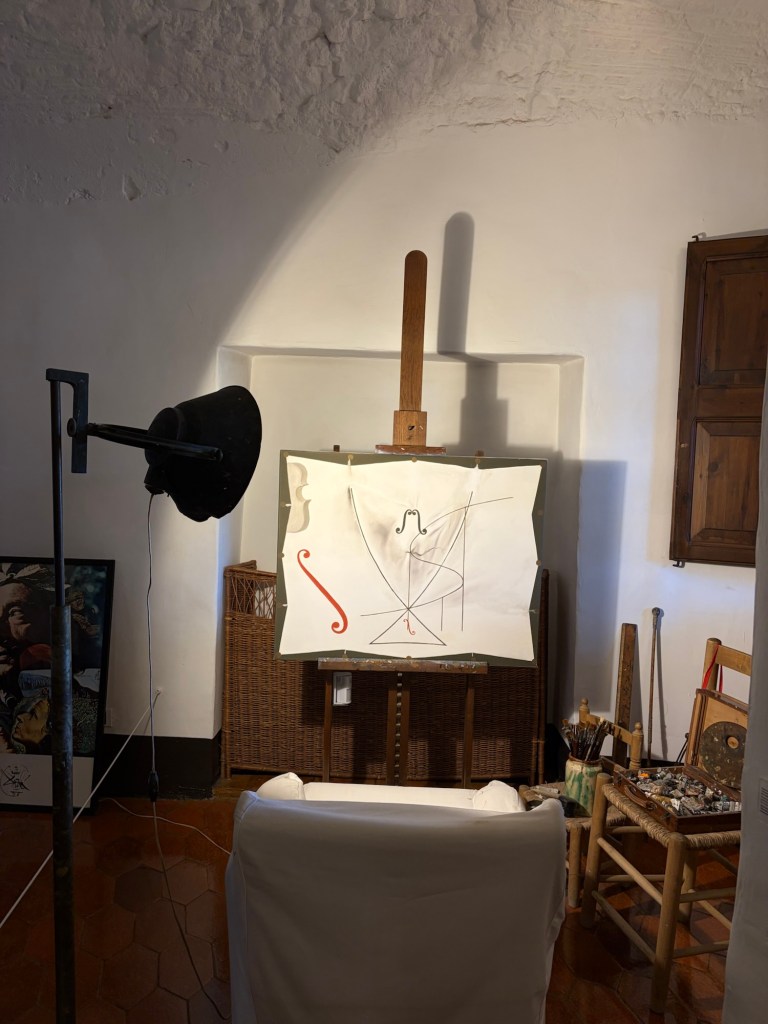
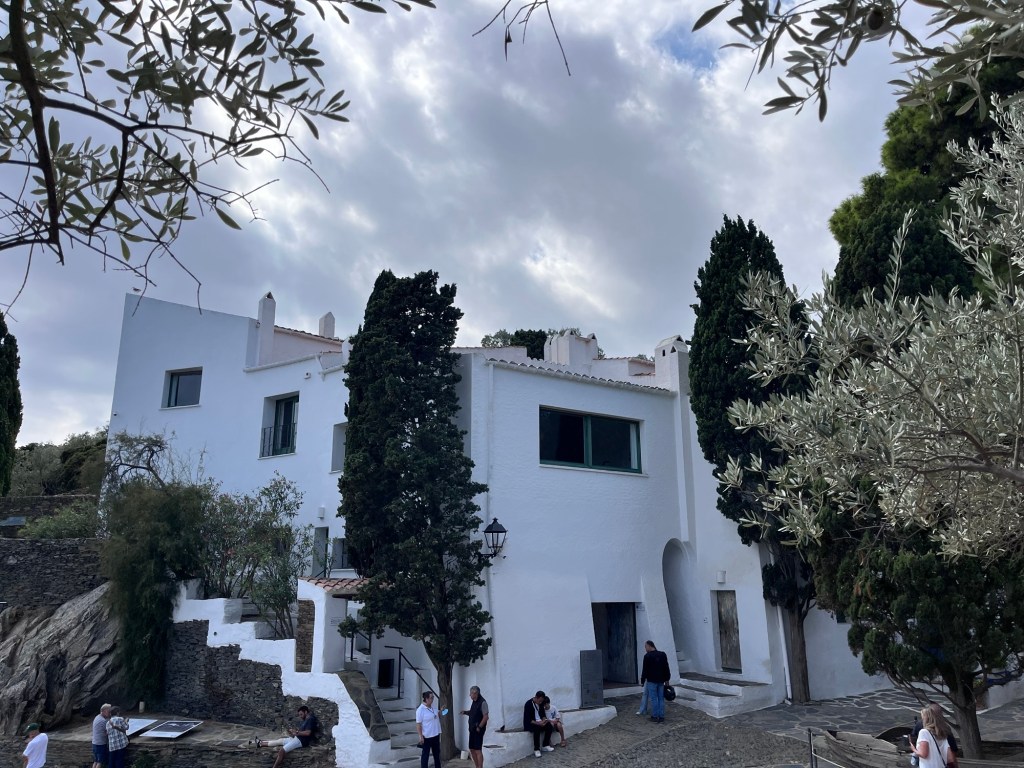
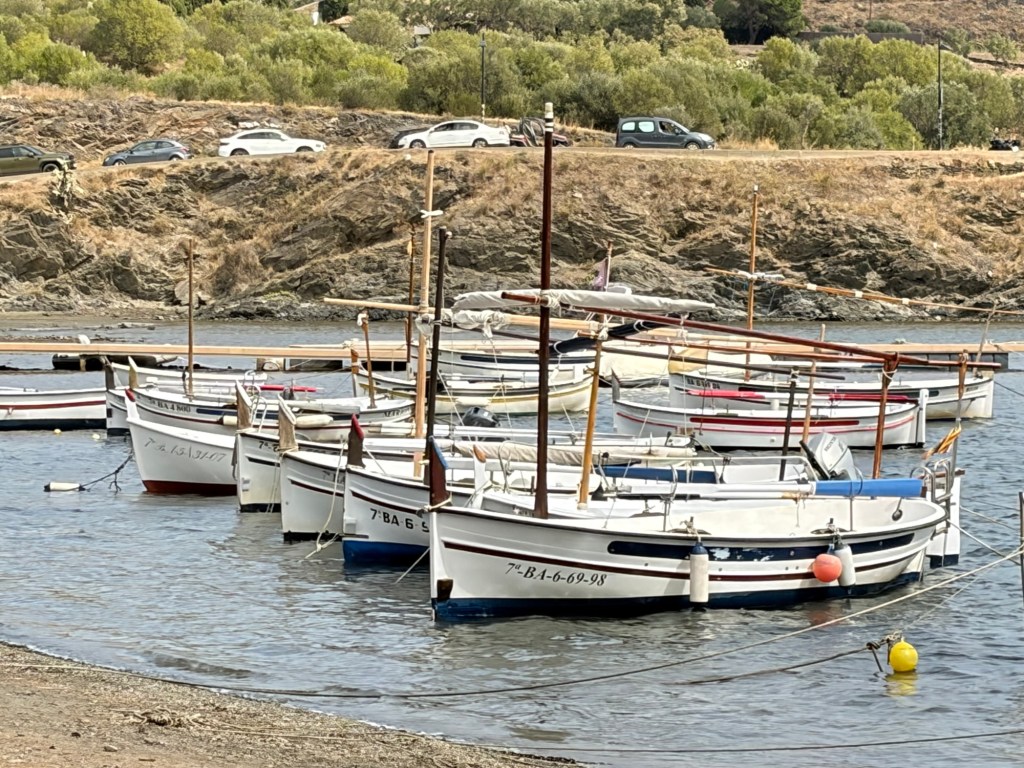
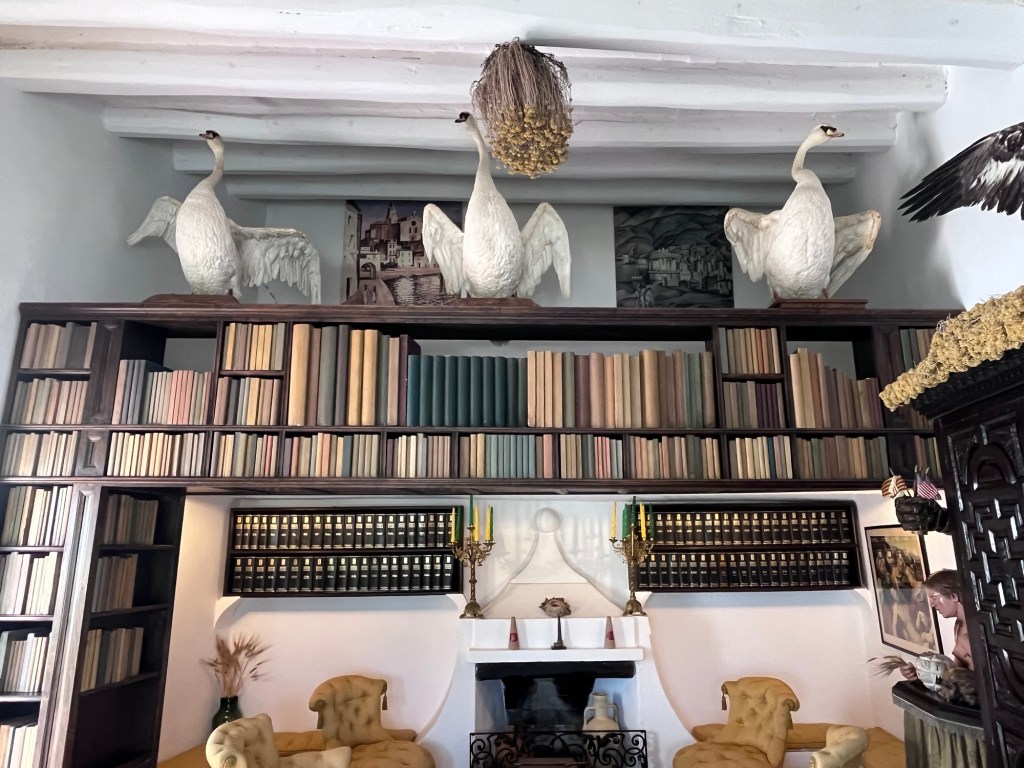
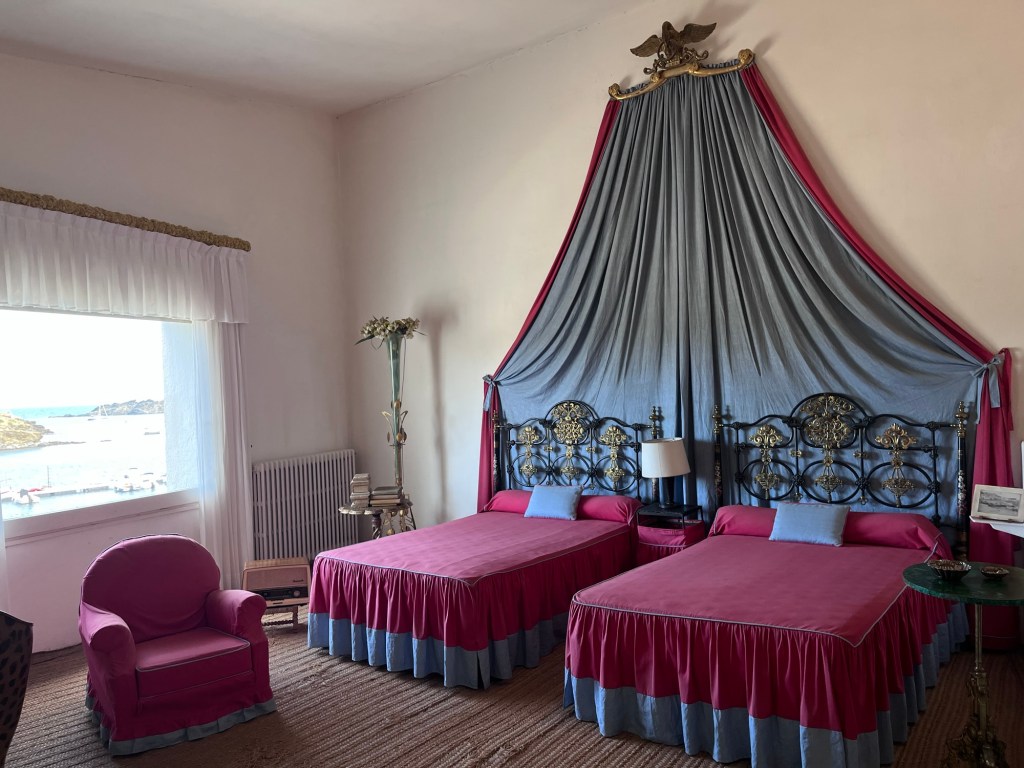
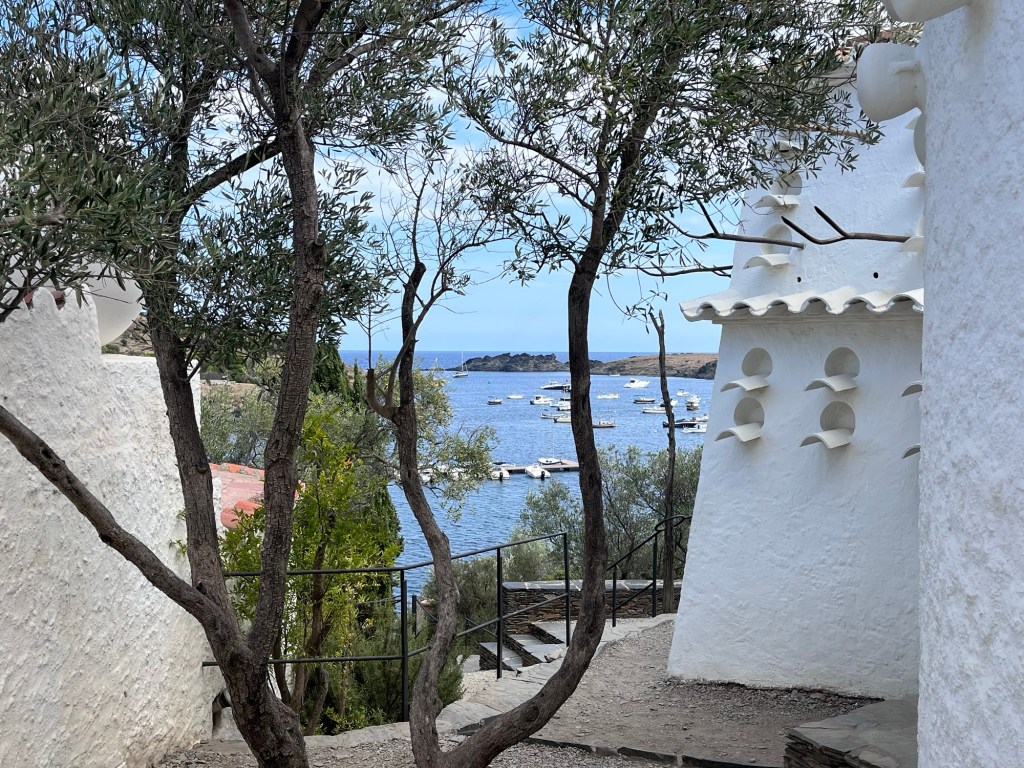
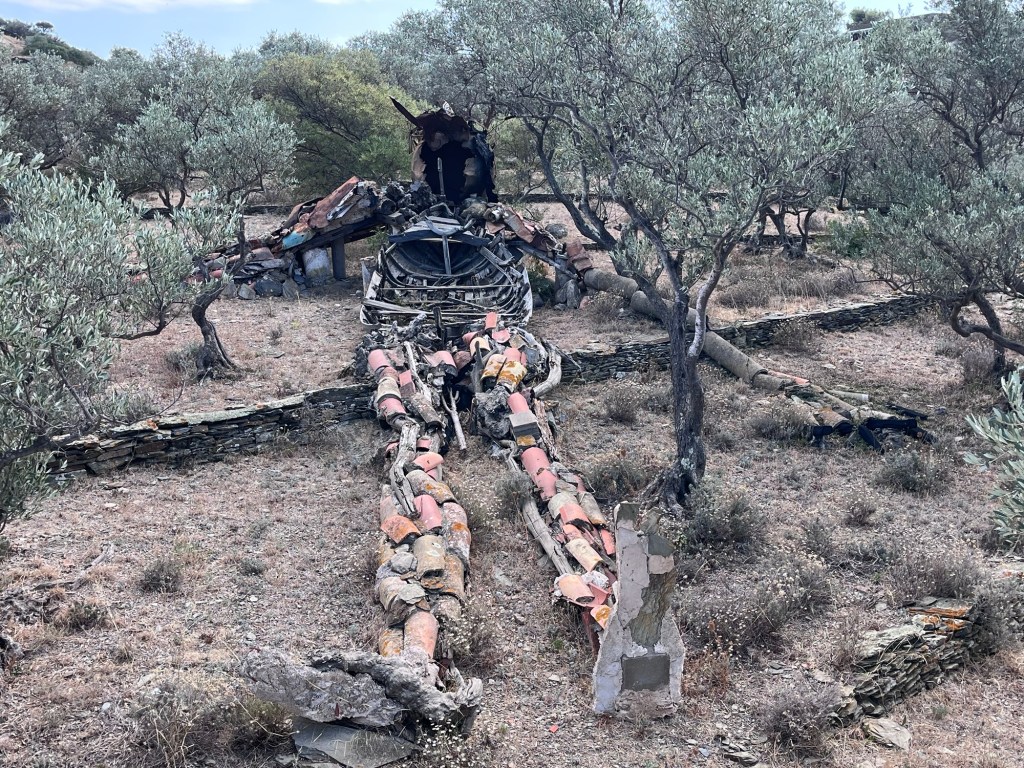
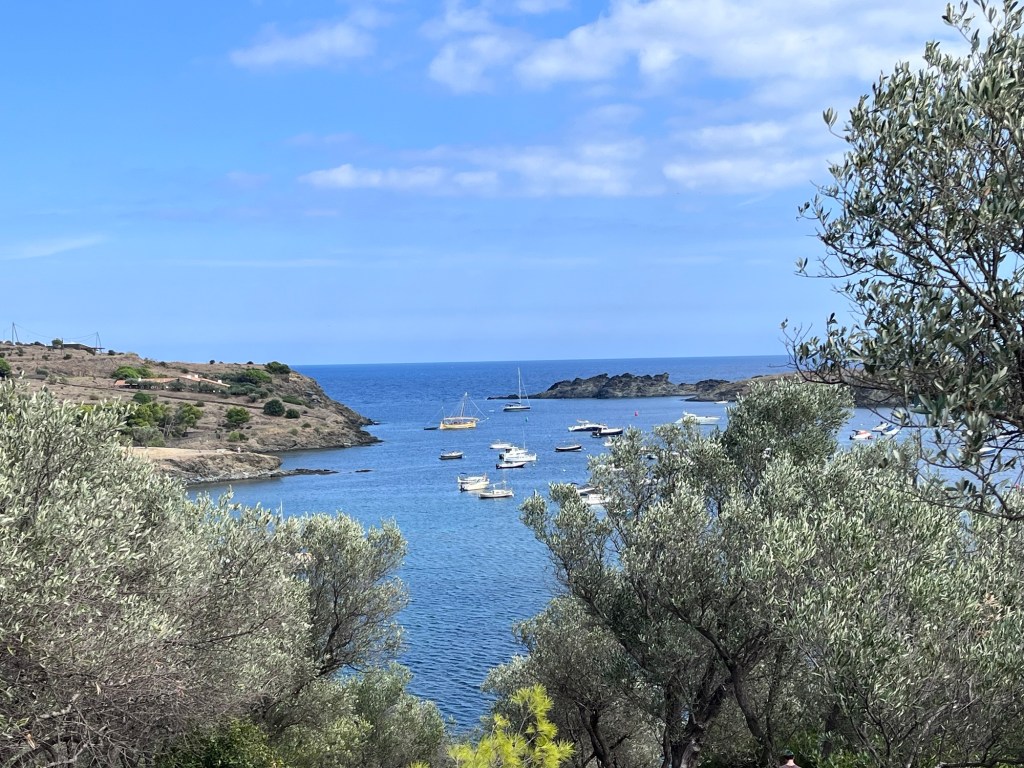
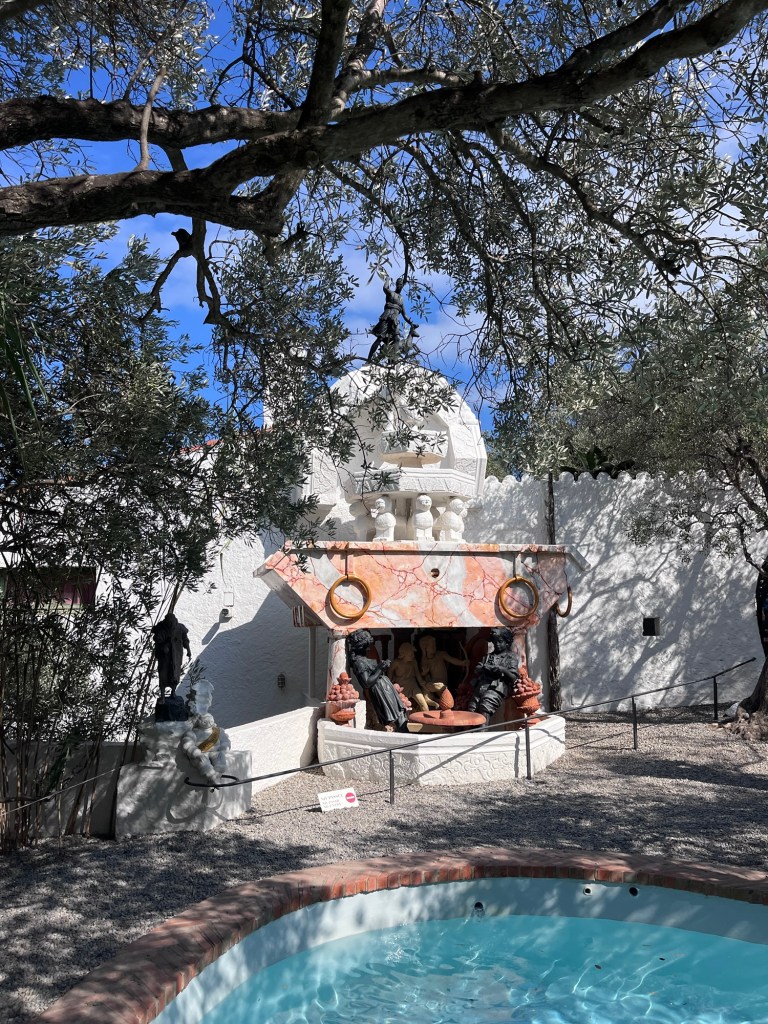
Portlligat, a short walk from Cadaques. was where Dali had his home for many years. They converted fishermen’s cottages overlooking the bay there. A truly gorgeous setting. Dali had a mirror angled over the bay so that he could see the sunrise from his bed and claimed to be the first Spaniard to see it as Portlligat is on the eastern tip of NE Spain.

Back to the campsite for another lovely BBQ.

Miles since last blog: 120

Miles this trip: 1,608

Rocamadour to Carcassonne

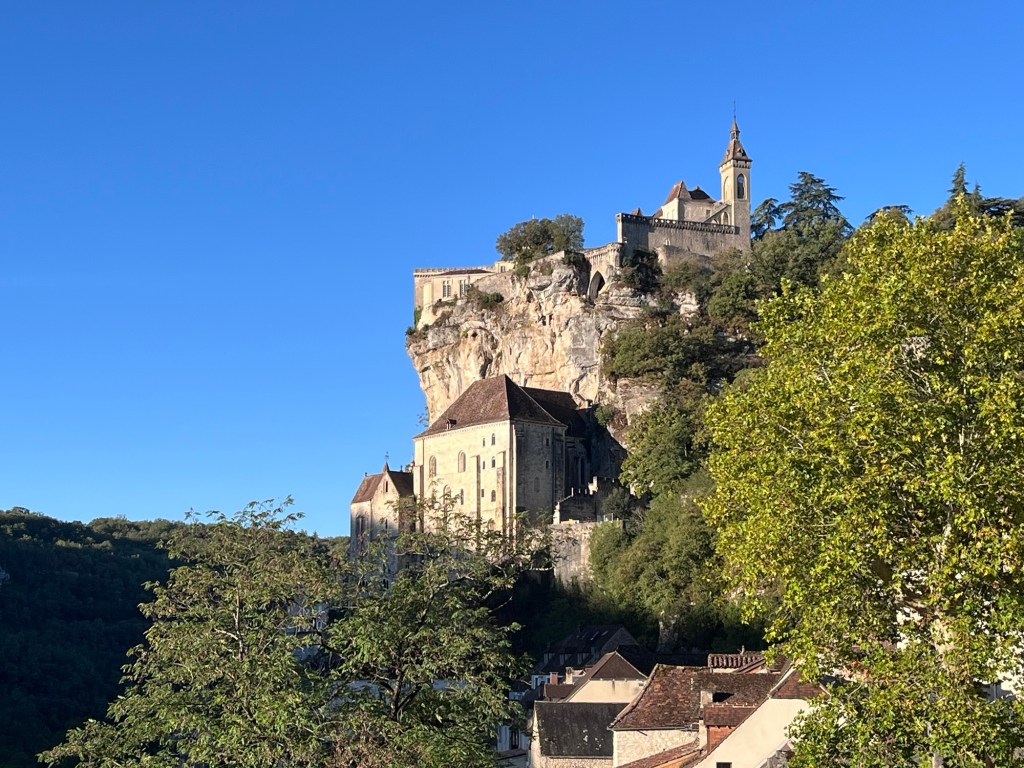
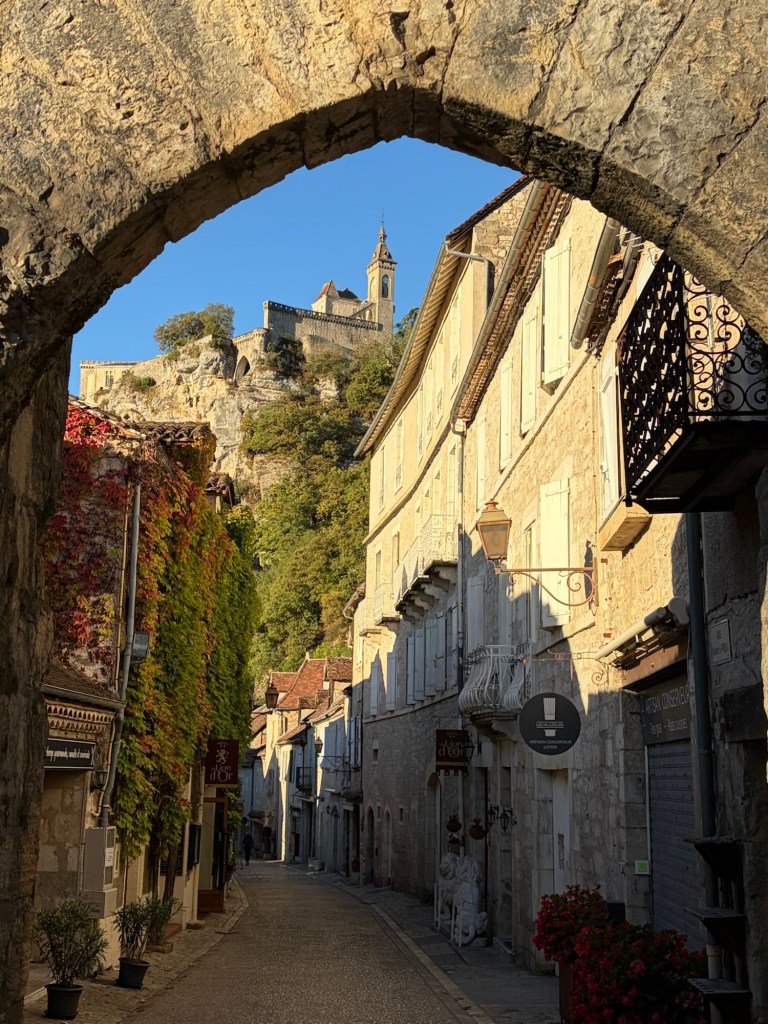
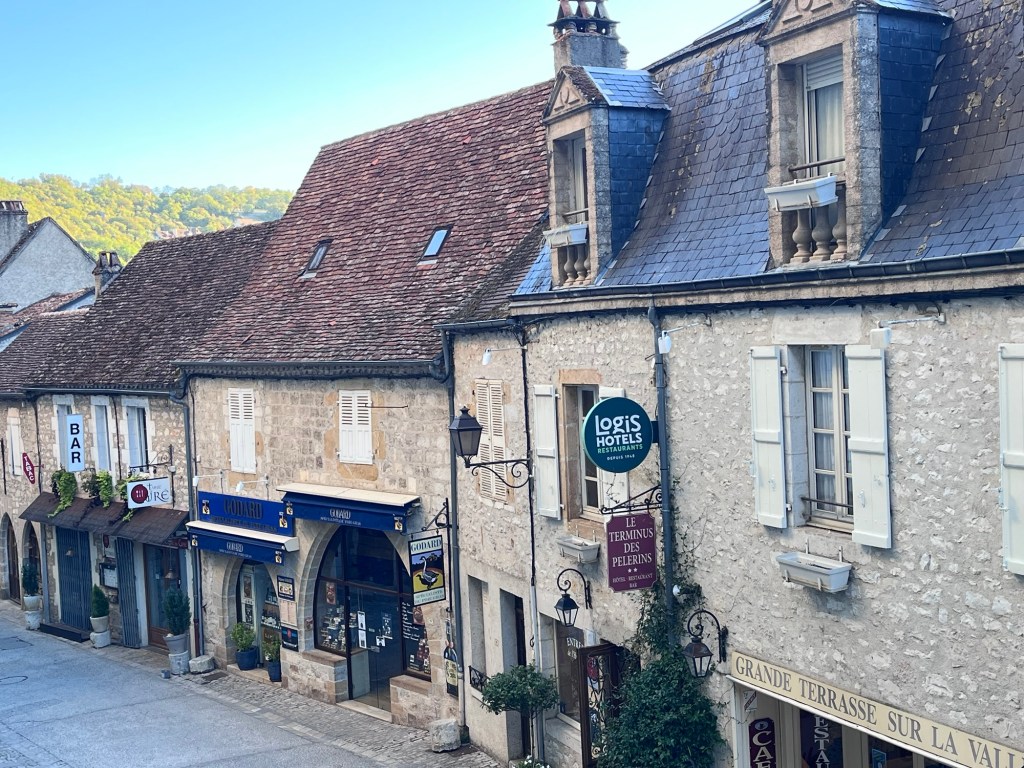
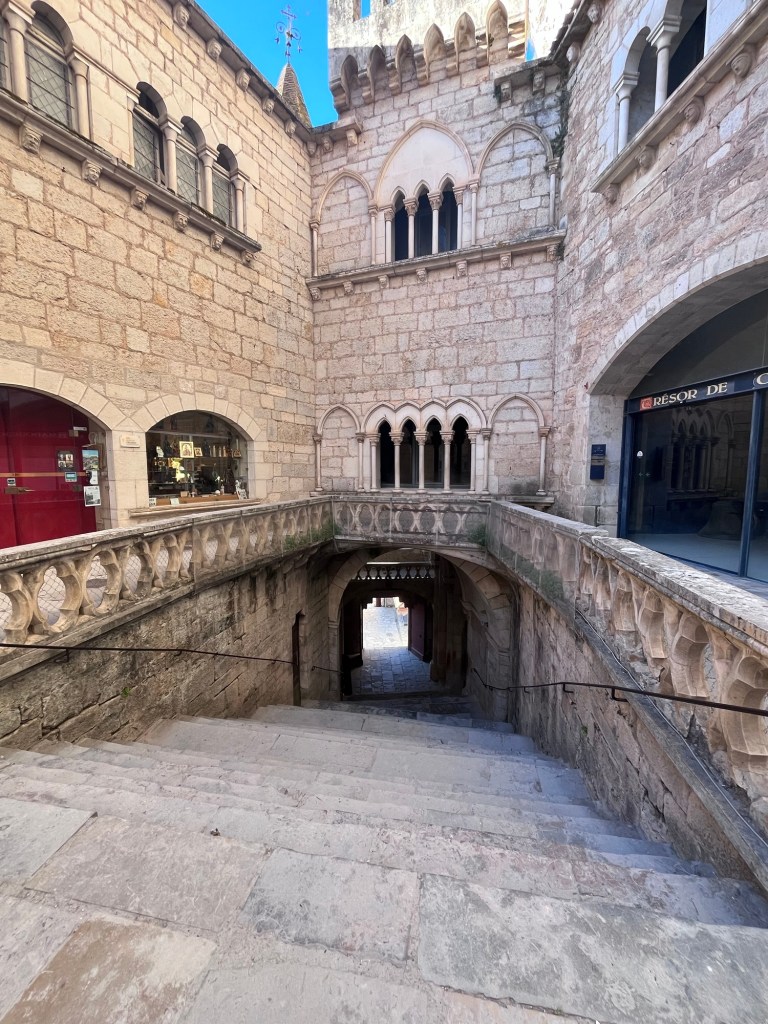
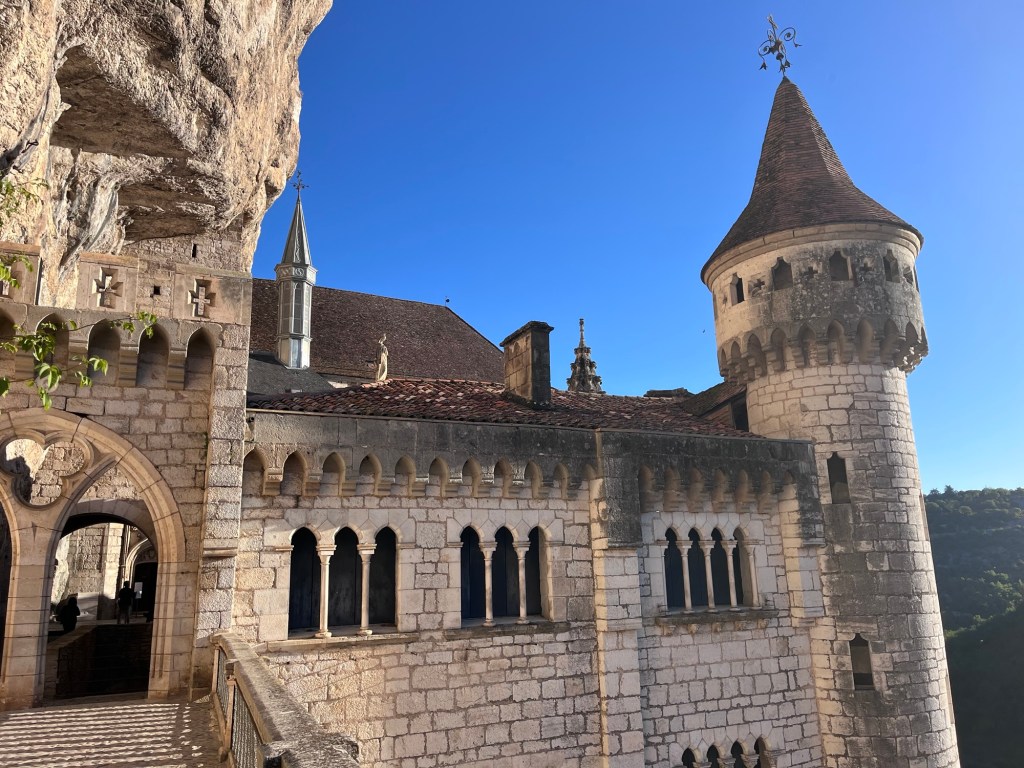
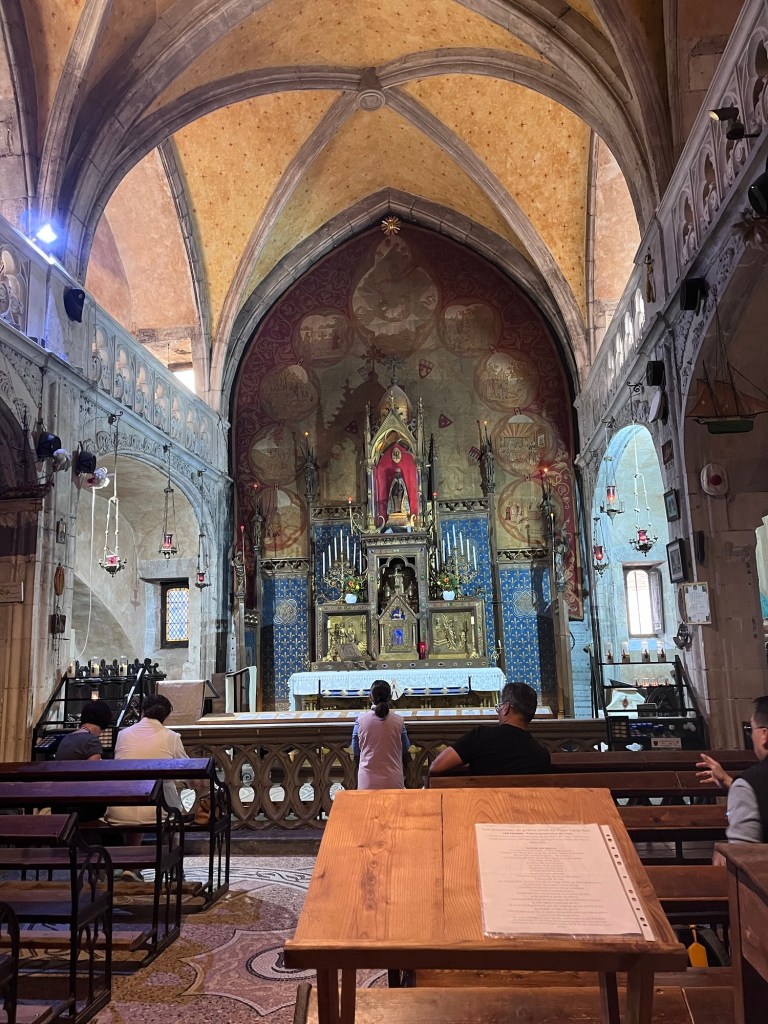
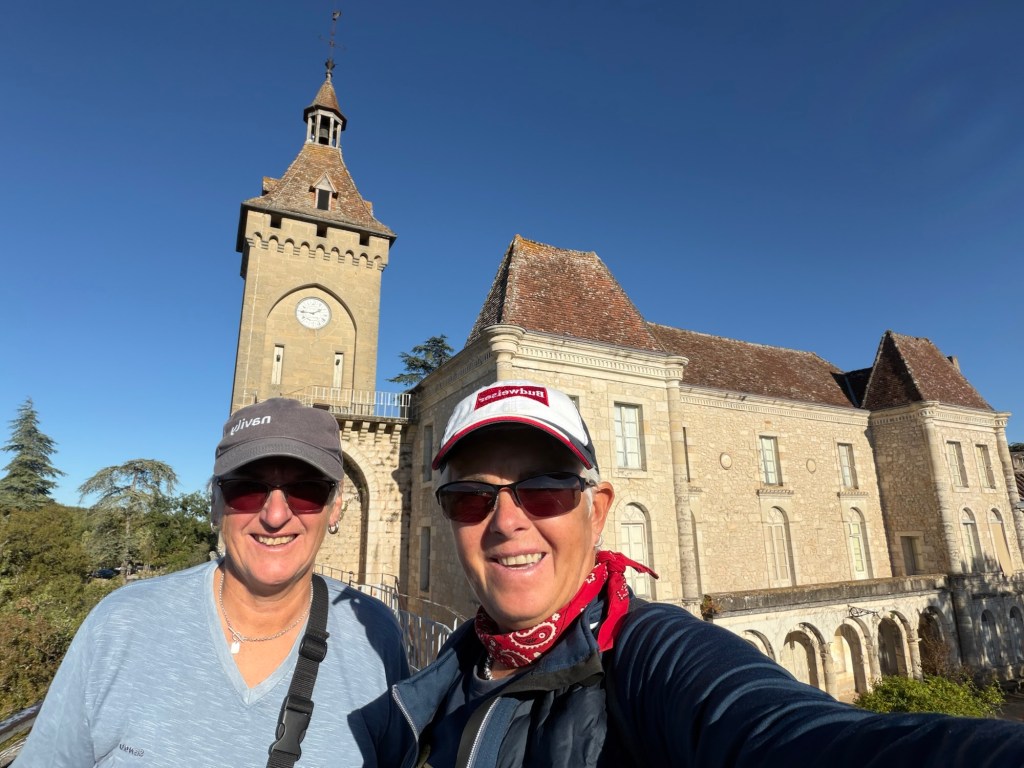
We wanted to catch the early morning sun on Rocamadour so we got up early (before 0700) on Tuesday, September 22 and we were rewarded with not only the sun but also we avoided the masses of tourists that flock there every day. After climbing a lot of steps, we visited the various chapels and the main Sanctuary. Apparently, pilgrims will often climb the 200 odd steps on their knees. It was hard enough upright! The fact that the place is cut out of the rock face is pretty impressive and so long ago in the 11th century.

We then caught the funicular up to the chateau that imperiously overlooks the church and the town to walk around its ramparts. It also made an easier walk back to the van along the top of the gorge.

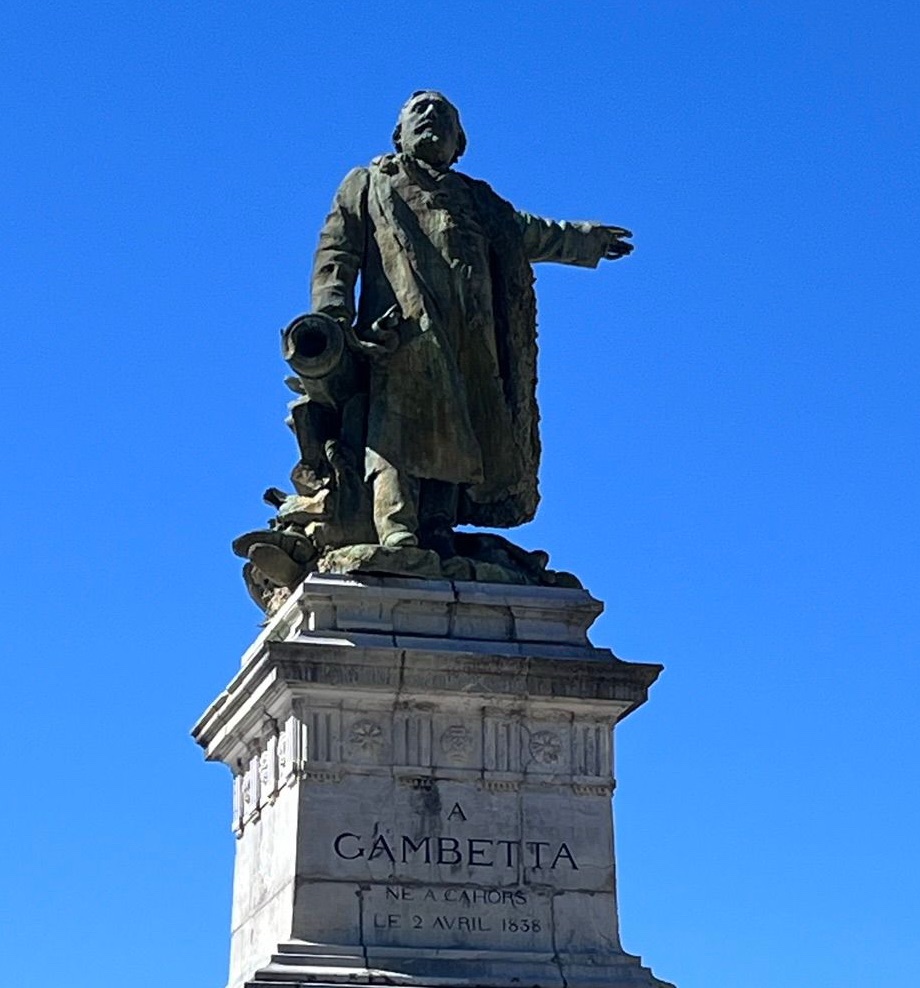
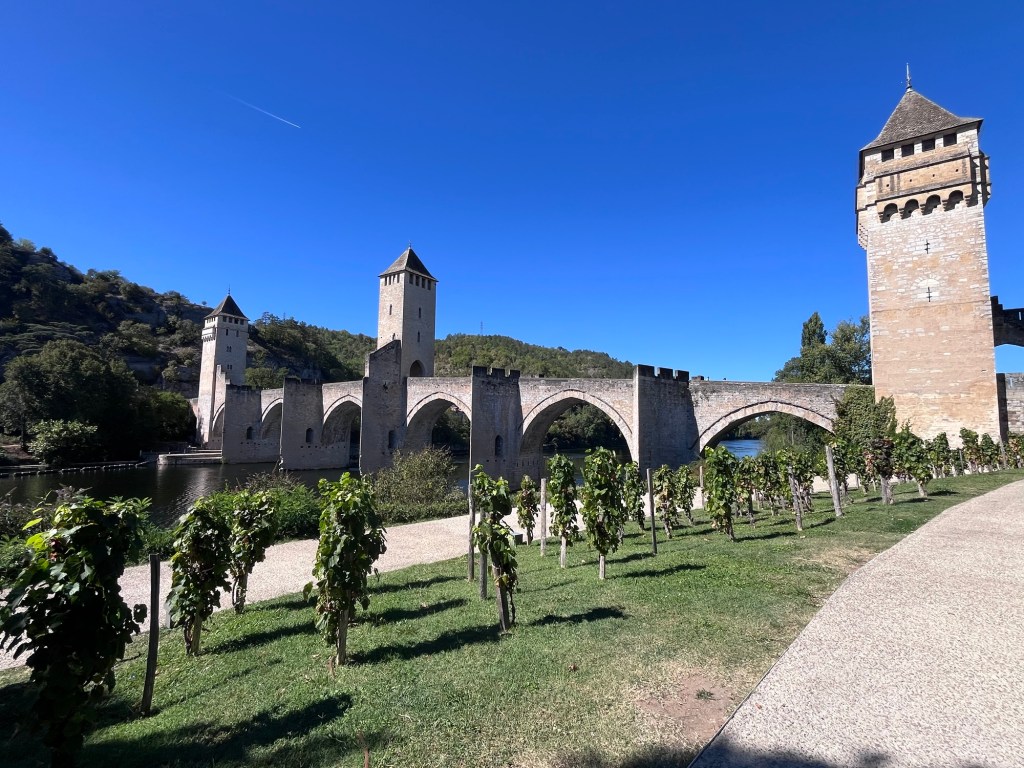
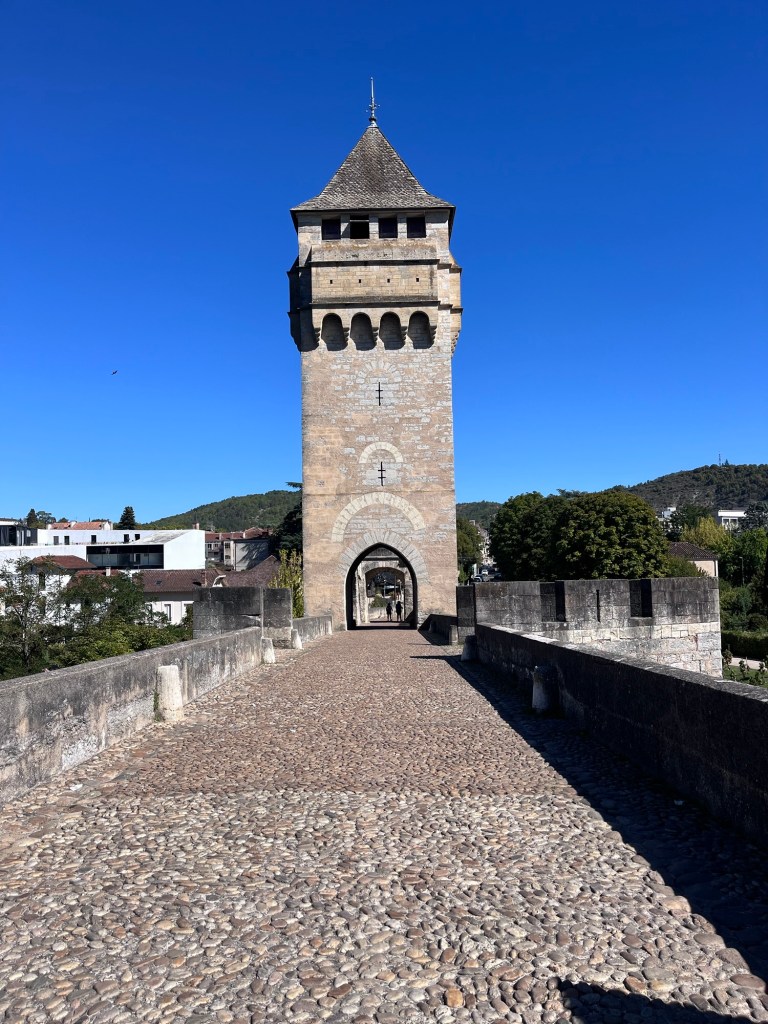
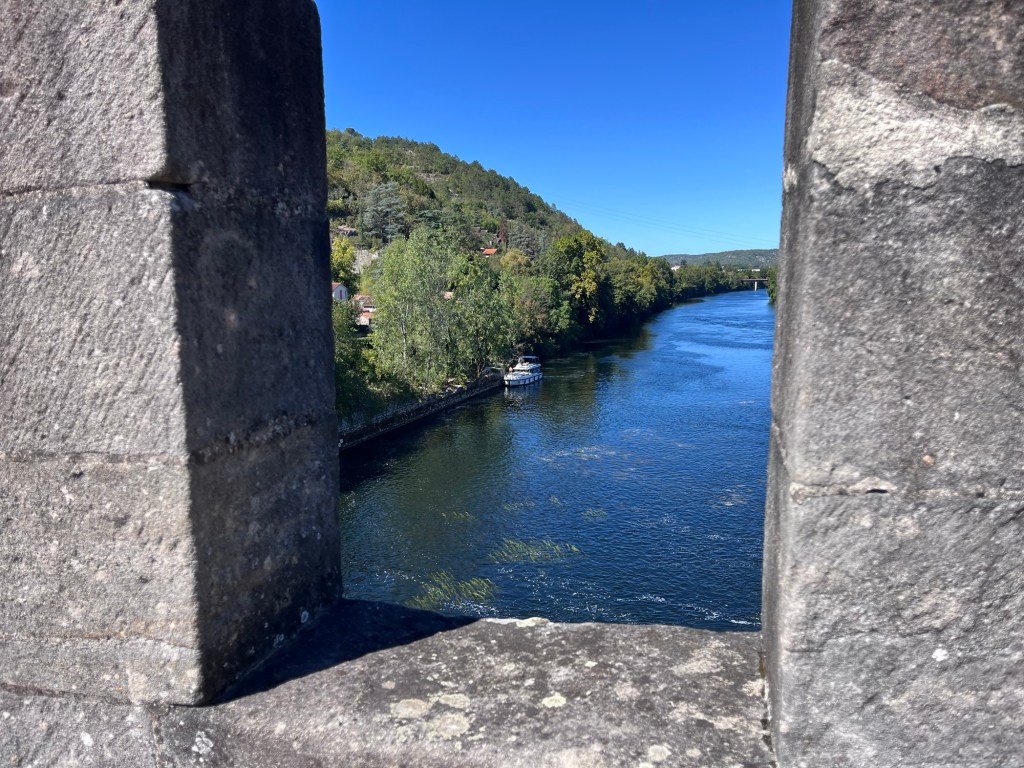
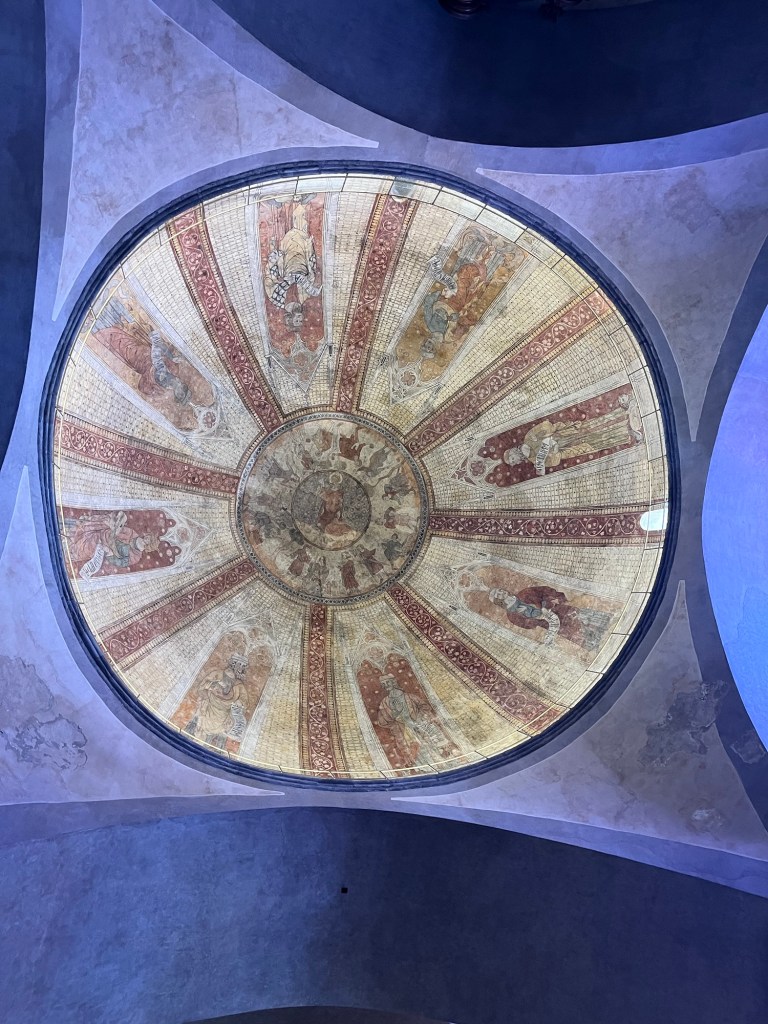
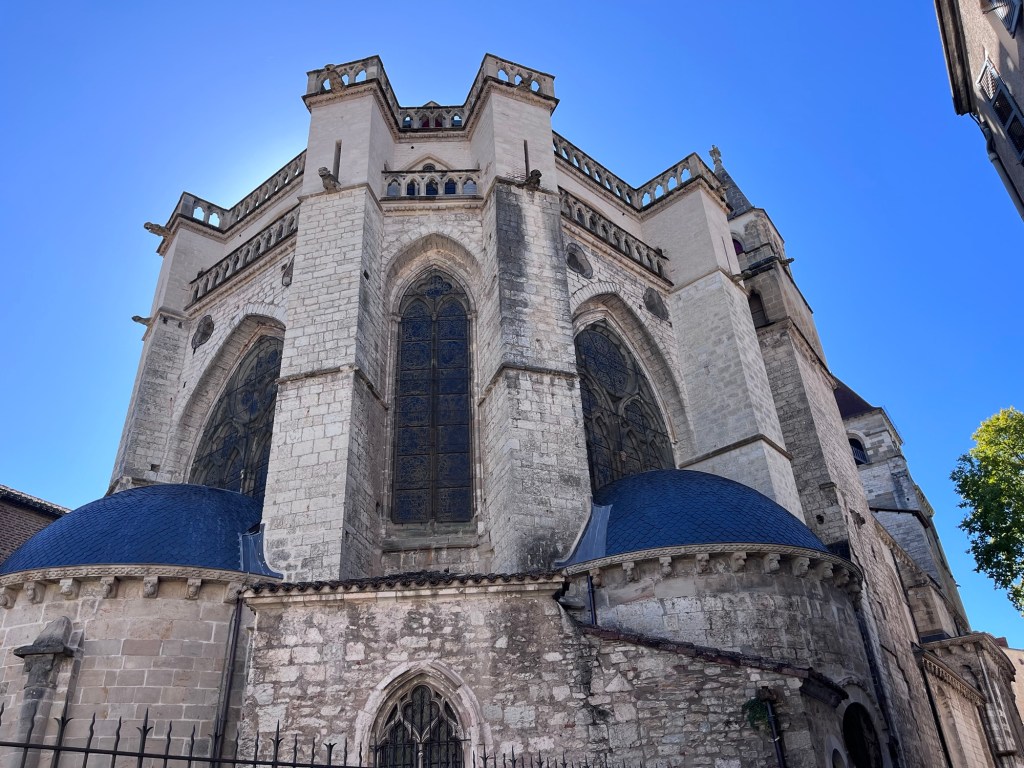
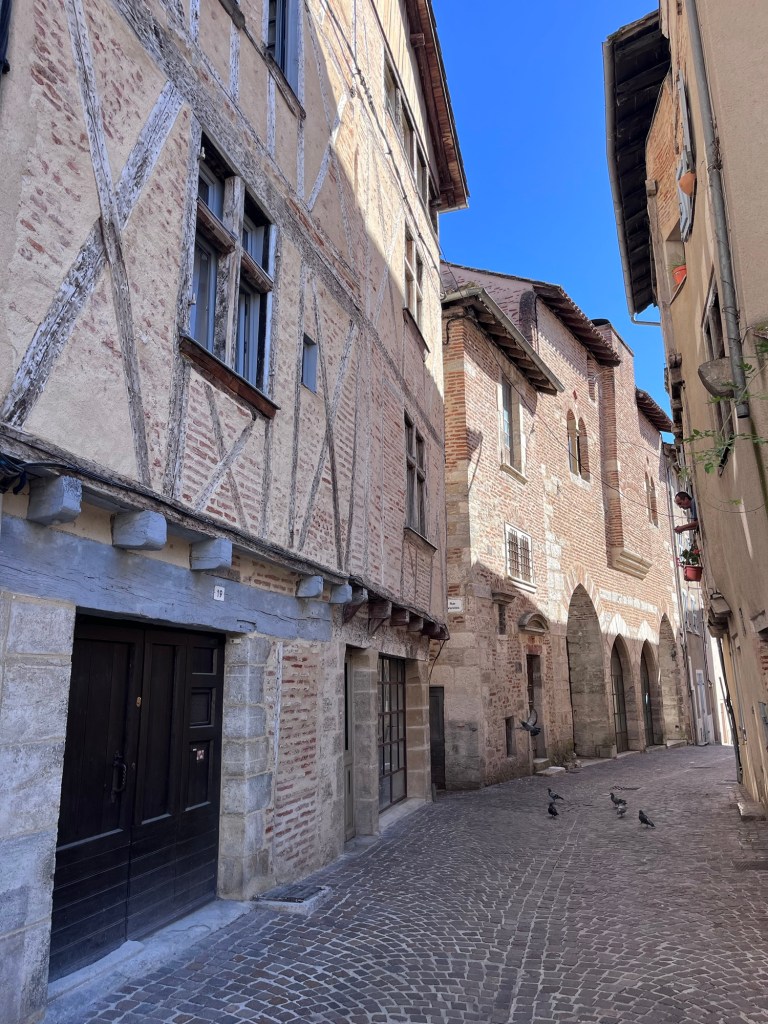
We left around midday to drive to Cahors, the home of the Malbec grape and another medieval walled city. We parked up in a large car park just south of the old town with about twenty other vans (P4N#549143). It was not a pretty park up but it was near the centre and free! We walked to the Pont Valentre, one of the most famous of old bridges in France, as well as through the old town. Unusually, the cathedral has two domes, one plain and one painted with frescoes. There we purchased a couple of bottles of Malbec wine from a local producer. Leon Gambetta, founding Father of the 3rd French Republic, was born in the city.

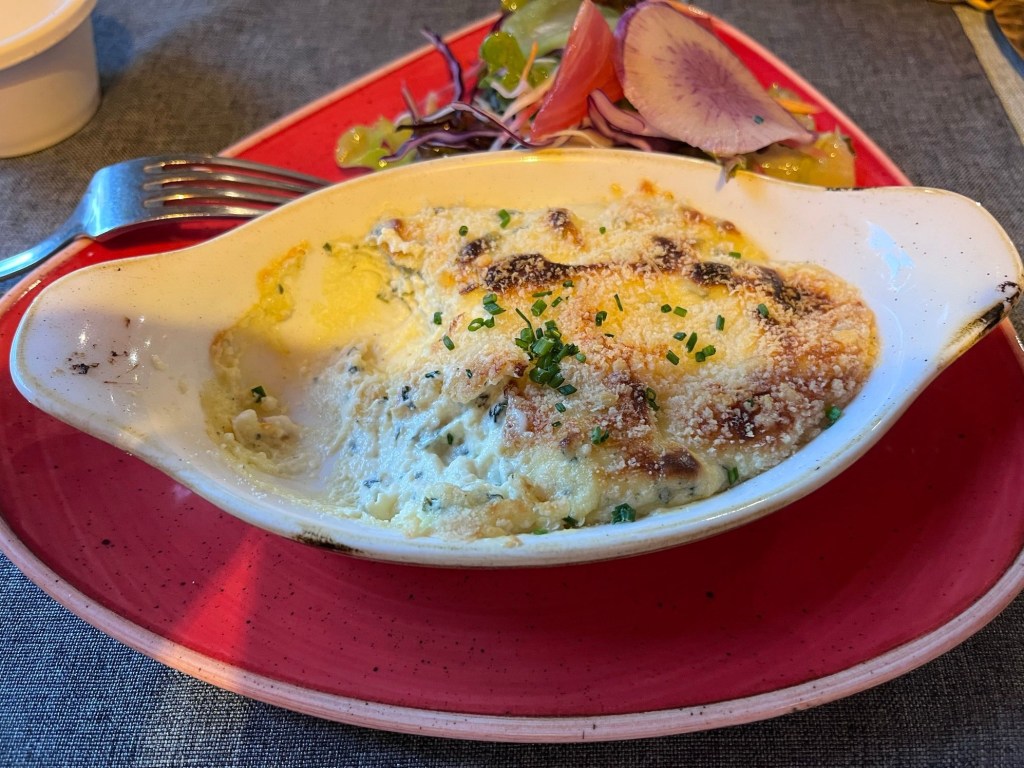
Back to the van for a much needed shower before going back into town for a gorgeous meal at La Petit Auberge, which included a Parmesan crème brûlée starter.

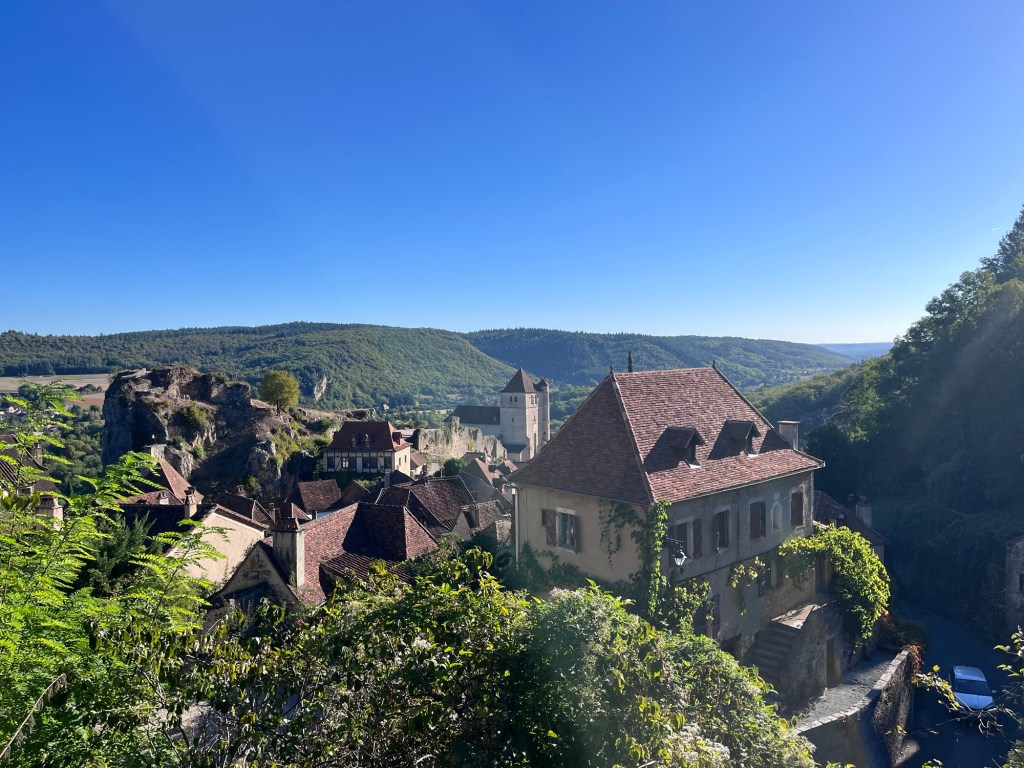
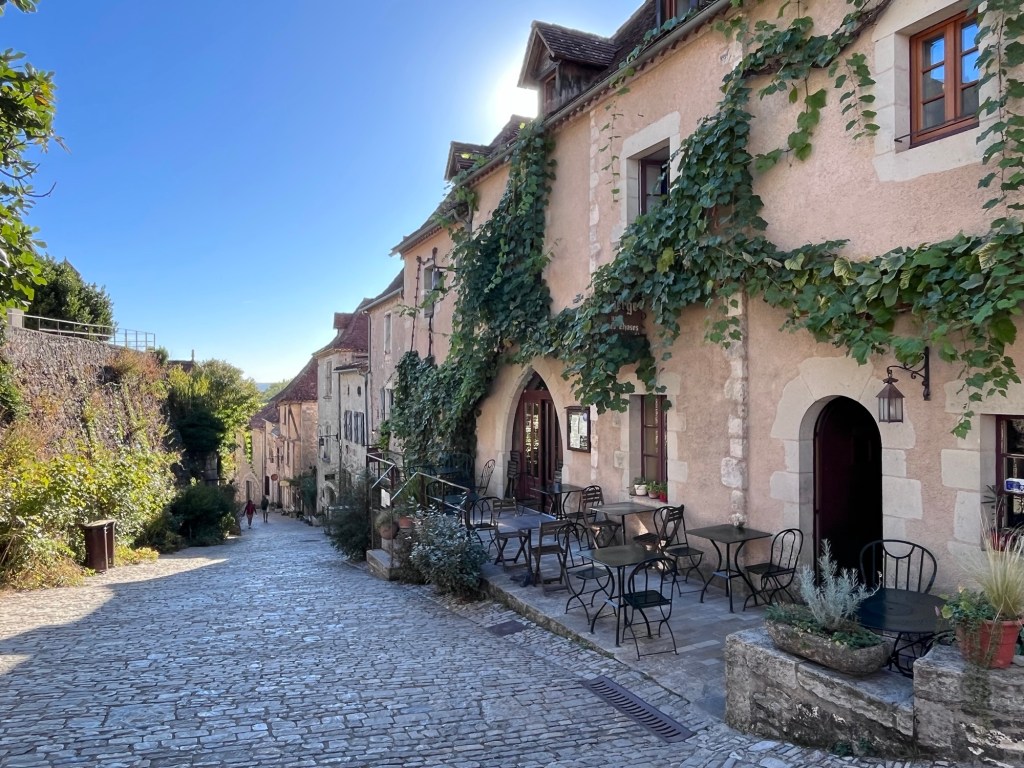
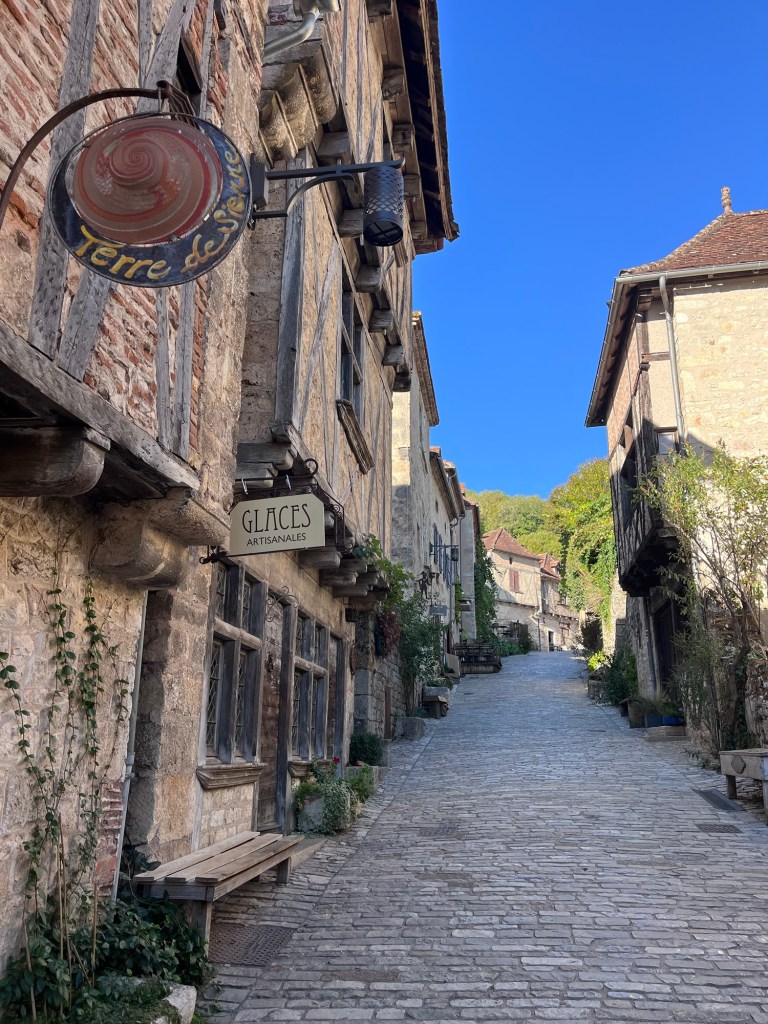
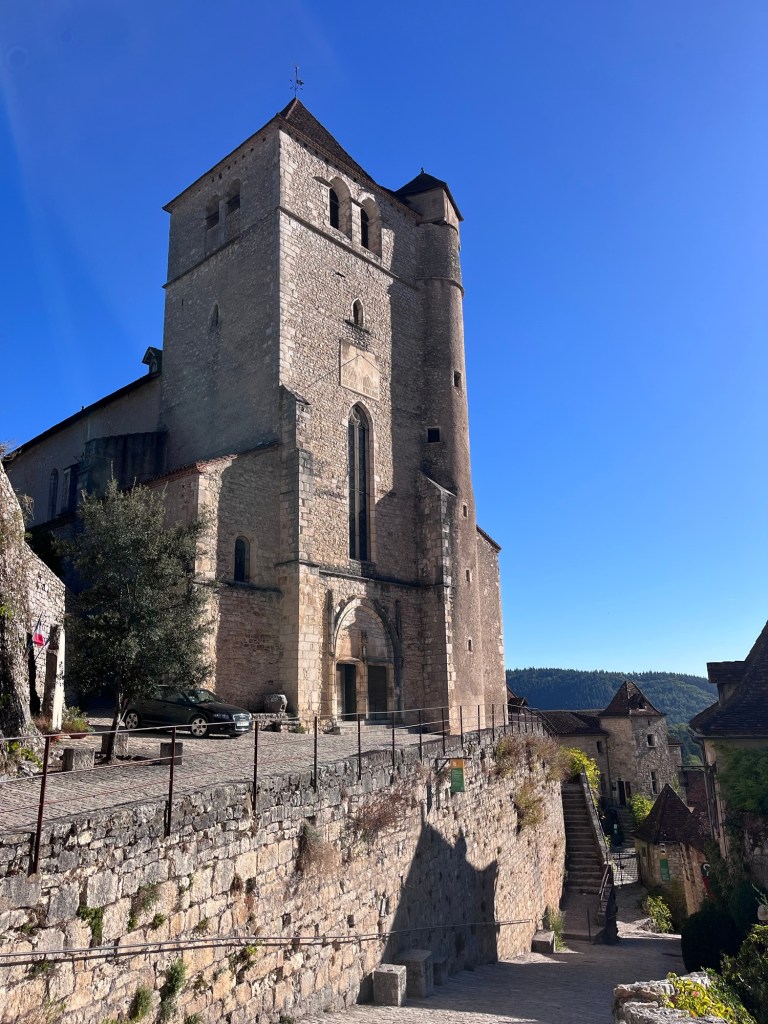
The next morning we left early, again (!), as we wanted to use the nearby dump station and make our way to Carcassonne to meet up with friends. On the way we stopped at Saint Cirque Lapopie, voted the most preferred village in France. We arrived before the maddening crowds again so we’re feeling very pleased with ourselves and it was indeed a gorgeous village.

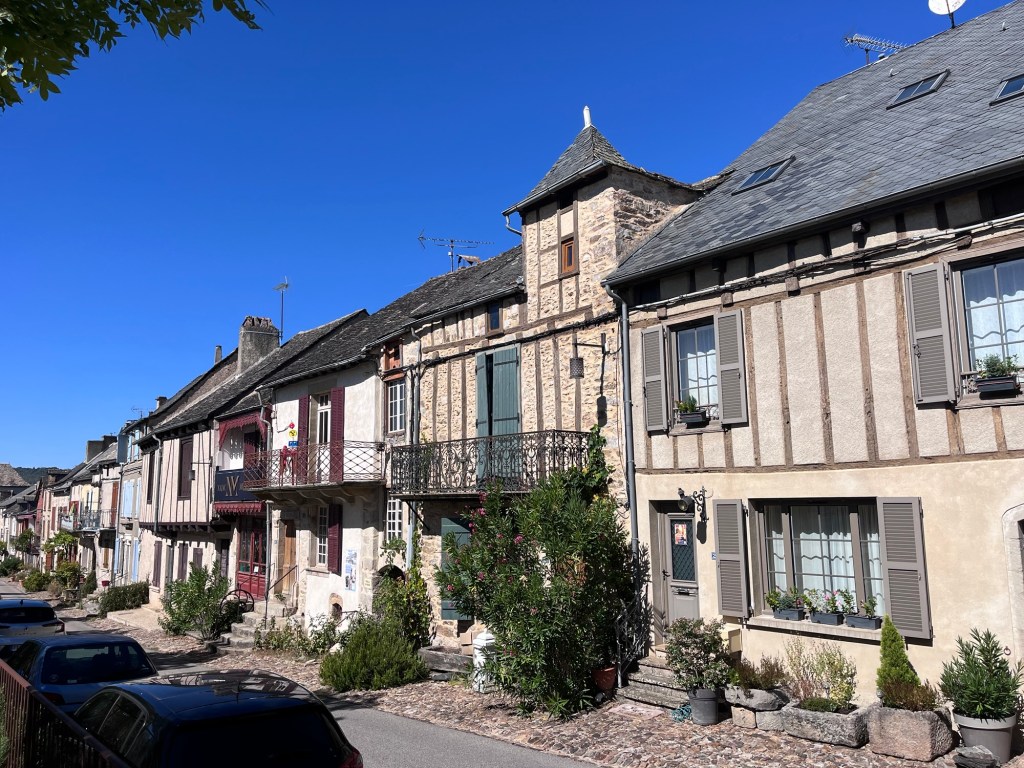
We drove onto another of the Beaux Villages, Najac, as well as Cordes-sur-Ciel. Both lovely.

Najac

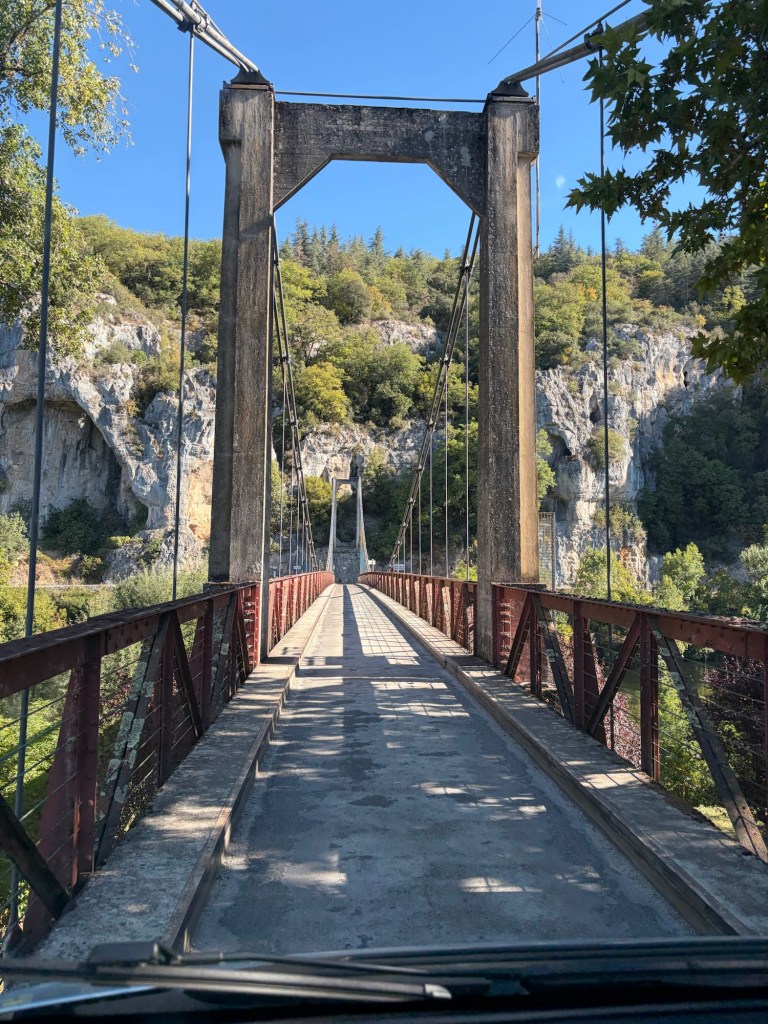
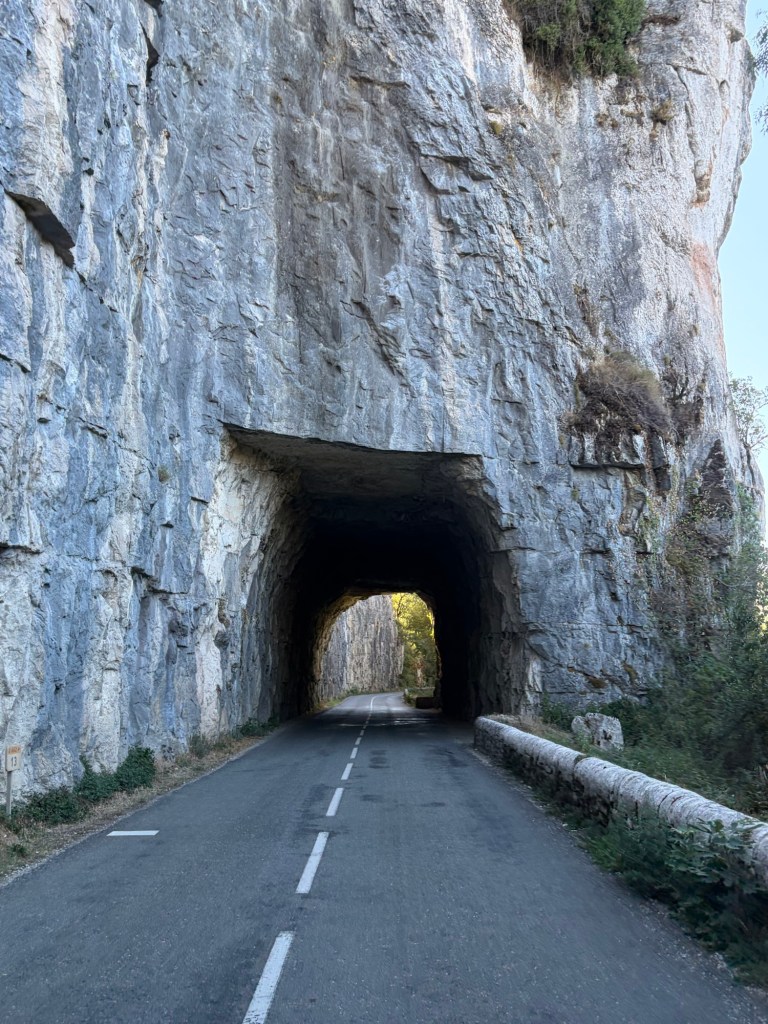
However, on our way to Najac, Liz wanted to drive along the side of a gorge that she had heard about. This involved going down narrow roads with rock overhangs on one side and sheer drops on the other. Not for the faint hearted! It finished with a bridge crossing that was 2.2m wide. Dora is 2.05m excluding wing mirrors.

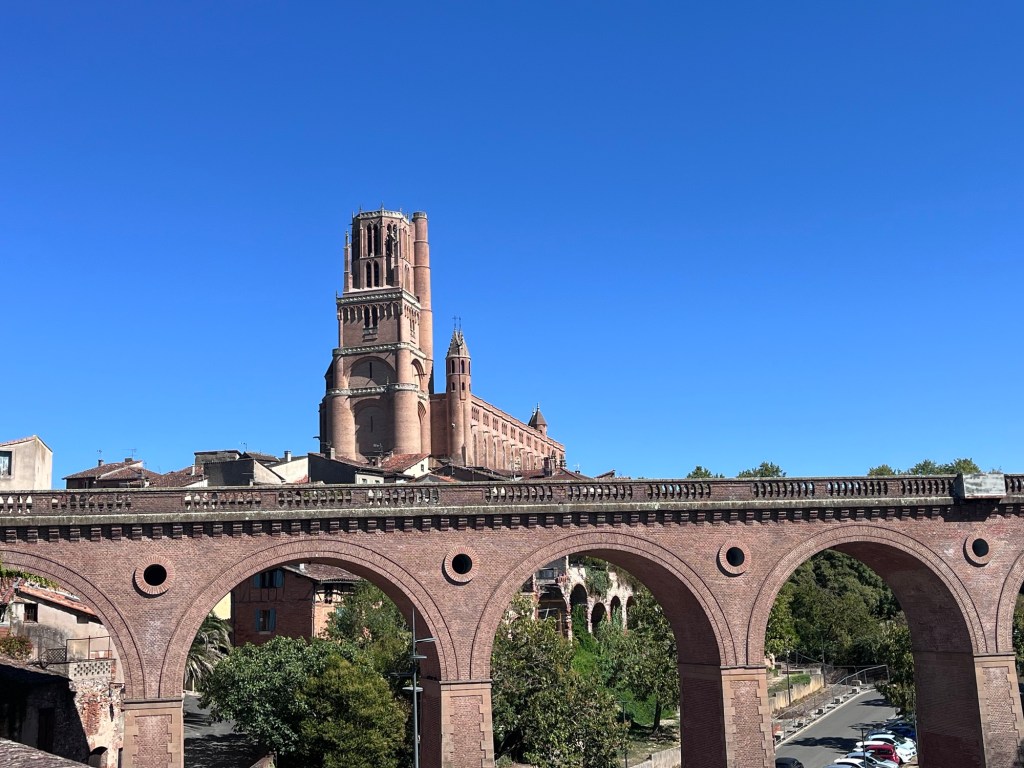
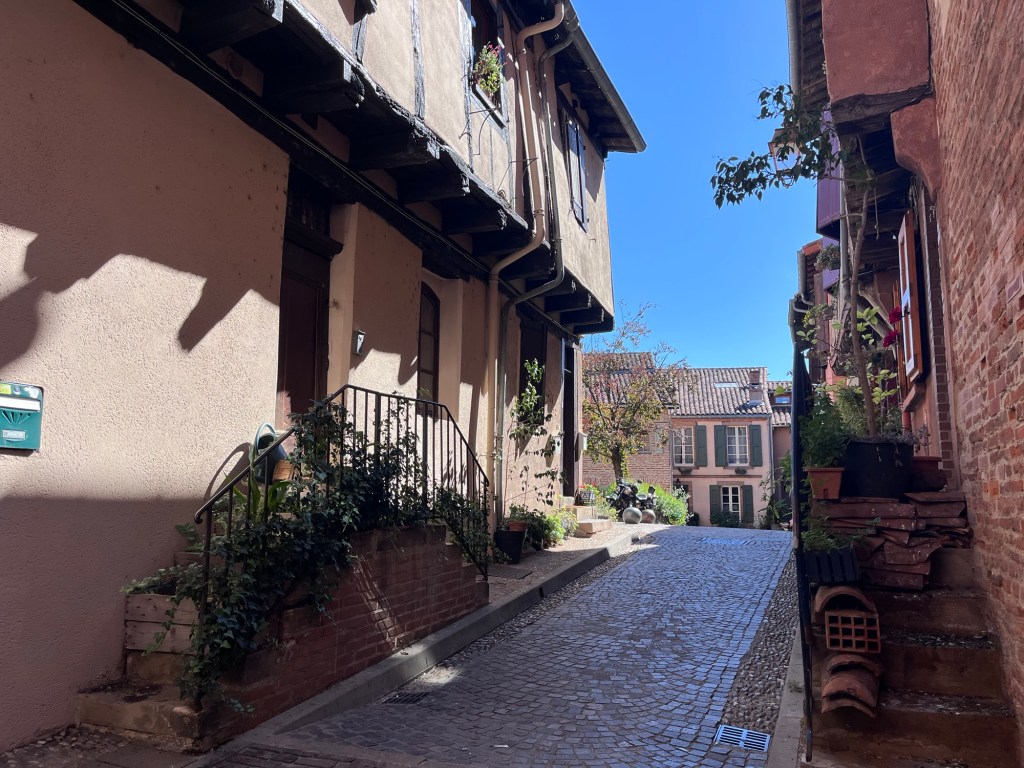
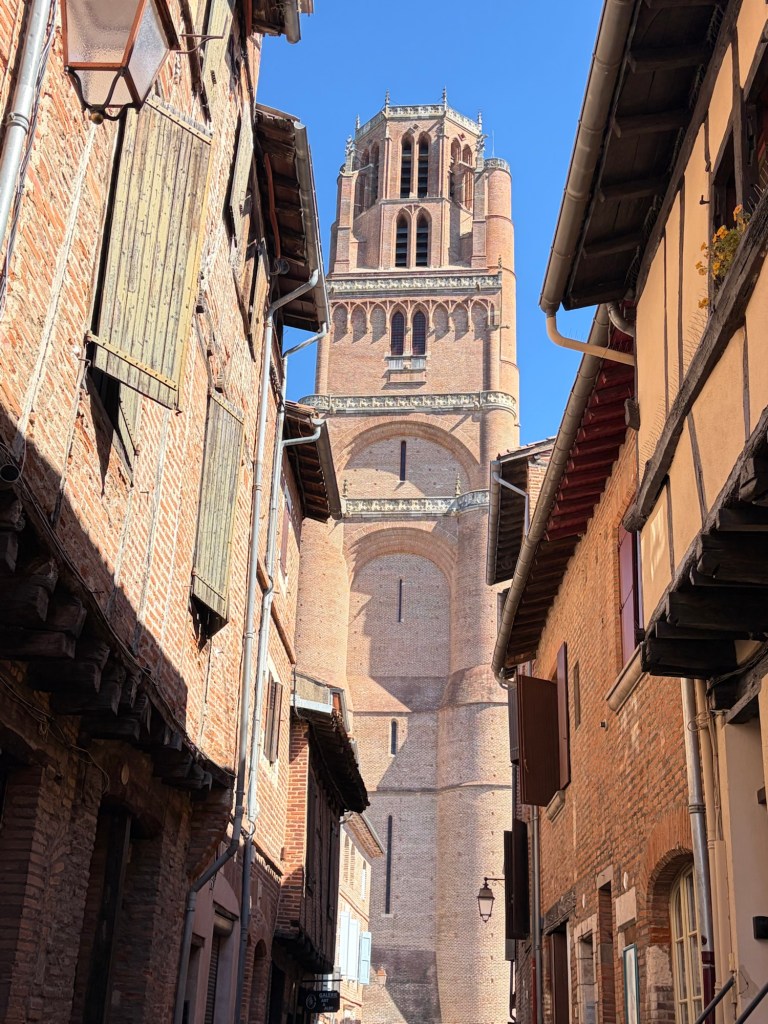
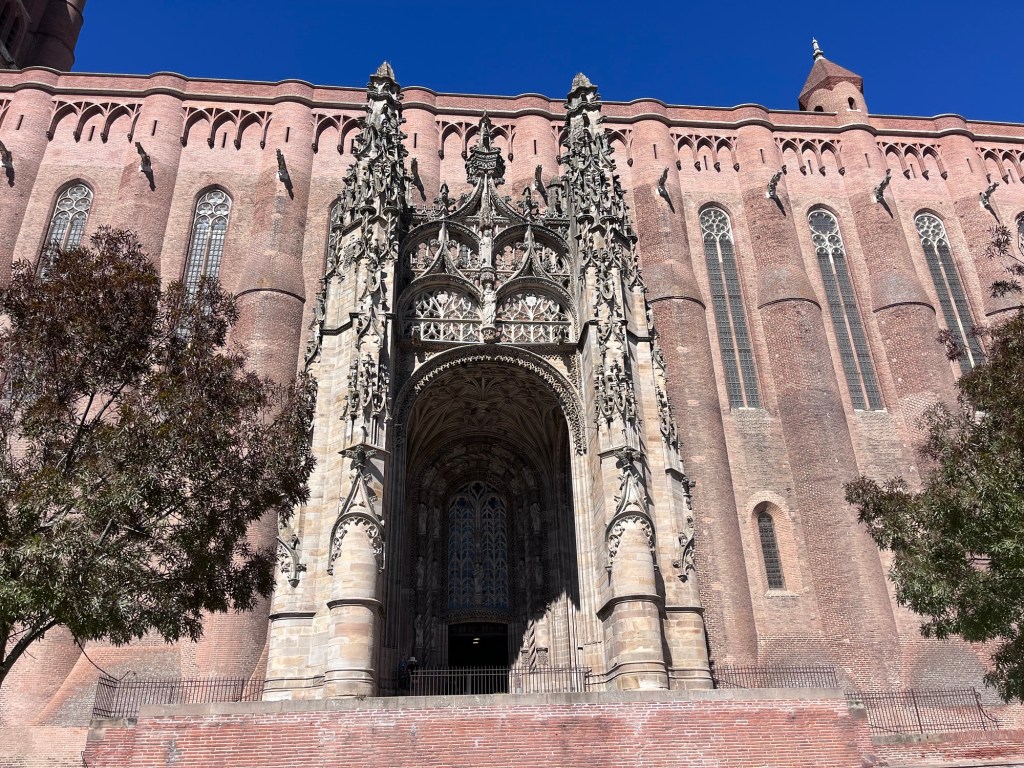
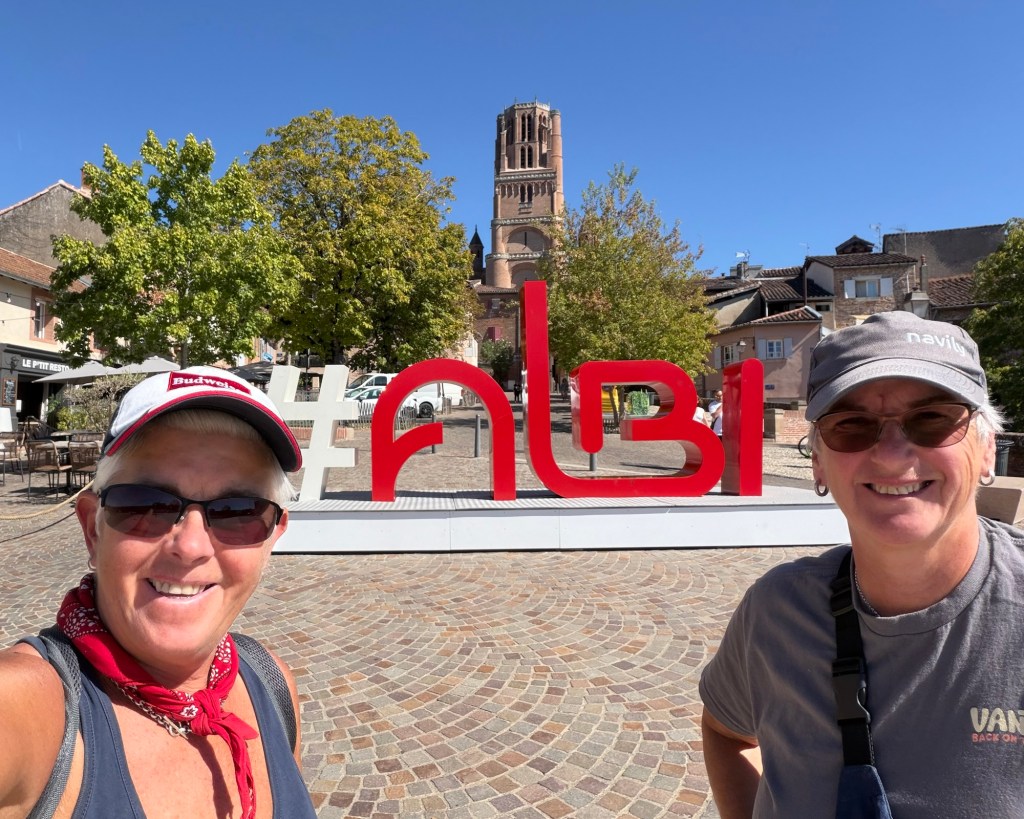
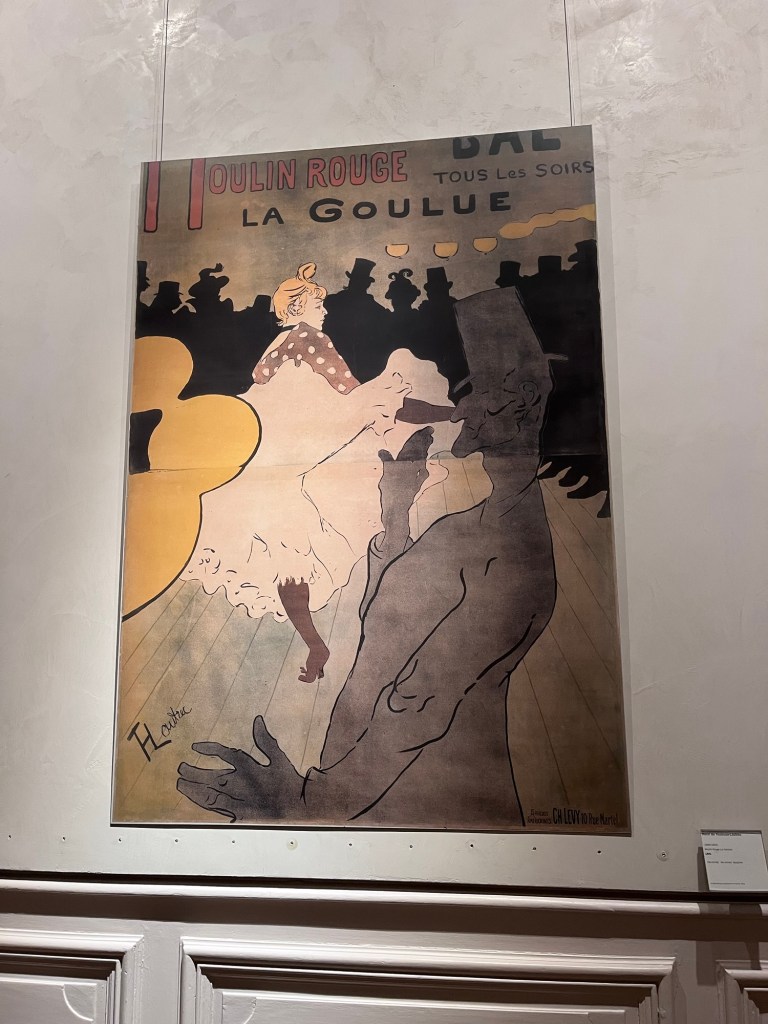
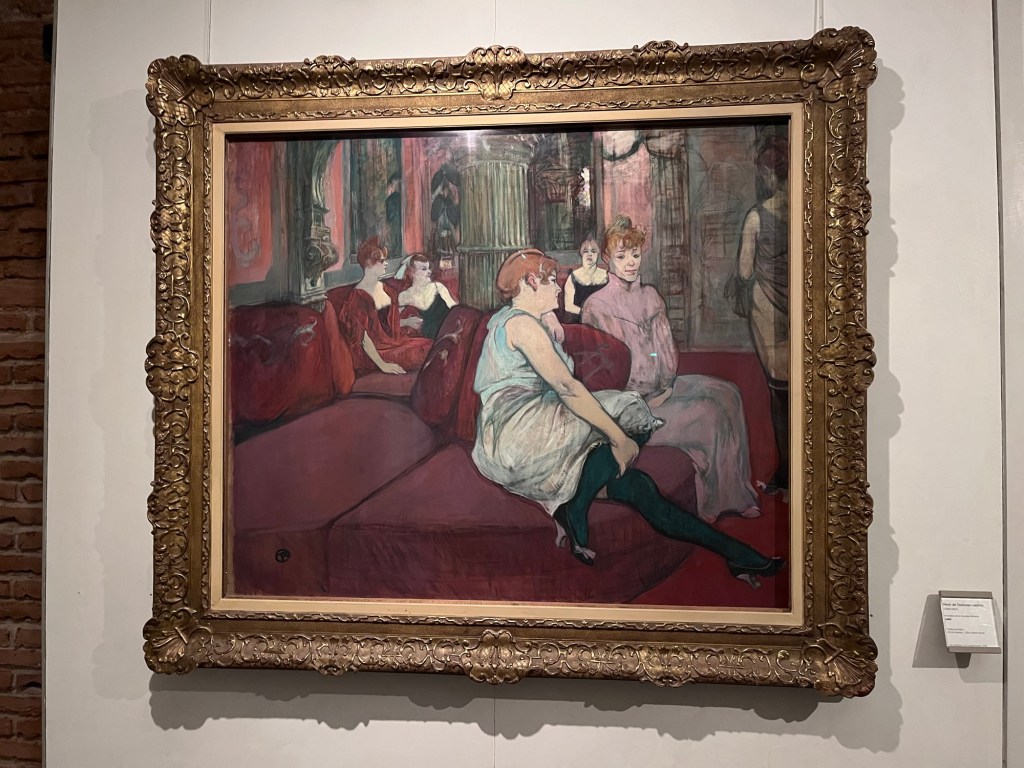
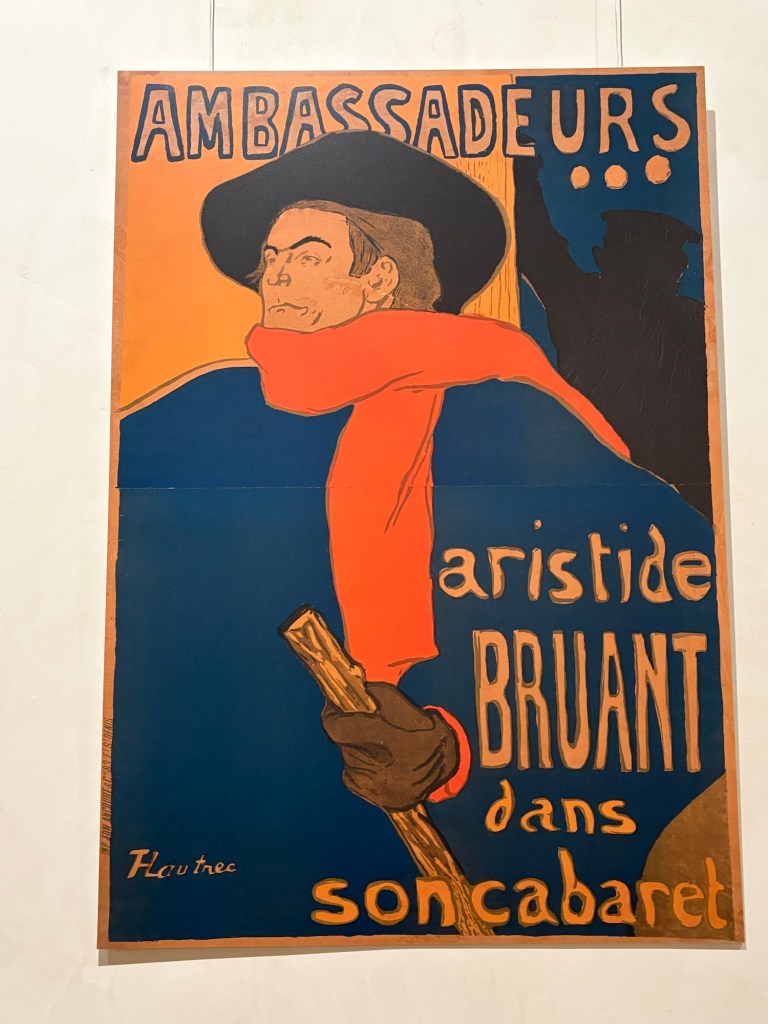
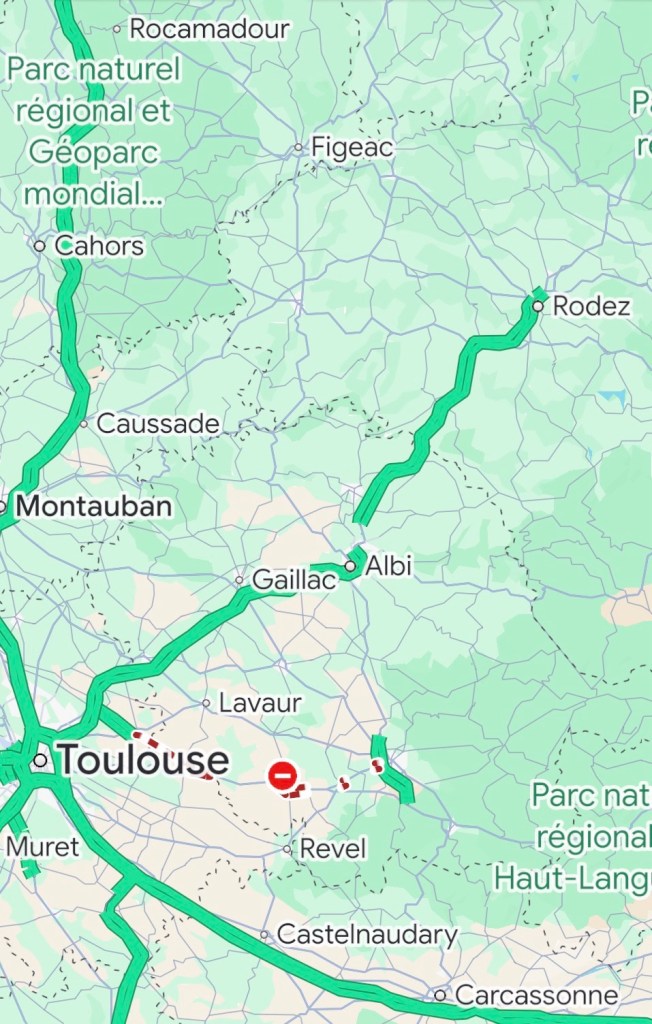
There was a large Toulouse-Lautrec exhibition in a town called Albi that was on the way to Carcassonne and we managed to park quite close to the old centre under a covered market. It was free parking when there wasn’t a market on and it was in the shade, which was great as it was 33°! Albi was a delightful surprise with the biggest brick cathedral in the world at over 70m tall and the exhibition was in the old bishopric palace next door. Toulouse-Lautrec was born in the town and so they had managed to acquire or been donated many paintings and drawings.

After a pleasant couple of hours there we drove onto Carcassonne where we got one of the last remaining places at the camping car aire by the campsite our friends were in (P4N#36930). We didn’t need electricity or facilities so the aire at half the price was perfect for us. We had a lovely evening catching up with our friends.

Photo courtesy of Sheila

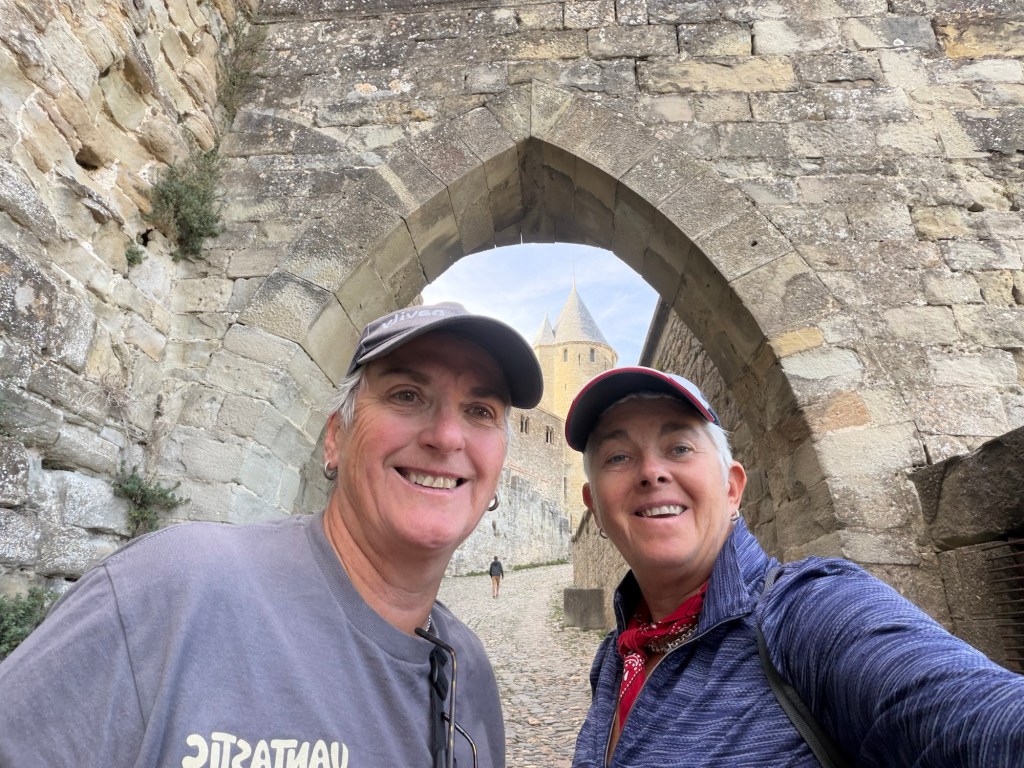
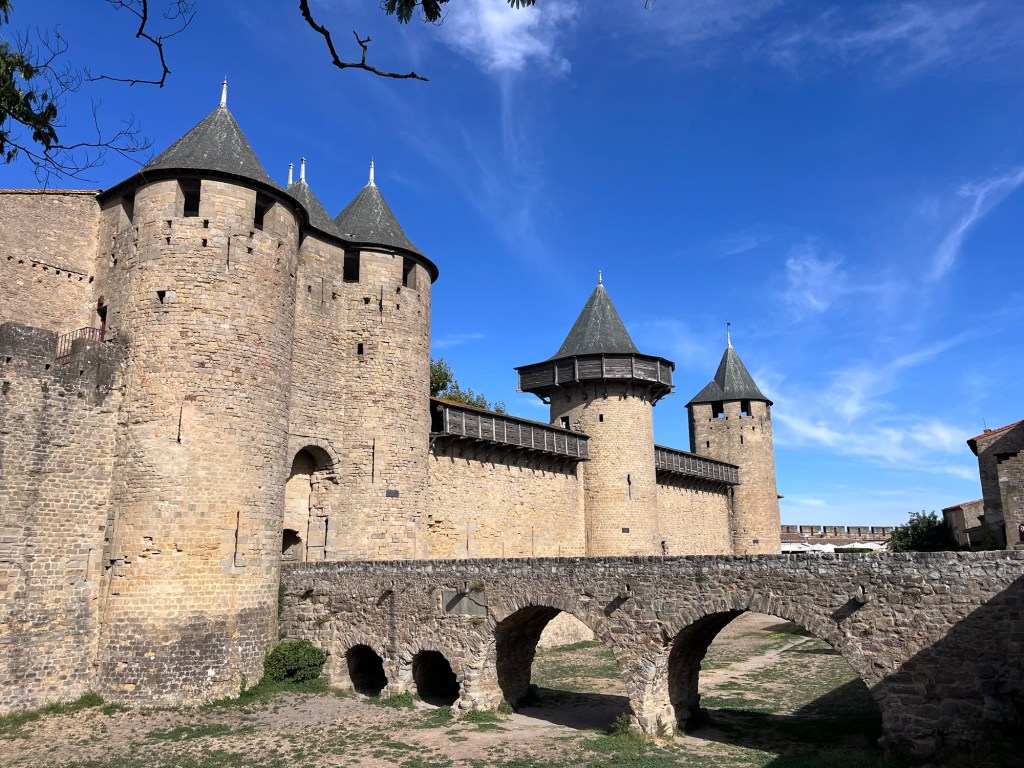
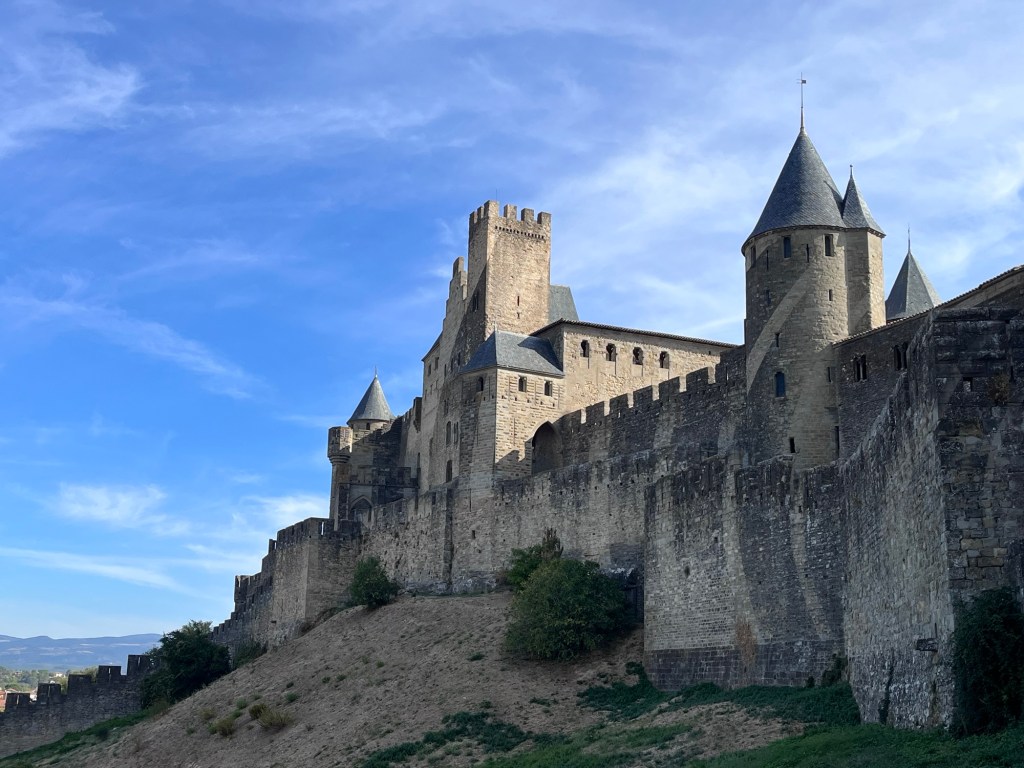
The following morning, we made the mistake of not getting into the old town until after 10.30 and the hordes had truly arrived. The old town was a pleasant 20 minute walk from the campsite along the river and has been inhabited for over 2,500 years. It has 52 towers and 3km of ramparts but after spending a couple of hours there we had had enough of the crowds so we hightailed it back to Dora for lunch.

In the afternoon, we decided we wanted to cycle over the Pont Vieux, built in the 14th century, to the Canal du Midi. The canal was one of the options we had considered when we wanted to take our previous boat, Nimrod, down to the Mediterranean. We opted to sail around the coast and across the Bay of Biscay in the end but wanted to see it for ourselves. It was all a bit underwhelming despite having been built in the 17th century to link the Atlantic and the Mediterranean. Back to the van for pizza with our friends.

Miles since last blog: 202

Total miles this trip 1,488

Auxerre to Sancerre and beyond

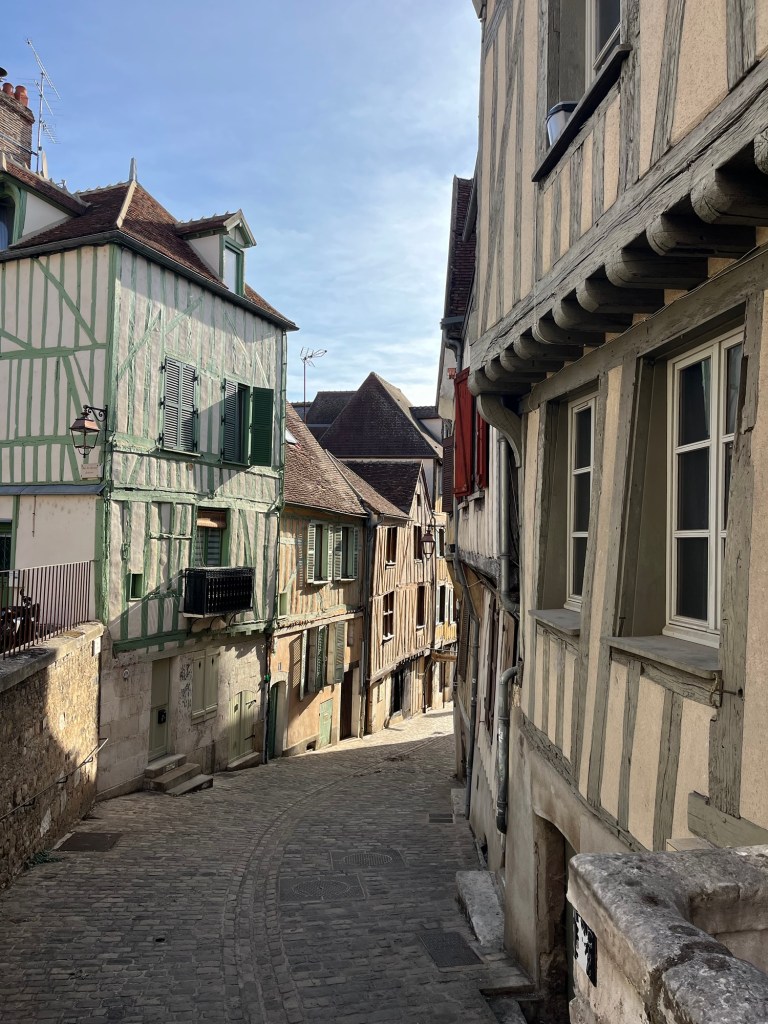
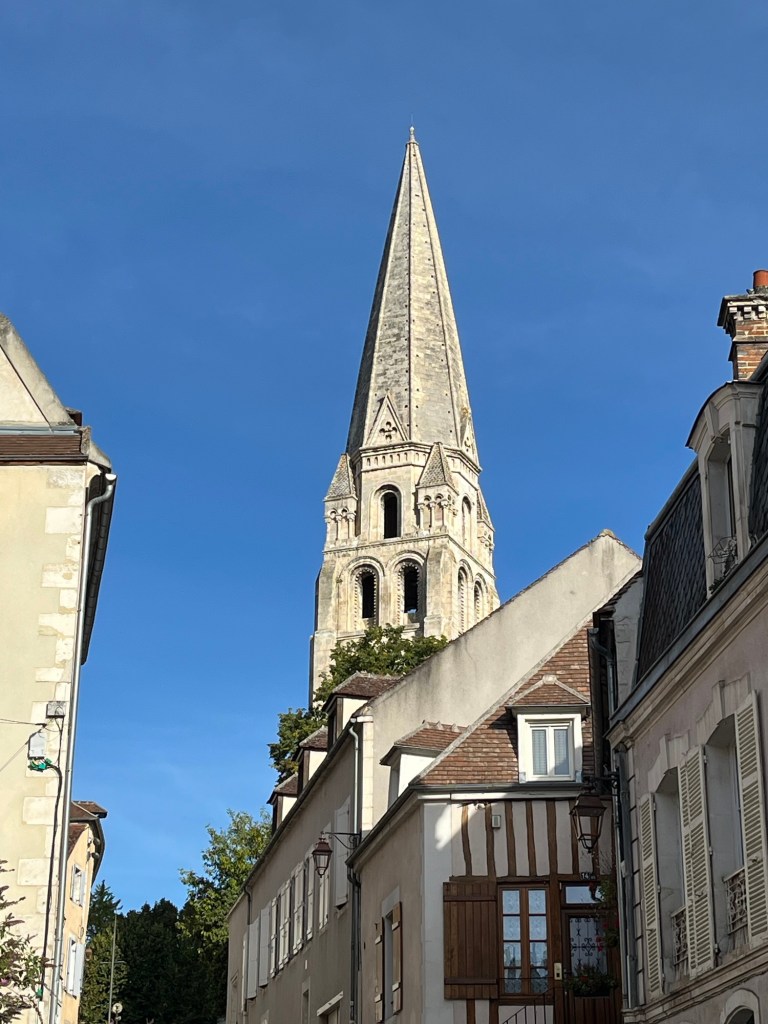
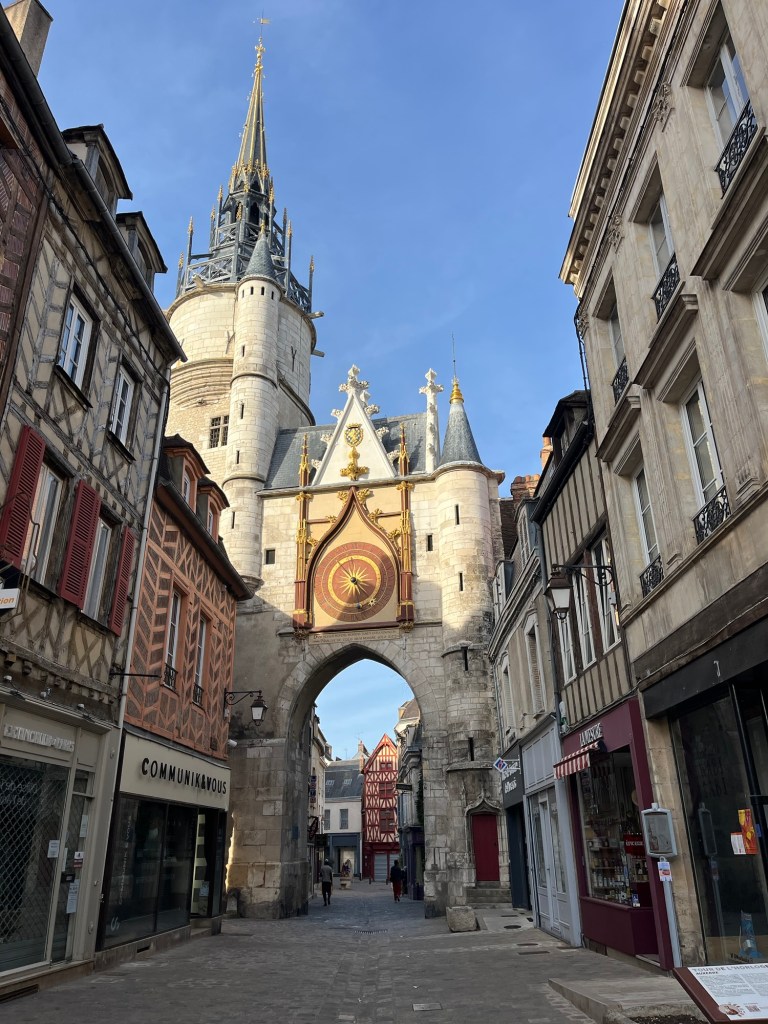
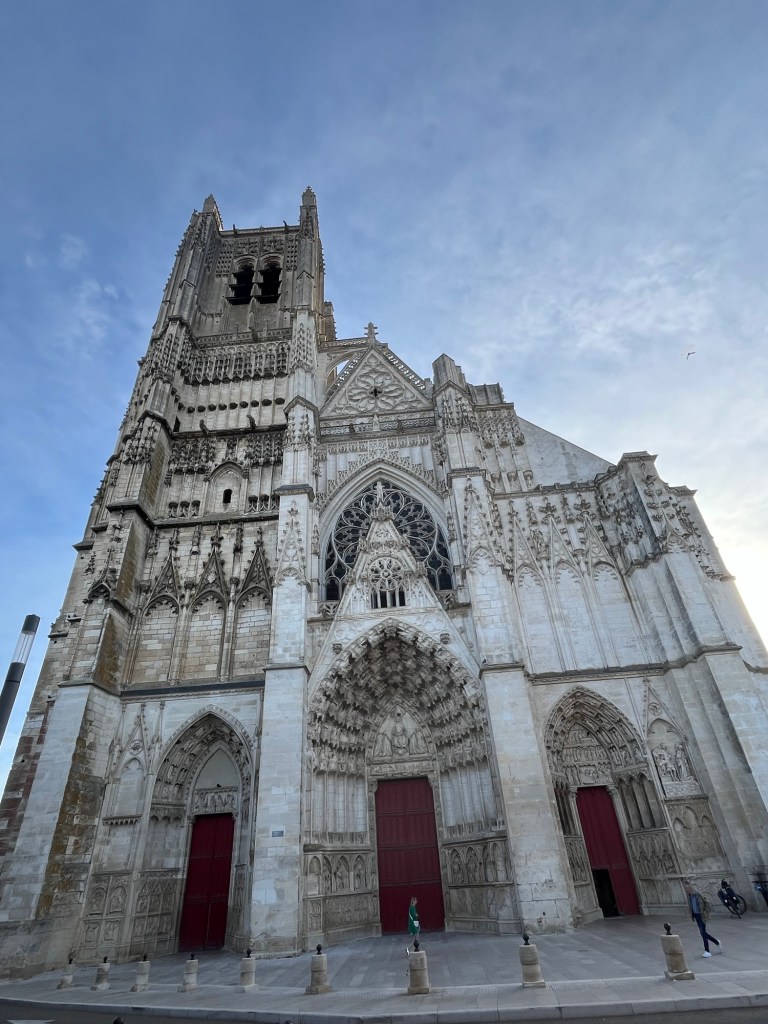
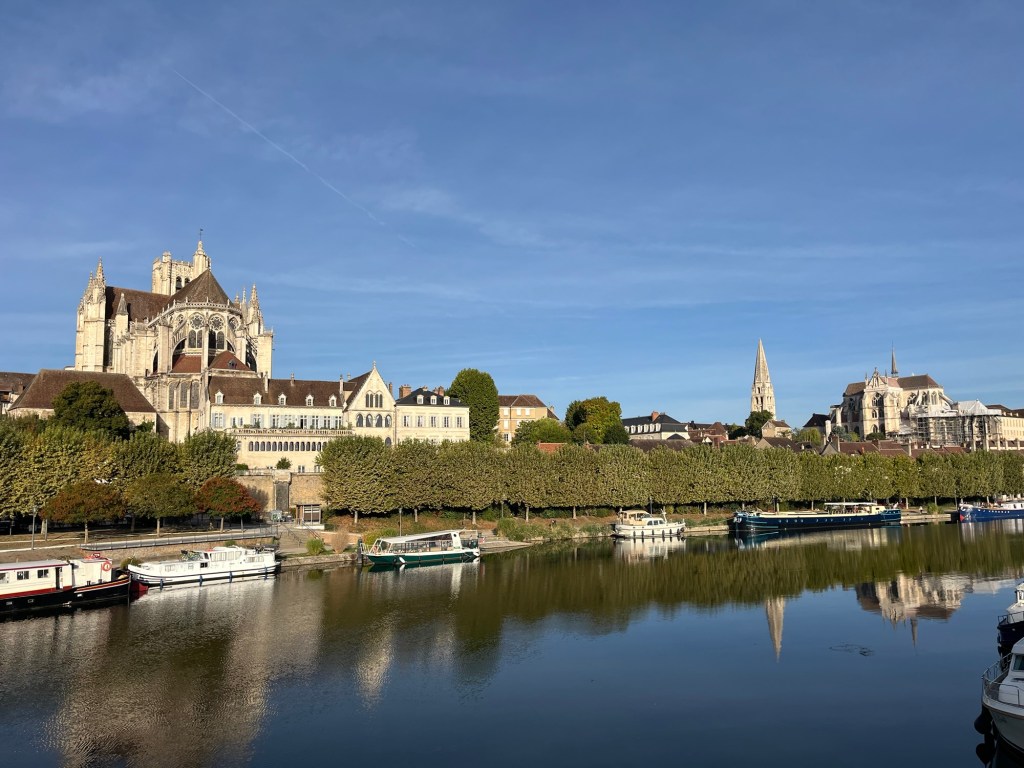
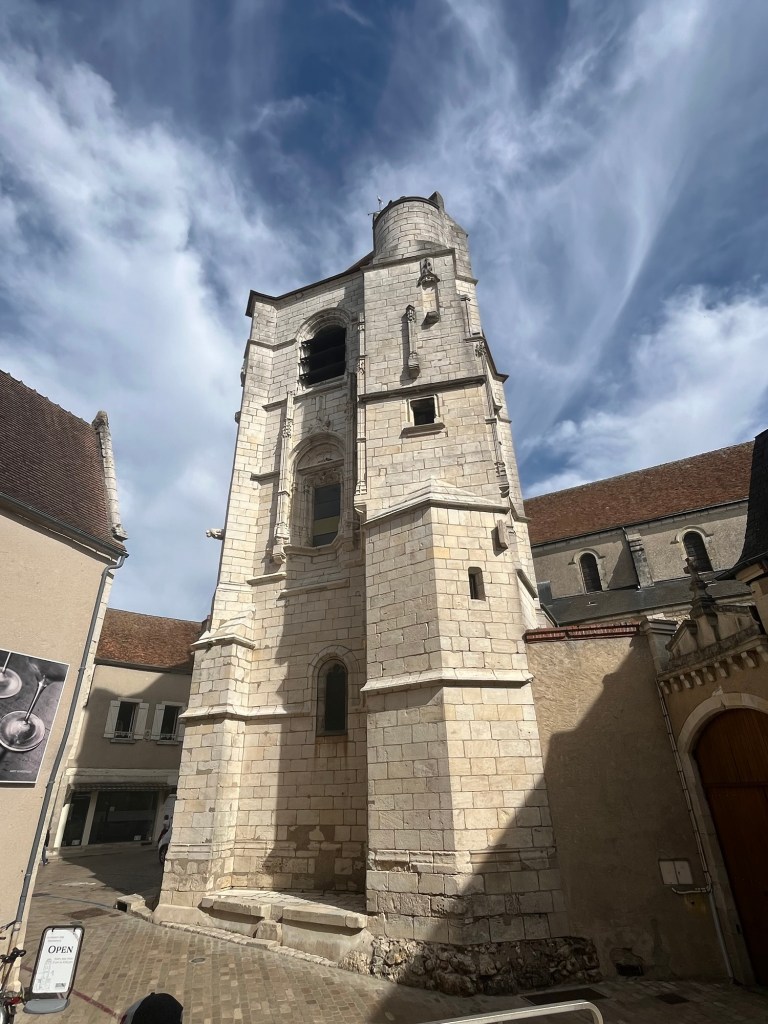
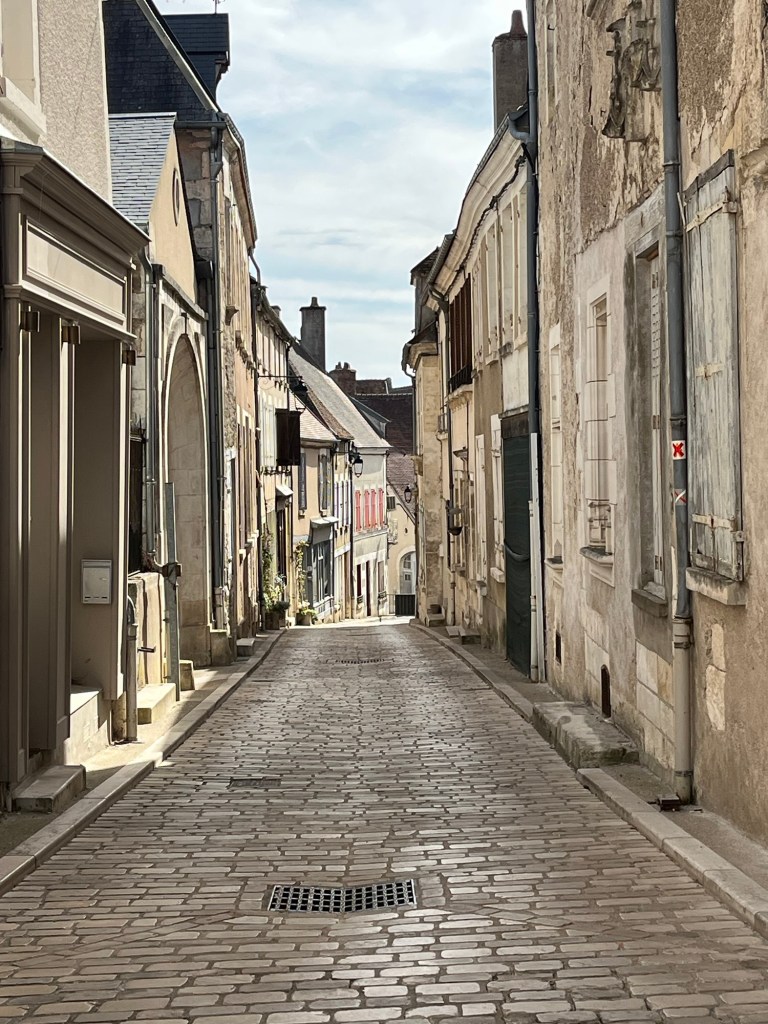
Having had to get up whilst it was still dark on Sunday morning, September 20, we made excellent time getting to Auxerre. There was even space at the car park we had chosen (P4N#3021) despite the fact that none of the overnighters had yet left! Liz went back to bed for an hour or so before we had breakfast and ventured into town. Auxerre is another medieval town so the car park was on the other side of the River Yonne but with a footbridge nearby. It was a lovely town with a 13th century cathedral, a medieval clock tower and a 5th century abbey. All visited via the old cobbled streets. The town itself dates back to the 1st century and was the capital of the Roman Empire in the 4th century. Delightful place and because it was so early, devoid of people. The whole visit was done and dusted by 10.00.

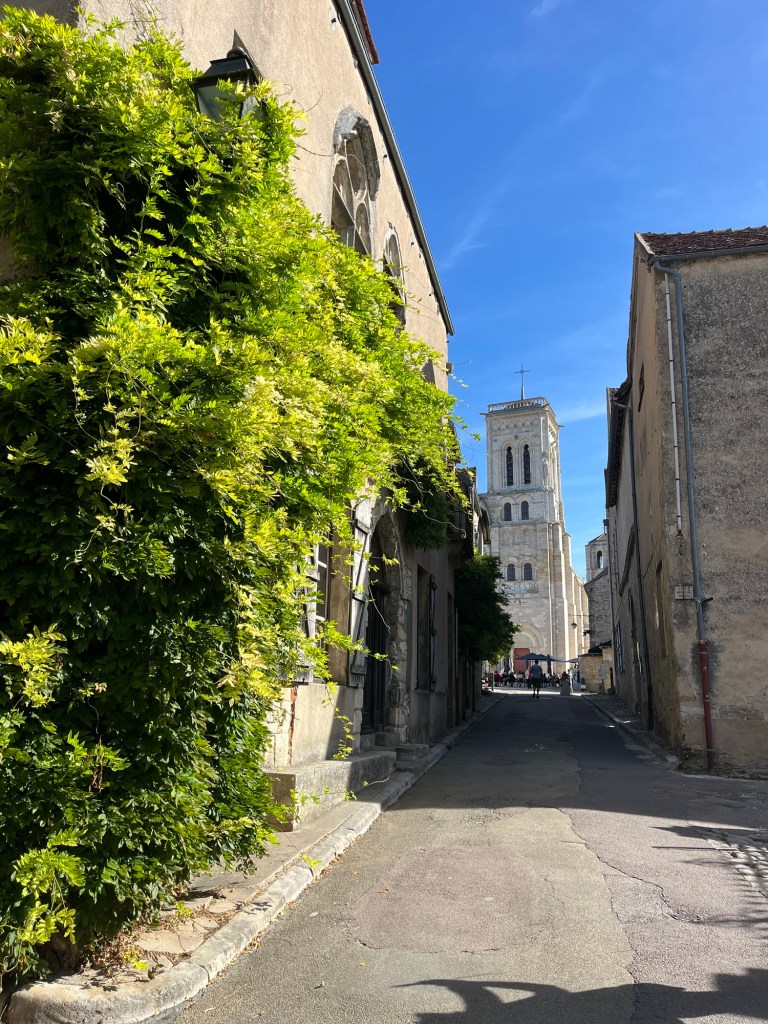
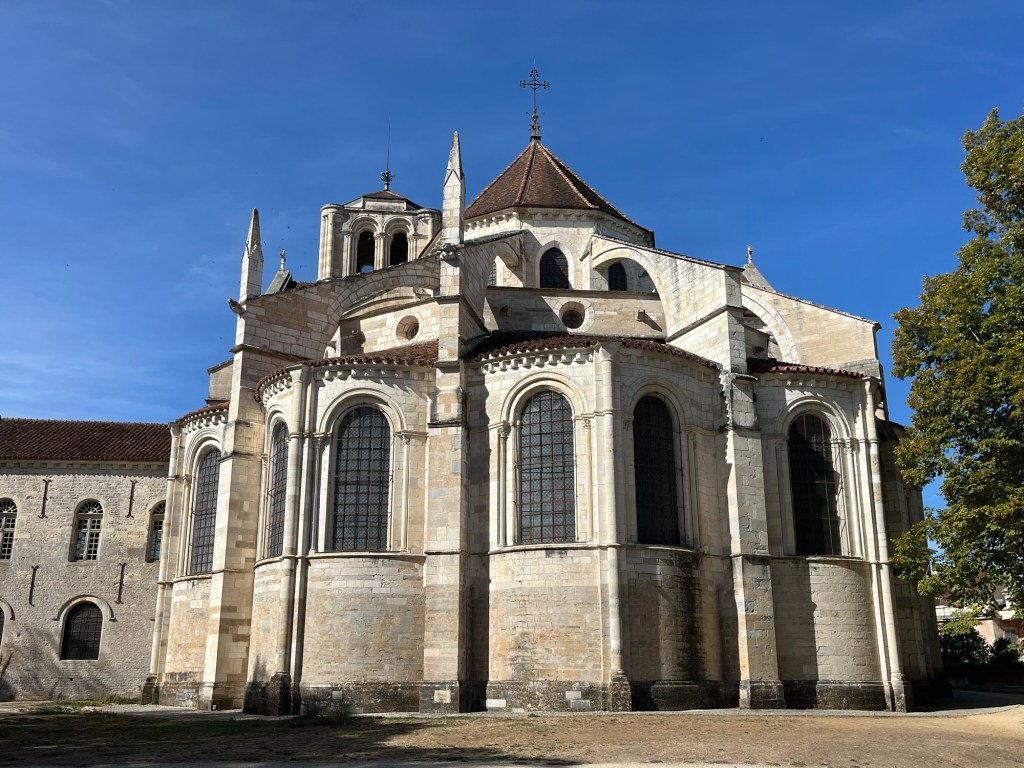
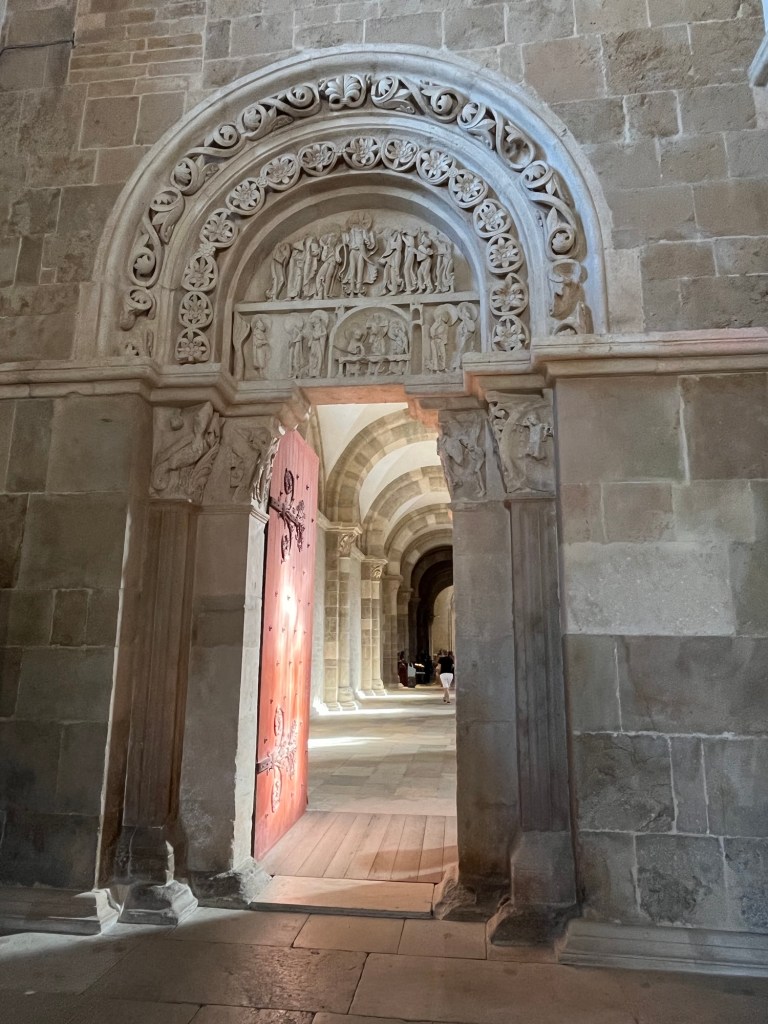
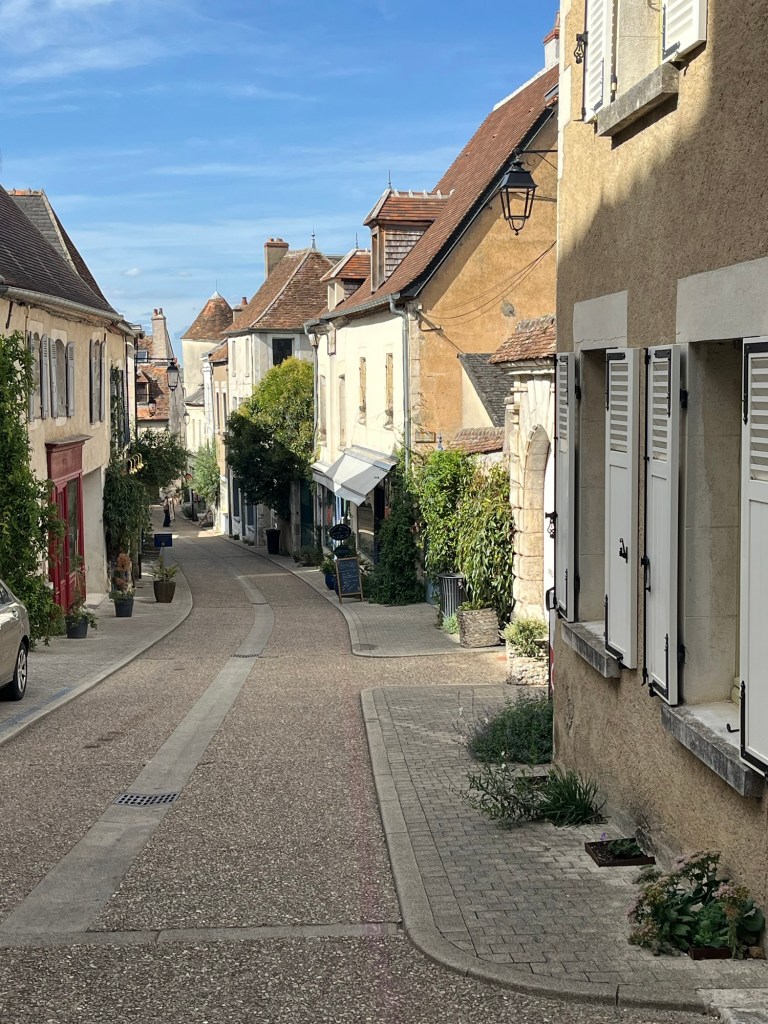
Onto the village of Vezelay, a UNESCO site with a religious context. It wasn’t in our guide book which seems strange given its UNESCO standing. The abbey at Vezelay supposedly holds the relics of Mary Magdalen and as such became a major pilgrimage destination from the 11th century. In fact, it’s the starting point in France for the Camino de Santiago de Compostela. We parked at the bottom of the village and walked up. Why are all churches at the very top of steep hills??!

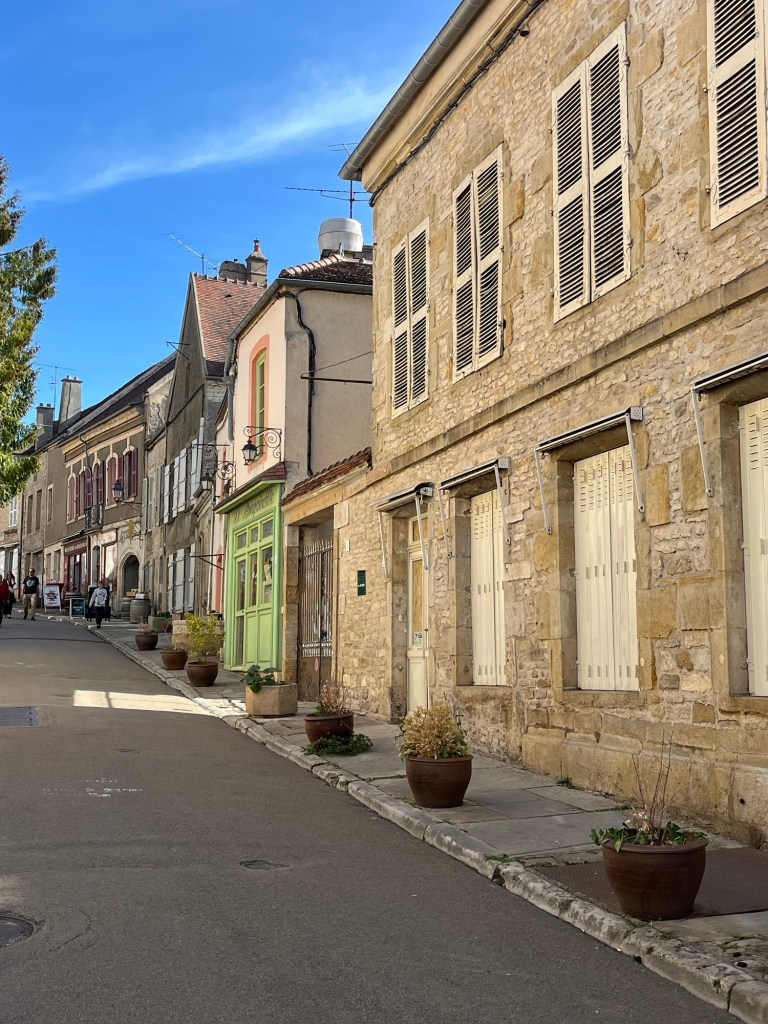
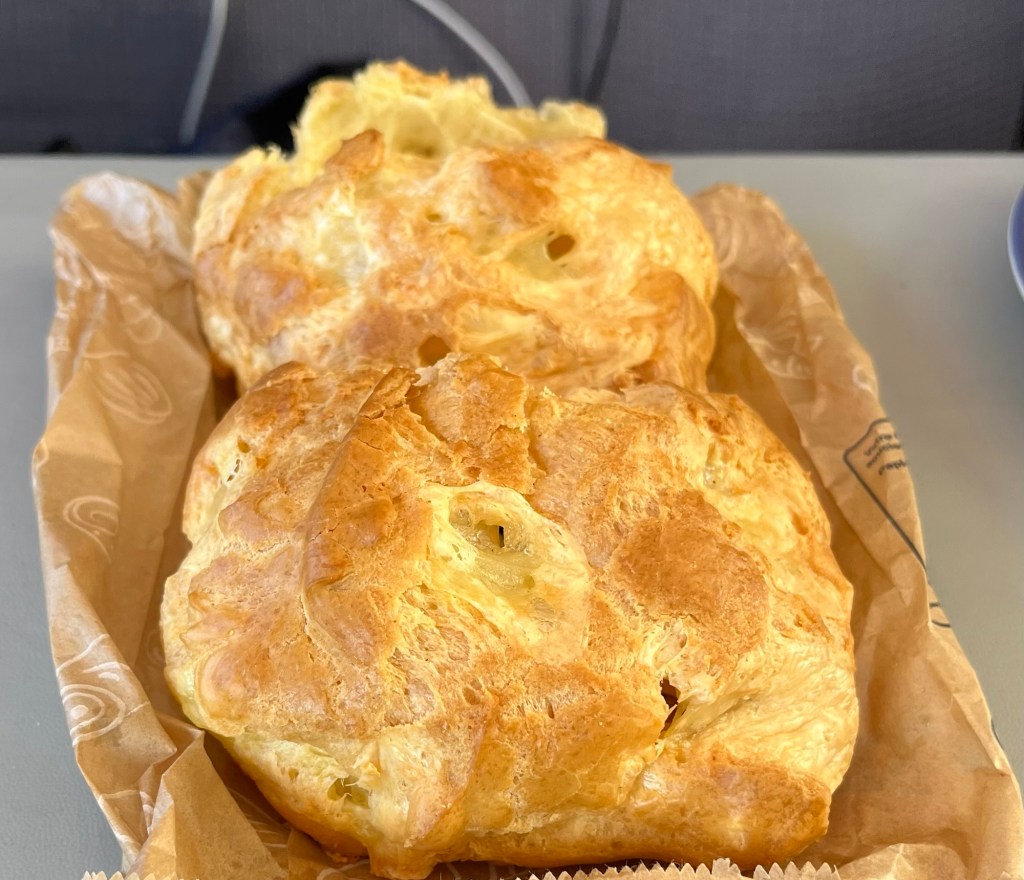
It was actually quite nice wandering the streets after visiting the Abbey although fairly touristy. We succumbed into buying a bottle of the local beer and a cheese brioche thing called Gougère. It was rather delicious.

Gougère

Next stop was Sancerre. We had low expectations as one review had described it as not one of the beau villages en France. We thought it was delightful. Again, it probably helped that it was mid afternoon on a Sunday. We popped into a wine shop and bought a couple of bottles, of course!

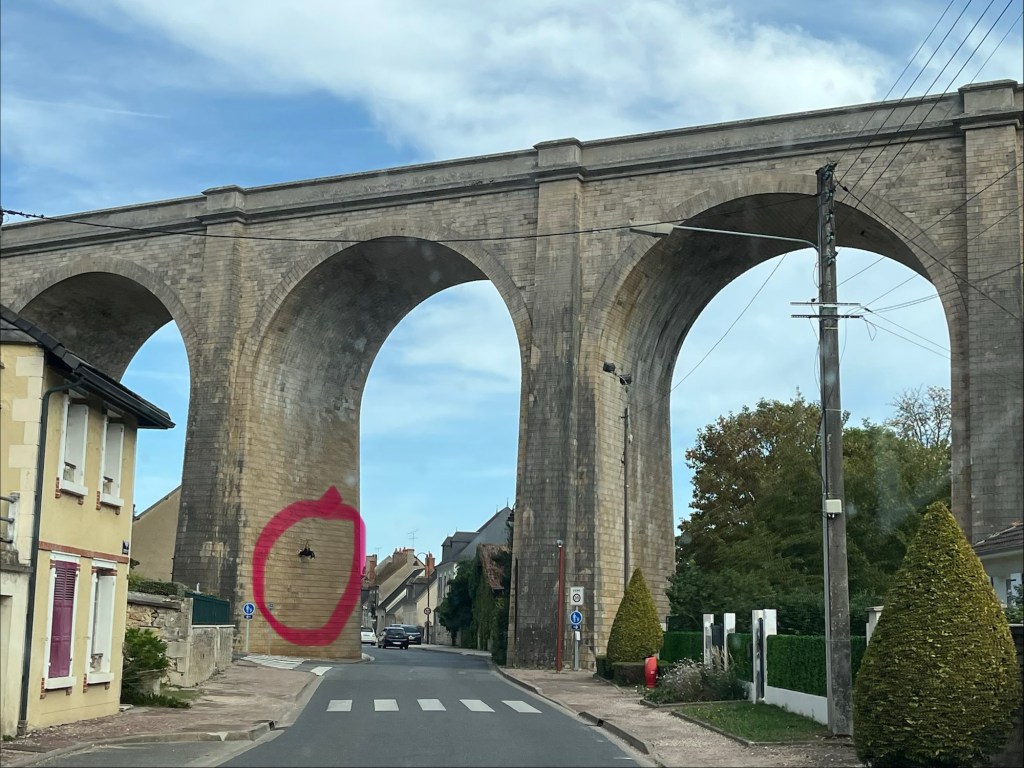
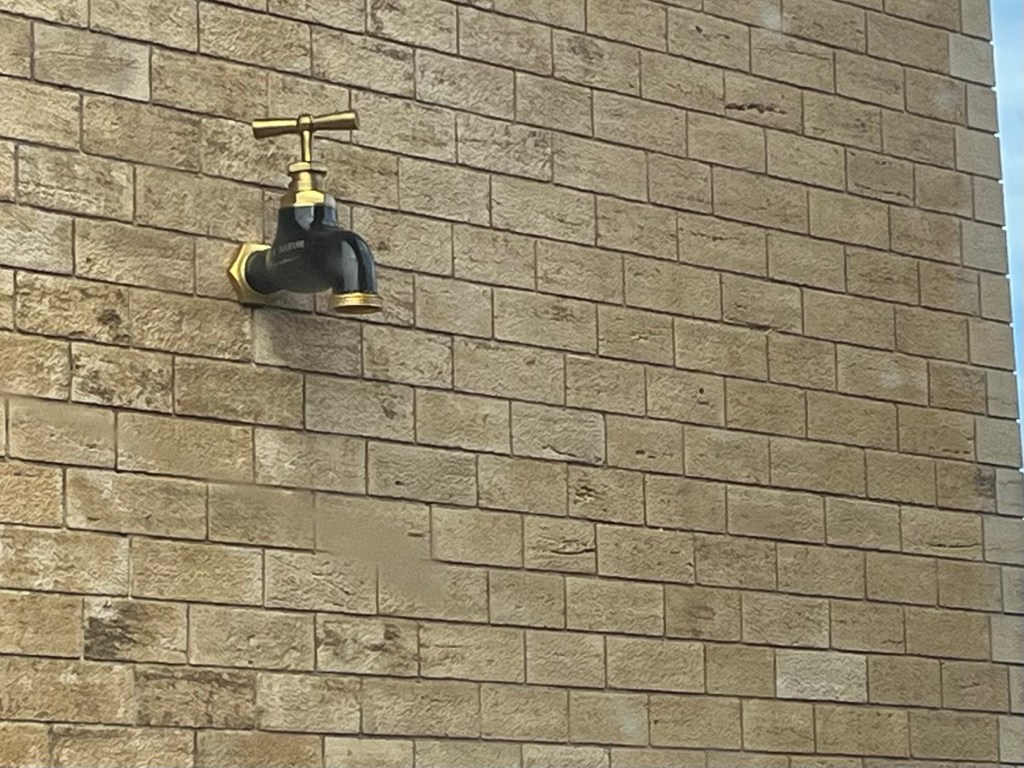
When we were driving out of Sancerre, we noticed a viaduct that had a water tap halfway up the wall. No idea why!

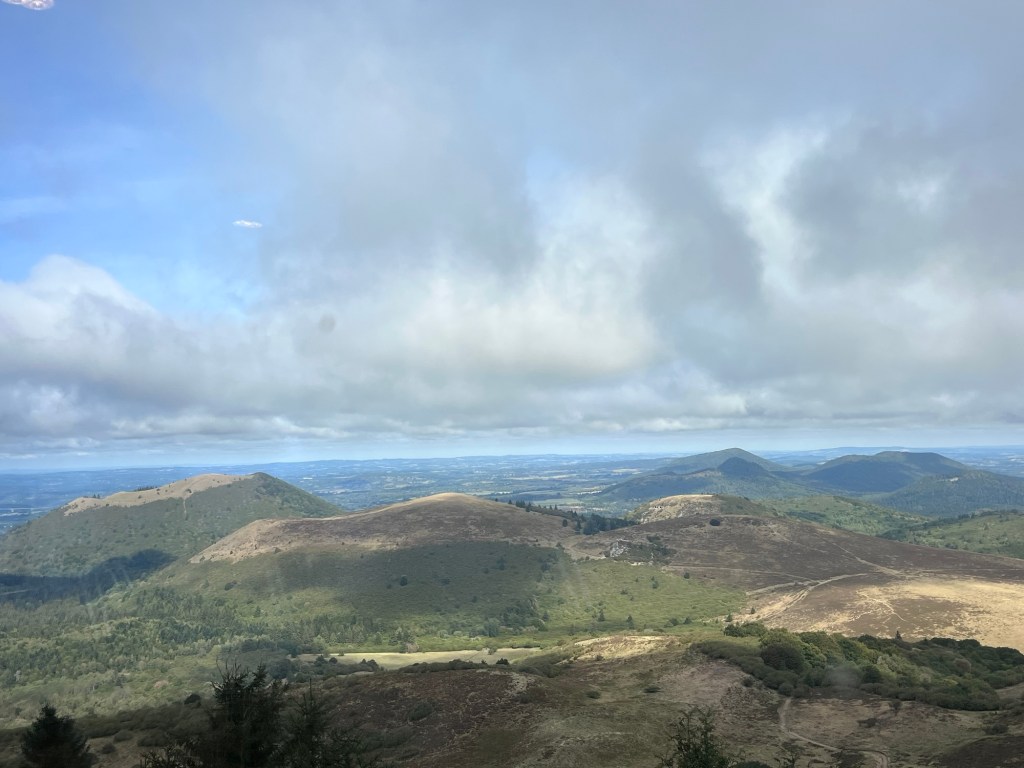
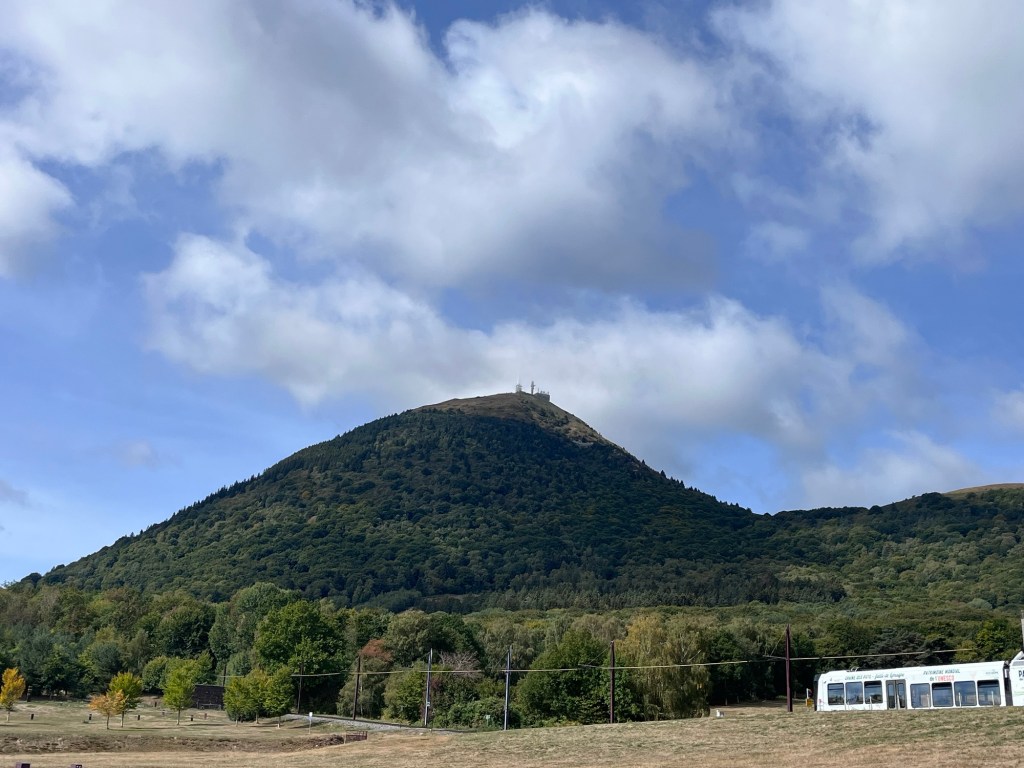
From there we continued heading vaguely south towards the Massif Central. There are a number of extinct volcanoes there that make up the Chaîne de Puys. You can see why the French Resistance squirrelled themselves away so effectively when the Germans took over Vichy France. The woods are vast with lots of trails making it very difficult to follow if you were not a local. Apparently, the Tour de France came up the Puy de Dôme this year. We were very impressed given the gradients! We stayed overnight near the Puy de Dôme at a free park up (P4N#444818) nestled amongst trees. Lovely end to the day.

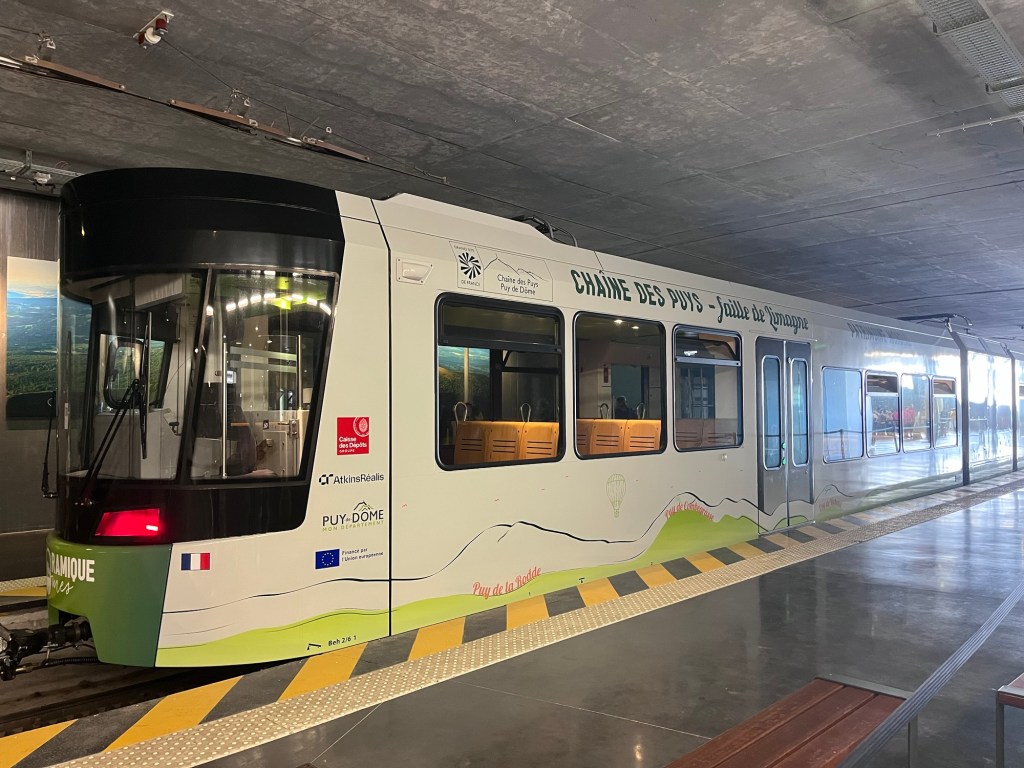
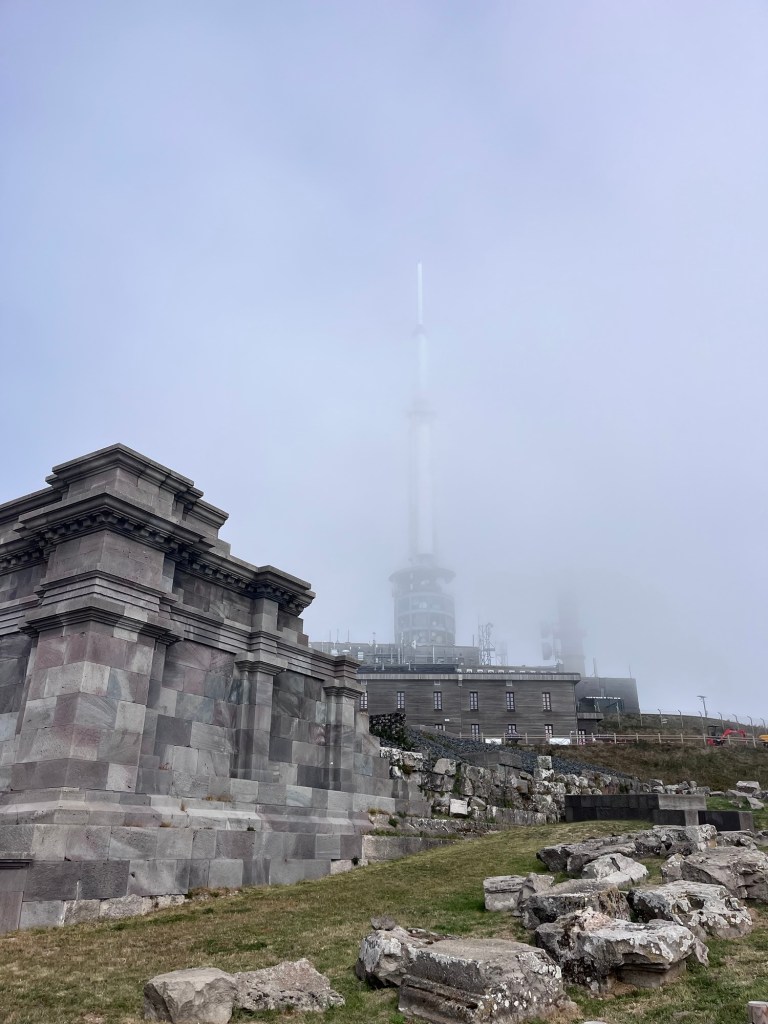
On Monday morning, we drove up to the train station to the Dôme as we didn’t fancy the trek up. We’d bought tickets the night before, not realising that there would be low cloud in the morning so we wouldn’t be able to see a lot from up there! We could have waited but we had lots to do so we caught the train anyway.

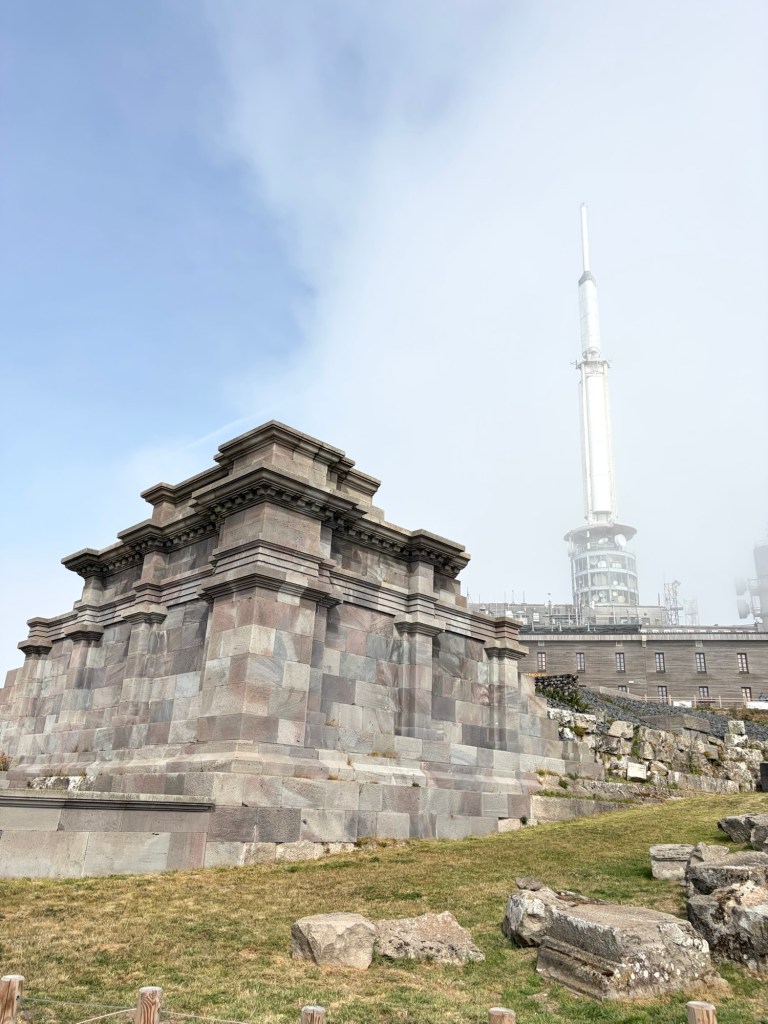
It was a lovely journey up and even though there was zero visibility most of the time, it was still fun. There was even a Temple to Mercury up there that was discovered in the 19th century. The museum was very interesting. One of the first longer distance airplane flights landed on its crest in 1911 to claim the prize of 100,000 Francs from the Michelin brothers. They had to take off from Paris and land at Puy de Dôme within 6 hours.

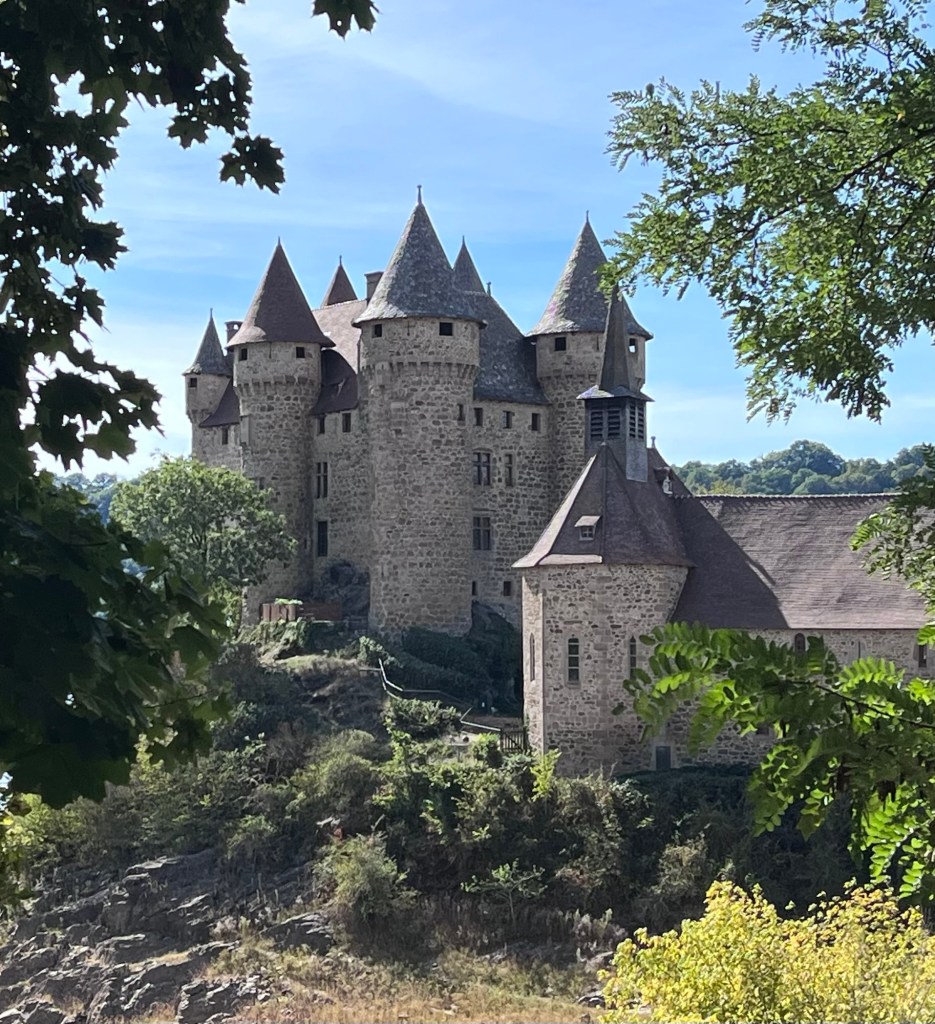
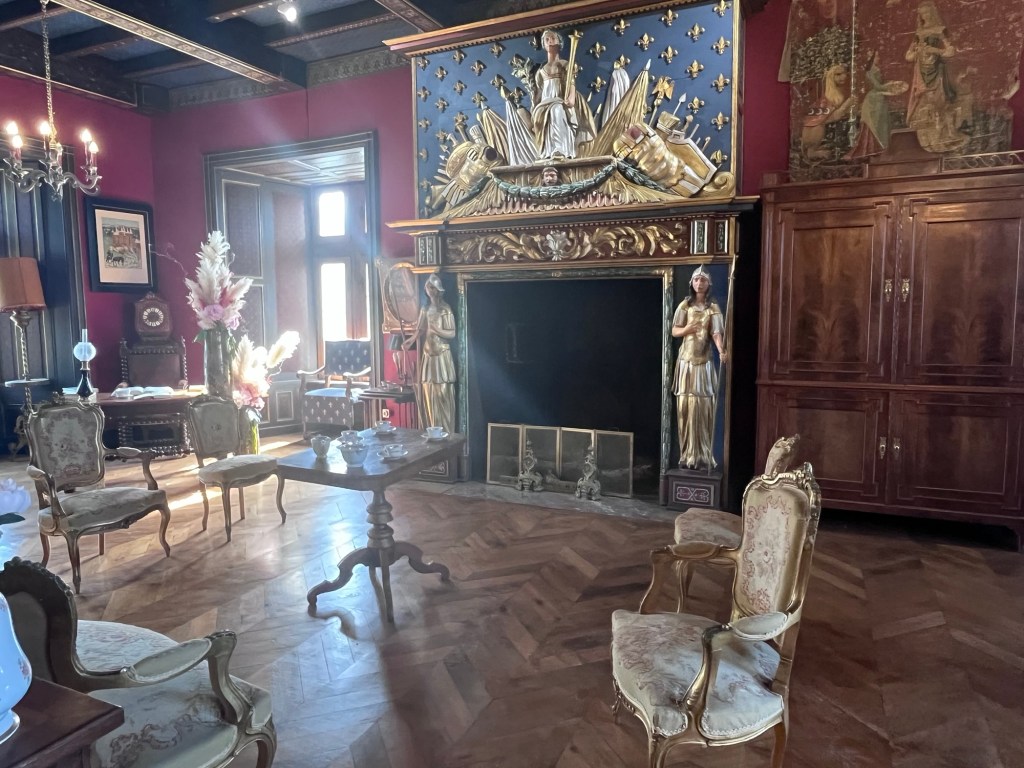
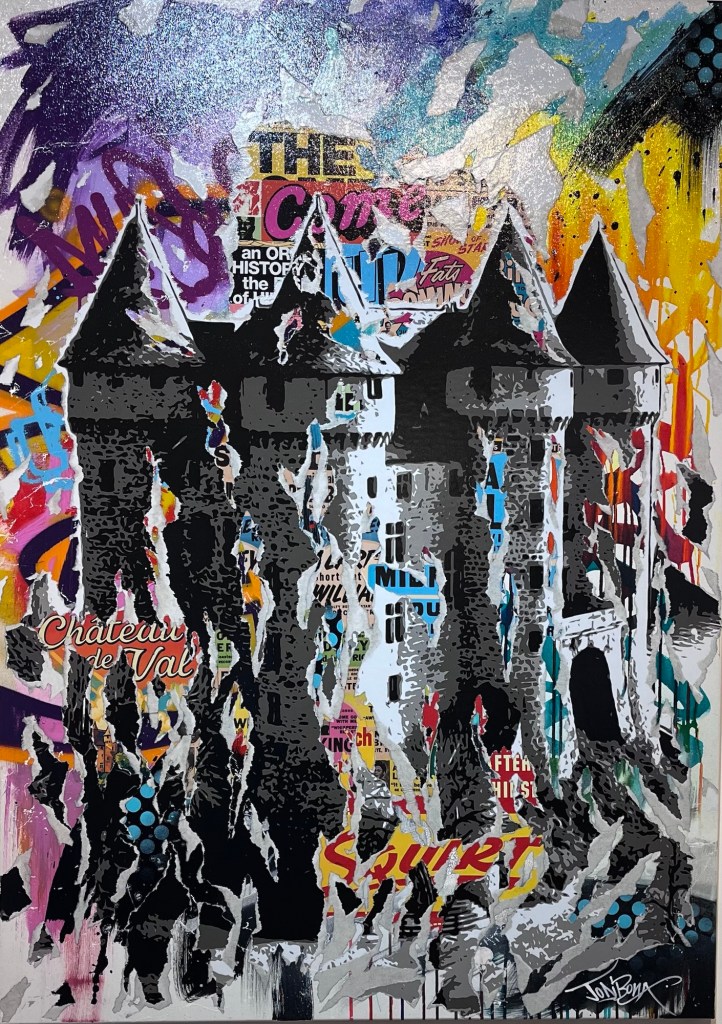
Back down on the midday train before heading onto Chateau de Val. The castle was on the Dordogne River. It sat very majestically on its promontory but was less impressive inside. The best part was the modern art exhibition by Jo Di Bona.

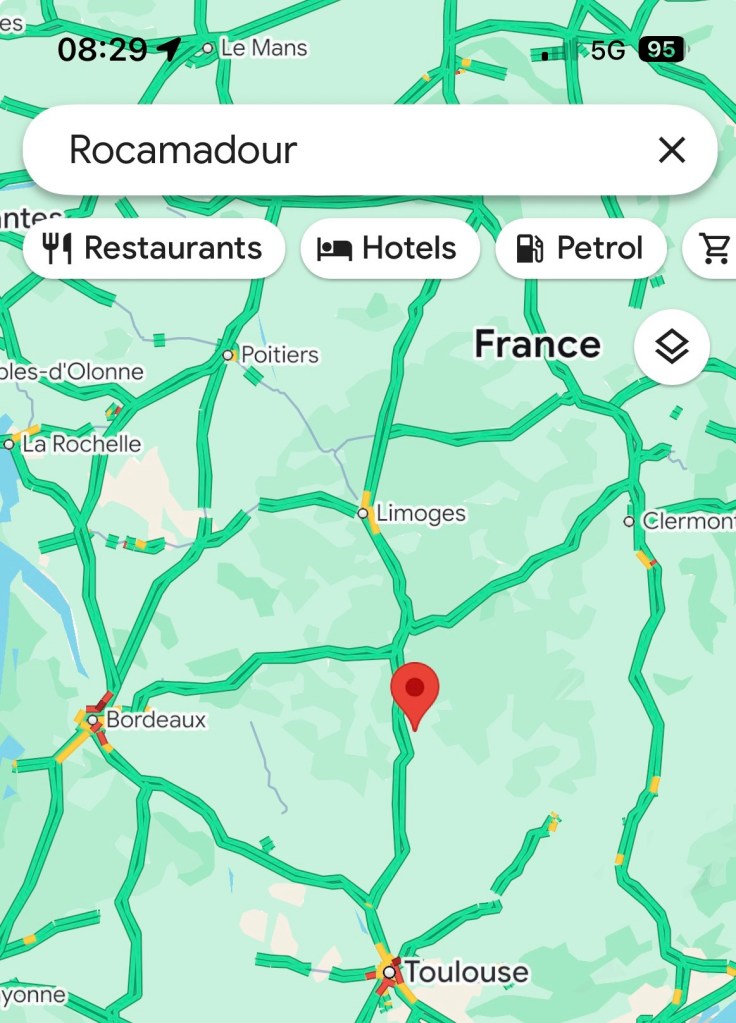
We finally made it to our overnight stop at Rocamadour (P4N#17495) around 19.00 in preparation for an early start in the morning.

Miles since last blog: 411

Miles this trip: 1,286

Troyes and Chablis

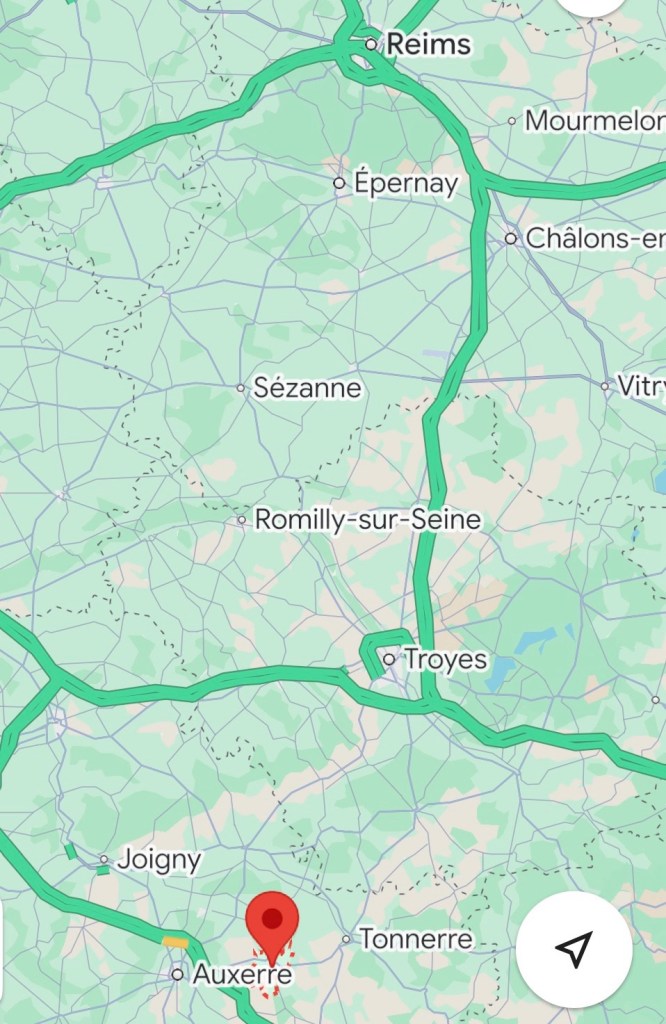
We had a leisurely morning packing up and saying goodbye to our friends in Èpernay on Saturday, September 19 before continuing our journey south (ish). First stop was back to Avenay Val d’Or where we had stayed on Wednesday night to pick up some more of their lovely champagne!

Vertus

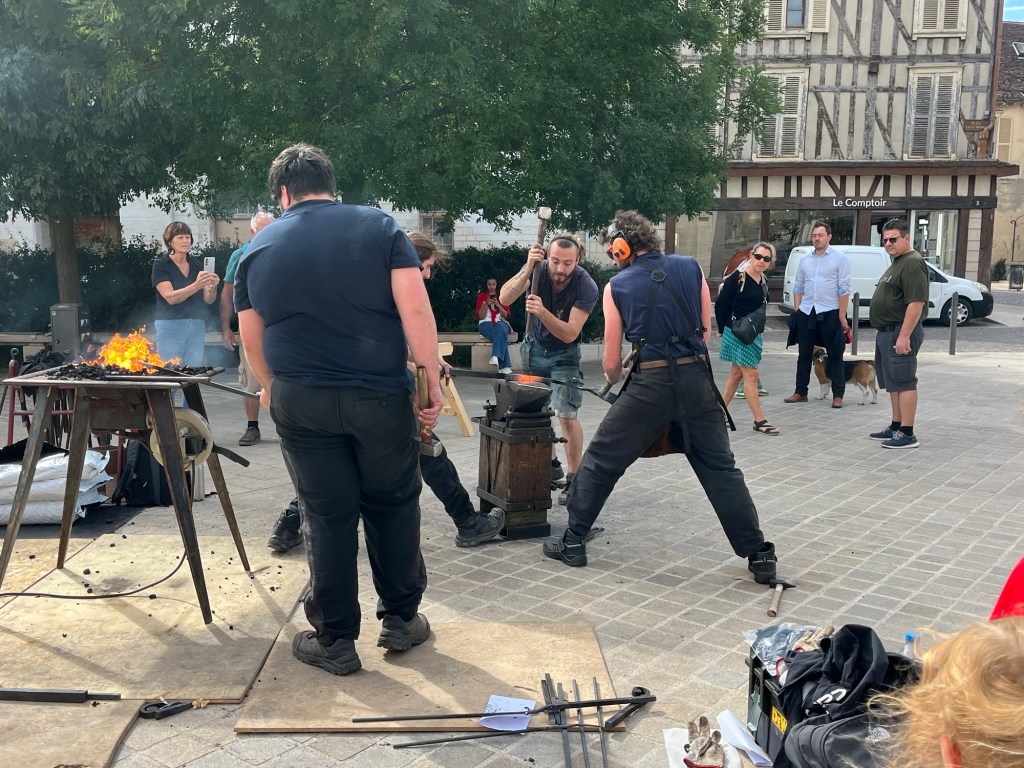
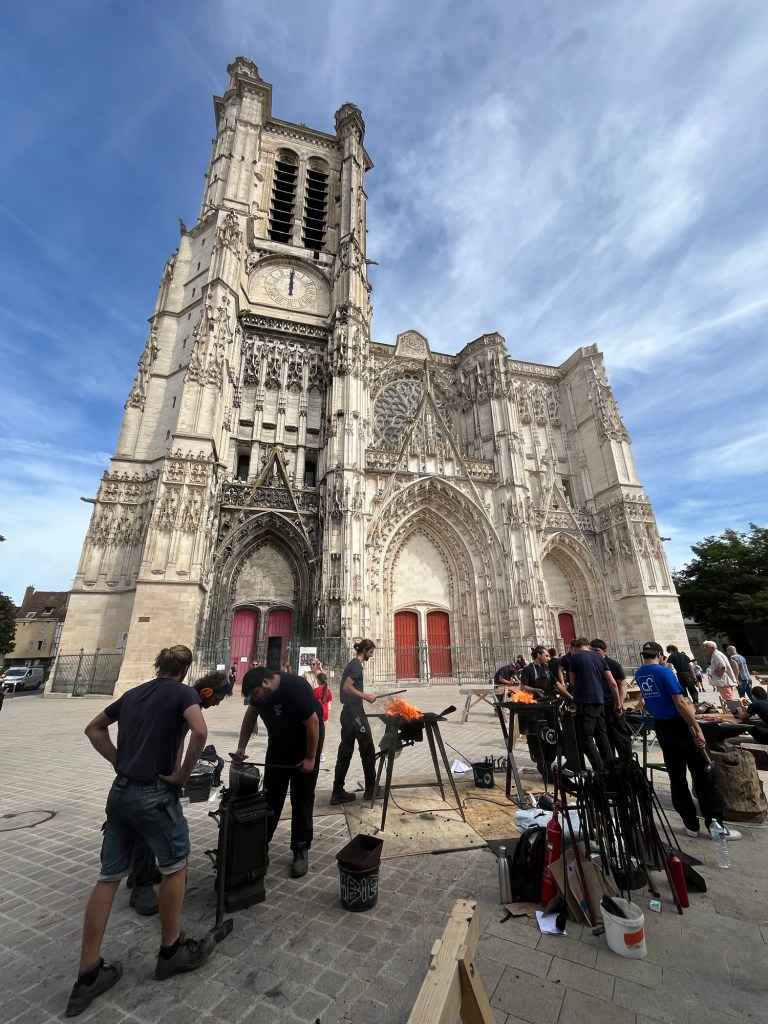
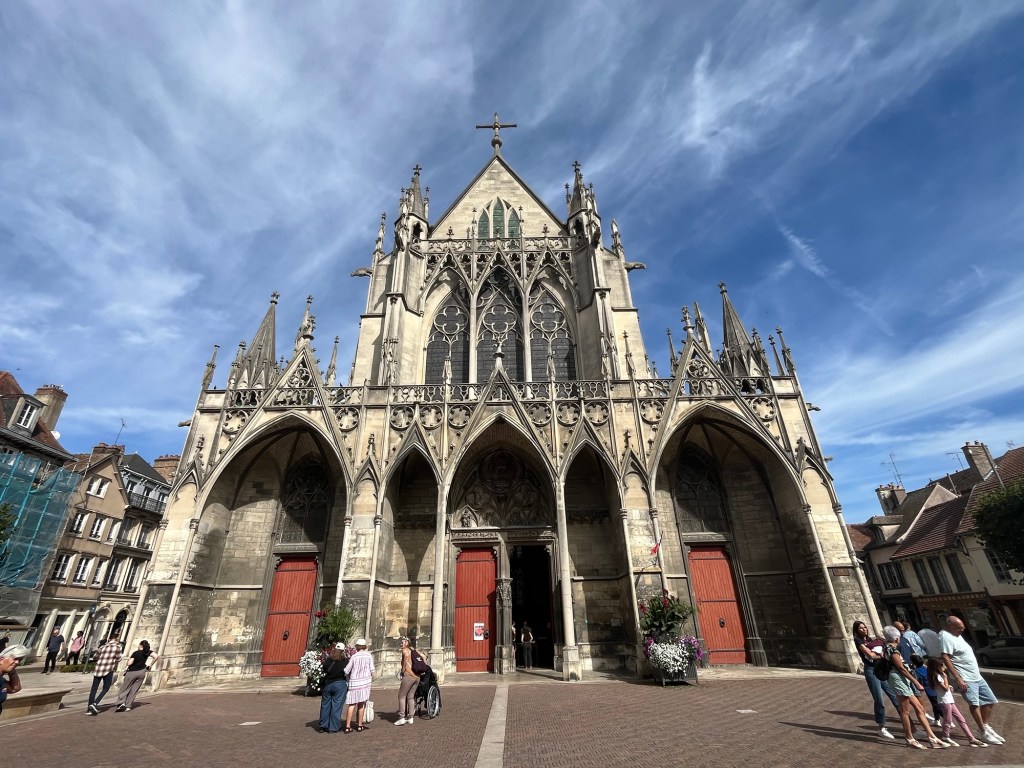
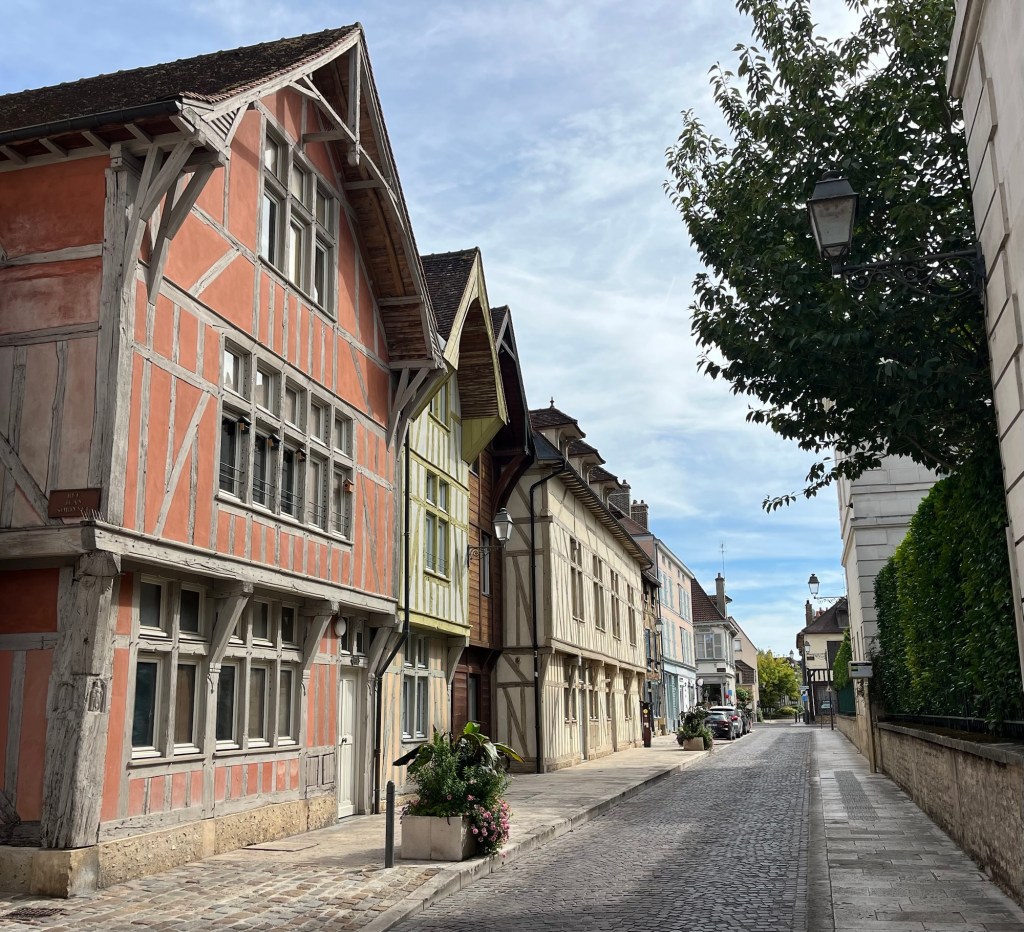
Then onto Vertus, a sweet town before Troyes, a wonderful medieval town. We were able to park up just outside the historic centre of Troyes and walk in. The car park was very busy but a van pulled out just as we entered so the parking goddess was definitely looking out for us. One of the reasons the town was so busy, apart from being a Saturday afternoon, was that it was National Heritage Weekend. This was to celebrate all the traditional crafts across France. So, in front of the cathedral were many different apprentices showing off their skills. There were blacksmiths, carpenters, roofers – you name it. Lovely to see such artisan skills being celebrated. Further into town there was a fete as well, where they were letting kids try out wheelchair basketball to see what it felt like to be in a wheelchair. Clever idea.

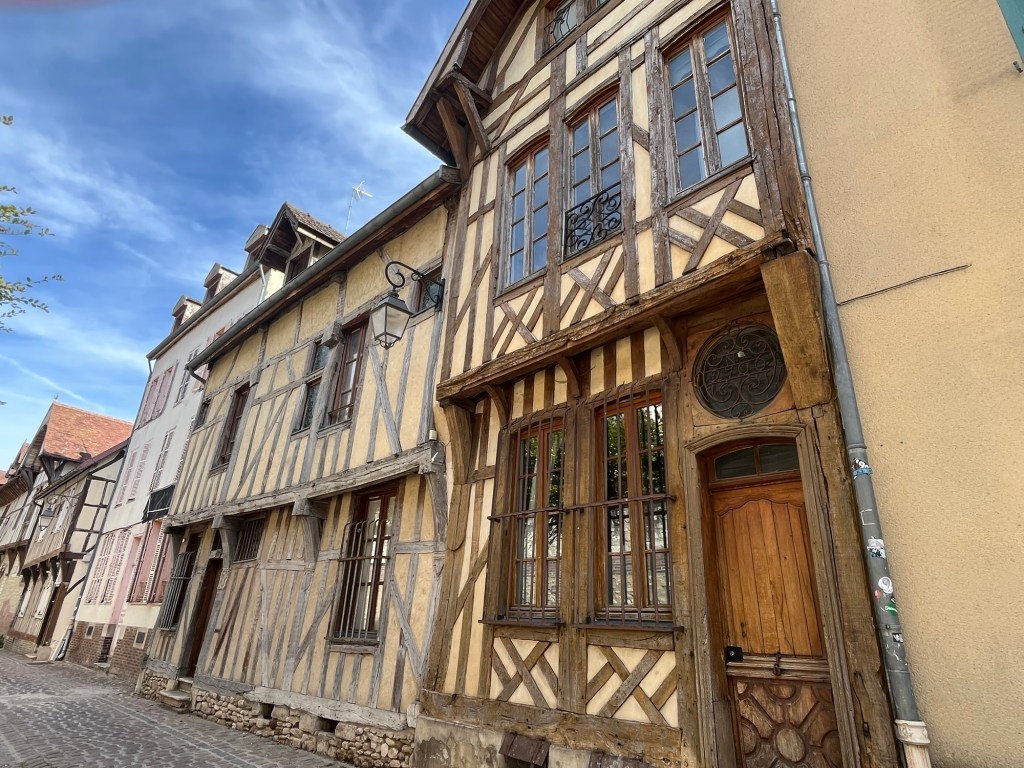
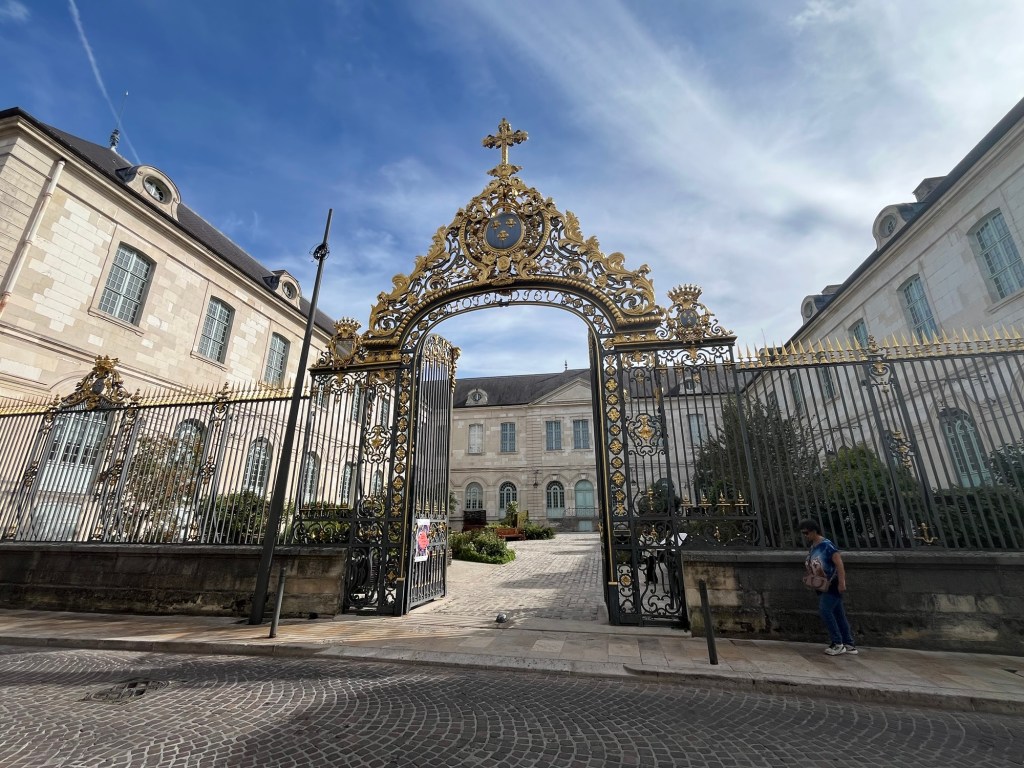
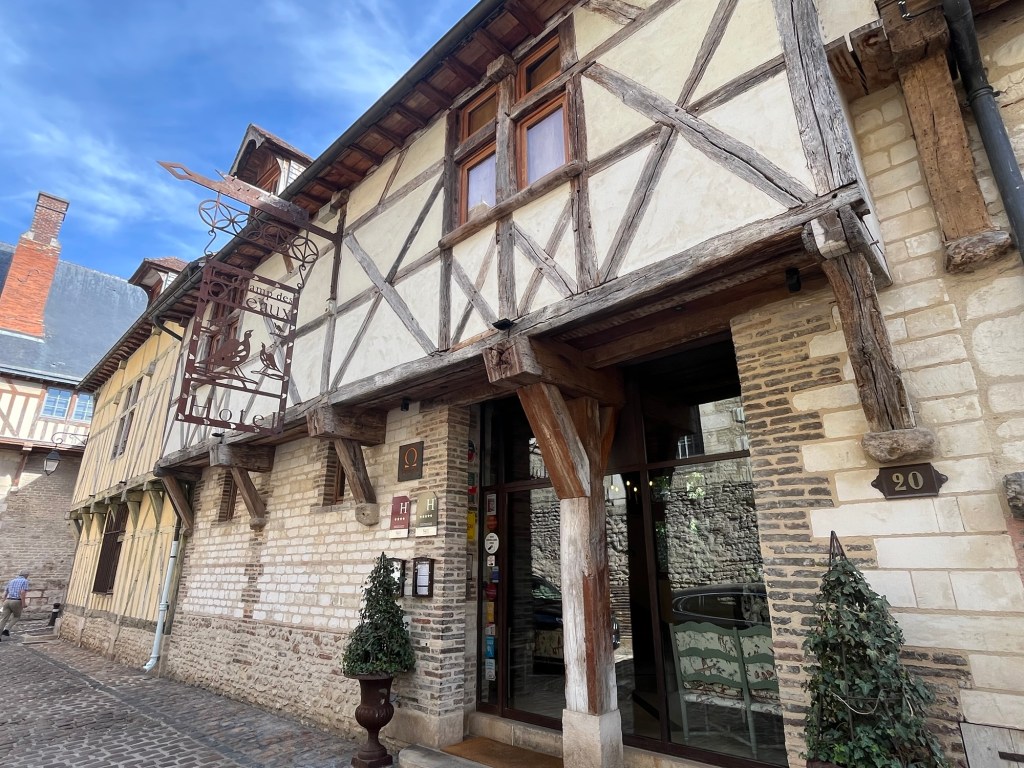
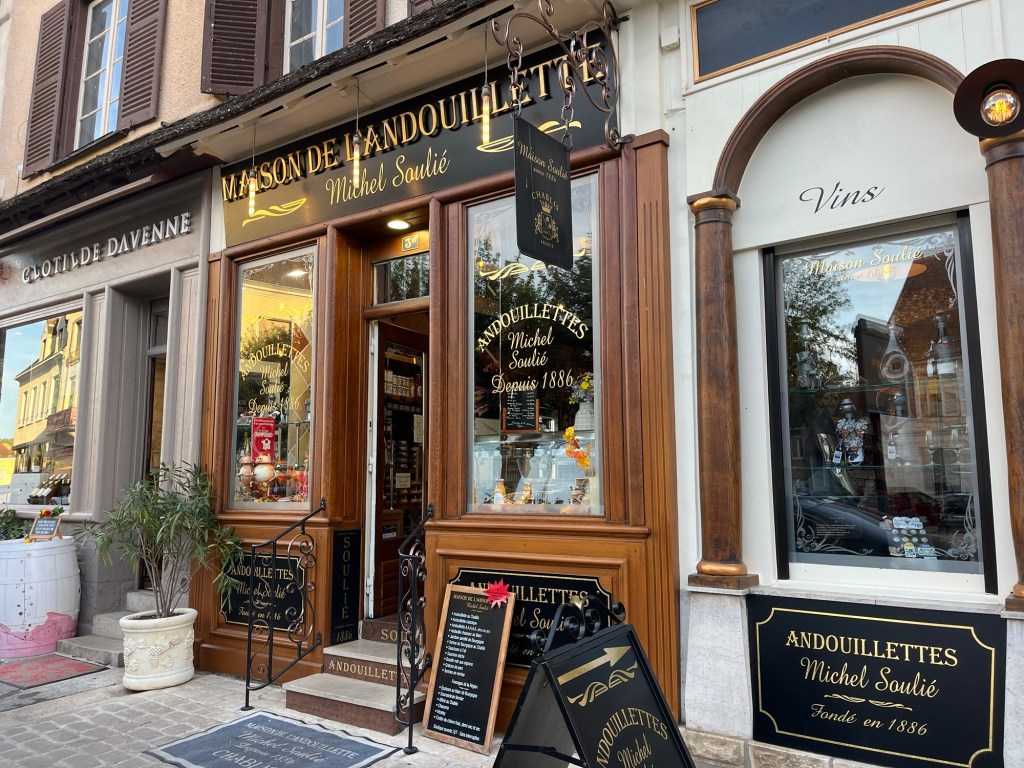
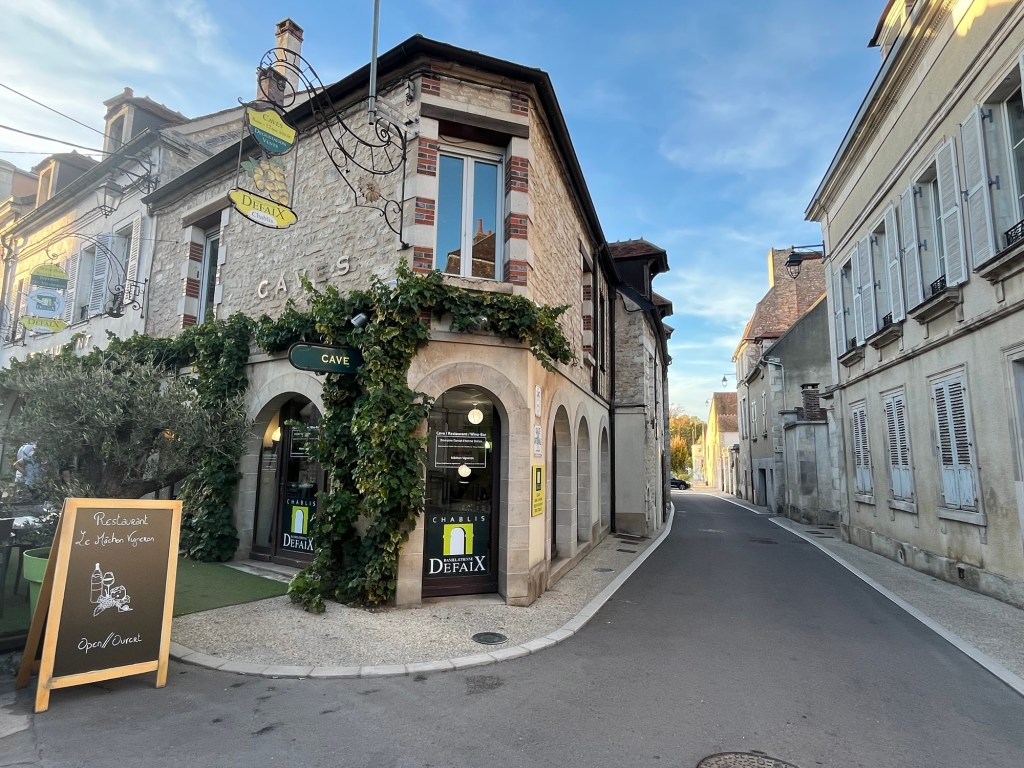
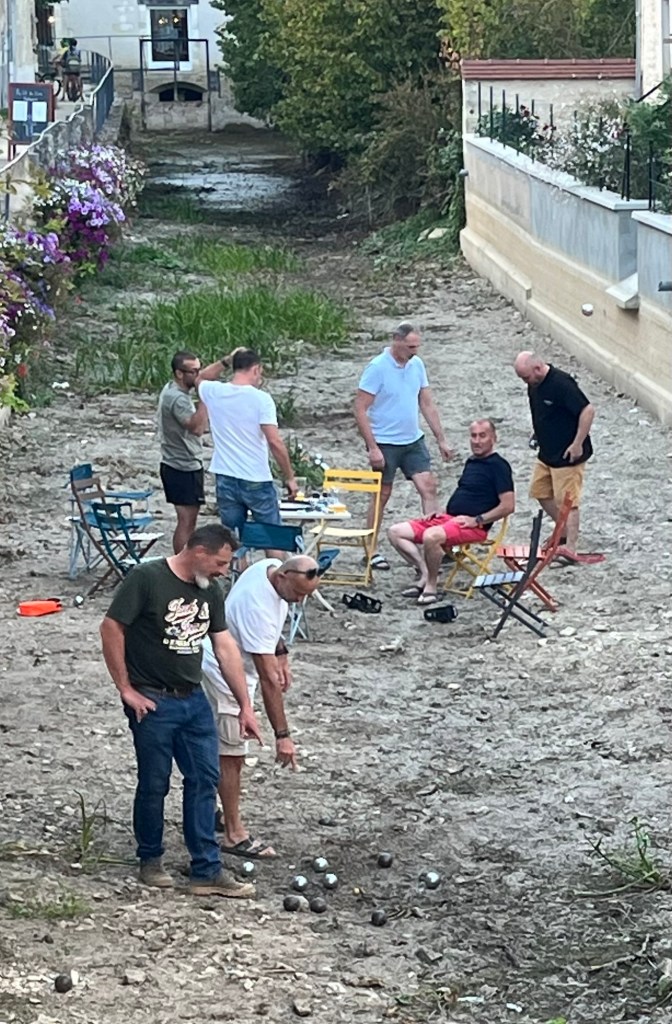
From Troyes we went onto Chablis. We stopped at another France Passion winegrower and managed to snaffle a tasting for 18.00. Lovely wine and we learnt more about the difference between Petit Chablis and Chablis. The latter grown on land that was once a seabed and has fossils in the stone. Consequently, Chablis has a more salty taste to it. We then offset our free night’s accommodation by buying several bottles of his wine! A wander into town where we purchased some local cheese and bypassed the shop selling andouillettes (tripe sausages!). On the way back we spotted some locals playing boules in a dry river bed. The only downside to a lovely day was the fact that our host, M Jacquin, needed to leave by 07.00 the next morning to set up a stall in a market in Dijon that morning!

The pin is Chablis!

Miles since last blog: 117

Miles this trip: 875

Champagne!

We were just about to have a leisurely breakfast at our fantastic overnight stop in Dinant when we saw two couples walking down the track to our park up. They had arrived very early for their stopover with two massive German A Class motorhomes. one was blocking the track so we couldn’t get out so they parked it beside us. It felt like the equivalent of early morning towels being left on the sun beds! We decided against having breakfast there and left them to it. We found a field a few miles away to eat in comfort (P4N#718421) before our long drive to Reims (pronounced Rance apparently).

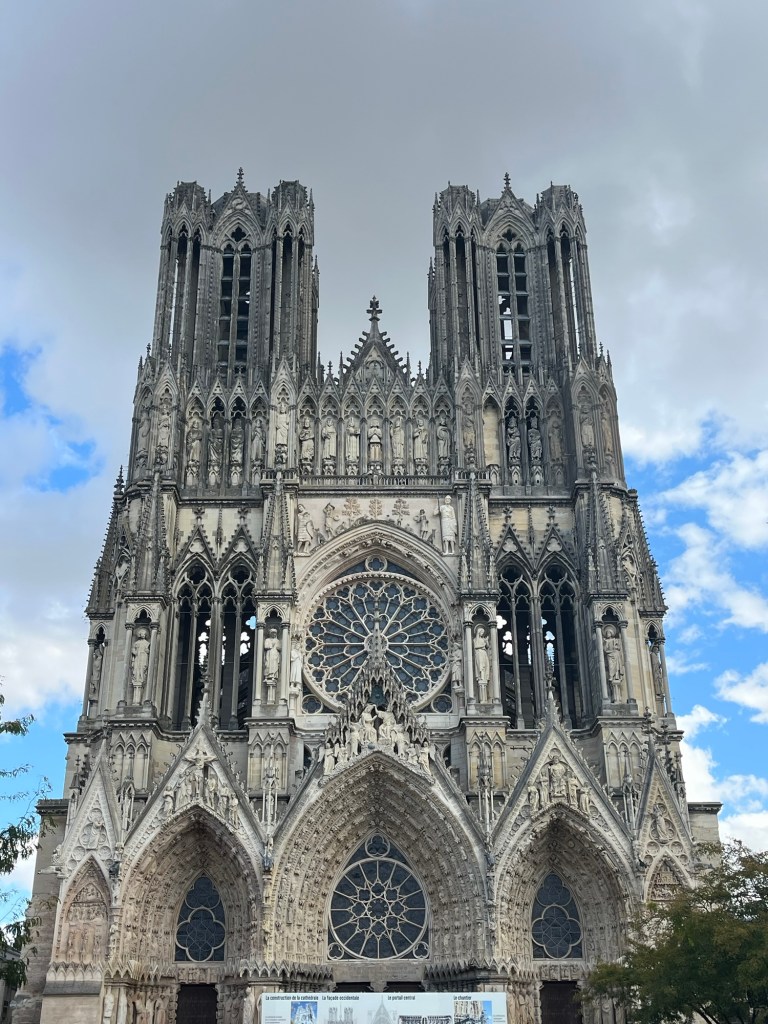
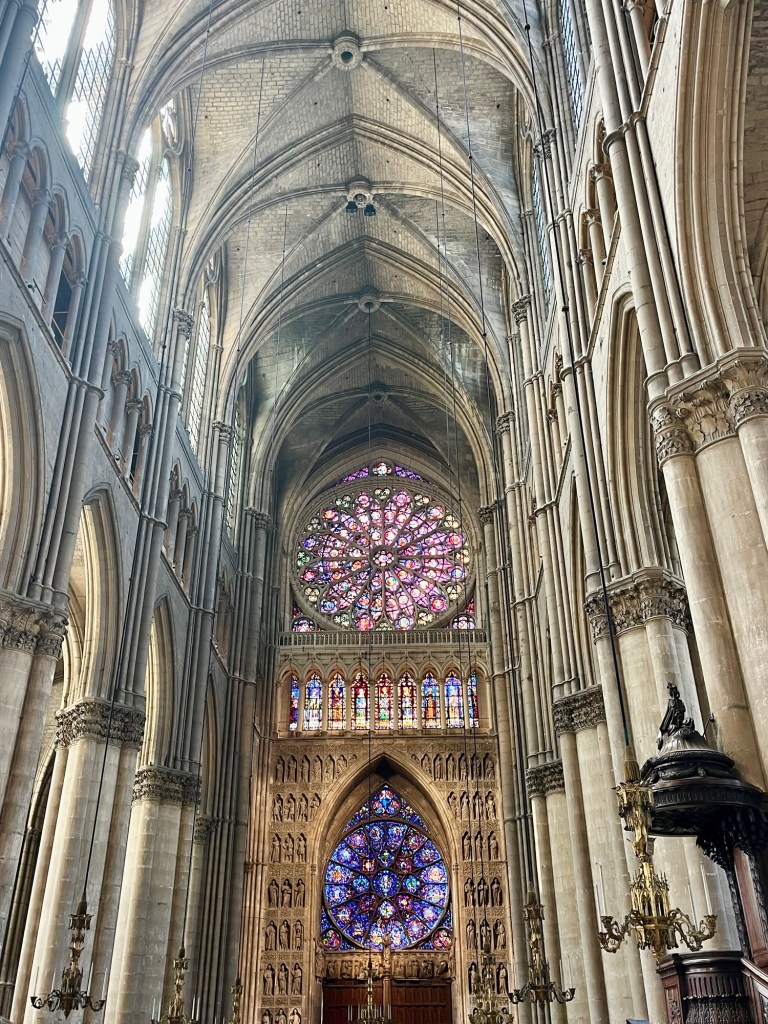
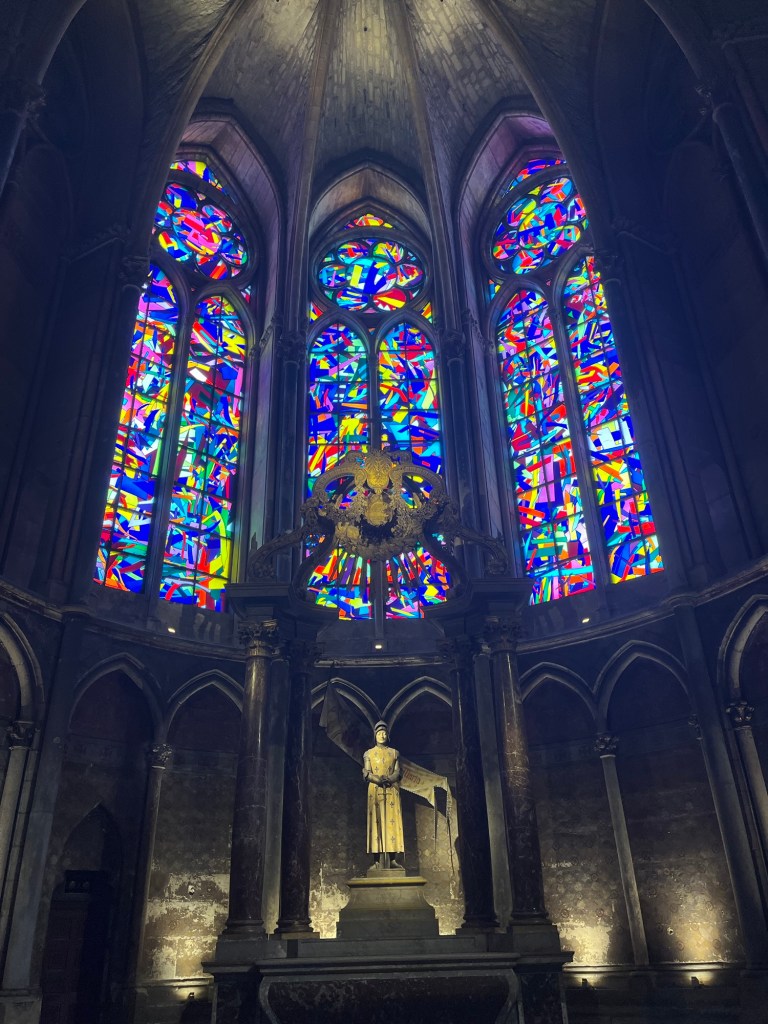
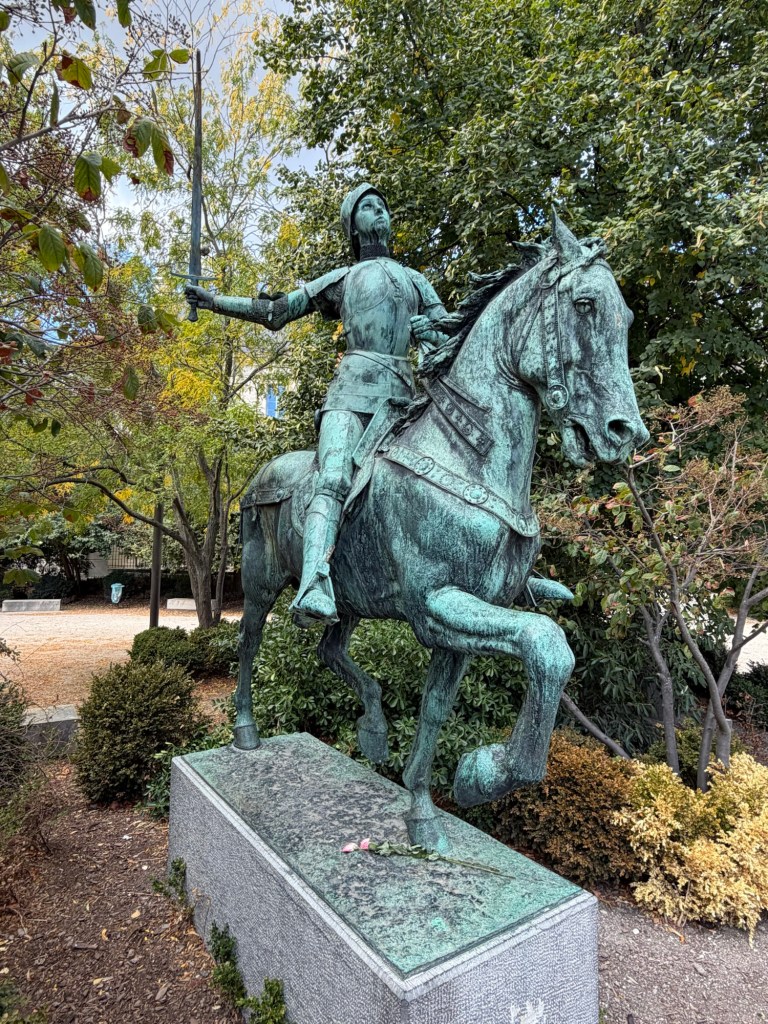
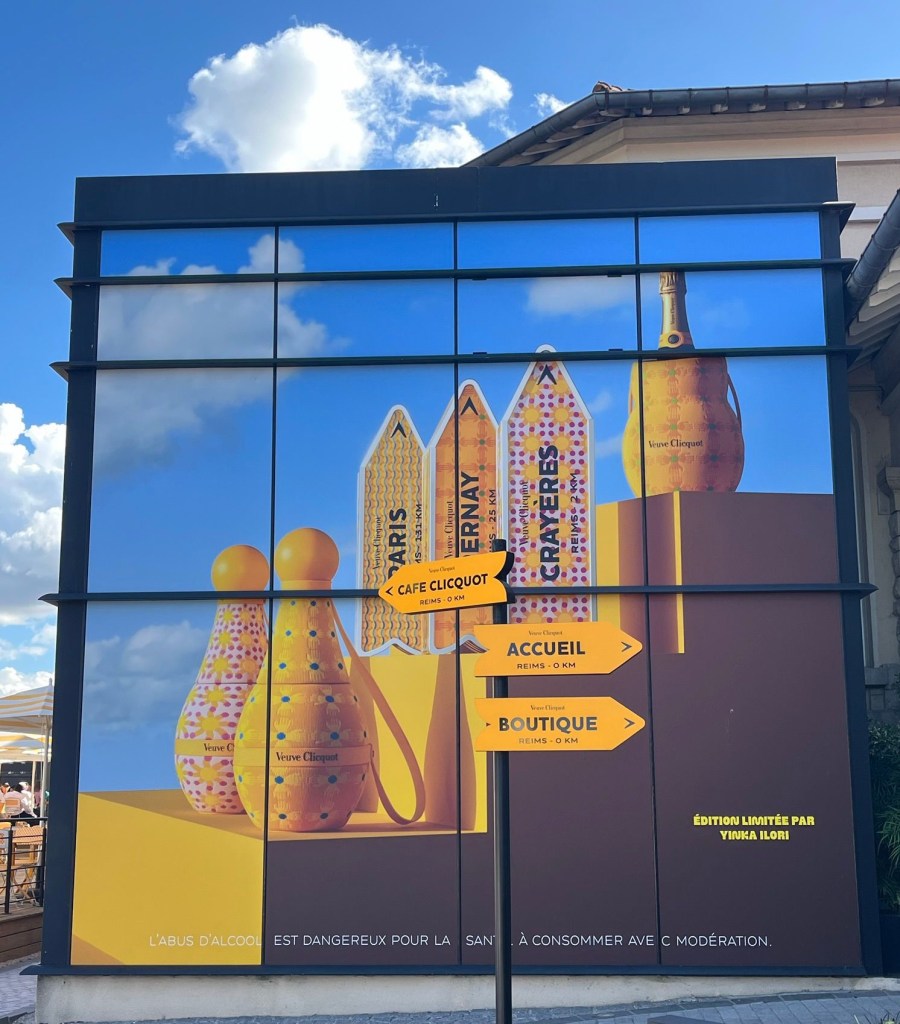
We arrived around midday so, of course, everything was pretty much shut apart from bars and restaurants. We had found free parking by the football stadium (P4N#13068), which meant it was only a 20 min walk into the centre. Despite Reims being the capital of the champagne region and where kings of France were crowned, the place underwhelmed us. The huge cathedral felt more like a tourist attraction than a place of worship. There was a statue of Joan of Arc outside but even that was tucked into a corner so after a quick look round we returned to Dora to continue our way. On our way out of Reims we stopped at Veuve Cliquot and bought a friend a present. I’m not sure their champagne is any better than others but their marketing certainly is. Whilst Moet and Chandon is still the world leader in number of bottles sold per year, Veuve Cliquot is the market leader in the USA.

Veuve Cliquot

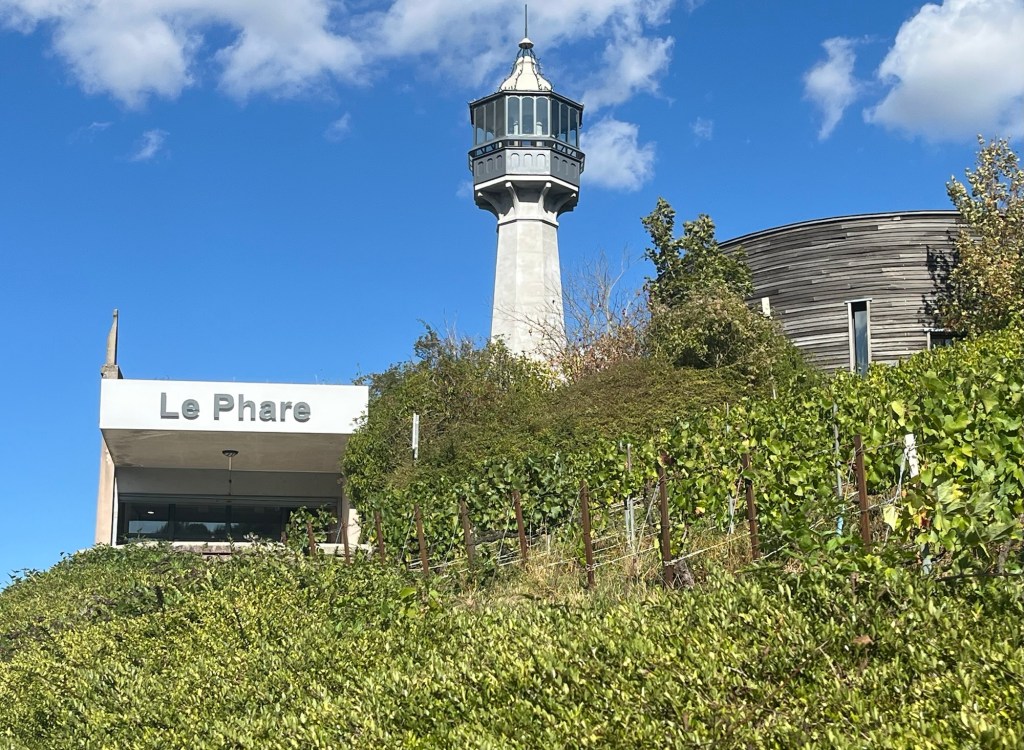
We went through lots of lovely villages and were amazed at how many champagne houses there were. Literally hundreds if not thousands. There was a lighthouse at Verzenay that acted as a centre for that region but we had to decline the tasting as we were still driving.

Verzenay

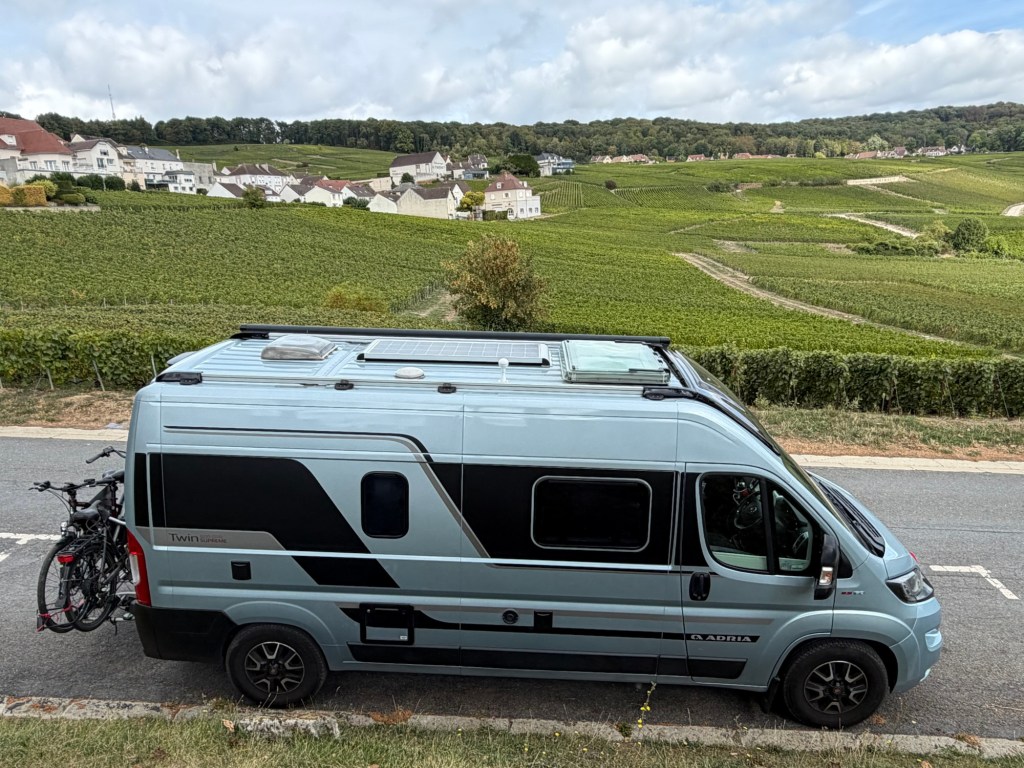
Our stopover for the night was the champagne vineyard of Yves Saintot. They are part of the France Passion scheme so we get to stay there overnight for free, get a free tasting and buy some bottles if we so desire. What’s not to love about this?

Our stopover with Dora

We had a lovely relaxed tasting from 18.30 for an hour or so and probably tried 6 different champagnes. We also got talking to our fellow tasters who were Dutch. They decided to buy cases of the stuff to take home with them whilst we were much more conservative and bought 3 bottles.

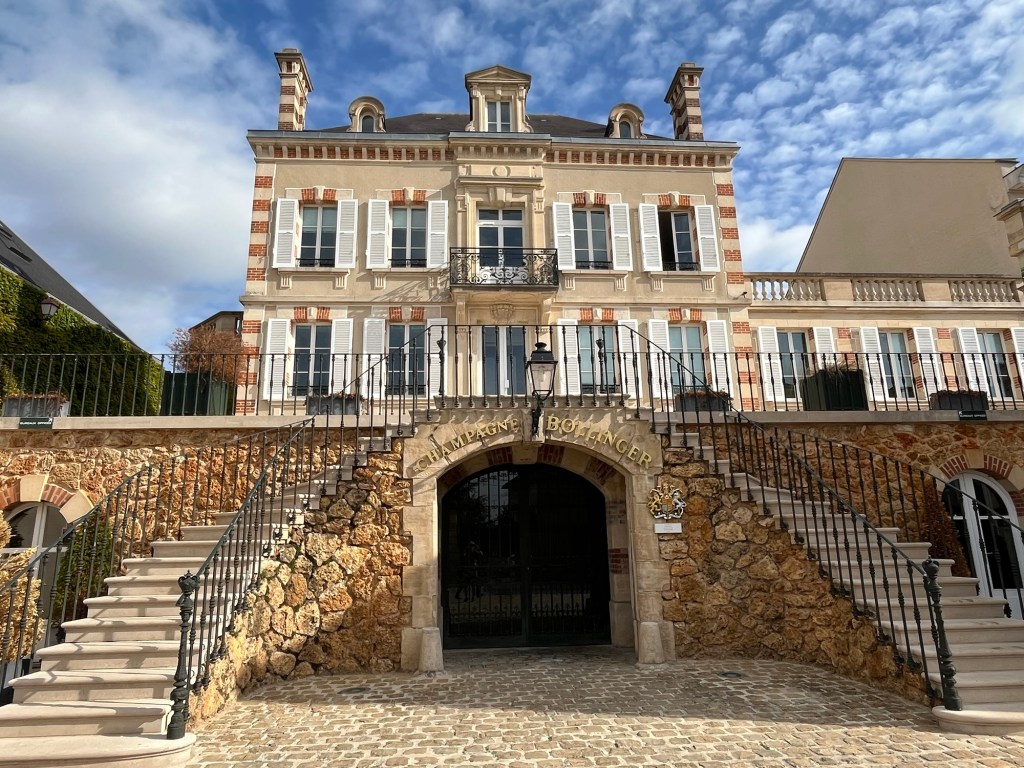
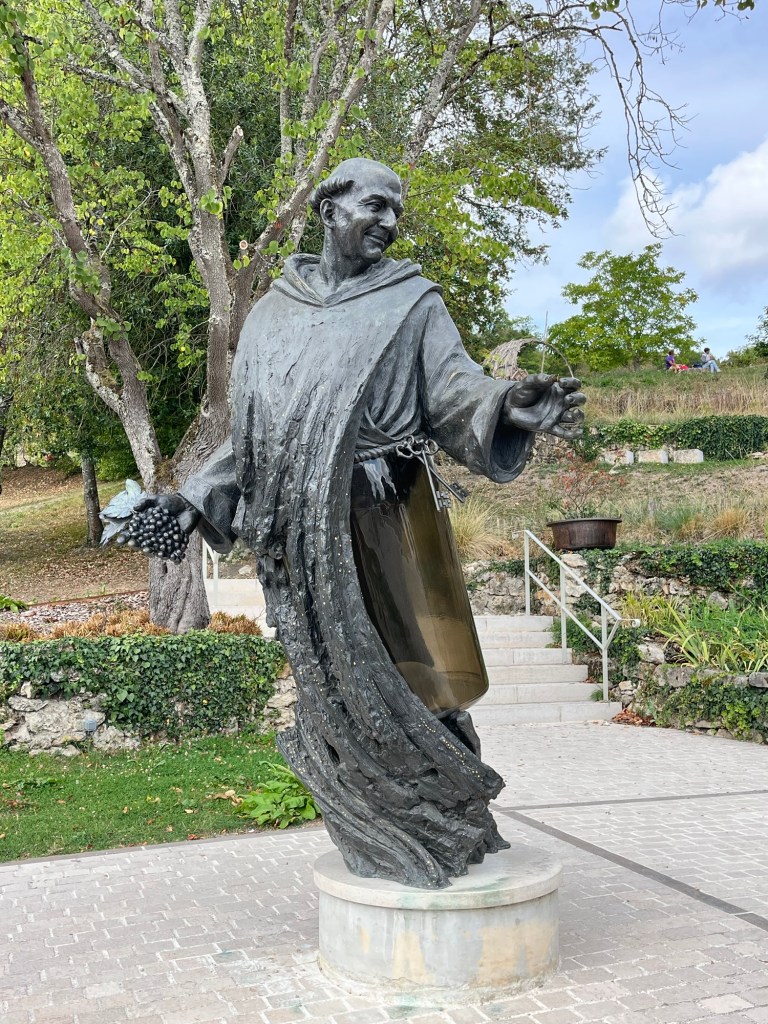
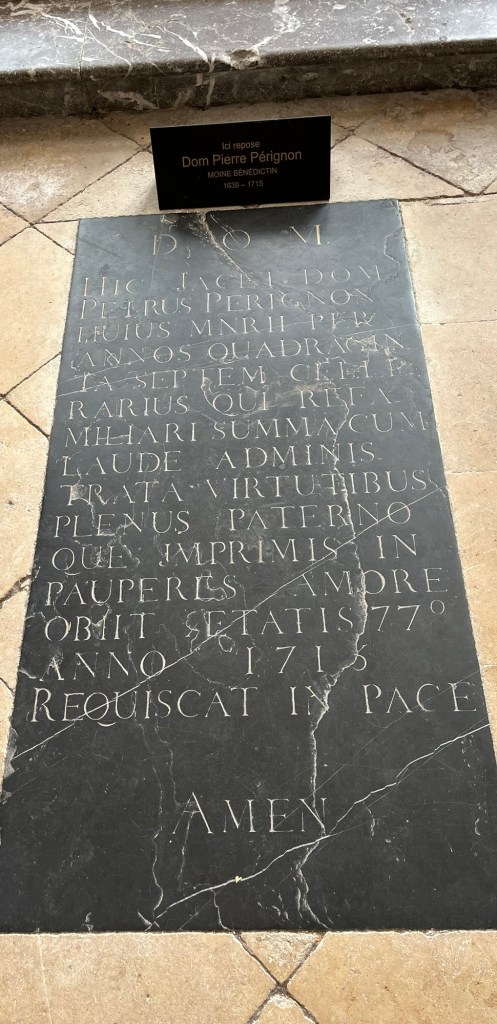
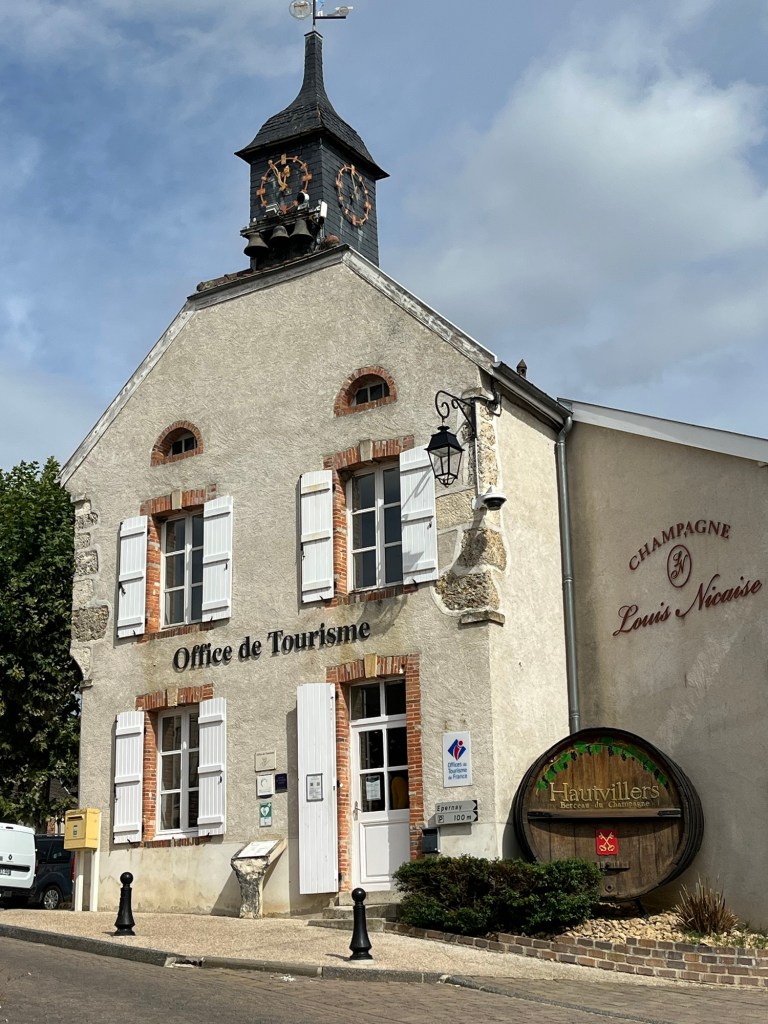
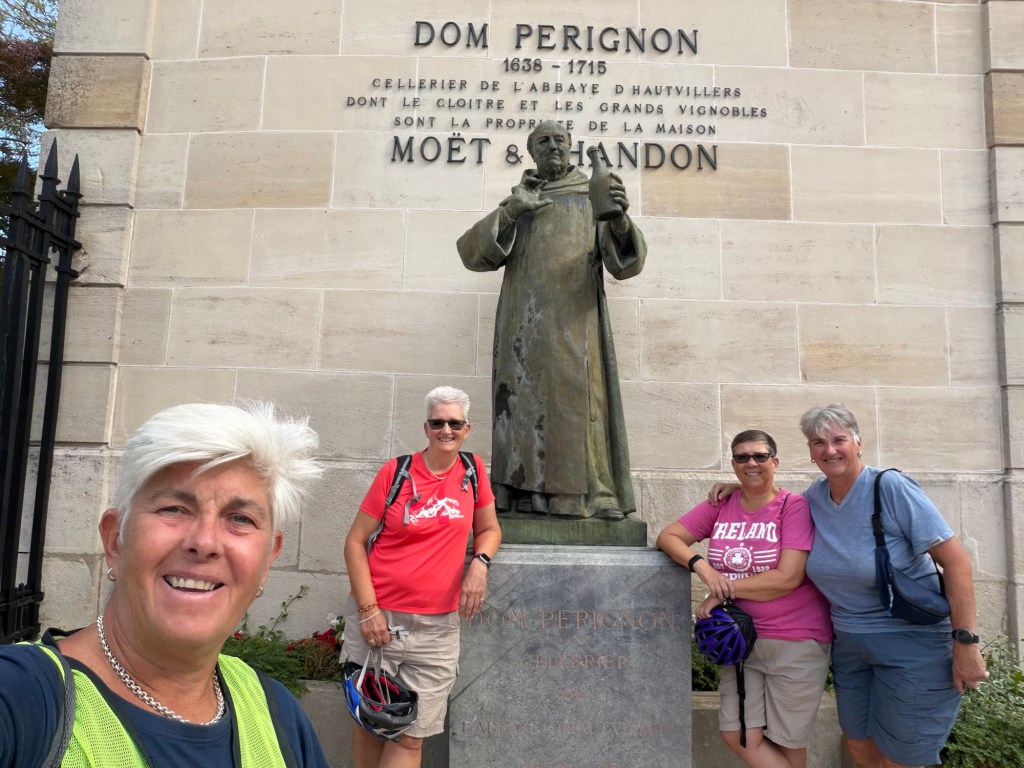
After another peaceful night with no early surprises, we continued our exploration of the area. The highlight had to be Hautvillers, the home of champagne, where Dom Perignon lived and was buried. The village up in the hills was delightful and well worth the slight detour. Again, we managed to get there for midday so the place was quiet but that suited us. Lunch in the van overlooking the vineyards before making our way to Epernay, the centre of champagne.

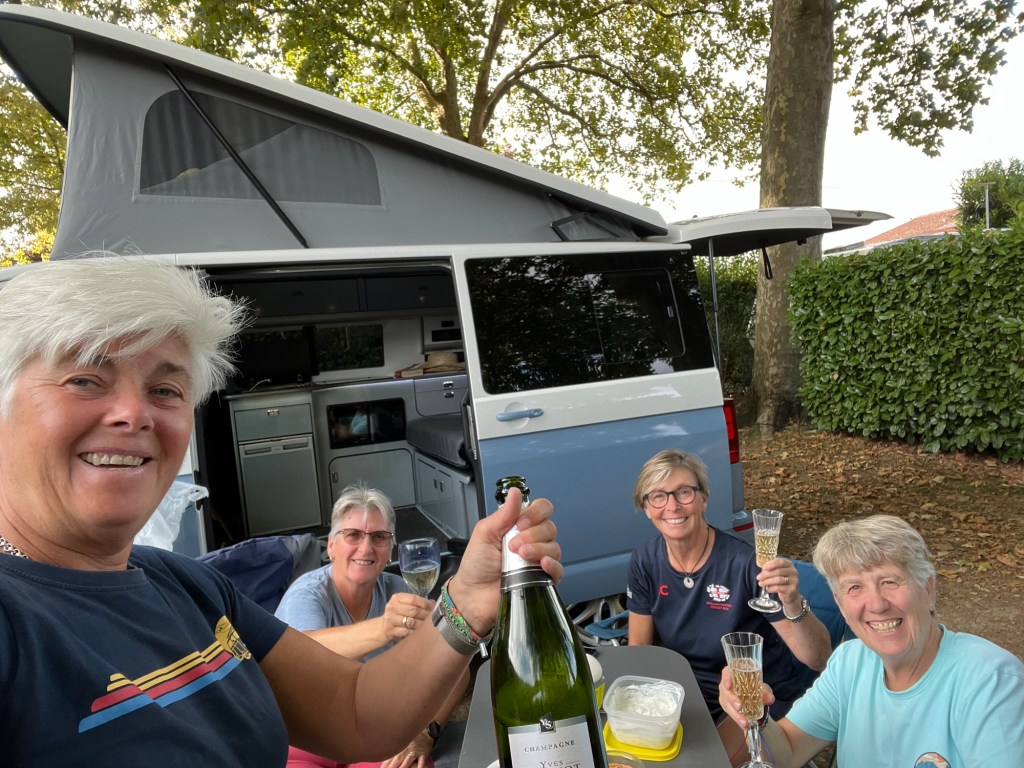
We had booked the only campsite in Épernay (P4N#10051) as we had decided to stay for a couple of nights and meet up with Solheim friends, Maria and Jane, as well as friends from home, Ben and Liz, who had literally left the U.K. that morning! We arrived at the campsite around 14.00 on Thursday, September 17. After setting up camp and greeting our visitors, we had a leisurely afternoon chilling and walking by the river. Back to the vans to open one of our purchases to celebrate Liz’s retirement (not this Liz) before a BBQ and a lovely evening spent in company.

Celebrating!

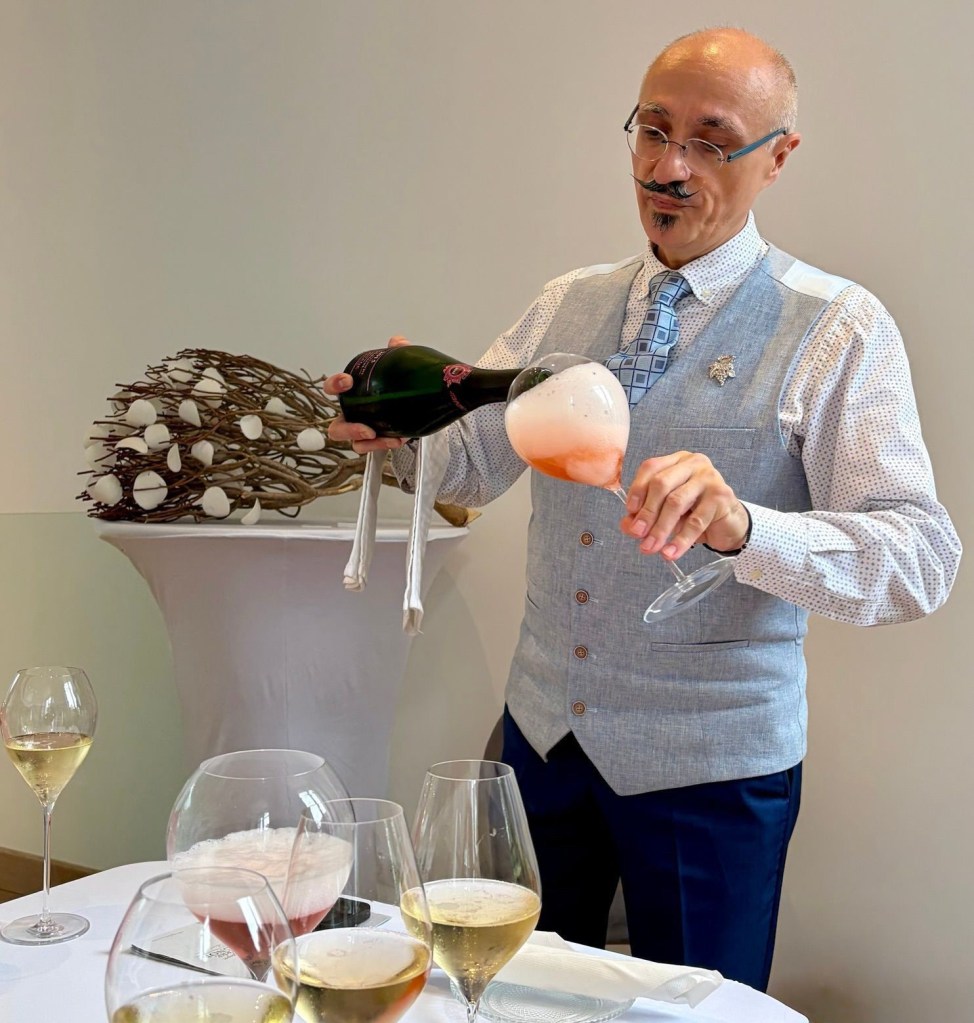
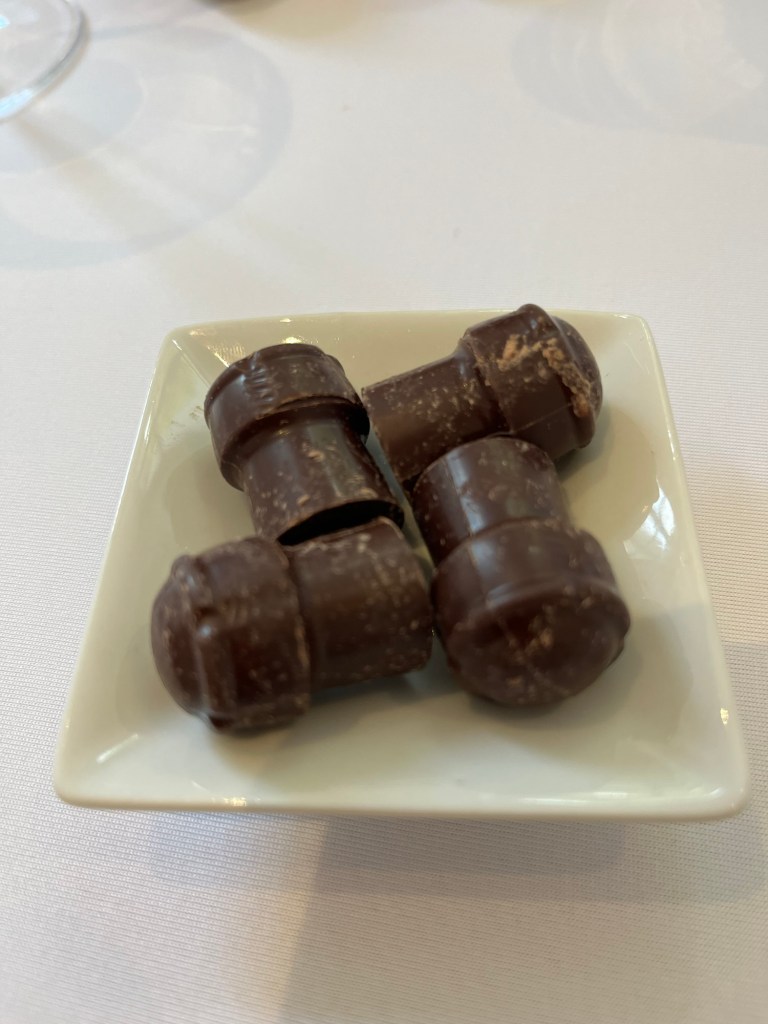
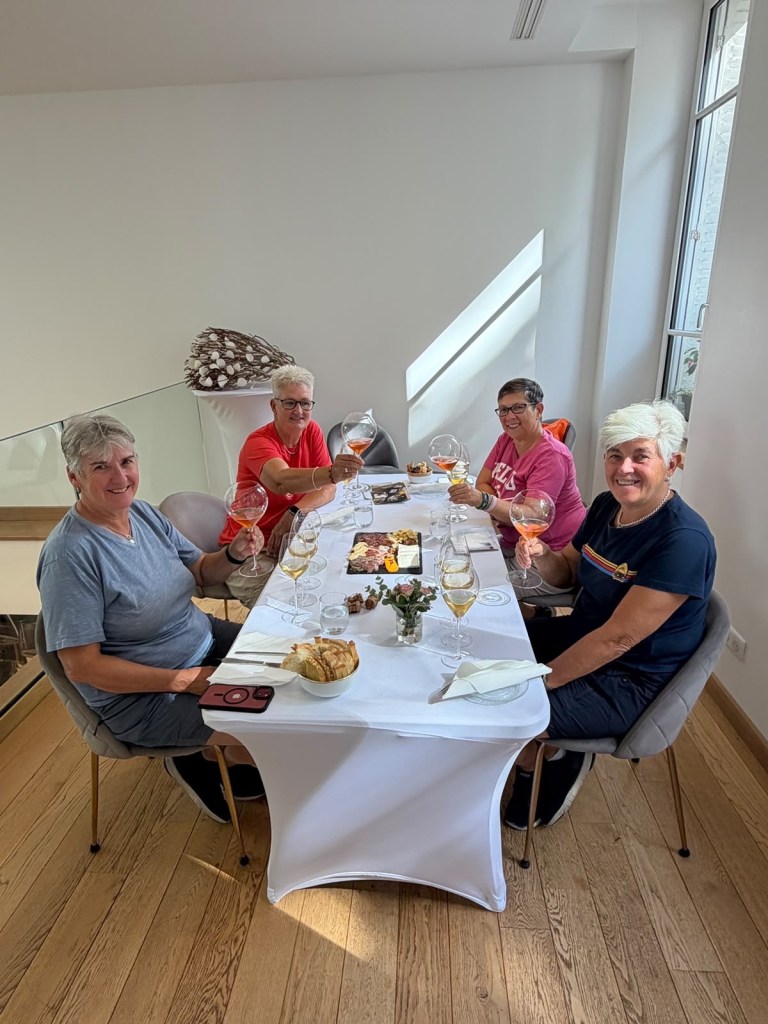
We had a champagne tasting booked for midday on the Friday so after a light breakfast, we cycled into Epernay. It was much bigger than expected but the old centre was charming. We found a restaurant to eat later that evening and went onto our tasting at Charles Mignon. The tasting was great value and very entertaining. Our guide, Ludwig, was informative, charming and very dapper. A cross between Ben Kingsley and Hercule Poirot, complete with waxed moustache!

Three hours later we stumbled out of the tasting (thank god there was some food with it) before getting back on our bikes to explore the Avenue de Champagne where the likes of Moet and Chandon are situated. The whole avenue was very refined although the Moet house was very modern in comparison.

Back to the van to recover before getting a taxi back into town to meet up with Ben and Liz for a lovely meal at Chez Françoise. By 21.00 we were all ready for bed so an early night for all of us as some had long drives planned for the next day.

Chez Françoise

Miles since last blog: 141

Miles this trip: 758

Maastricht and Dinant

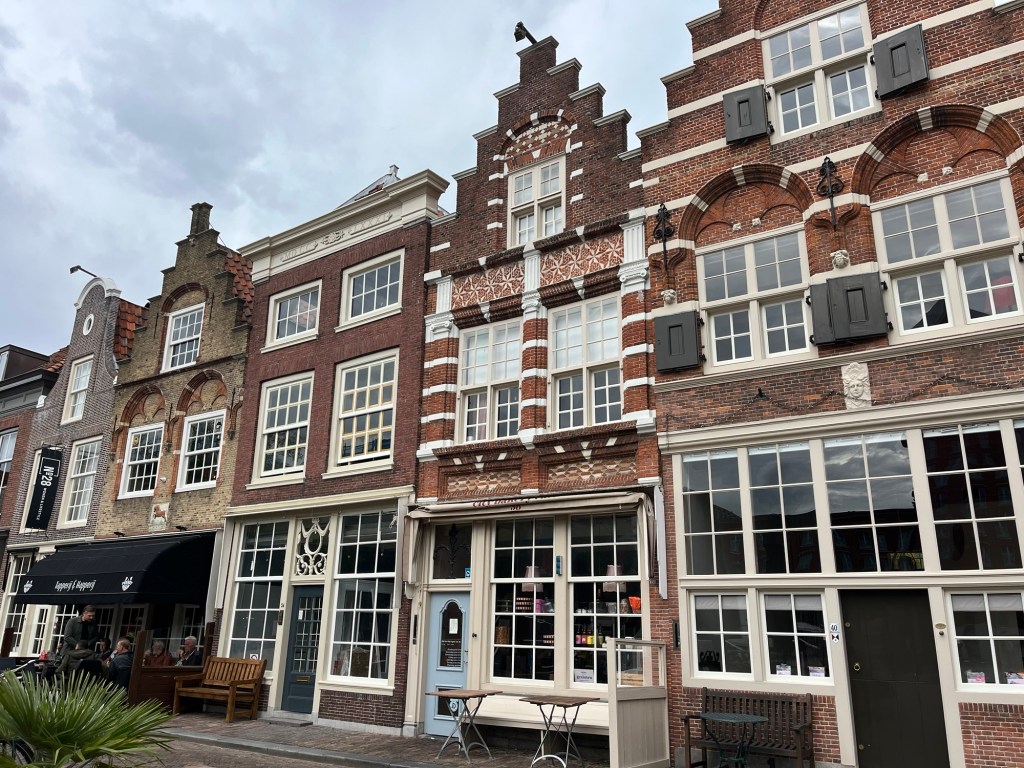
Luckily, it wasn’t raining when we packed up the van at Camping Distelloo as everything was pretty sodden from the previous few days and it would have been miserable to do it in the rain. We got away around 10.00 and drove south east to Maastricht, in the corner of the Netherlands, Belgium and Germany. Poor Maastricht has been the subject of many invading armies over the years.

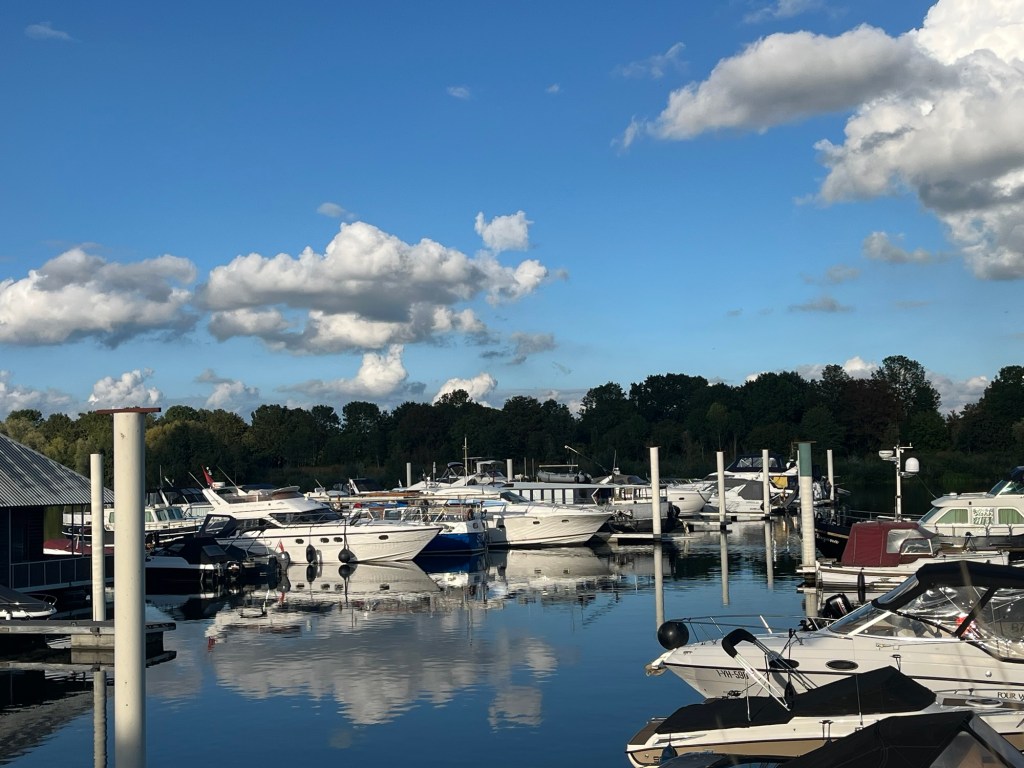
We managed to snaffle a parking spot at Maastricht Marina (P4N#166068) for the princely sum of €35 but it did mean that we could easily cycle into the centre. It was also a lovely setting and we are always happy to be around boats.

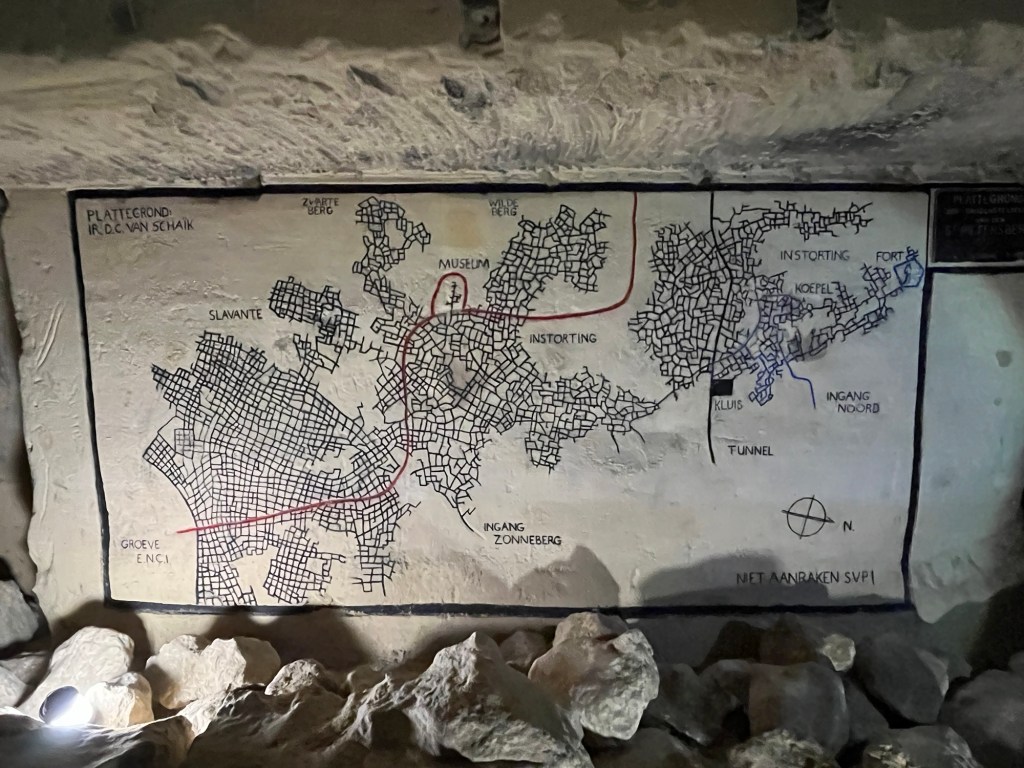
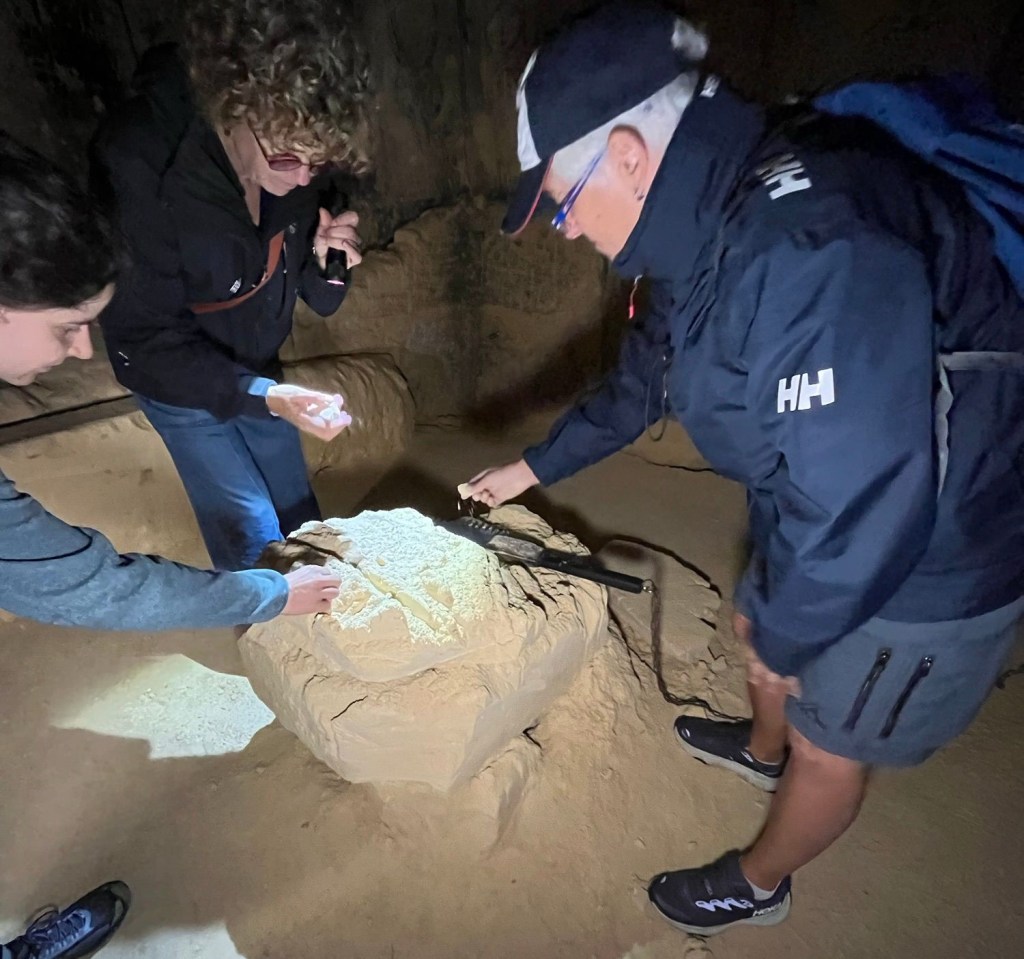
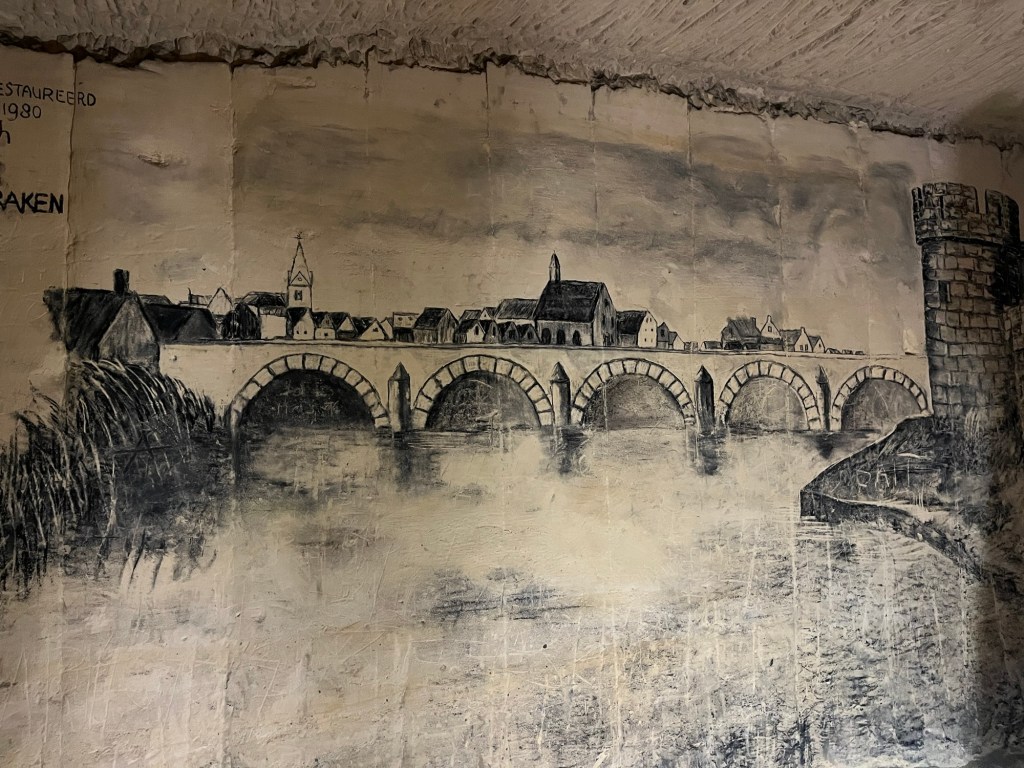
We had booked a tour of the North Caves for 15.20 so after a quick bite to eat, we cycled into town. The caves are actually man made as farmers and monks had been excavating the limestone for centuries to use or sell for construction. They were still fascinating and our guide, Simone, was very informative. When we asked her whether she saw herself as Dutch, French or German, her answer was Maastricht. She said that her fellow Maastrichtians feel very different to the Northern Dutch. The caves had a number of charcoal drawings in them – some dating back over 100 years. The caves played a vital role in hiding Jews and allied airmen during WWII.

After the cave tour we wandered around the city centre but were not that enamoured to be honest. Back to the van to have a beer in the sunshine.

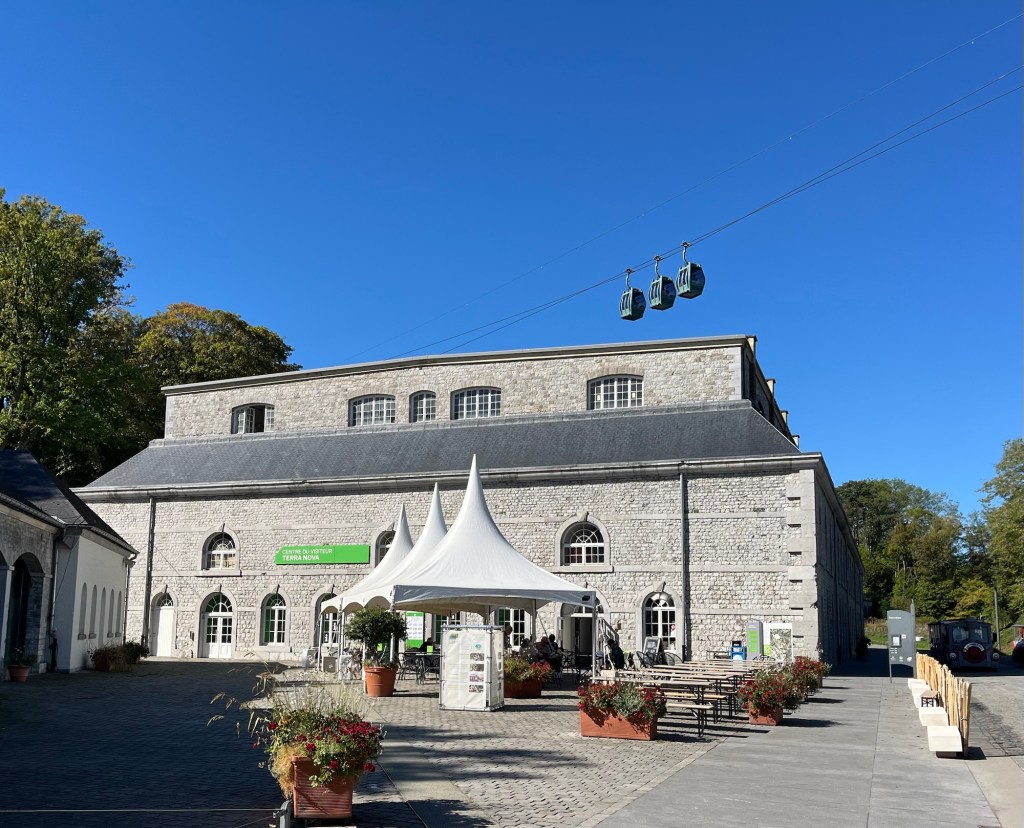
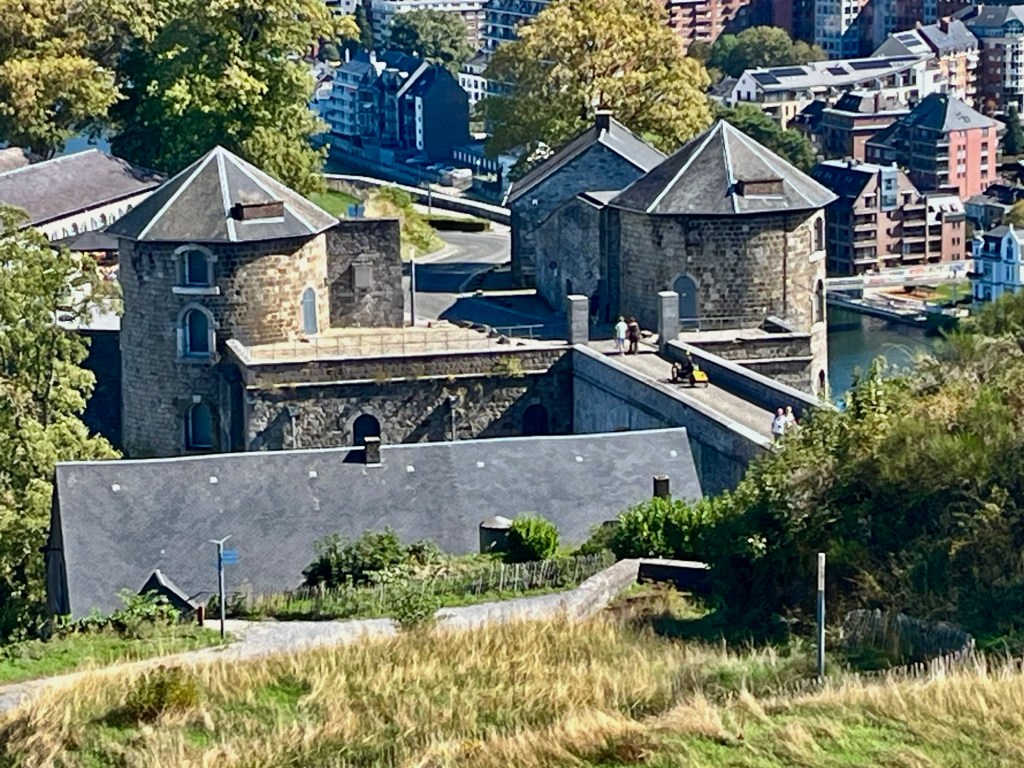
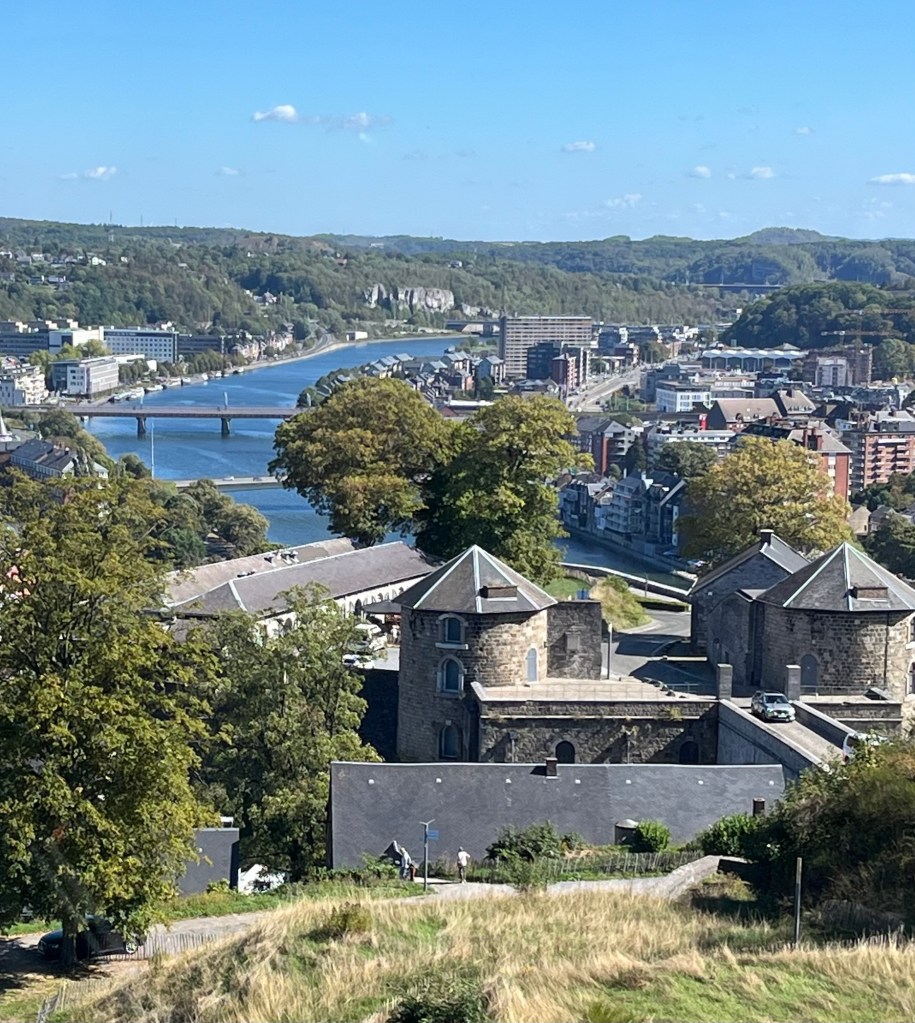
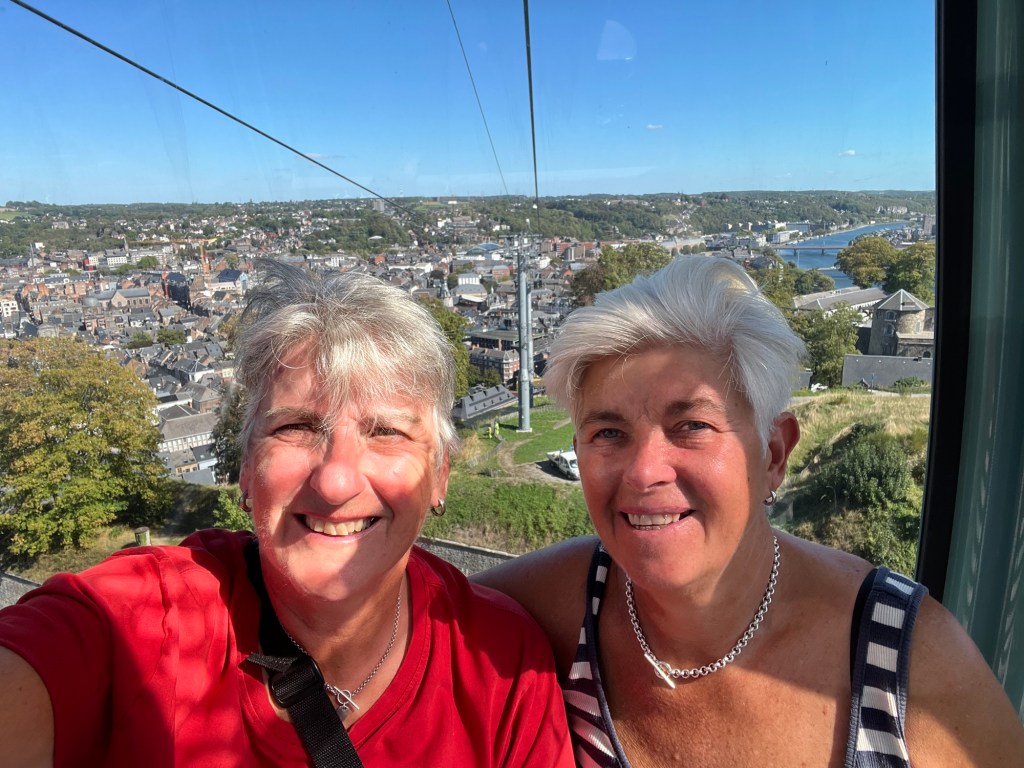
The next day, Tuesday September 15, we left Maastricht to make our way to Dinant in Belgium. On the way, we stopped at the very pretty town of Namur in Belgium with its amazing citadel. We spent a wonderful couple of hours there having found a great park up right by the citadel. We walked down to the town and caught the cable car back up.

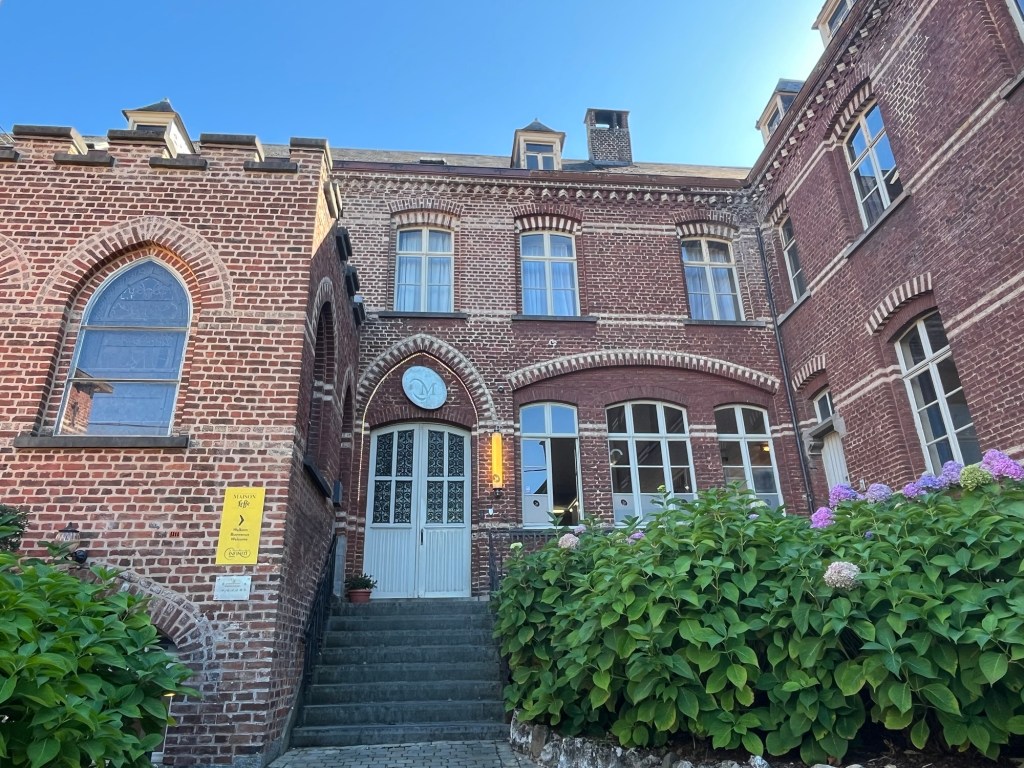
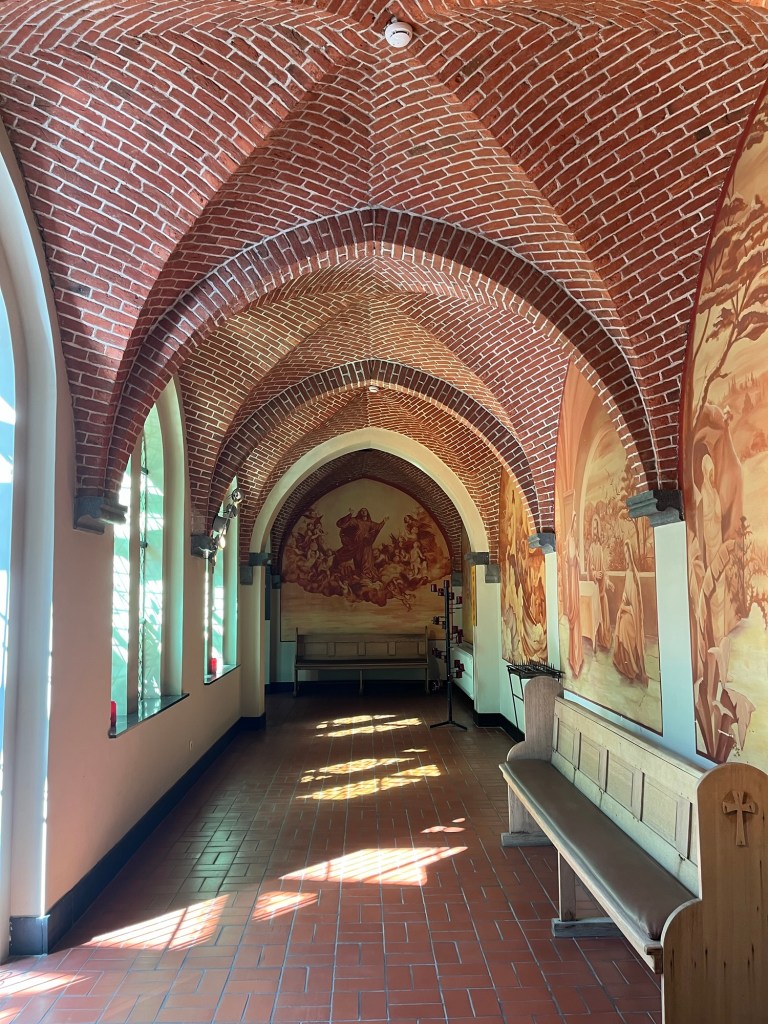
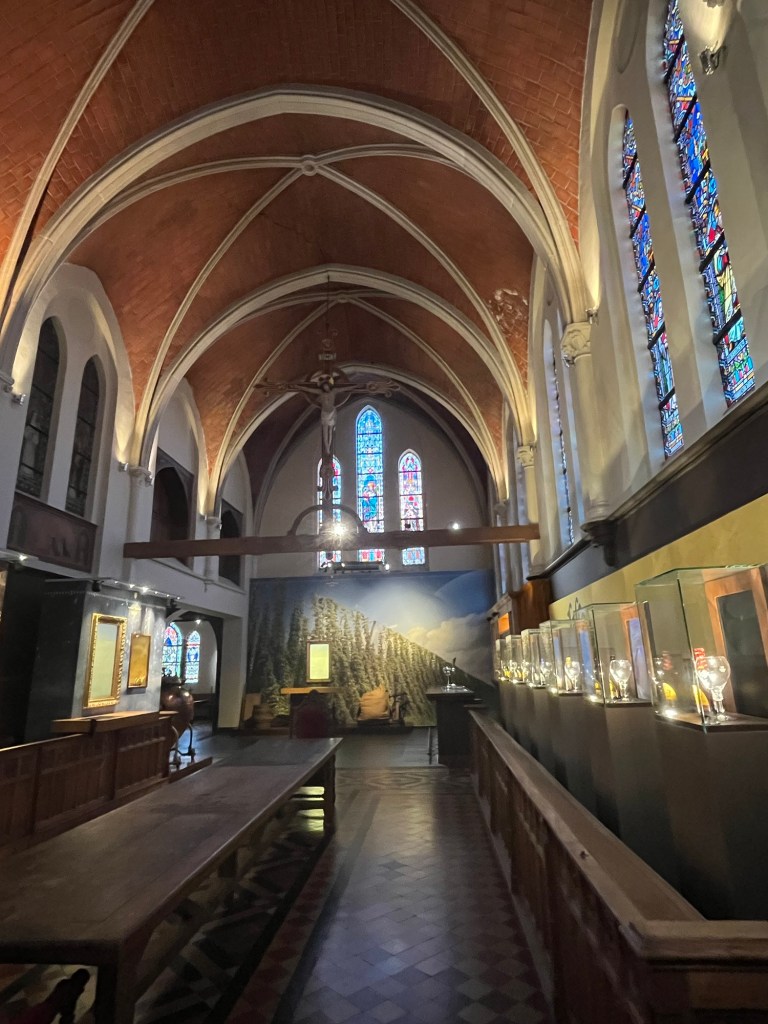
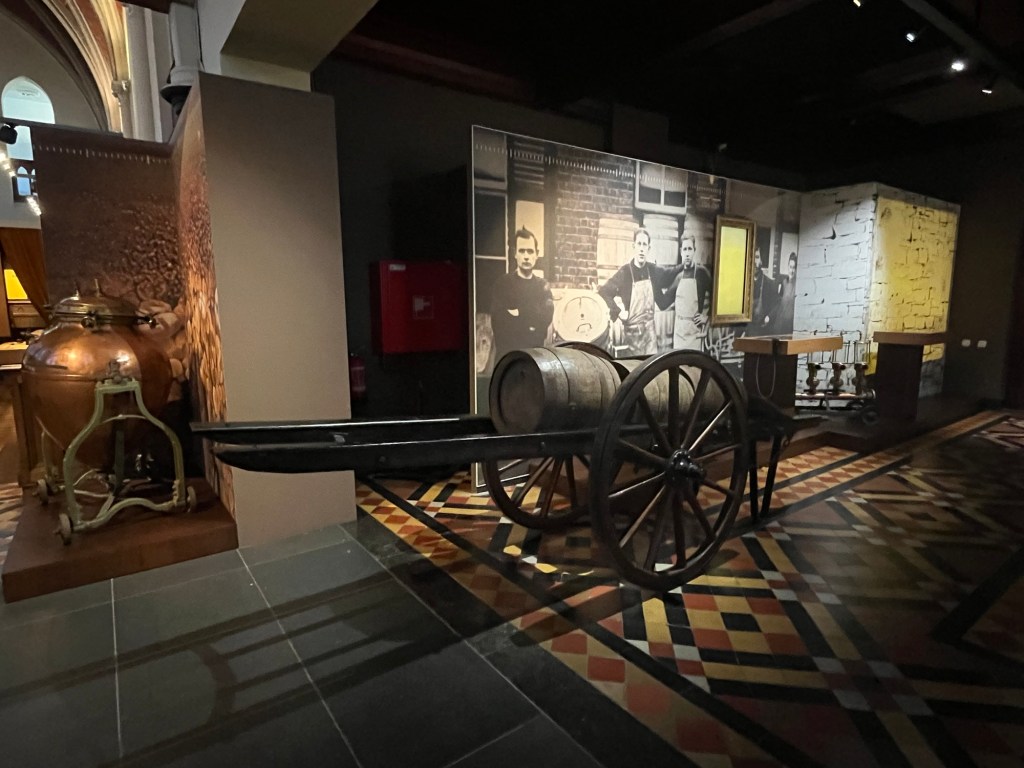
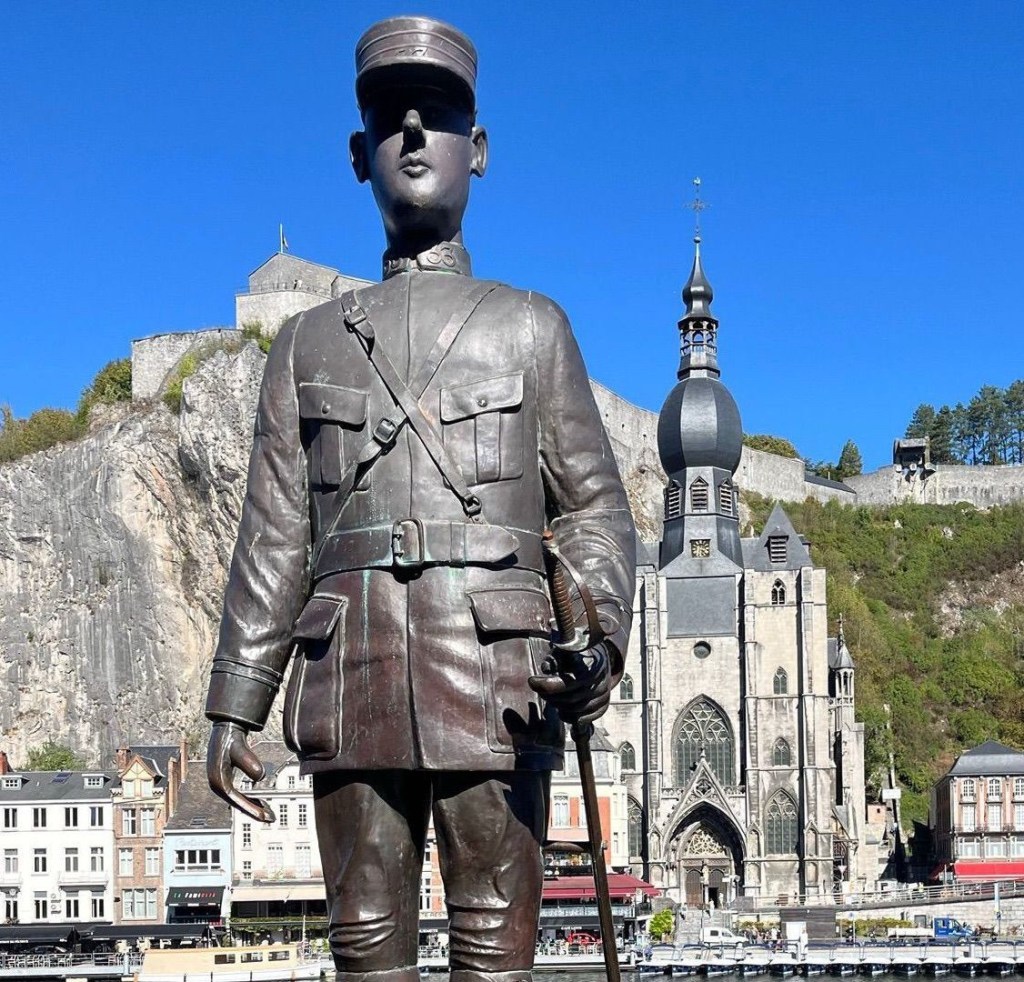
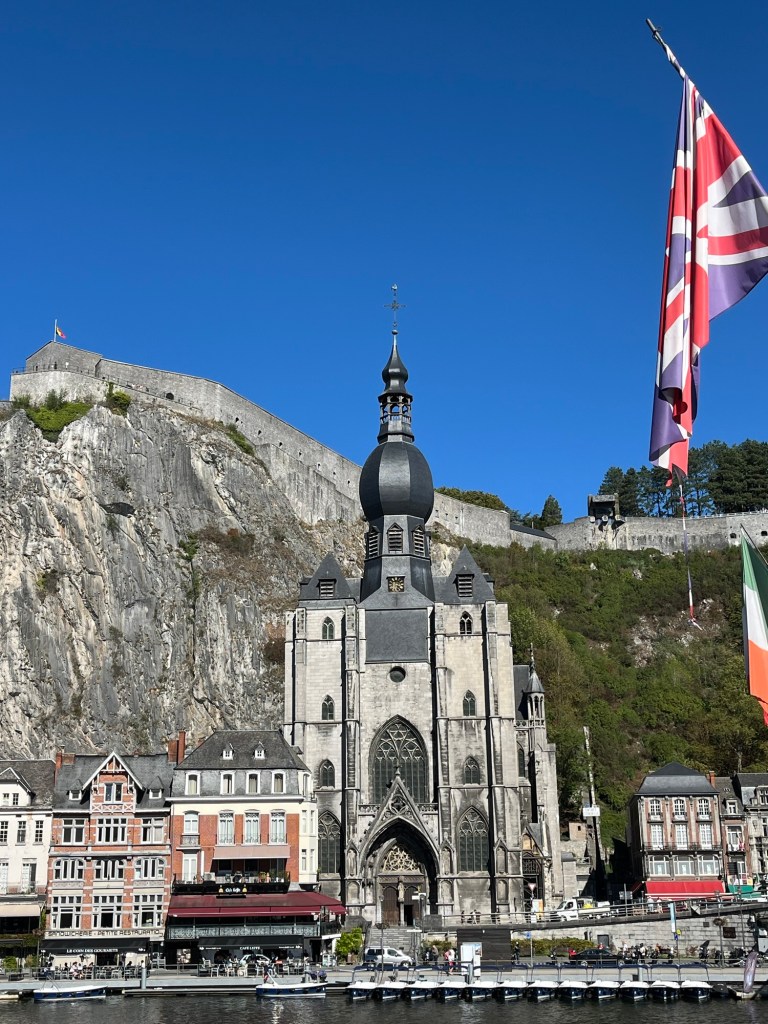
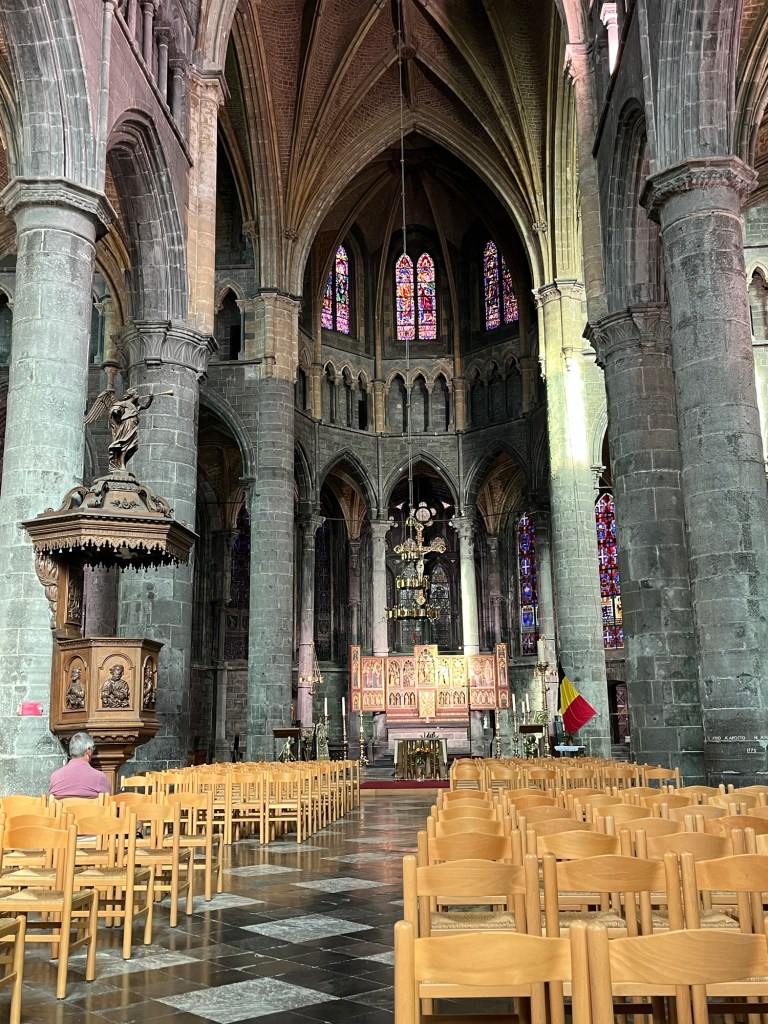
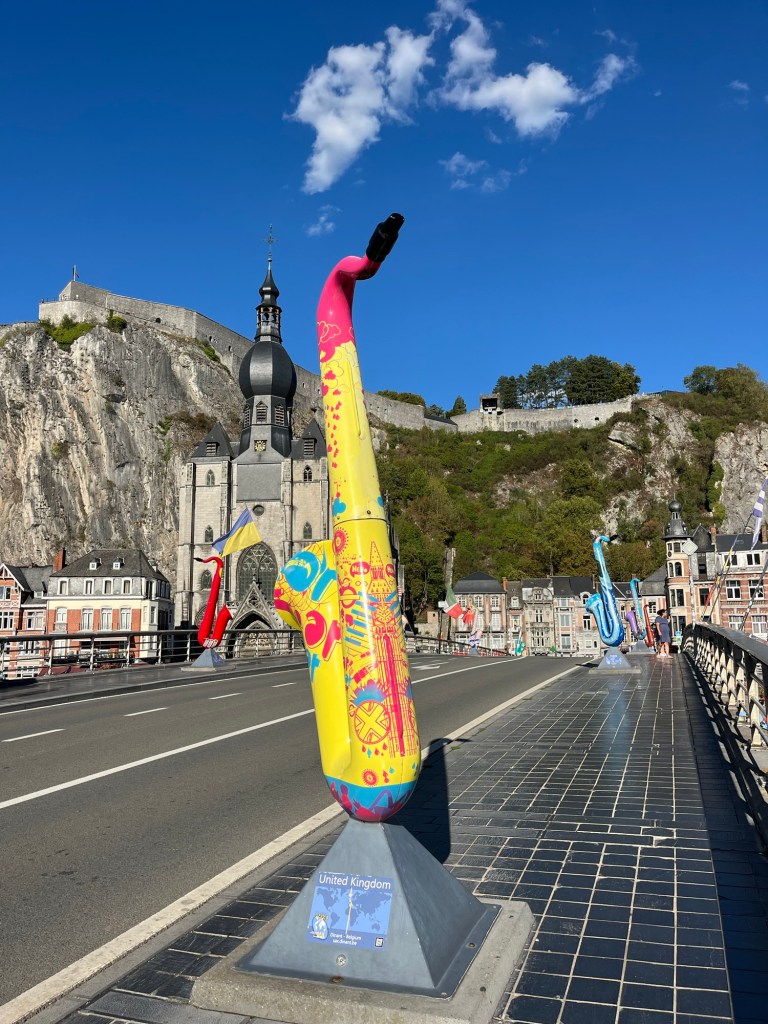
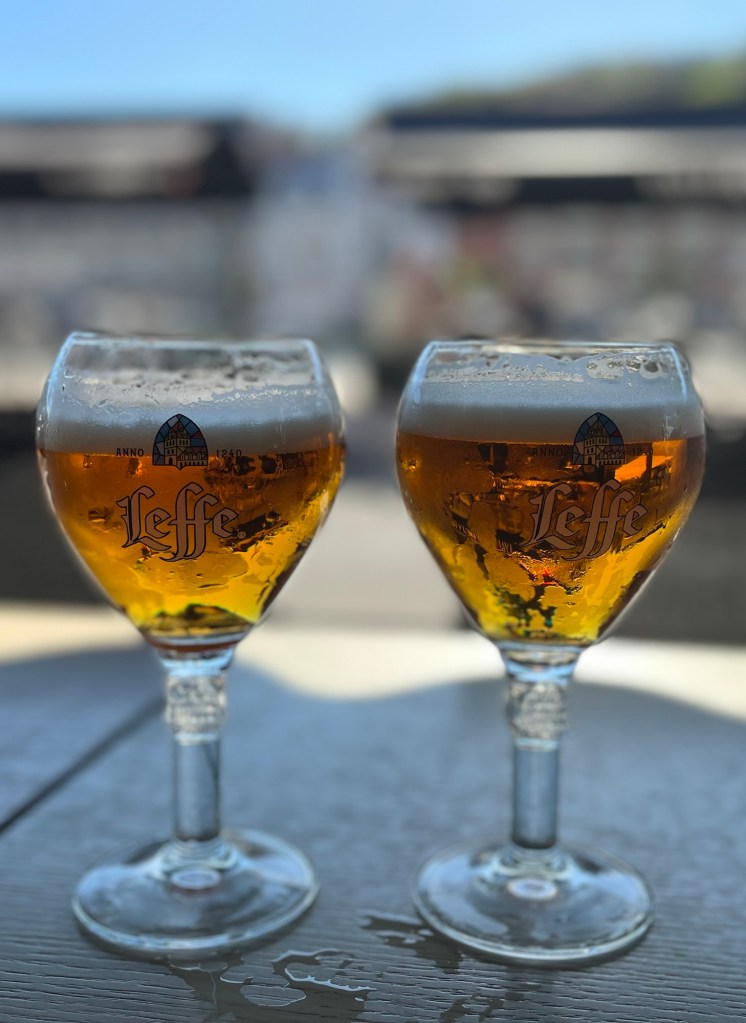
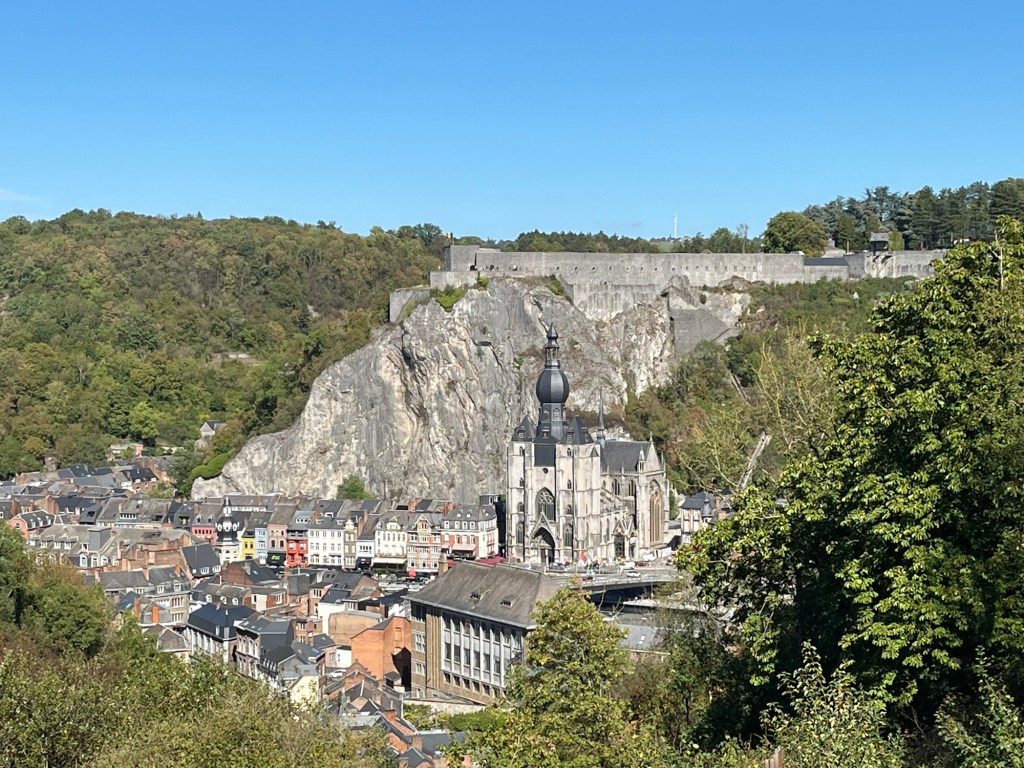
After lunch in the van we continued our journey south to Dinant. Home to Leffe beer, an amazing church and an imposing citadel. The cable car to the citadel wasn’t working and we didn’t fancy the 400 steps up to it so we opted for looking at the church and having a beer! We went to Maison Leffe (a converted convent) where they had been brewing beer since the 12th century but couldn’t find anyone to show us around or give us a drink so we did a self guided tour before retiring to a local bar for said Leffe beer. There was even a statue of Charles de Gaulle, who as a lieutenant fought in Dinant against the advancing German armies in WWI.

Our park up for the night overlooked the town and had an amazing view. The owner was a local farmer who had converted a bit of land to allow 4 vans to stay charging just €10 a night (P4N#298190). It was a bit adventurous to get to him but a quick 10 min walk into town. He saw us walking back up the road later on and gave us a lift back in his car. A real sweetie. A wonderful evening was spent just relaxing and taking in the view whilst eating supper in the van. Perfect.

View from our park up

Miles since last blog: 177

Miles this trip: 617

Den Bosch

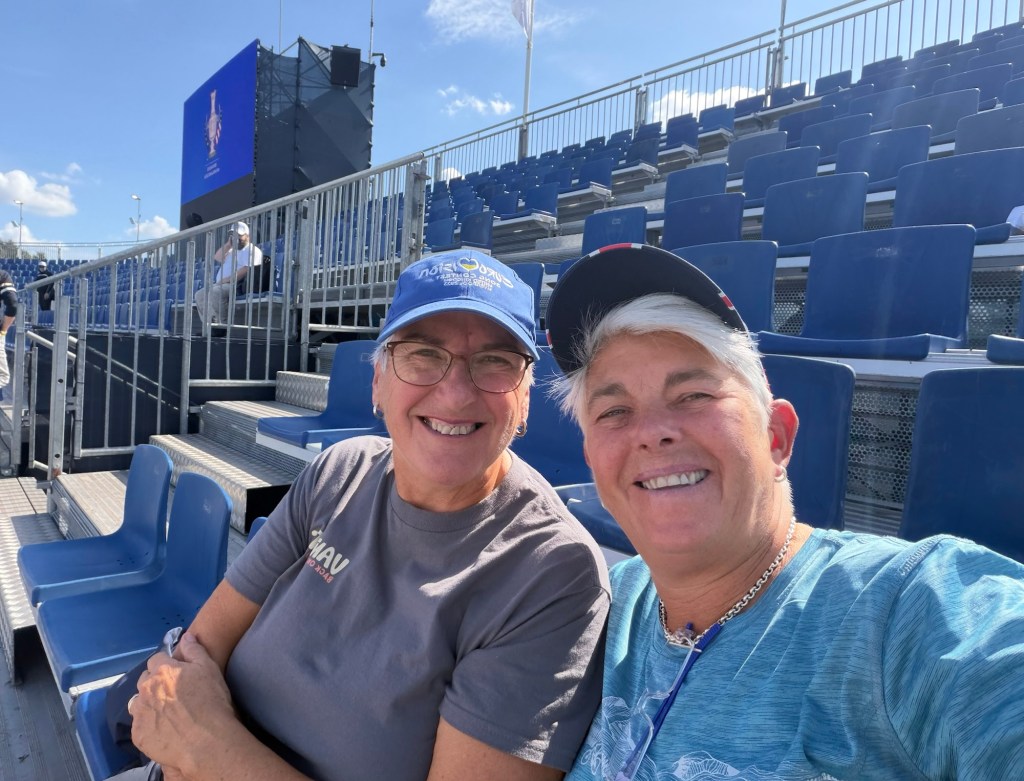
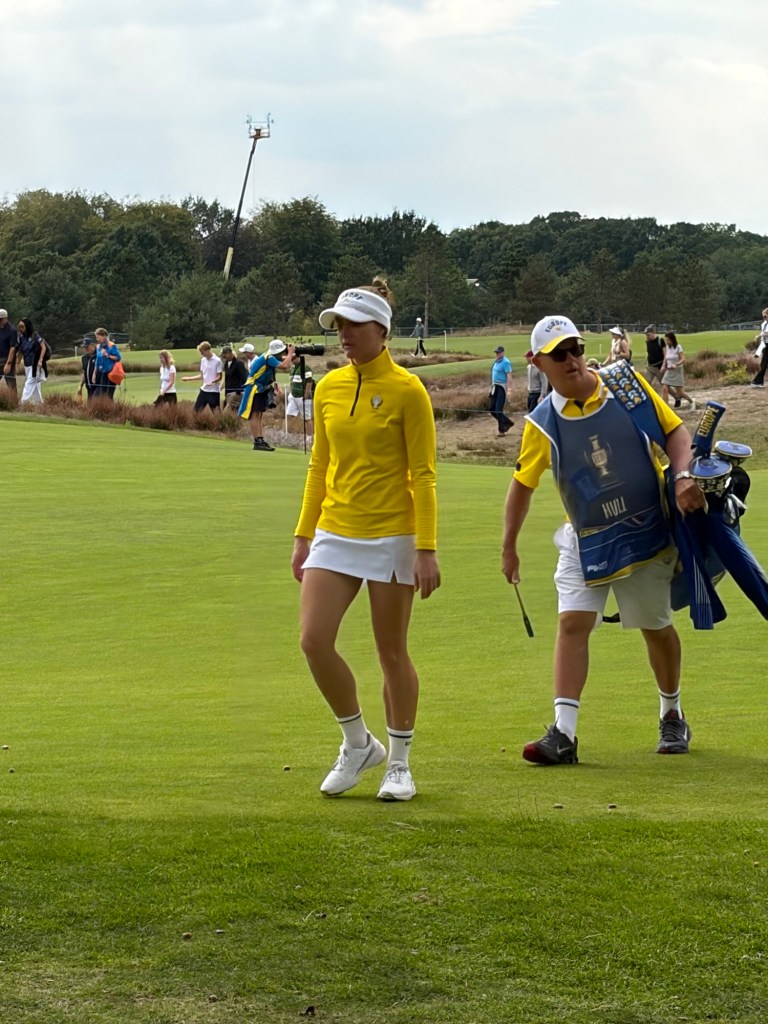
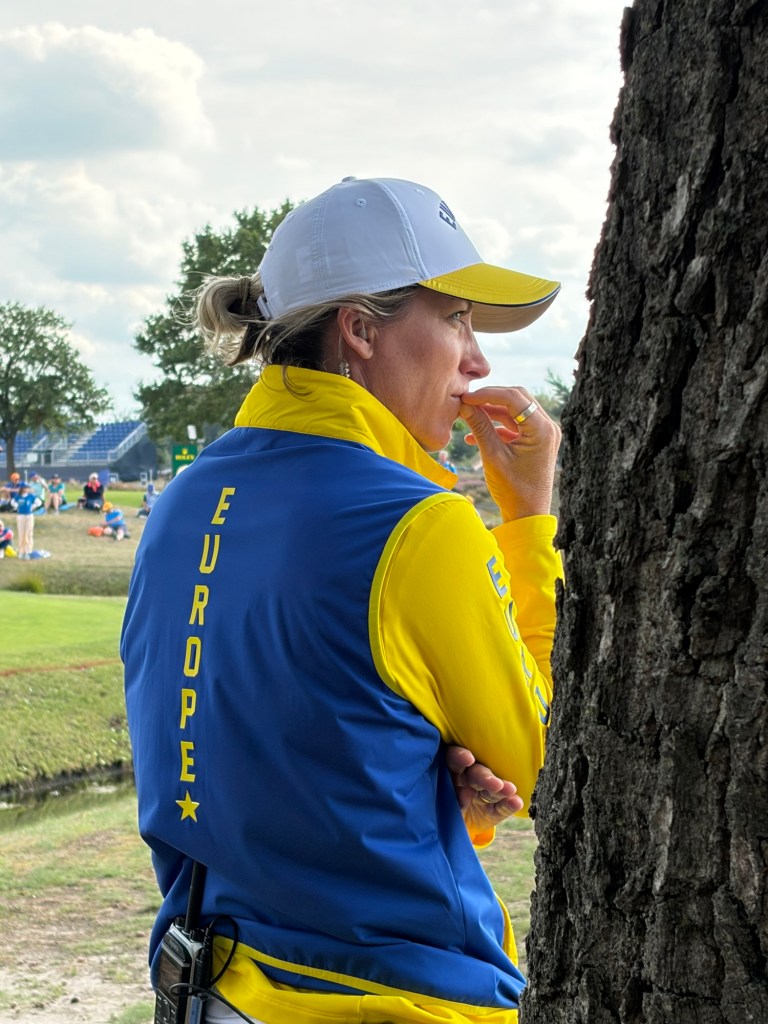
We left our campsite just outside of Arnhem around 11.00 on Tuesday, September 8 to make our way to Camping Distelloo, some 60 plus miles away in the Brabant region of The Netherlands. This would be our home for the next six nights whilst we watch the Solheim Cup. This is a biannual golf match between Europe and the USA featuring some of the best women golfers in the world. As you can imagine, the rivalry is intense but also played with mutual respect. That goes for the spectators as well. We obviously wanted Europe to win but it’s equally a showcase for women’s sport which so rarely gets the media coverage it should.

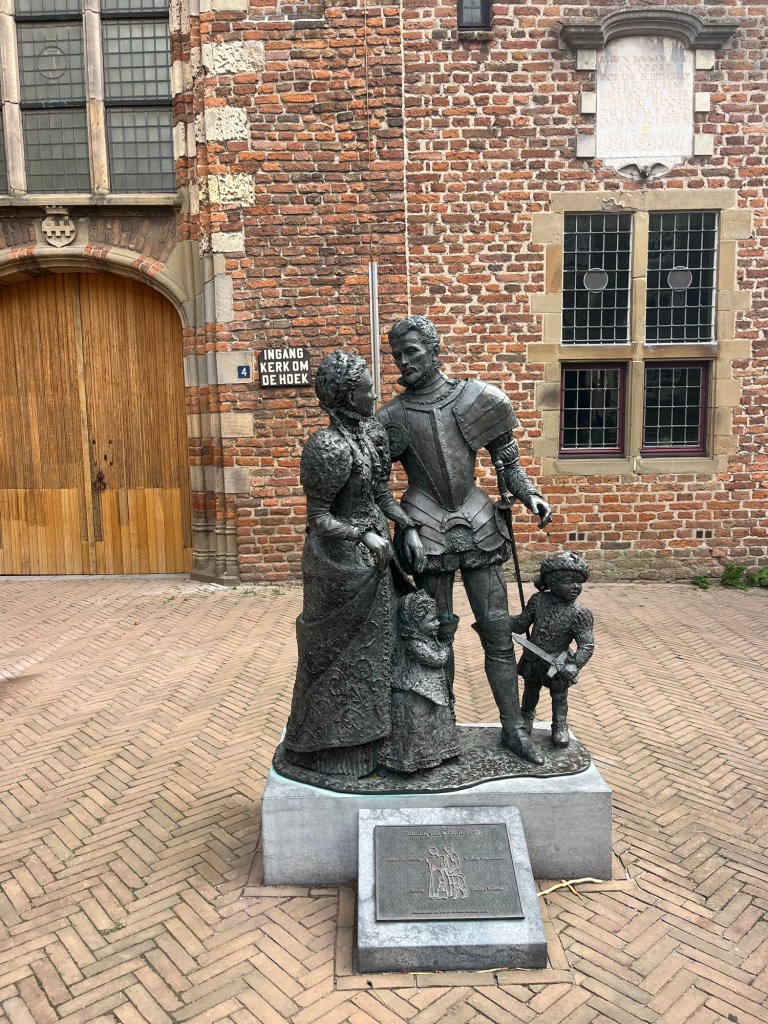
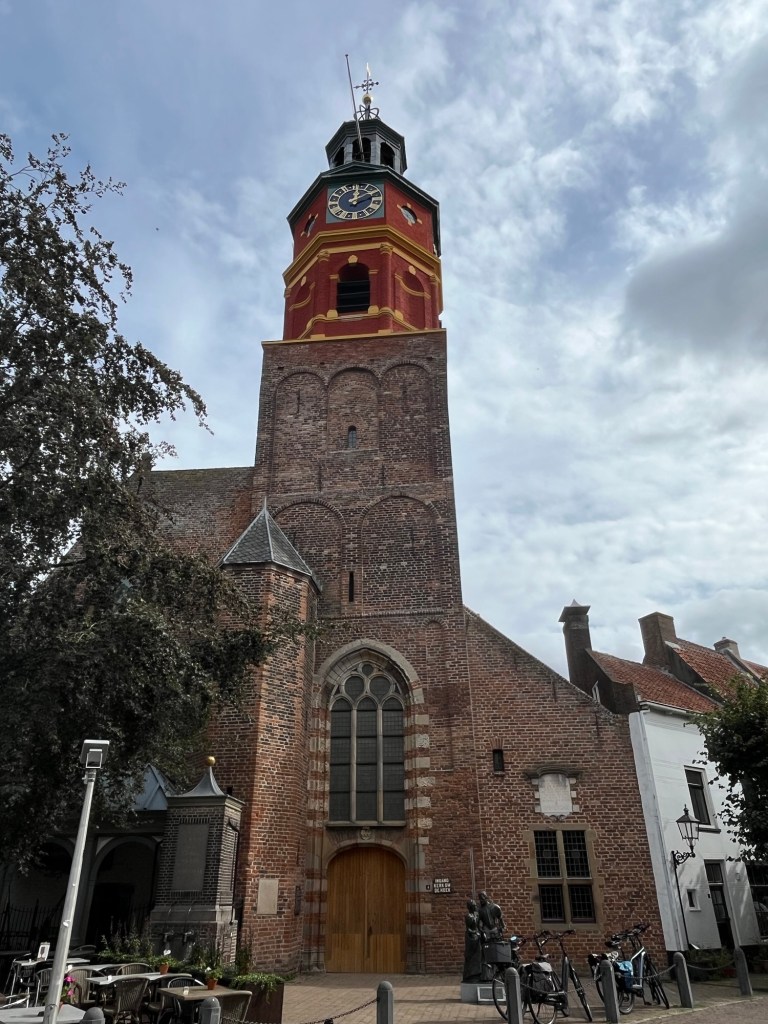
Anyway, before we arrive at our campsite outside of ‘s Hertogenbosch (known as Den Bosch, woods in English) we pop into the lovely town of Buren. This was the home of Anna van Egmond, the first wife of William of Orange and became part of the Orange family dynasty. Although the town promotes its connection as much as possible, it is still a quaint little town. It had the added advantage of easy parking and a supermarket close by.

We then drove onto our campsite, which was set in the woods. We found it via a google search as it wasn’t on any of our apps.

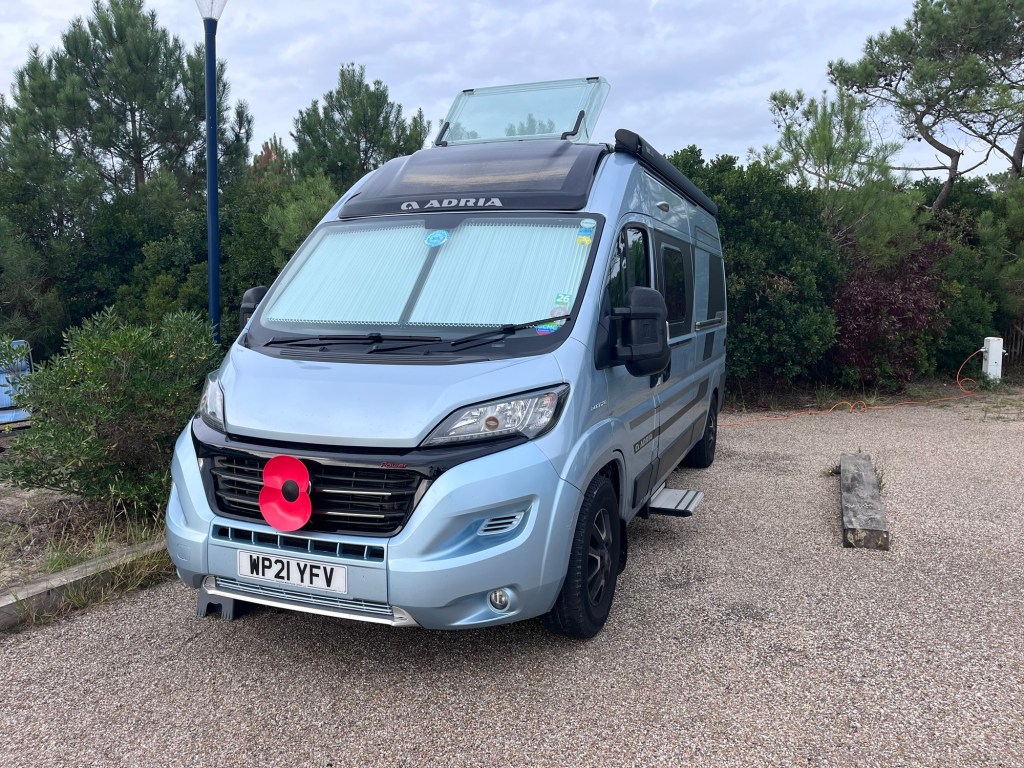
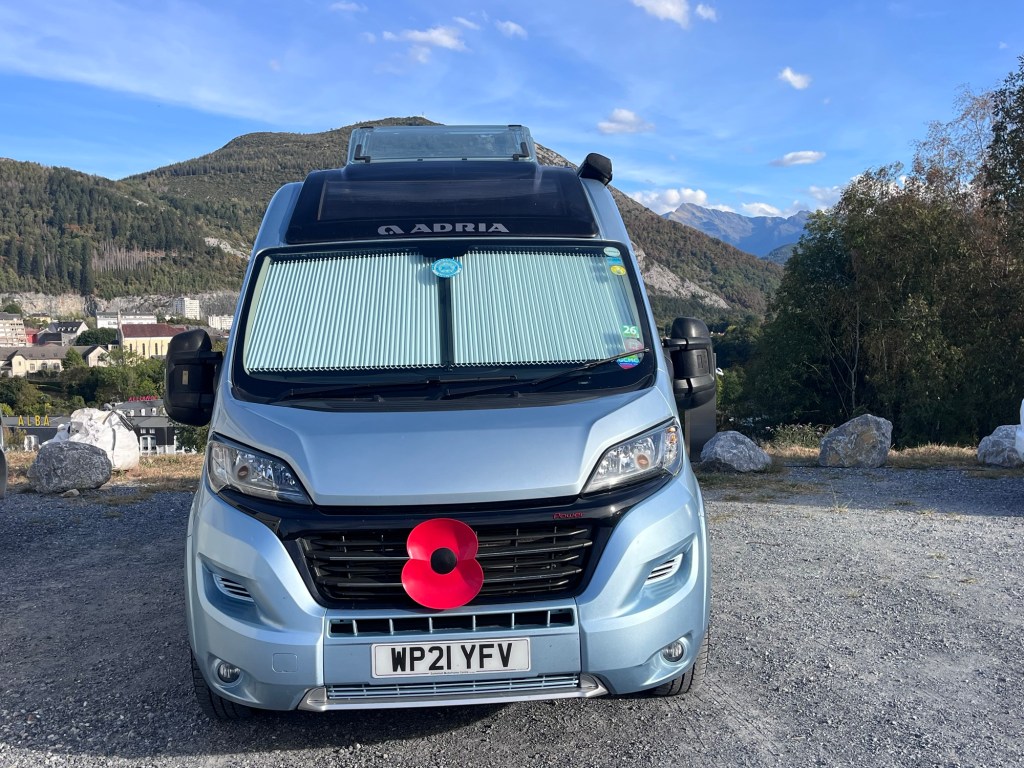
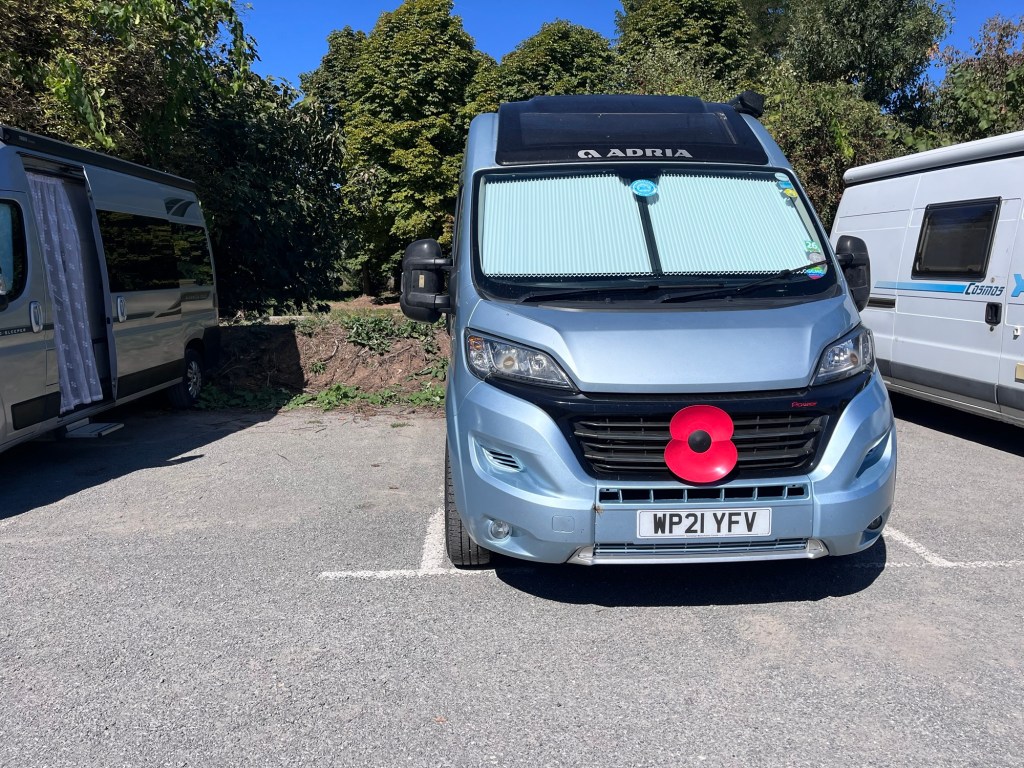
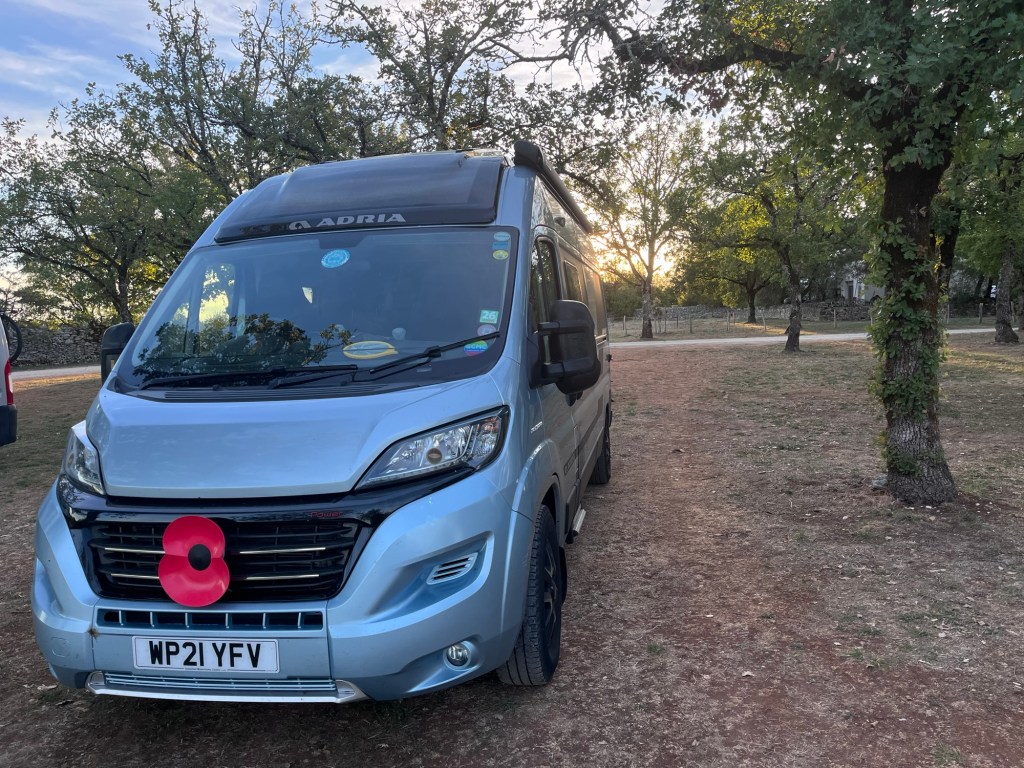
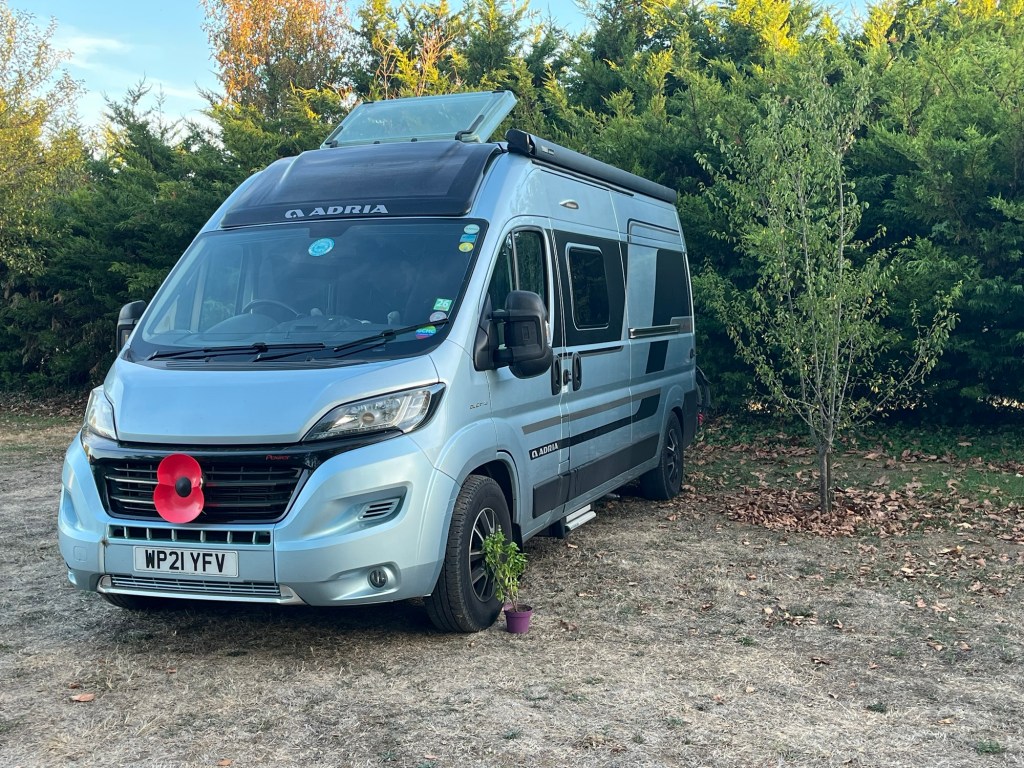
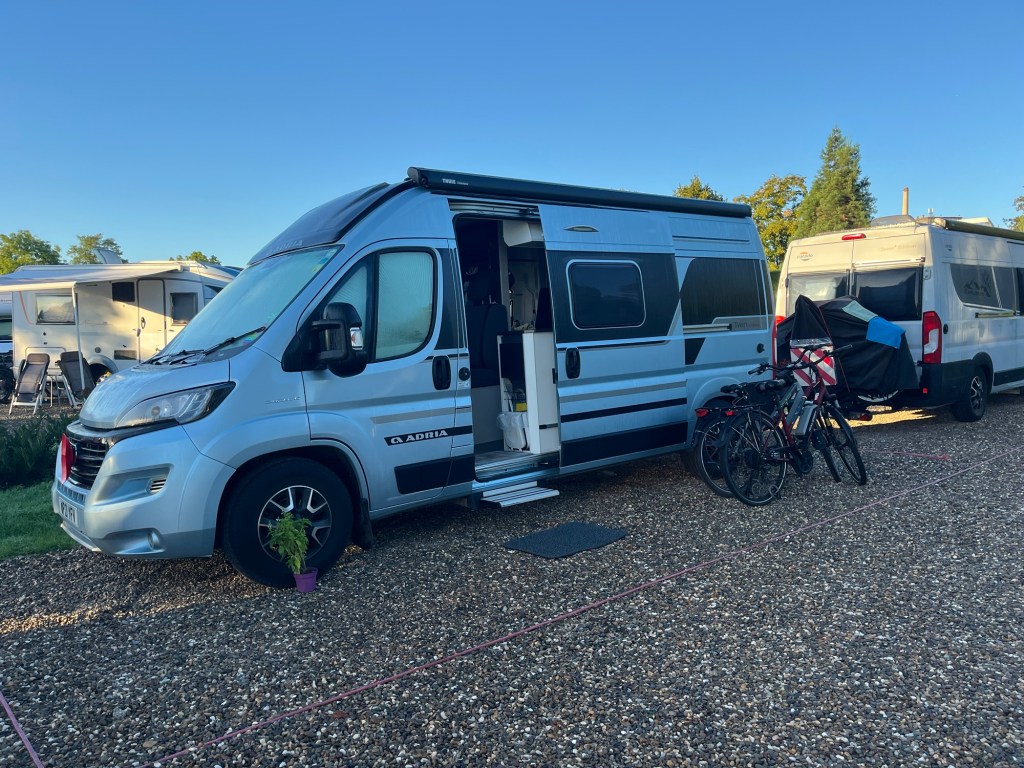
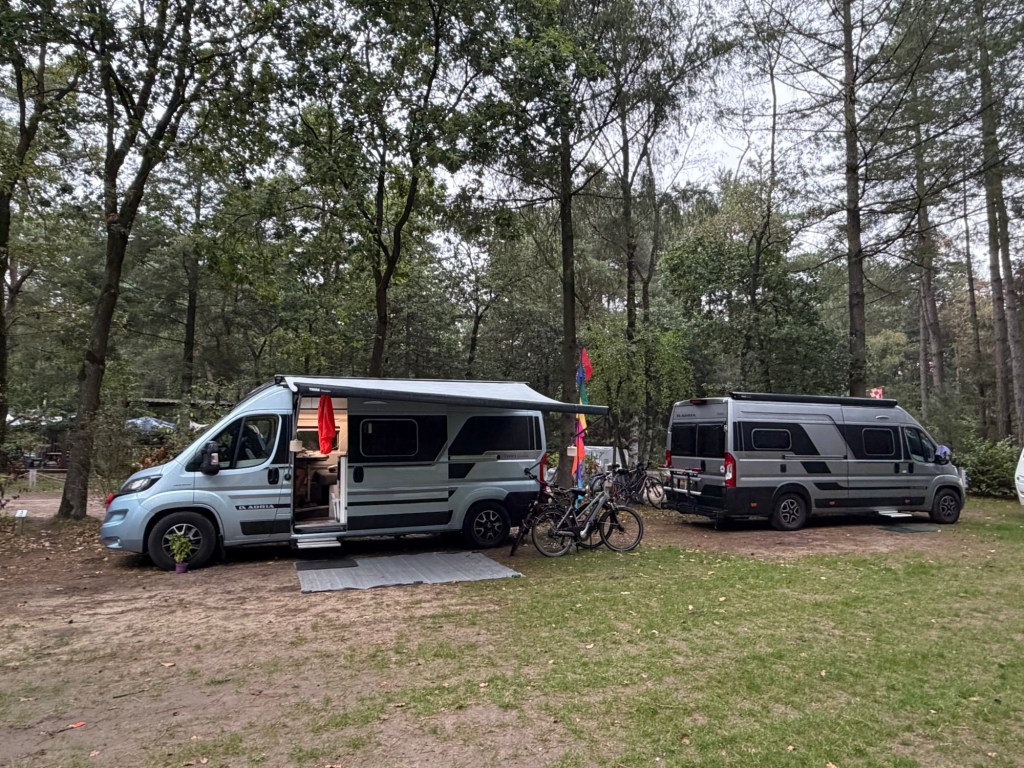
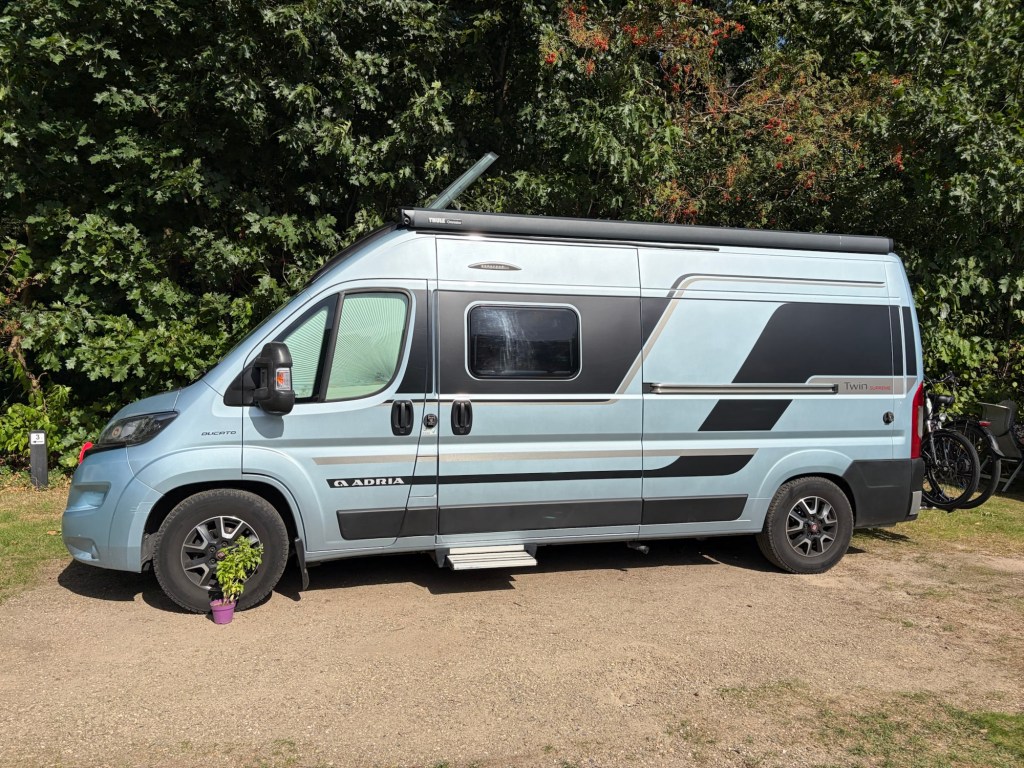
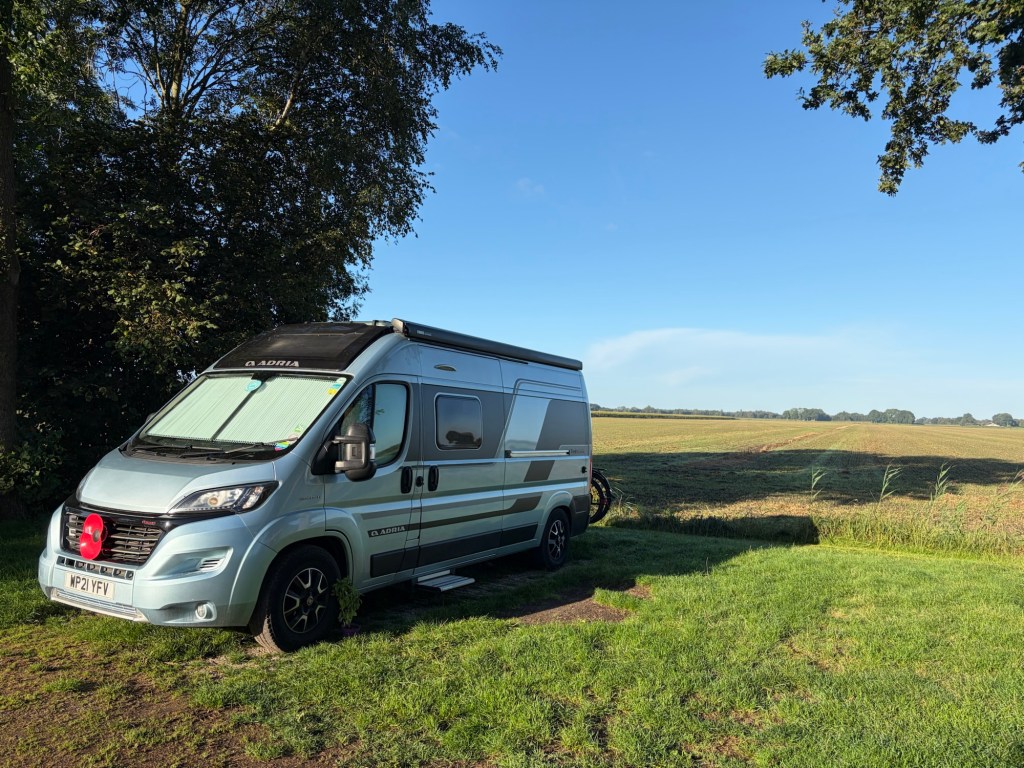
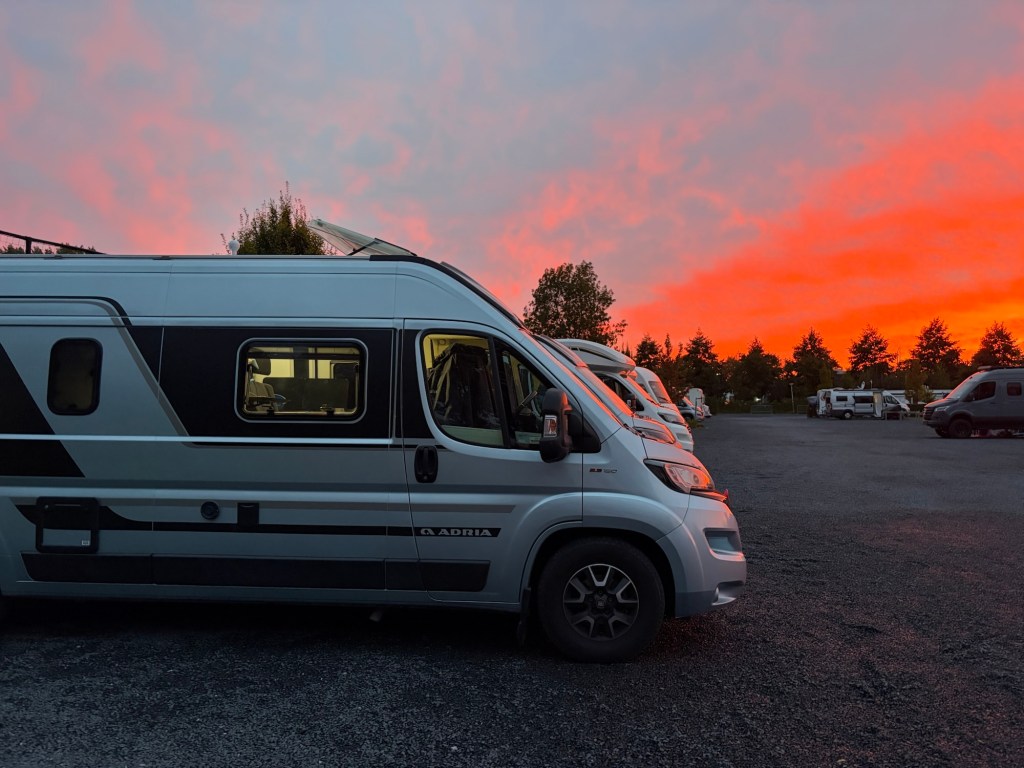
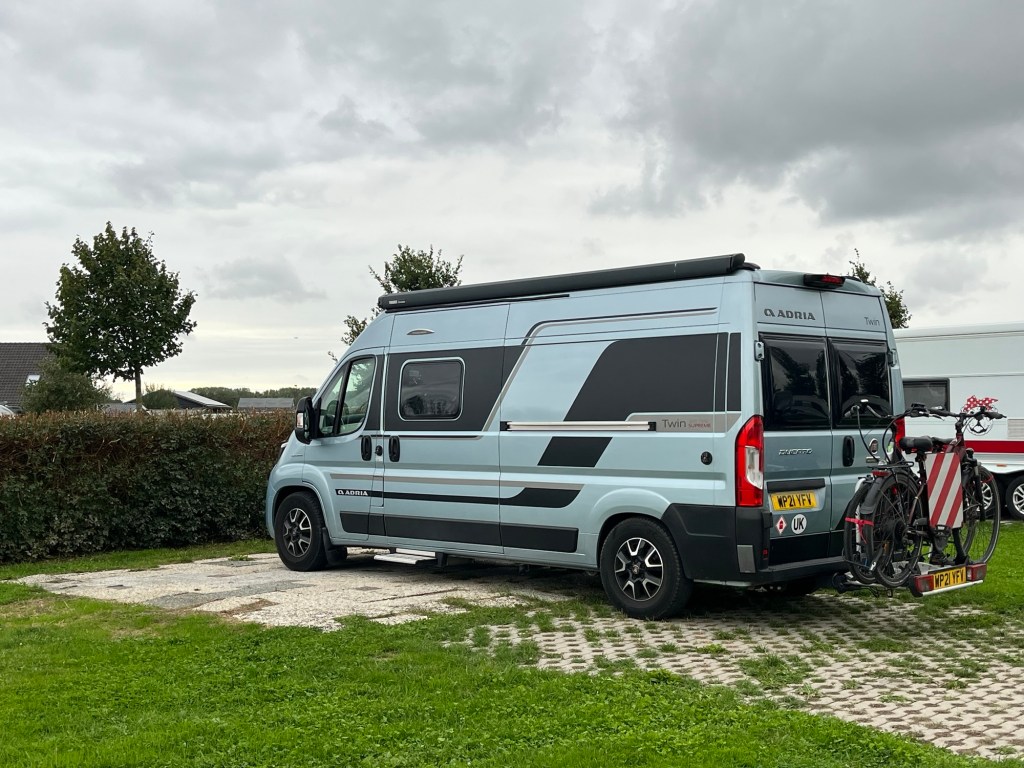
Dora with our friends Adria Twin.

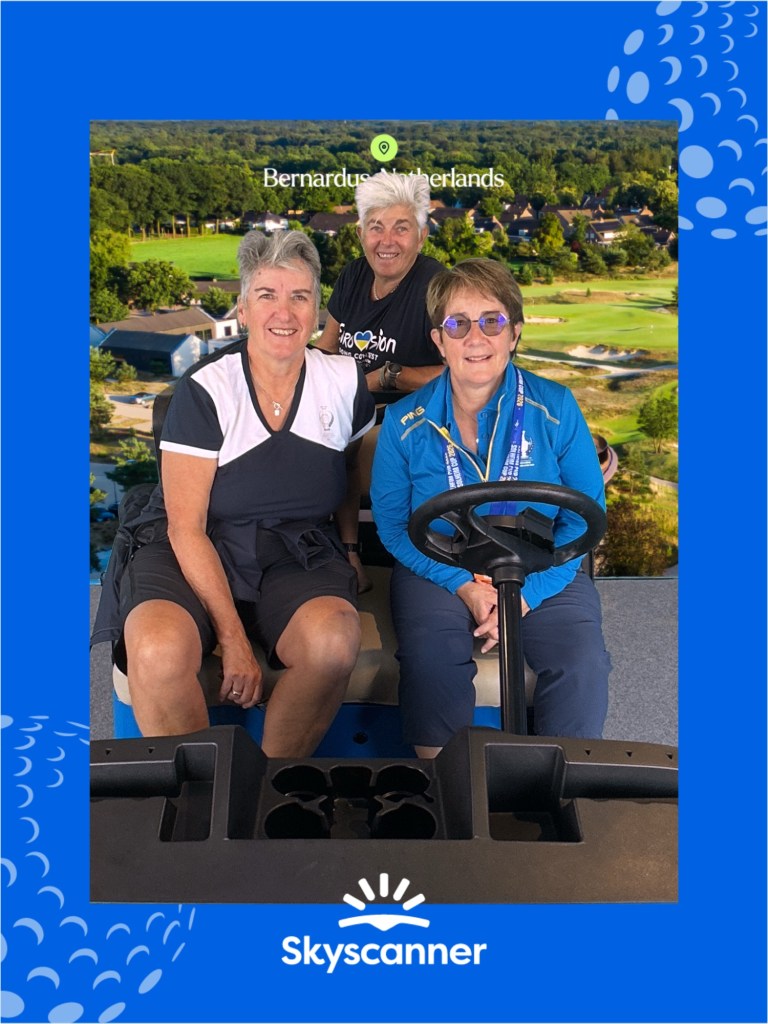
It became full over the week with many campervans and motor homes, mainly for the golf as it was only a ten minute cycle ride through the woods to the cycle park at Bernardus Golf Club. The organisers were running shuttle buses to and from various locations, including Den Bosch, so we jumped on one on Weds afternoon to see the city. Torrential rain was also forecast so it seemed a good idea as it was only a practice day for the players.

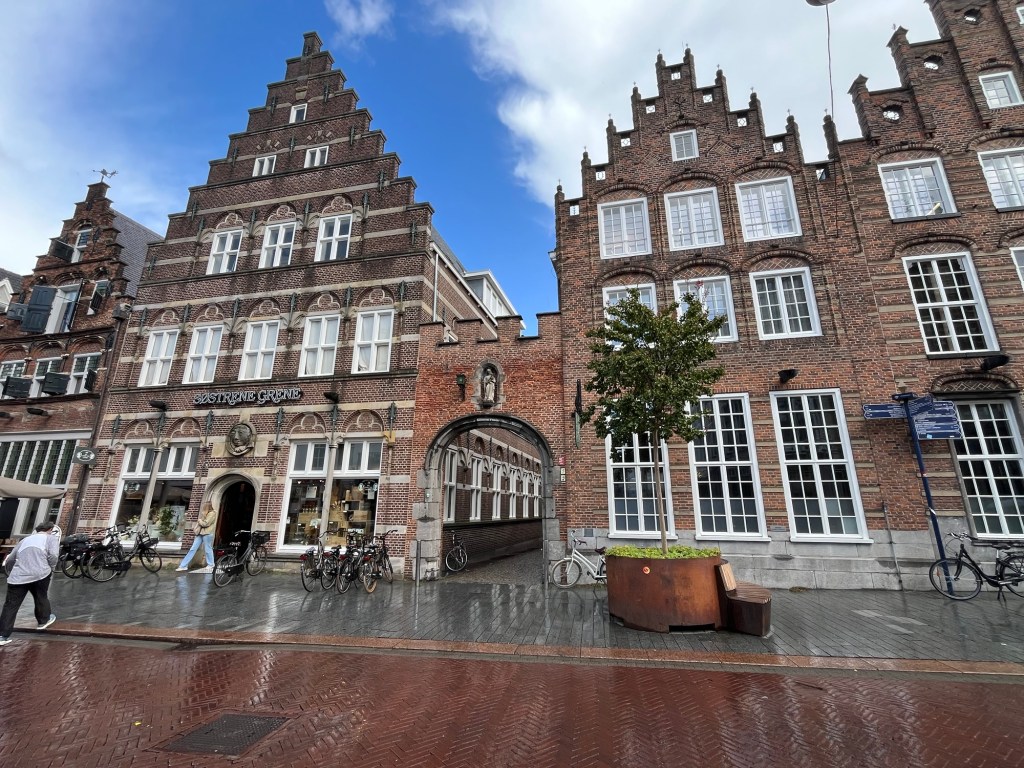
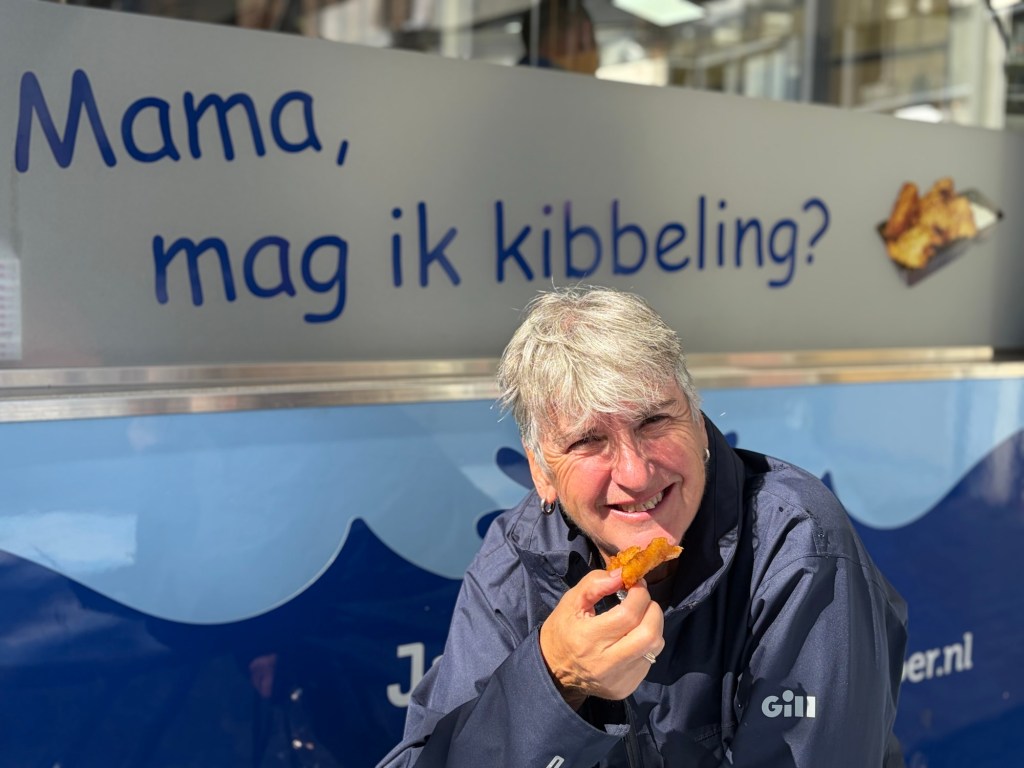
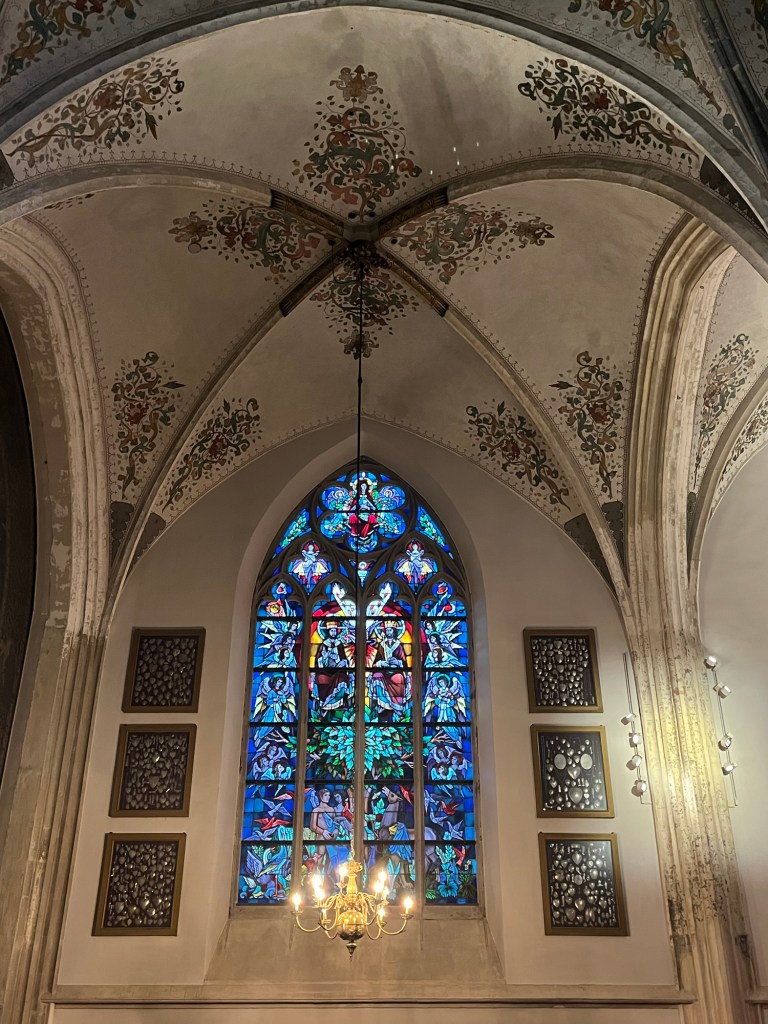
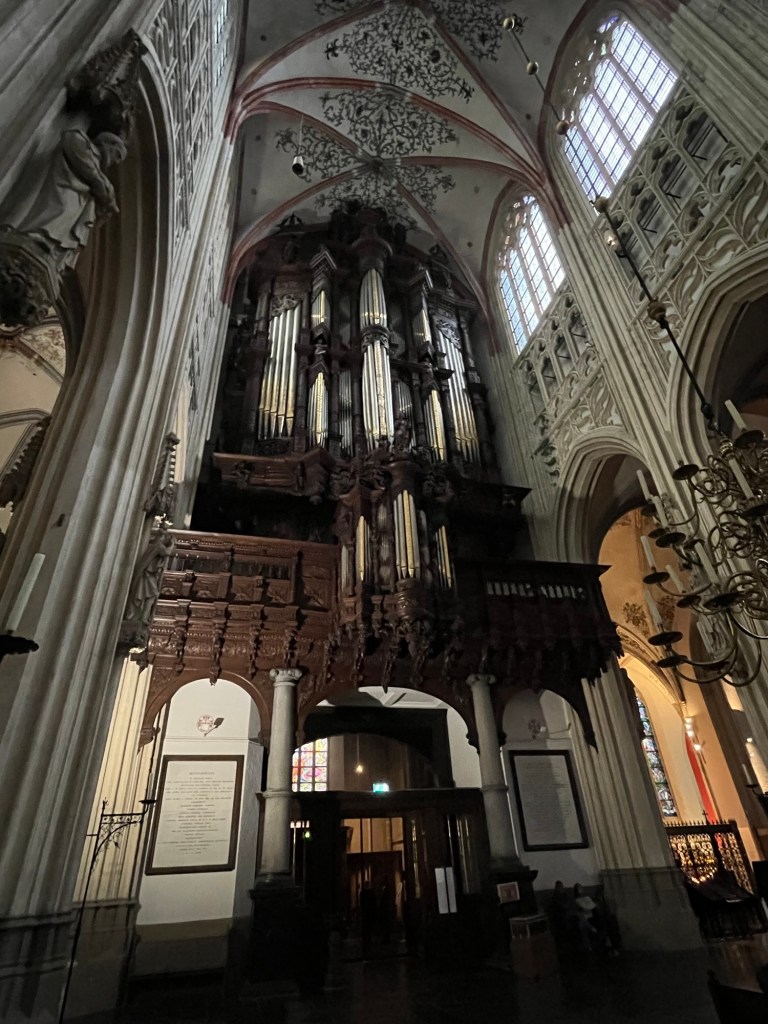
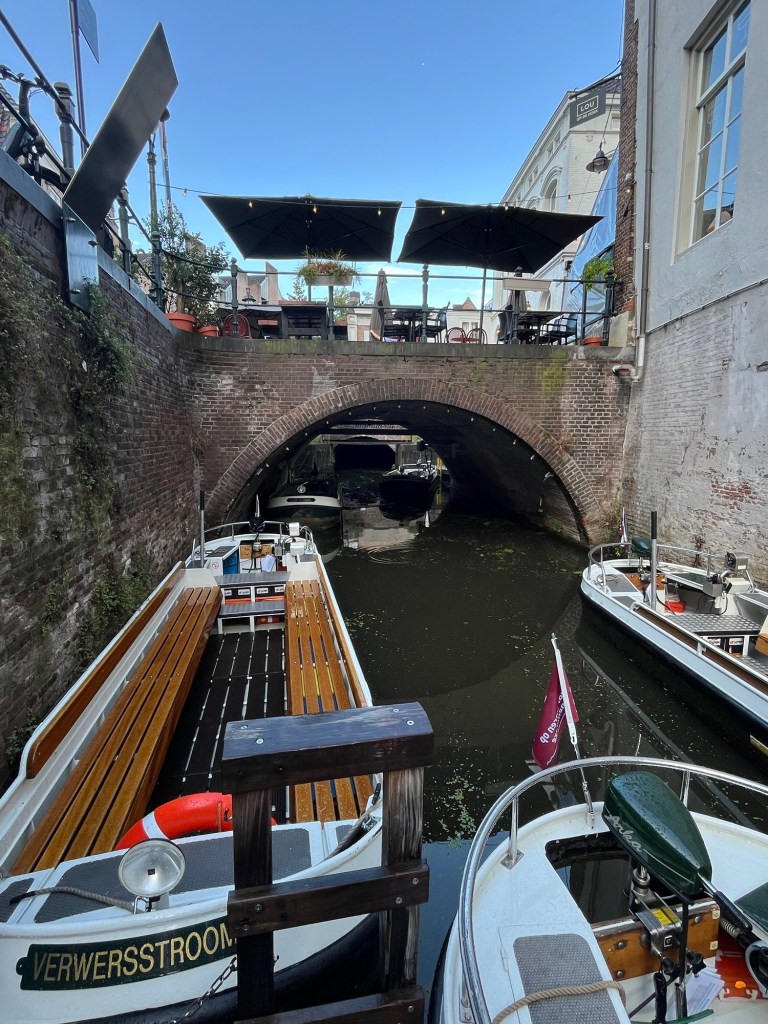
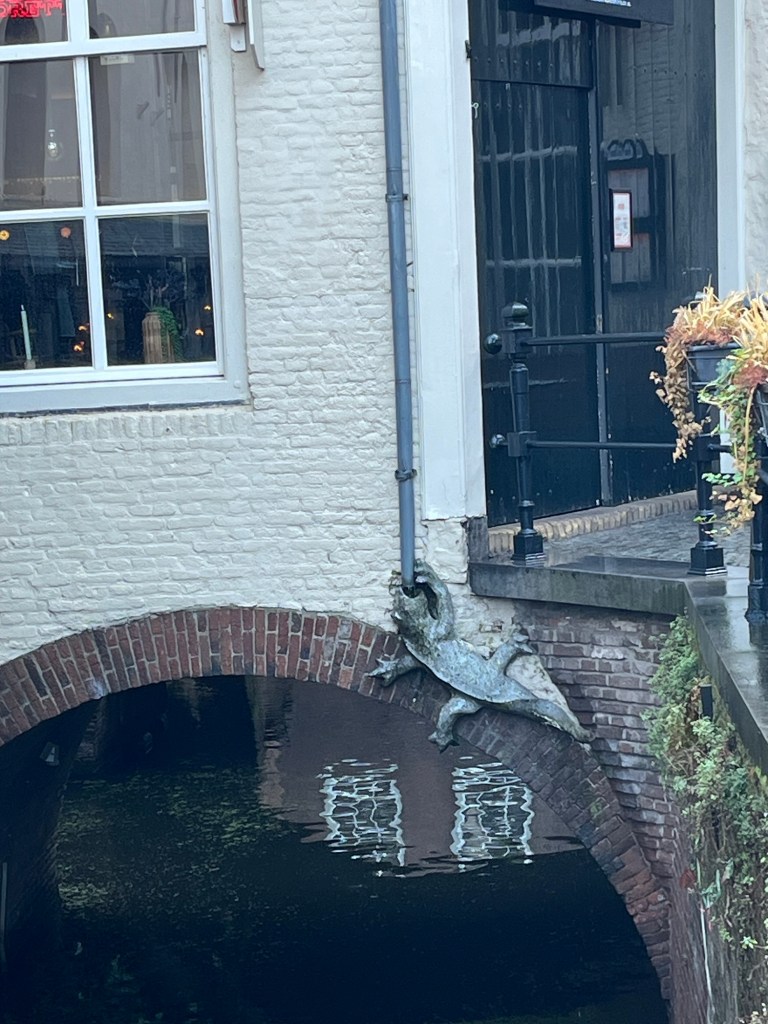
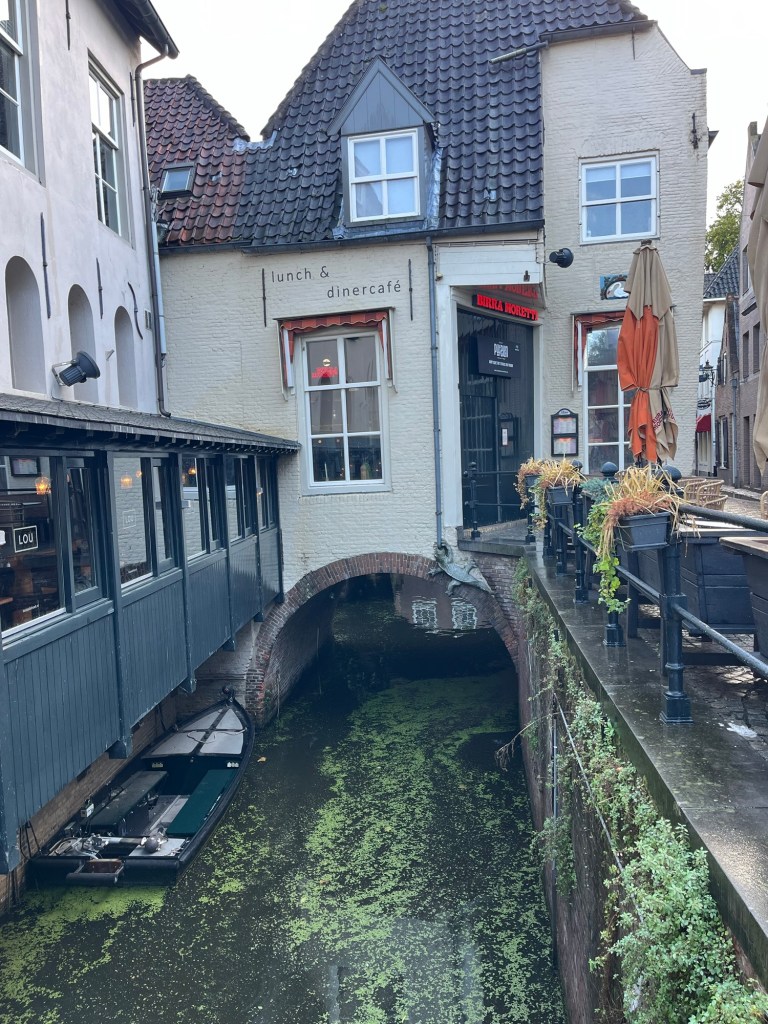
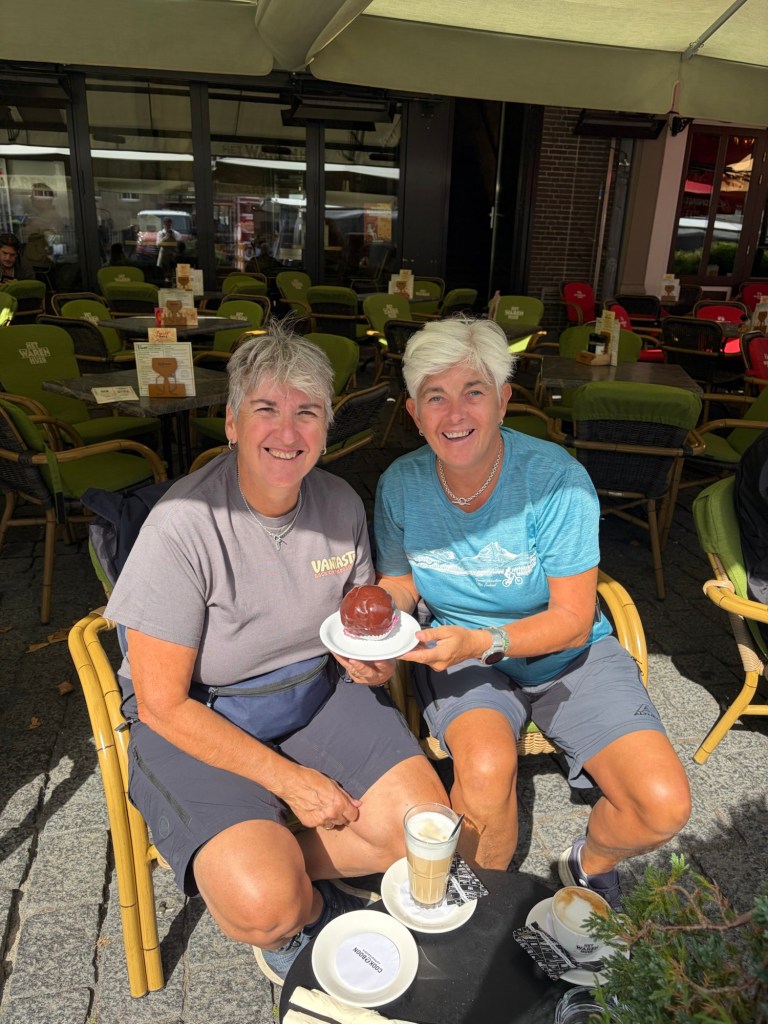
Den Bosch has a wonderful old quarter, Uilenburg, dating back to the 12th and 13th centuries and, unusually for The Netherlands, many of the canals went through tunnels rather than just having bridges over them. The twice weekly market was just finishing up when we finally arrived so we were able to enjoy a Dutch staple, kibberling. This is a freshly made fried fish in bite sized chunks that you have with either mayonnaise or rémoulade. Delicious and not expensive. As the heavens opened, we thought it appropriate to pop into the Sint Jan’s cathedral for shelter, which has one of the largest organ walls in Europe. After all this culture we had to stop and have a Bossche Bol that was a huge profiterole.

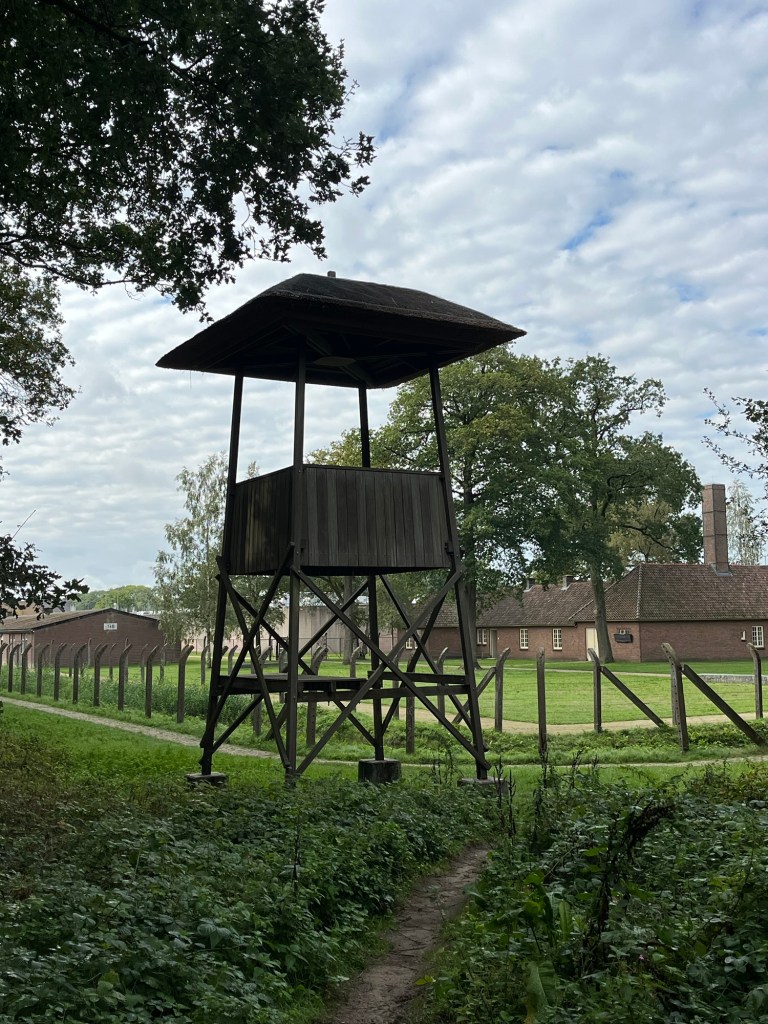
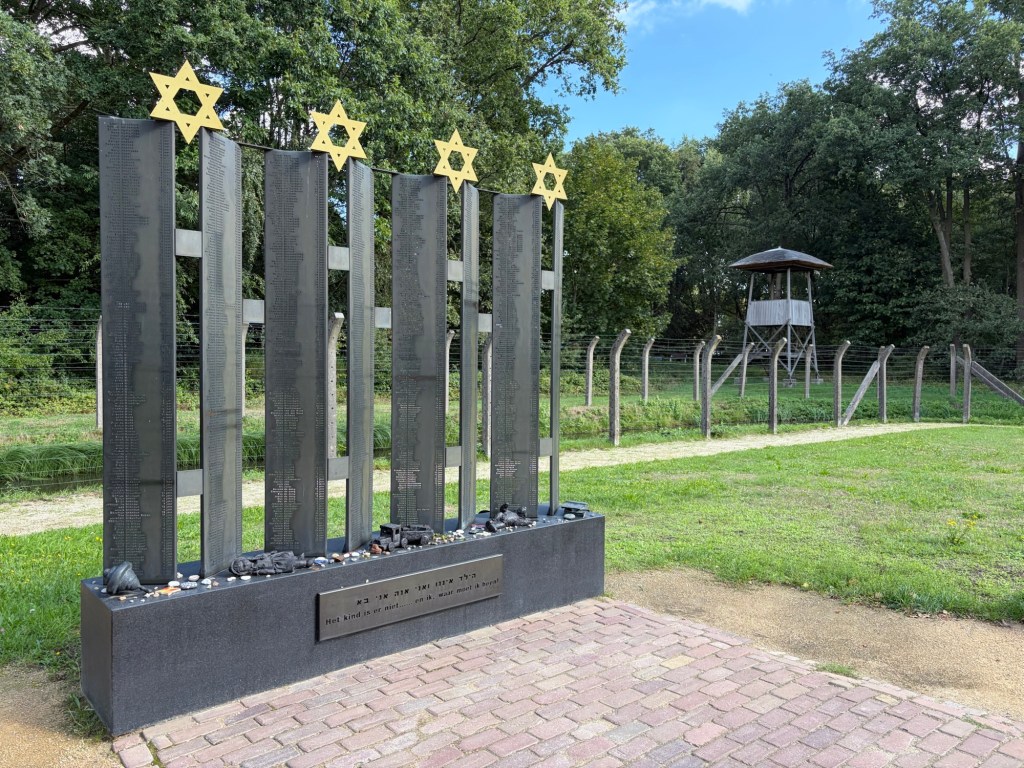
The woods in the nearby town of Vught was the setting for a concentration camp during WWII. Whilst it wasn’t an extermination camp, many people died or were executed there or were moved onto other camps in Poland or Germany. A well thought through exhibition highlighting that there never is just black and white in war.

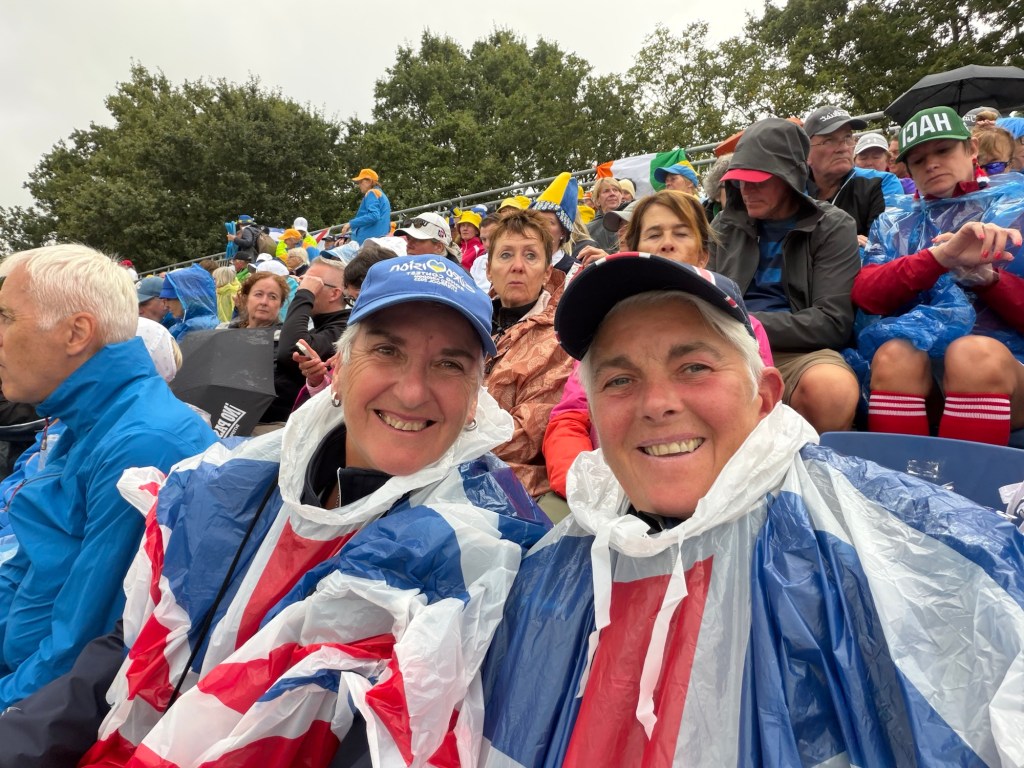
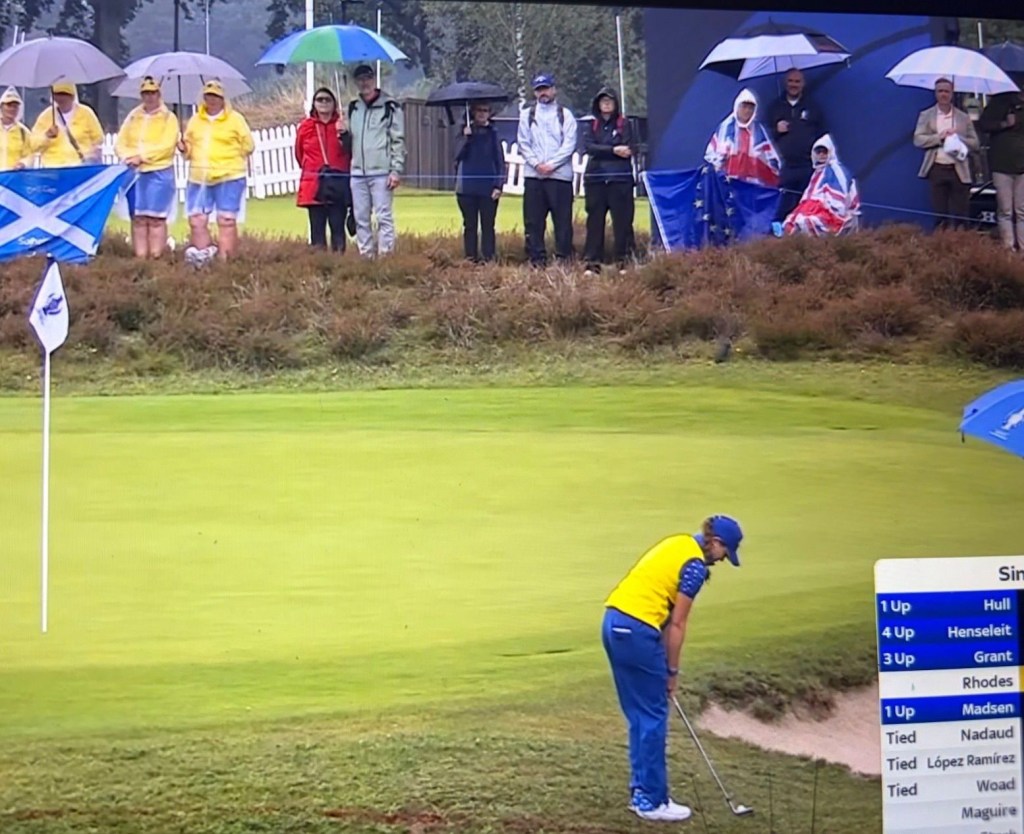
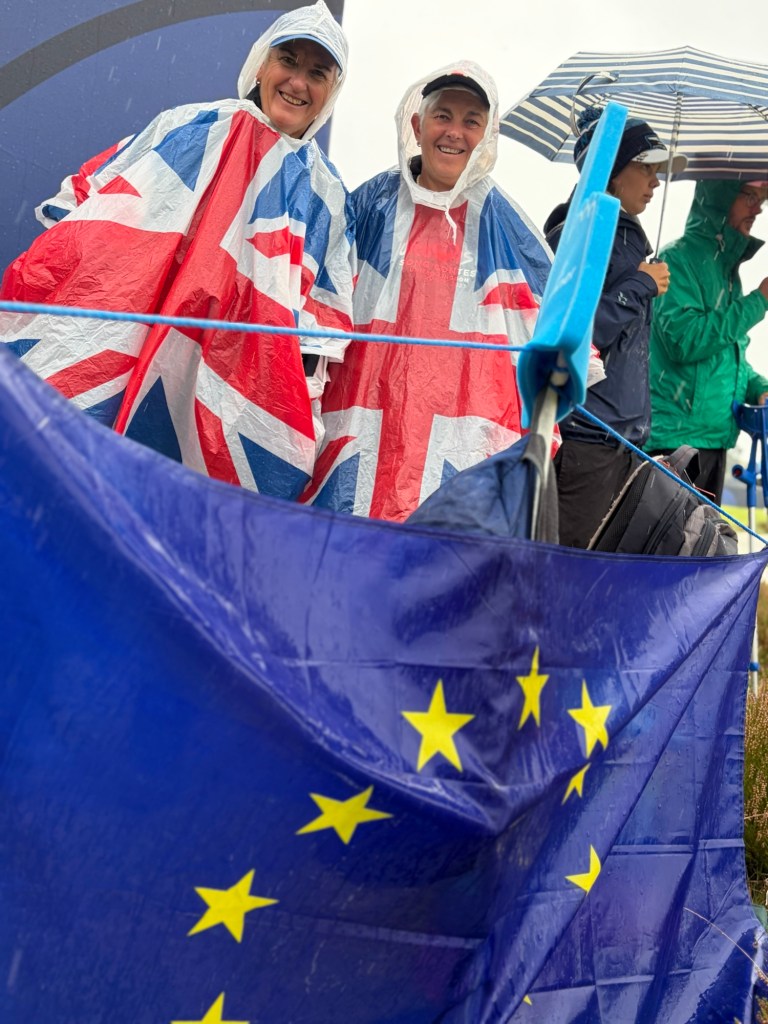
Back to the golf course to pick up our bikes and then back to the van. The theme of torrential downpours continued for the rest of our time there but the golf did not disappoint. World class golfers playing for each other was nail biting stuff. All square after days one and two with 12 singles matches on the Sunday to decide who will take home the trophy. Europe prevailed 15-13 and the place roared with each hole won let alone when we won a match. Great stuff.

It was really torrential
The winning team!

Miles since last blog: 67

Miles this trip: 440

Arnhem

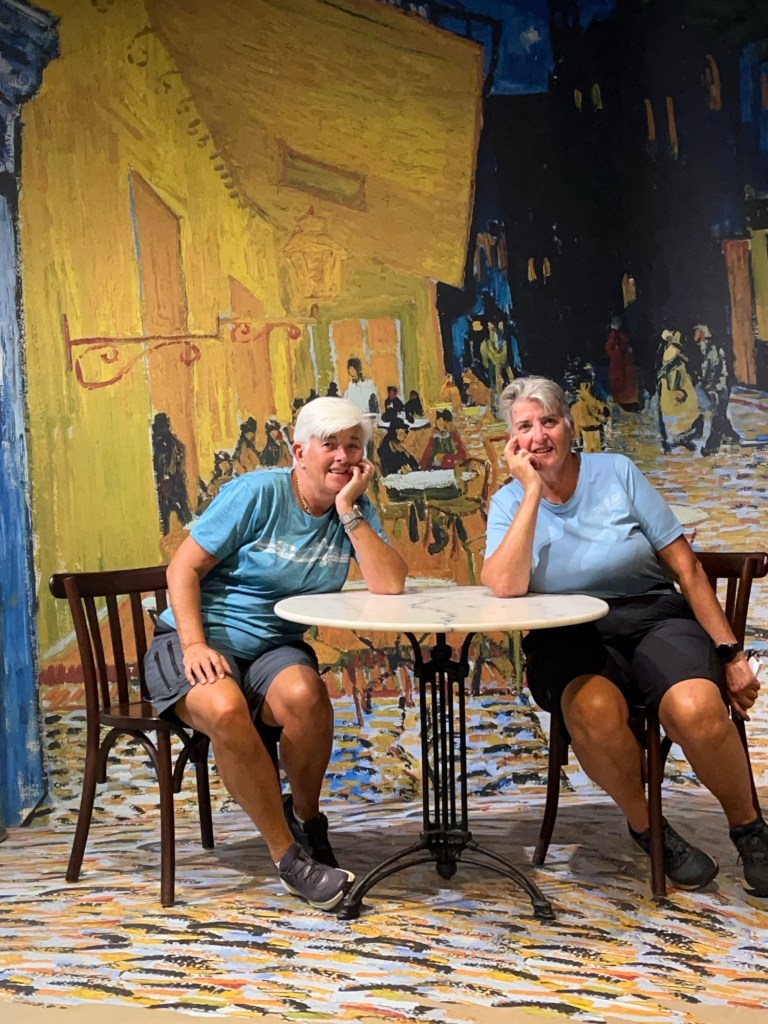
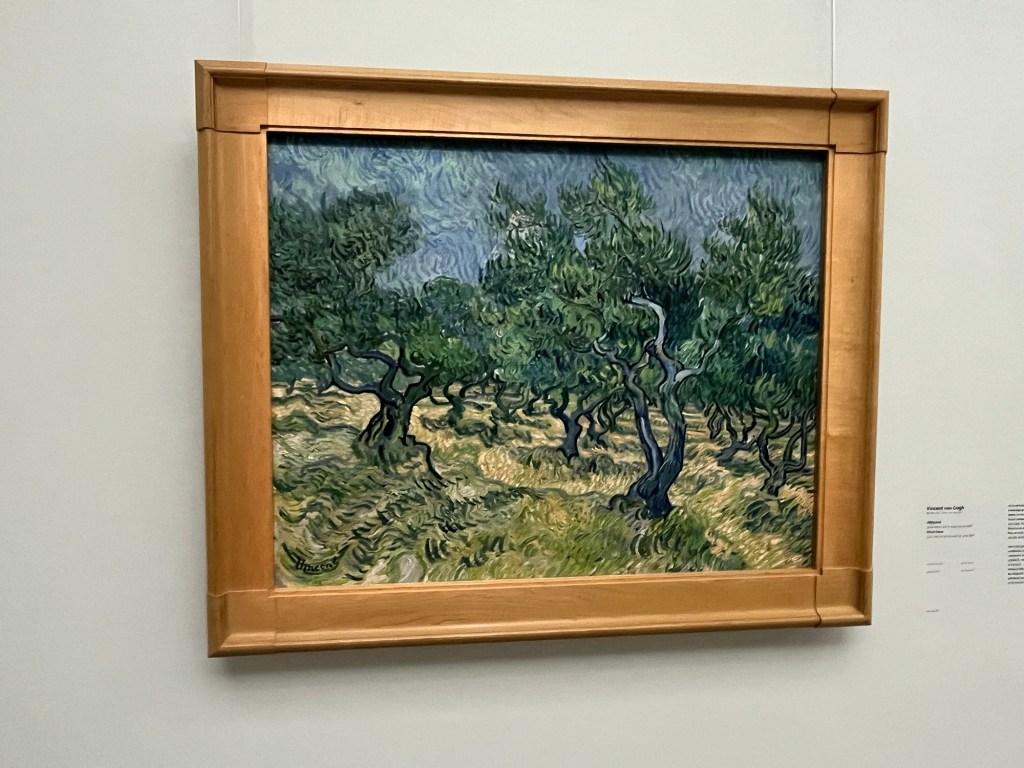
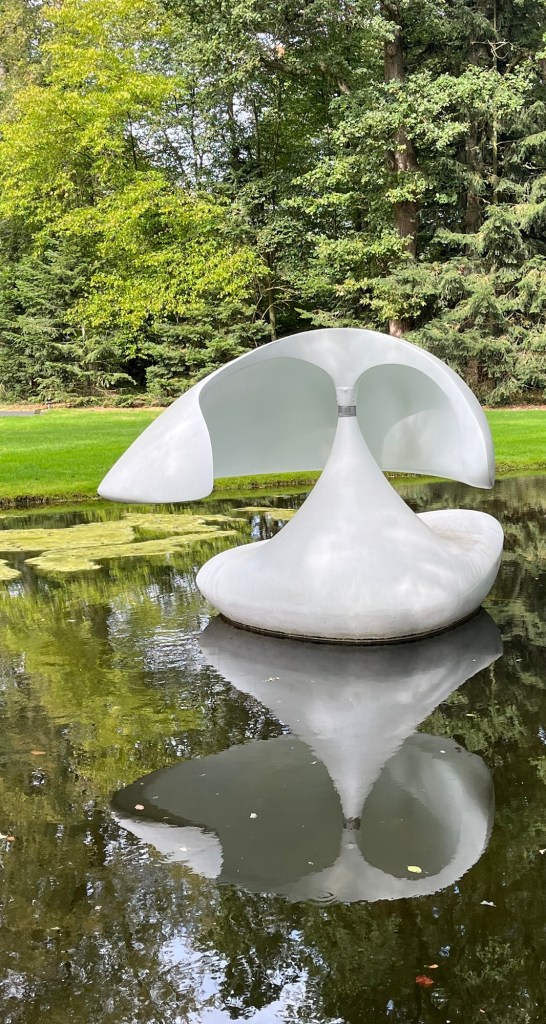
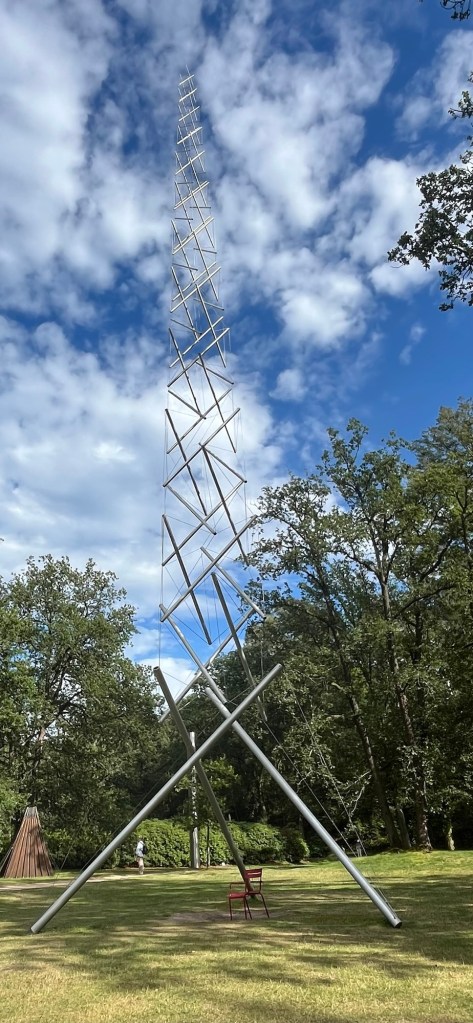
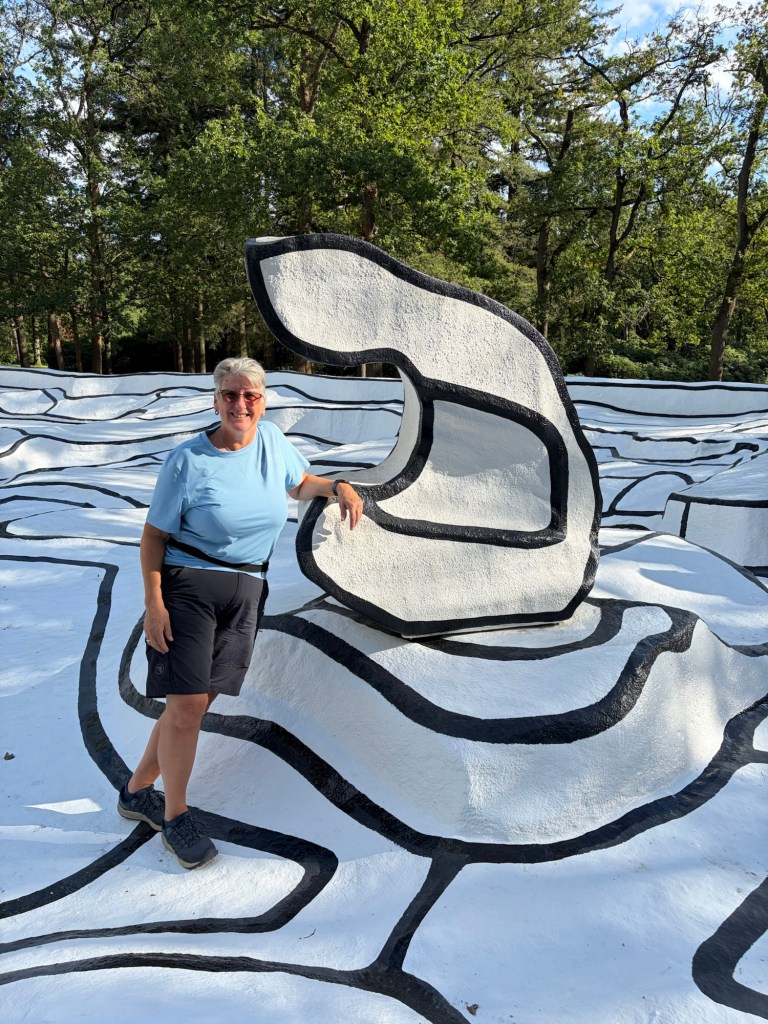
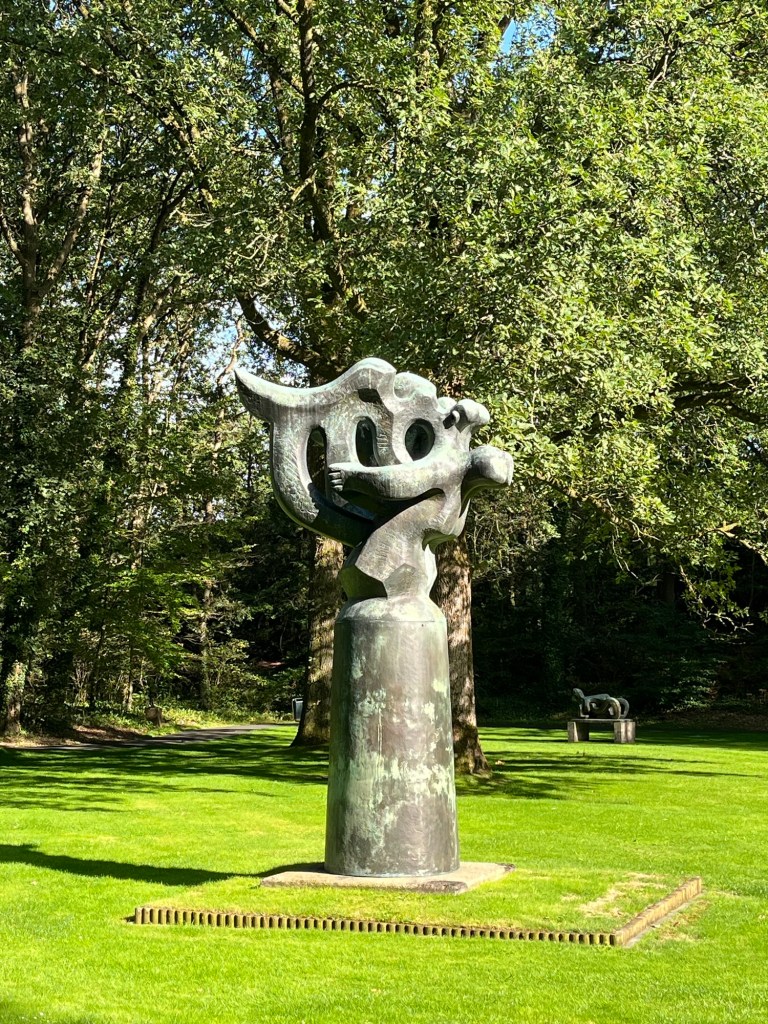
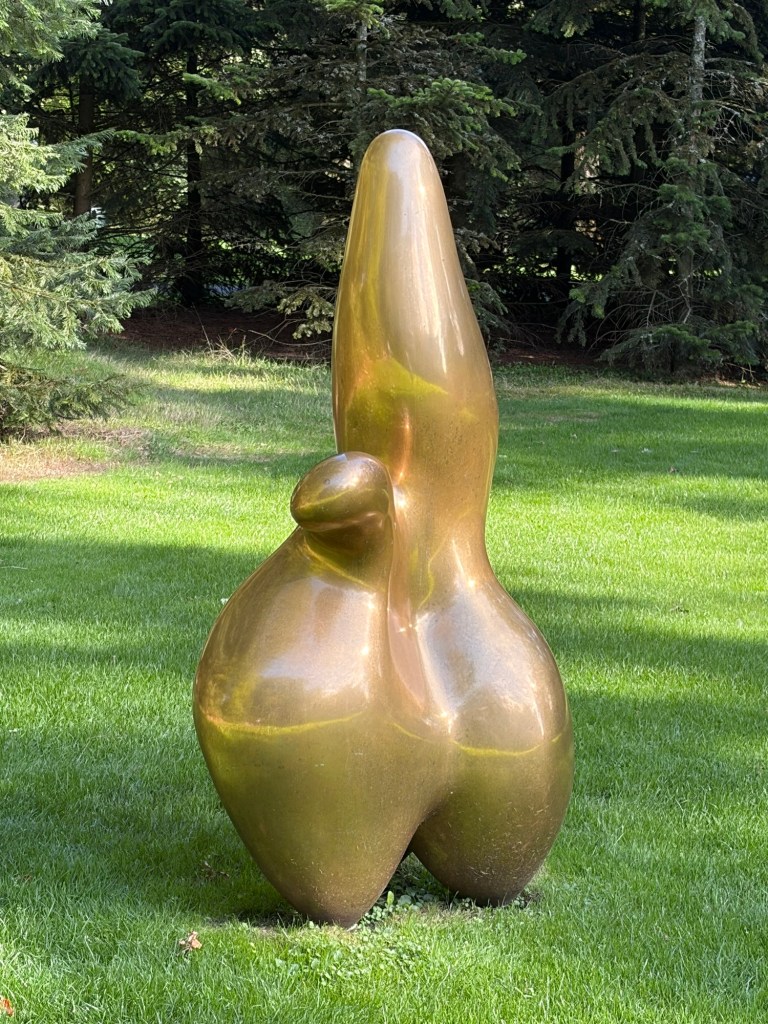
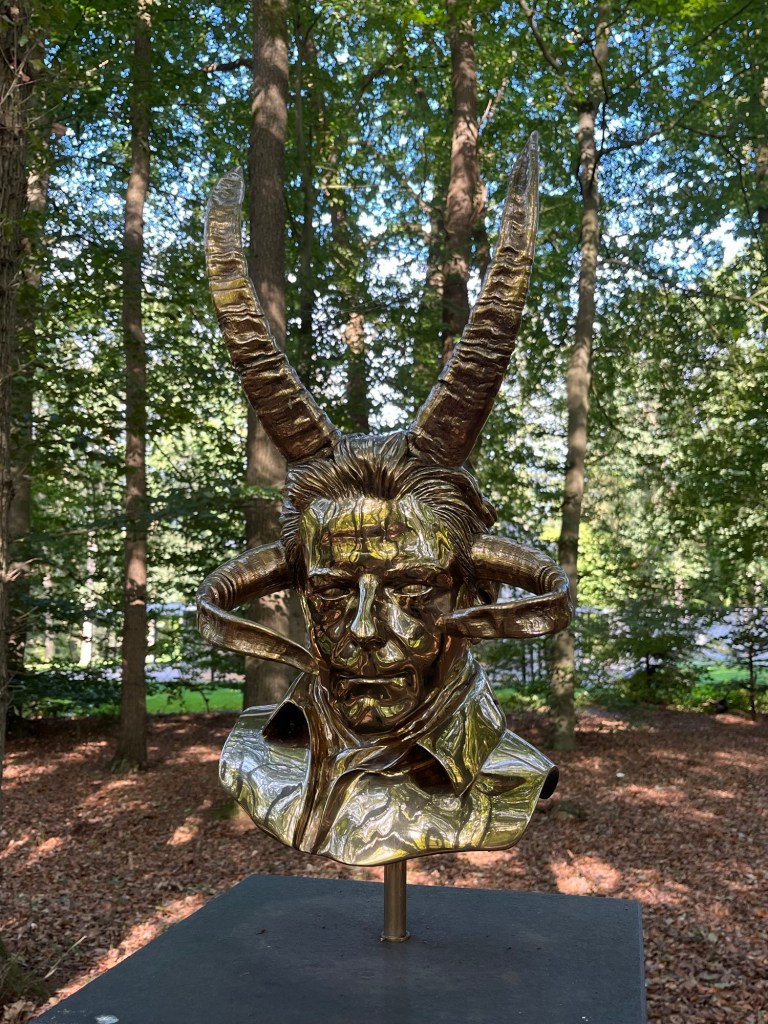
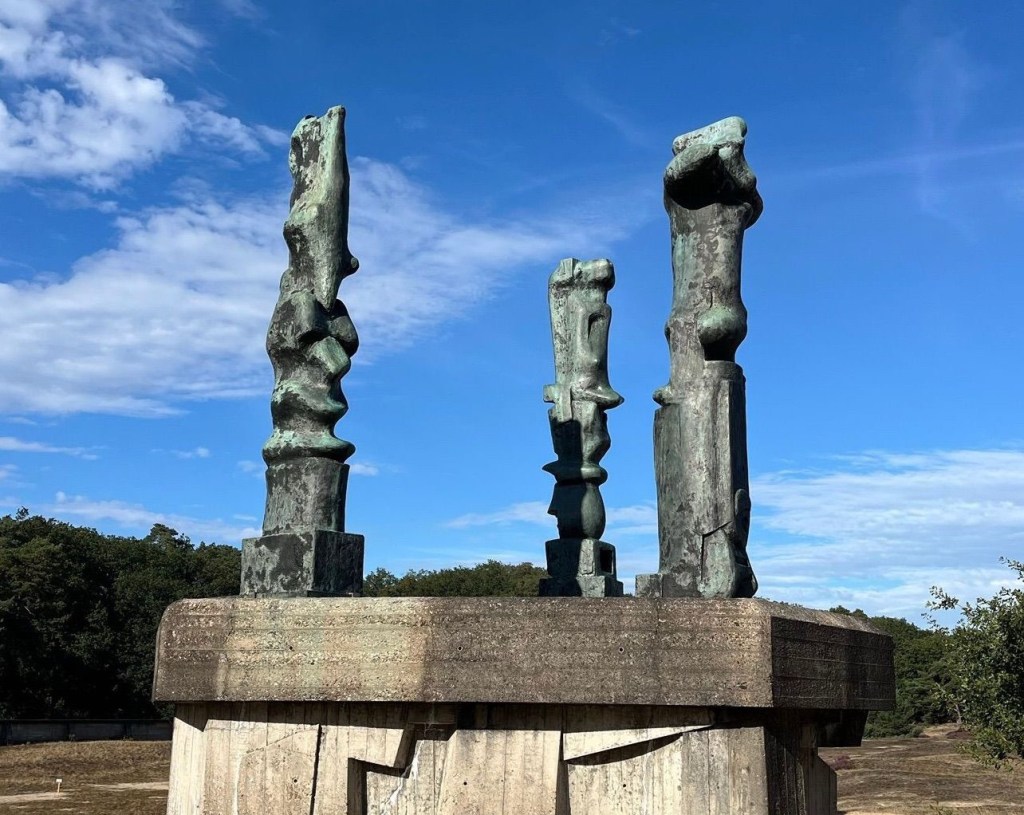
We left Giethoorn around midday on Sunday, September 6 after a delightful wander around the town, even getting a chance to do some food shopping. Shopping in The Netherlands is a bit tricky as not many supermarkets have large car parks and many Dutch seem to do theirs by bike! Anyway, we travelled for around 100 minutes to the small town of Otterlo in the Hoge Veluwe National Park. We found a site called Camping de Bosrand (P4N#452240) that was a tiny site with just 20 places but we managed to book one night with them. It was perfect for us as we could then cycle to the National Park to visit the Kroller-Muller Museum. It holds the largest collection of Van Gogh in the world with over 90 paintings and drawings. It also had a wonderful sculpture garden. We managed to do the whole thing before it closed at 17.00. Back to the van for pre dinner drinks and a meal.

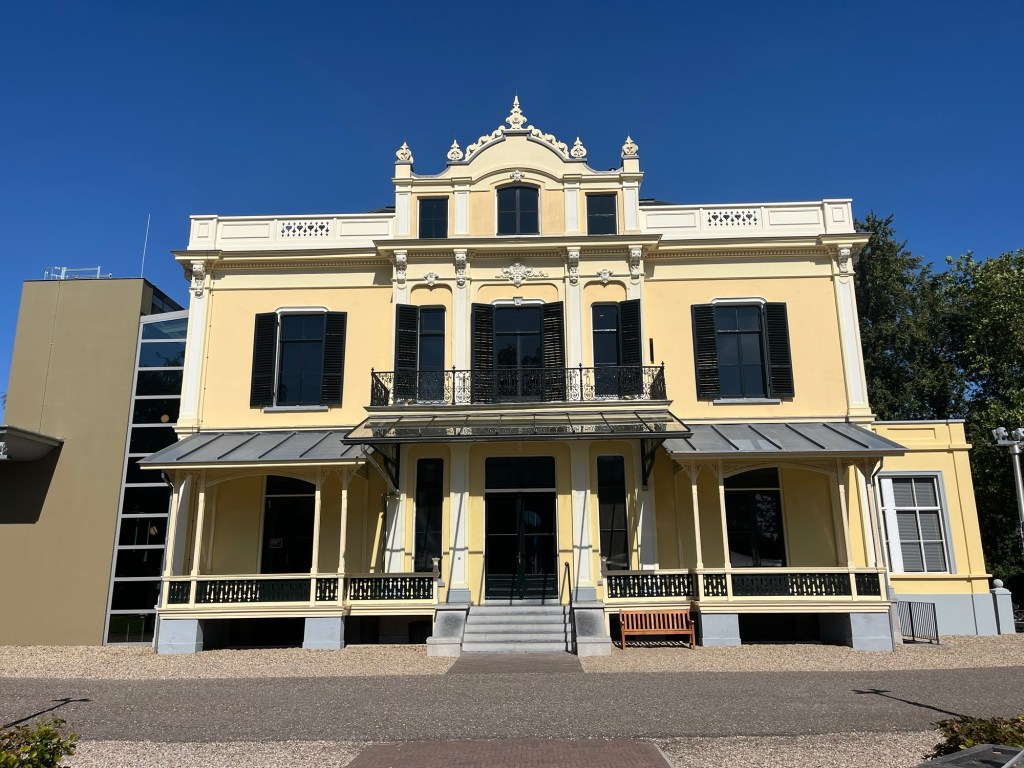
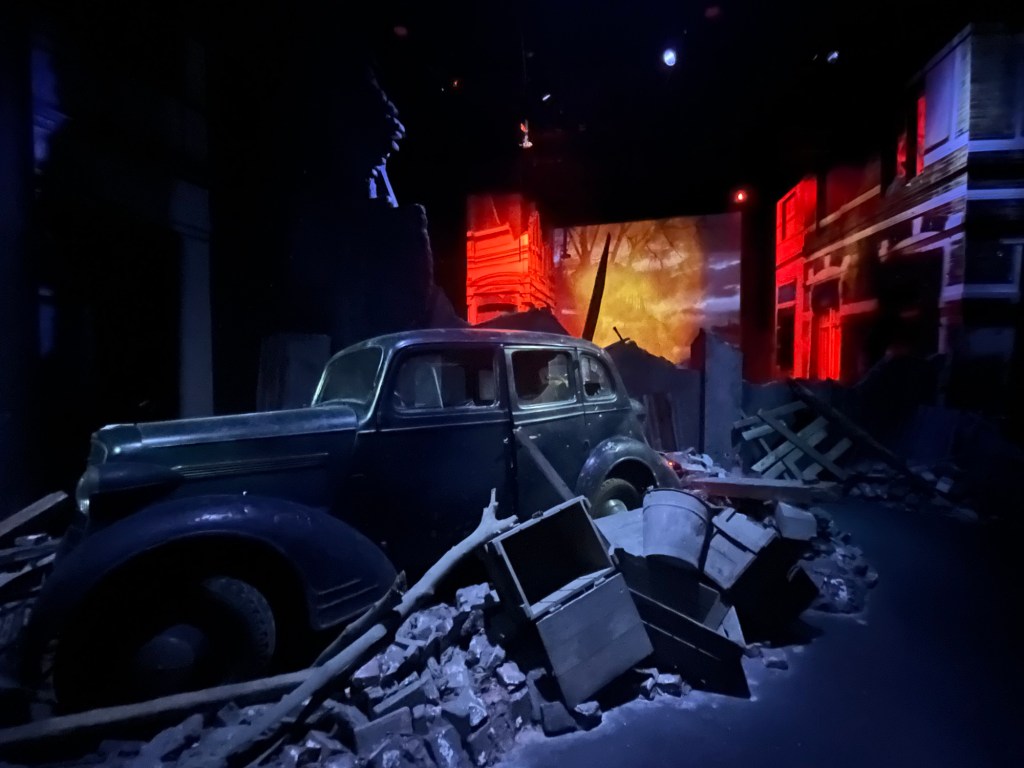
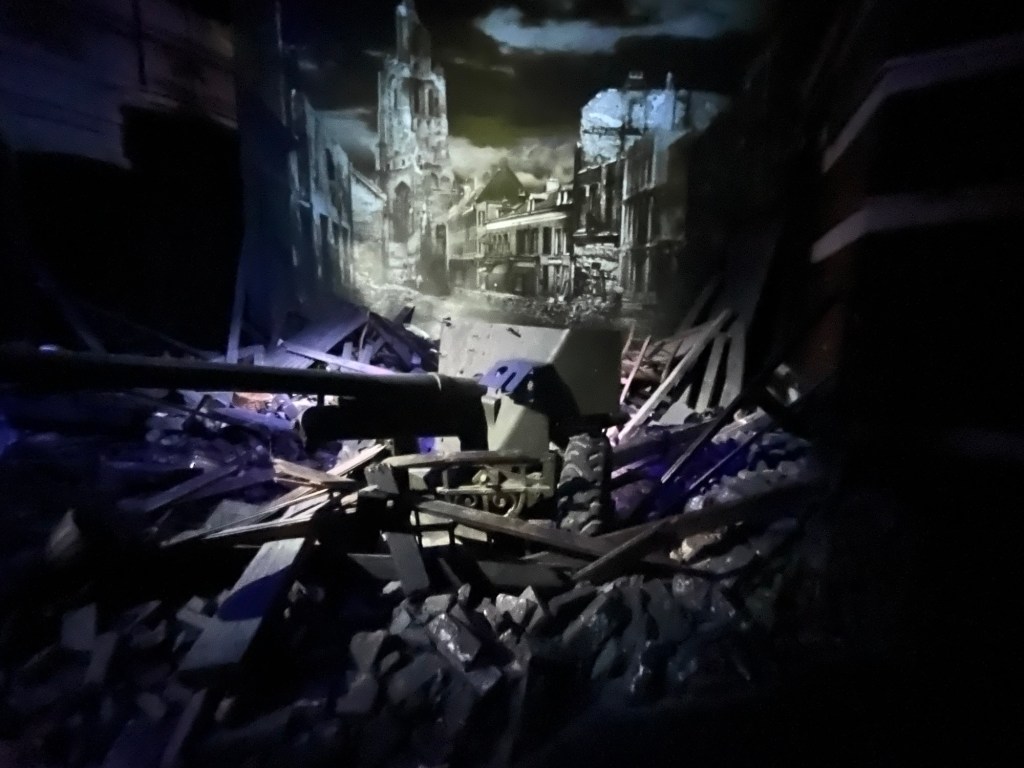
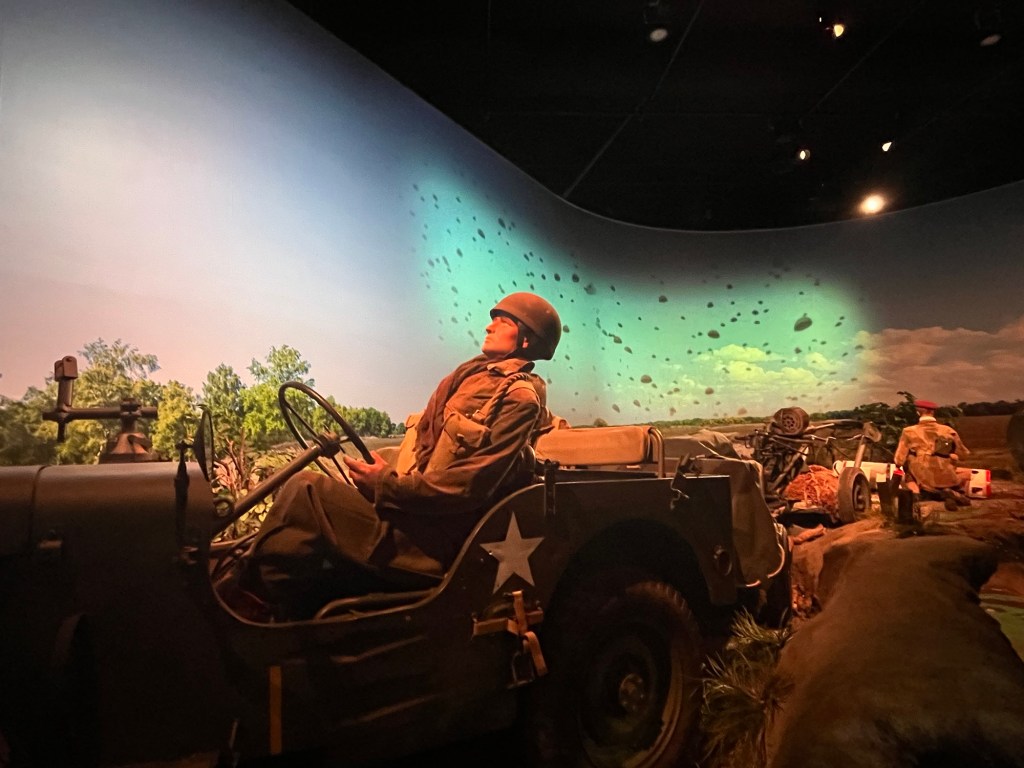
The next morning, we had to move on so we opted to drive the few miles to Oosterbeek where there was a museum on the Battle of Arnhem in WWII. Many of you will be familiar with the film, A Bridge Too Far, which was all about Operation Market Garden. This was an airborne drop involving 30,000 men behind enemy lines in September 1944 after D Day. General Montgomery thought it would shorten the war. Instead, it was a disaster with 17,000 killed or wounded and 6,500 taken prisoner. The museum at Oosterbeek was in Hartenstein House, the same house that became the Allied HQ during this operation and it was a fascinating insight into the battle. The immersive experience in the basement was particularly impressive. We also had visited the War Cemetery just outside the town before visiting the museum.

We then moved onto our campsite for the night just outside of Arnhem, Camping Warnsborn (P4N#142580). It was another small campsite and again close to the National Park but at the southern end so it was another site in the woods.

Camping Warnsborn

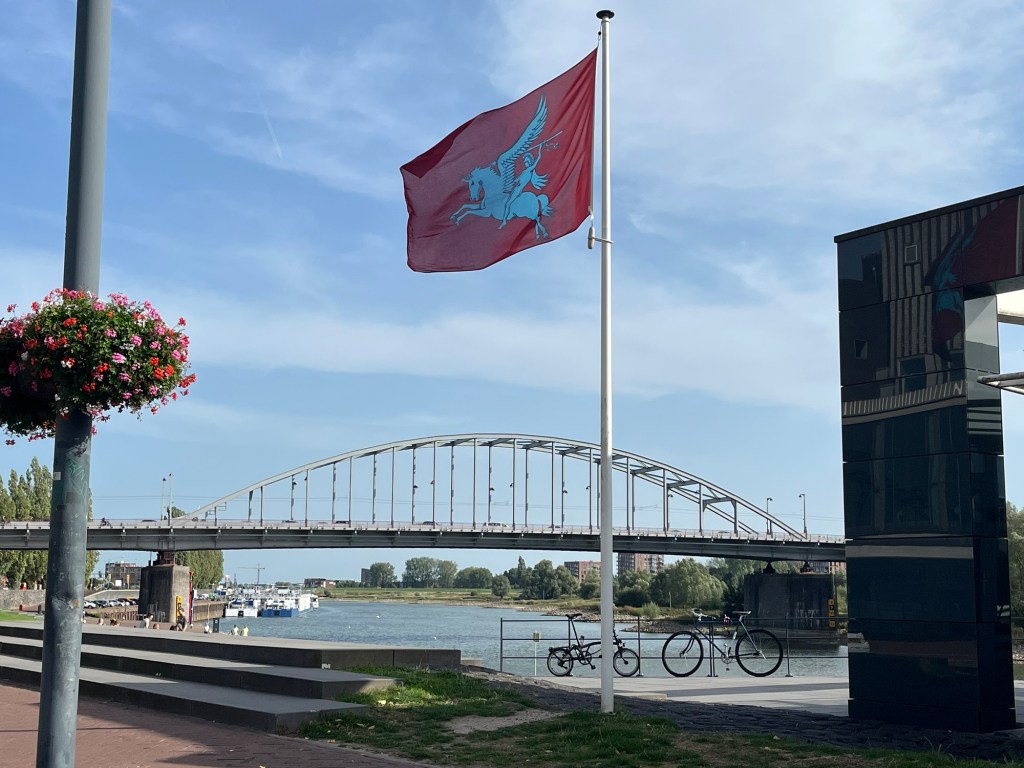
Once settled we cycled into Arnhem itself to see the John Frost Bridge (of A Bridge Too Far fame).

The John Frost Bridge

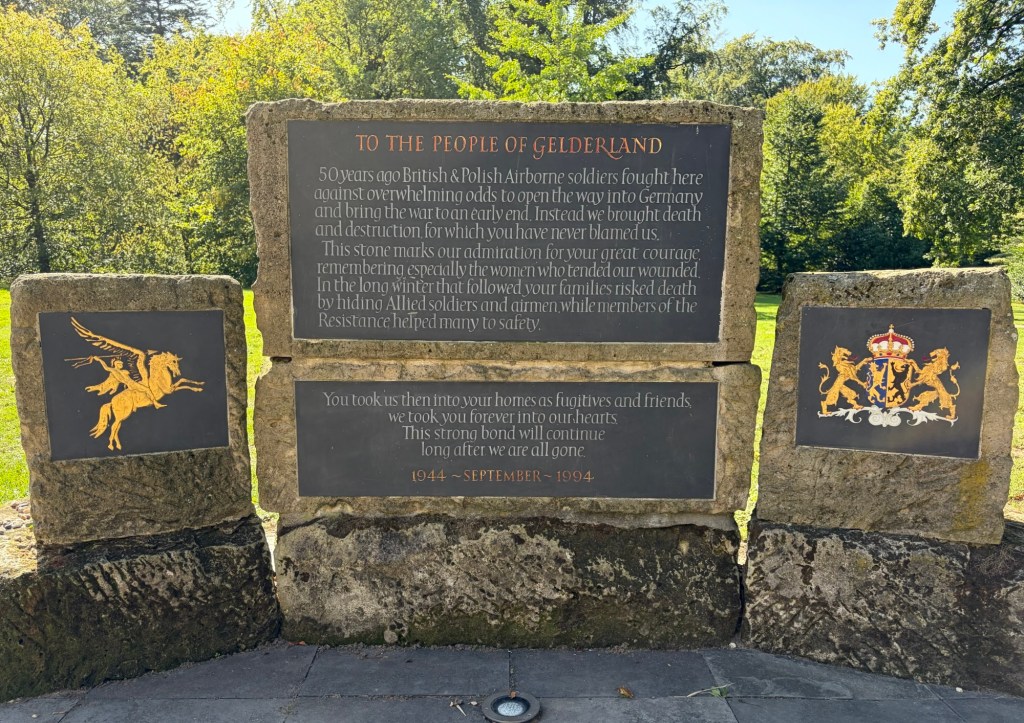
All over town, the flag of the 101st Airborne Division was being flown in commemoration of the battle. Considering Arnhem was pretty much razed to the ground by the Germans during and after the battle, the local people didn’t seem to hold a grudge against us.

A poignant reminder

Back to the van again for beers in the sun before dinner on board.

Miles since last blog: 80

Miles this trip: 373

Oudewater and Geithoorn

As the motorways are toll free in The Netherlands, we made good use of them to drive towards our final destination of the day, Giethoorn. Before that, though, we stopped at Oudewater, about an hour north of the Biesbosch.

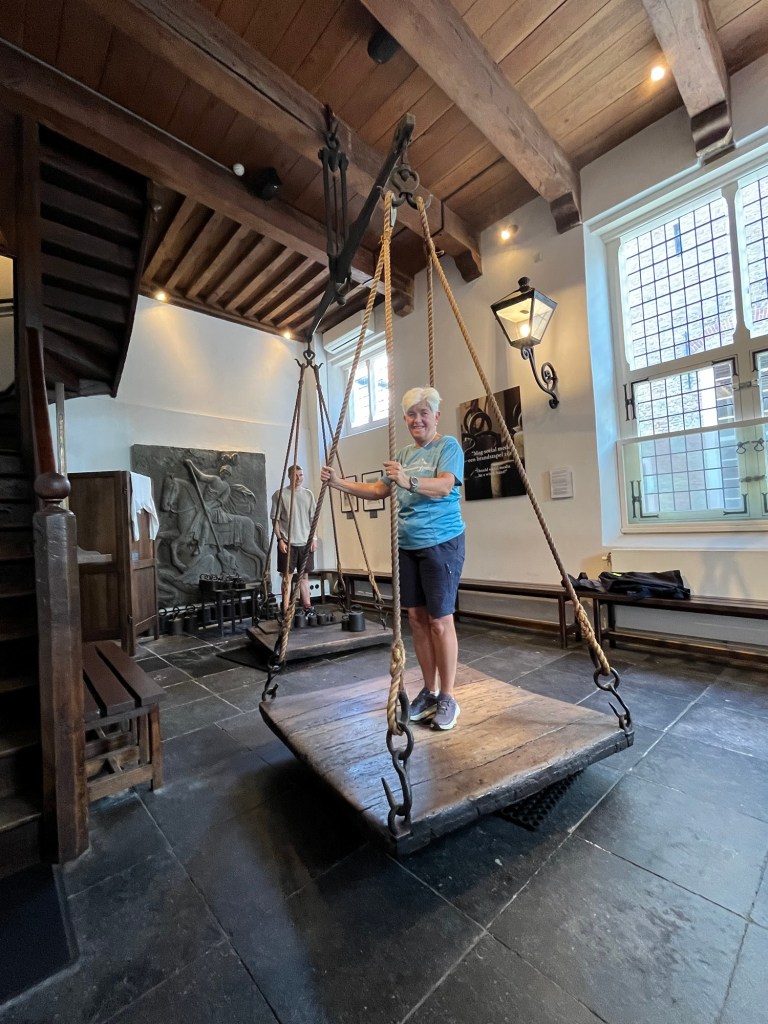
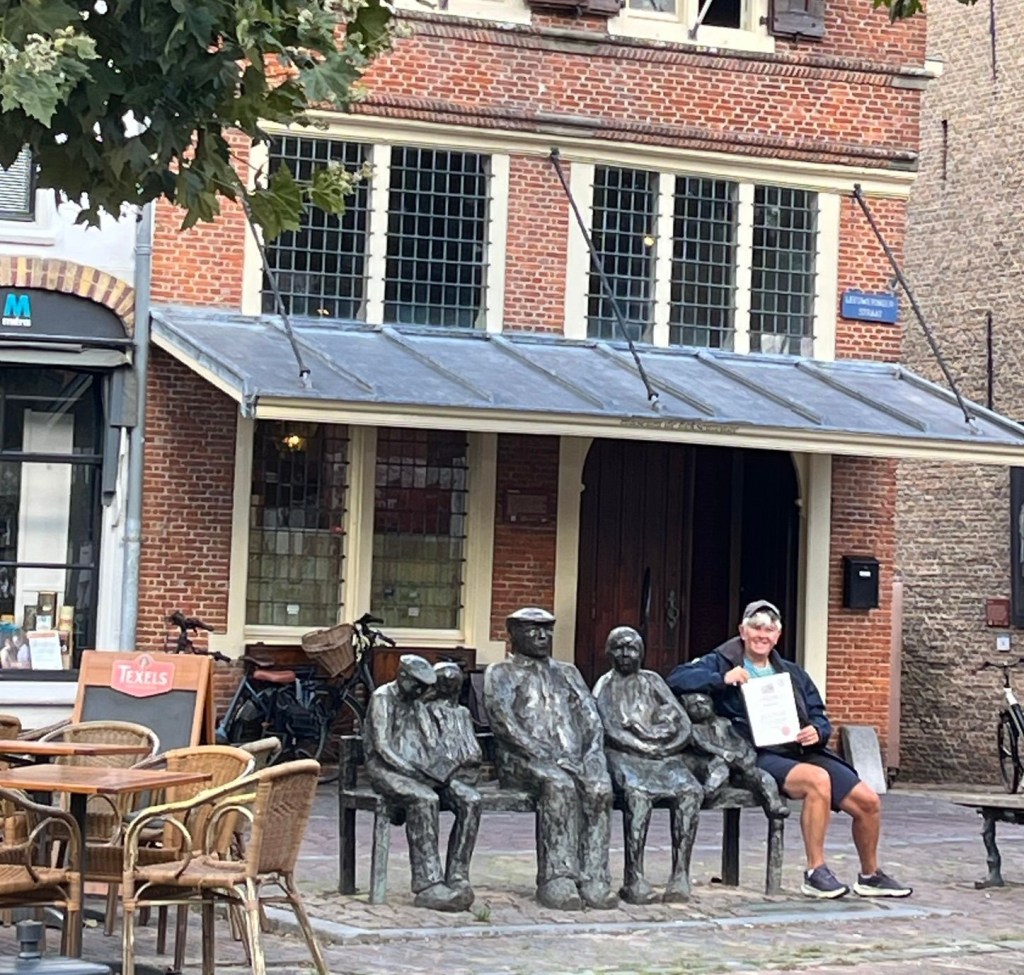
Oudewater became famous in the 16th century for weighing people who had been accused of being witches. It is thought that over one million women were killed as a result of the witch hunts across Europe during this time. It was a time when petty grievances and superstition ran rife. Many women were tortured, drowned or burnt alive due to the fact that it was extremely hard to prove their innocence. However, one test was about how much they weighed as witches were thought to be very light in order to fly around on broomsticks. So, women accused of witchcraft could be weighed. The town weighing house was generally used as this was where goods were normally weighed. Many of the weigh masters were bribed to ensure the women only weighed a few pounds. This happened when Emperor Charles V was passing by and he ordered the woman to be reweighed at Oudewater as he knew the weighing there was reliable. The woman survived and was given a certificate stating her weight which was then proof of her not being a witch. After that, the town drew thousands of women who for a small fee could be weighed. So, of course, Liz demanded to be weighed and got a certificate to prove that she wasn’t a witch.

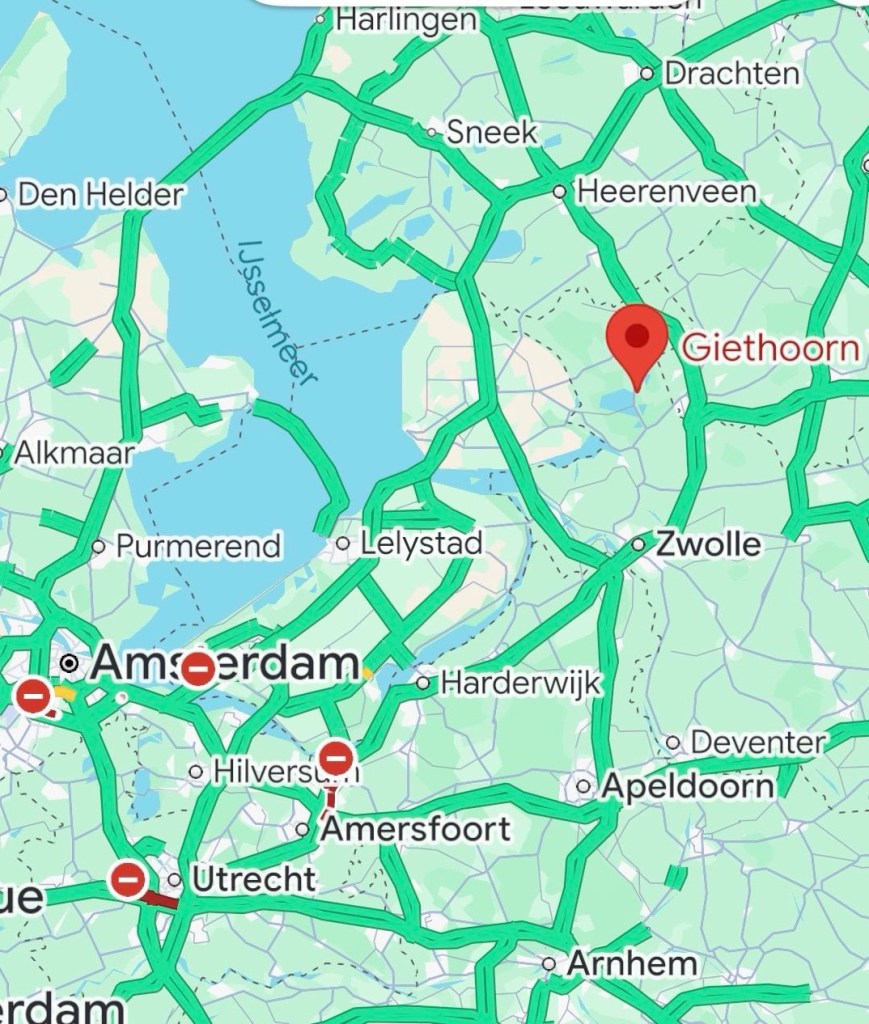
We then continued north for another 90 minutes to reach Giethoorn and found the lovely, quirky campsite Haamstede (P4N#32120) about a 20 minute walk from the centre.

Camping Haamstede

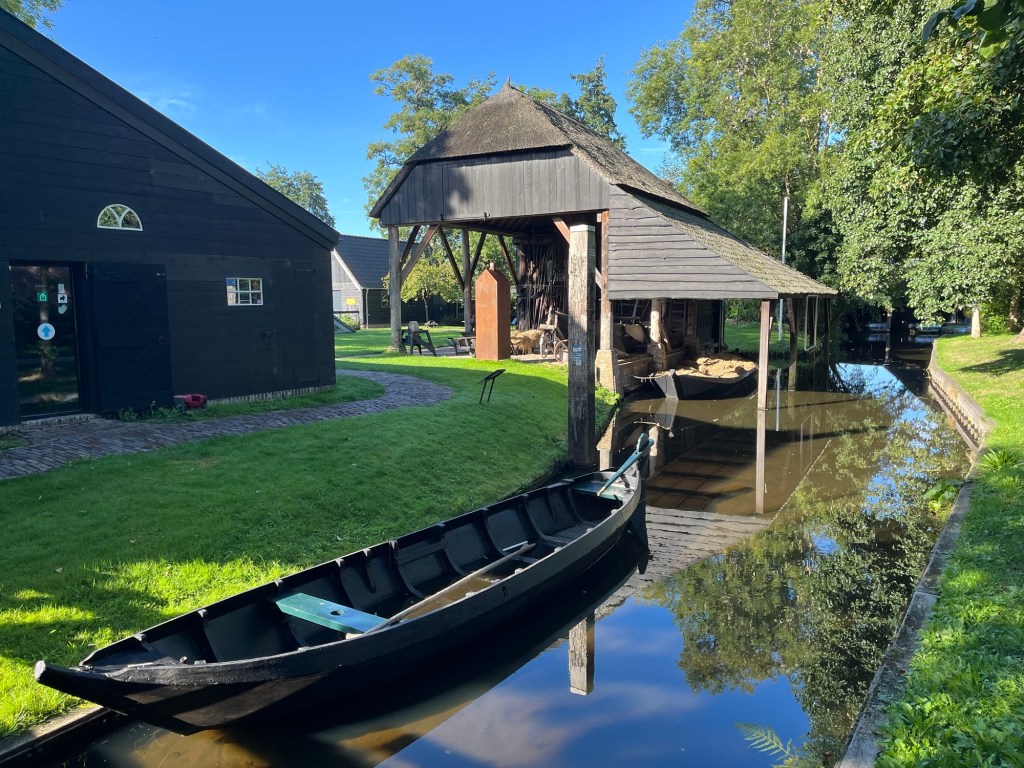
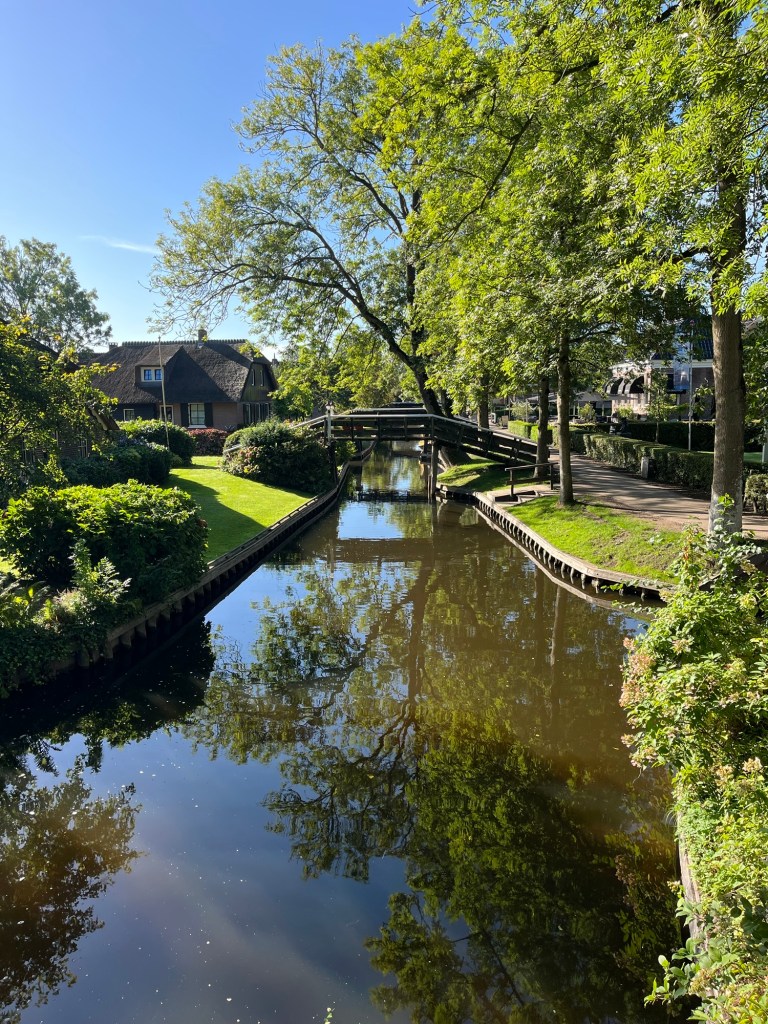
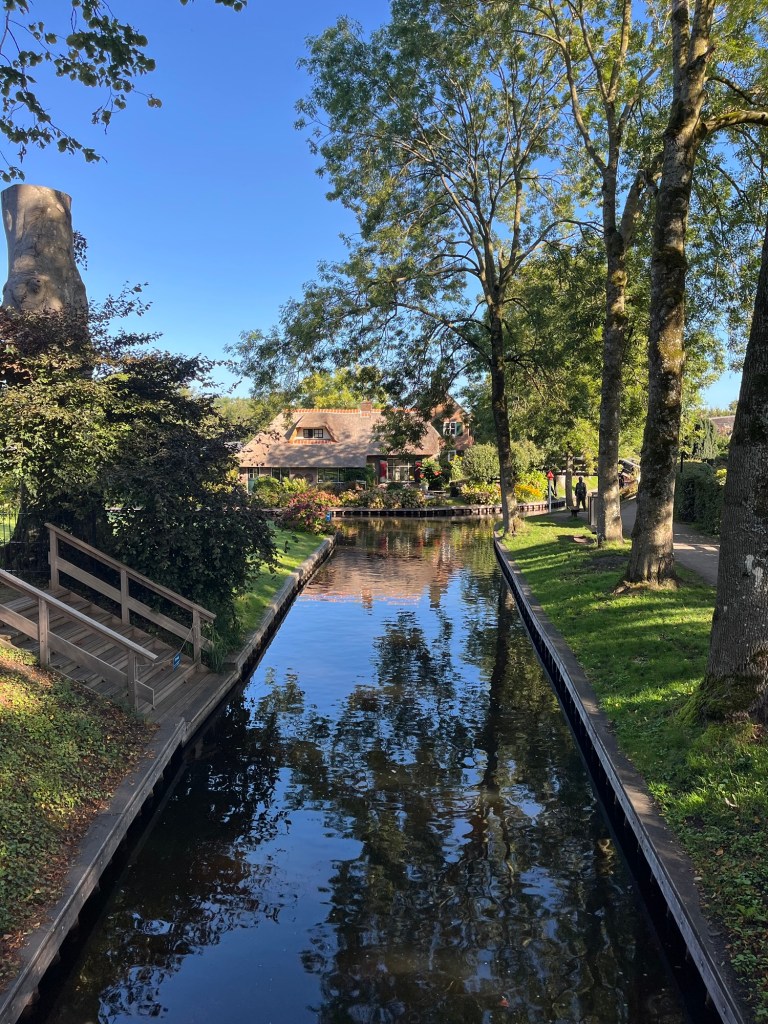
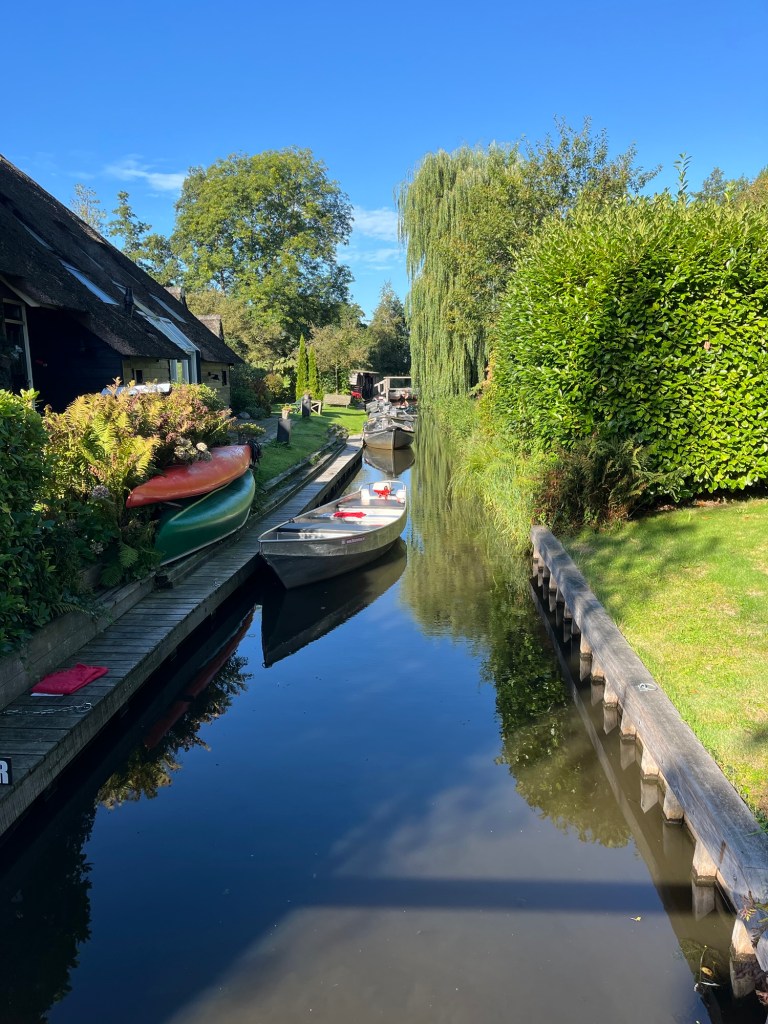
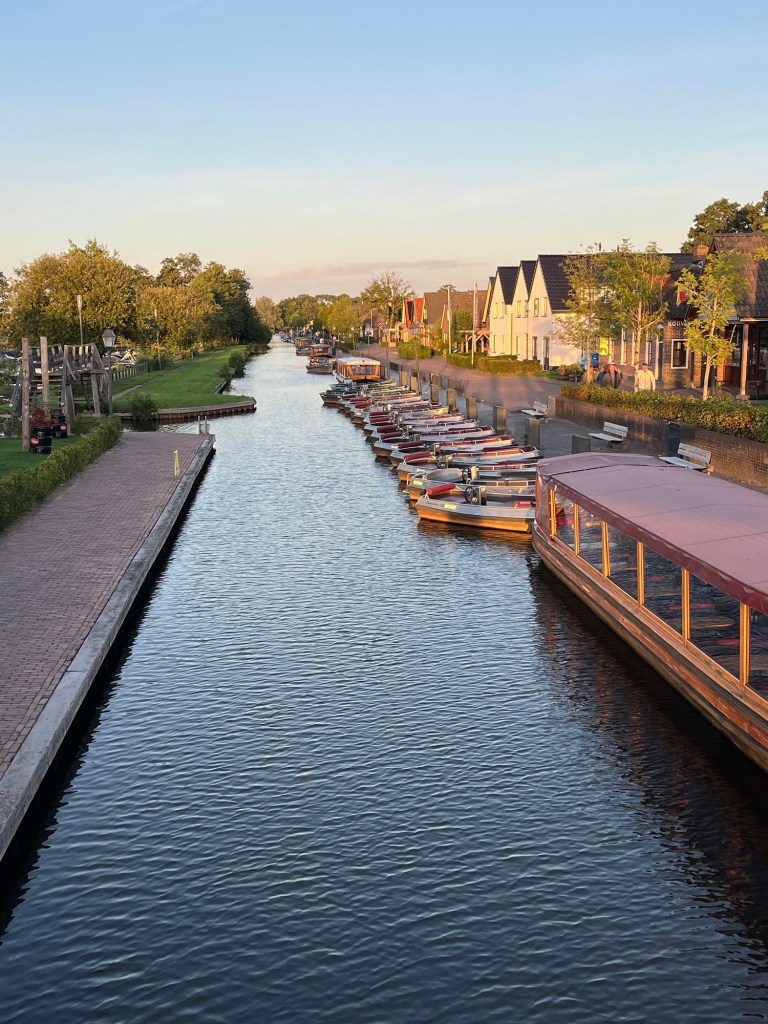
We arrived around 19.00 so we had a quick G&T before heading out to find our restaurant, L’Achterhuus, in the centre of the village of Giethoorn. Giethoorn means goat horn as they found hundreds of horns when they drained the area in the 13th century. They believed that the remains were from the St Elizabeth Day flood of 1170. It now is a delightfully pretty village with no cars that felt to us like a cross between Cambridge, Marlow, Cotswolds and Norfolk Broads with criss crossing canals flanked by quaint thatched cottages on the banks and hump backed bridges. Due to the large number of tourists, there are also hundreds of small electric boats to hire to meander around the village for an hour or two. Dinner was gorgeous with Liz having guinea fowl and Jo had boneless ribs, washed down with a glass of wine. A walk around a deserted village afterwards made for a very pleasant evening.

The next morning, Sunday September 6, we took advantage of the coaches not having arrived yet to walk around the village in daylight. It really was very pretty, helped by the lovely weather no doubt.

Miles this blog: 123

Miles this trip: 293

Windmills and wetlands

We left our campsite near Delft around 10.00 on Friday, September 4. Not sure how it took us two hours to get ready with showers, filling up with water, emptying the grey and black waste. The campsite had a wonderful machine to empty and clean the toilet cassette where you popped the cassette in and it did it all behind a closed shutter then popped out all clean with bio toilet solution already in it. Wonderful!

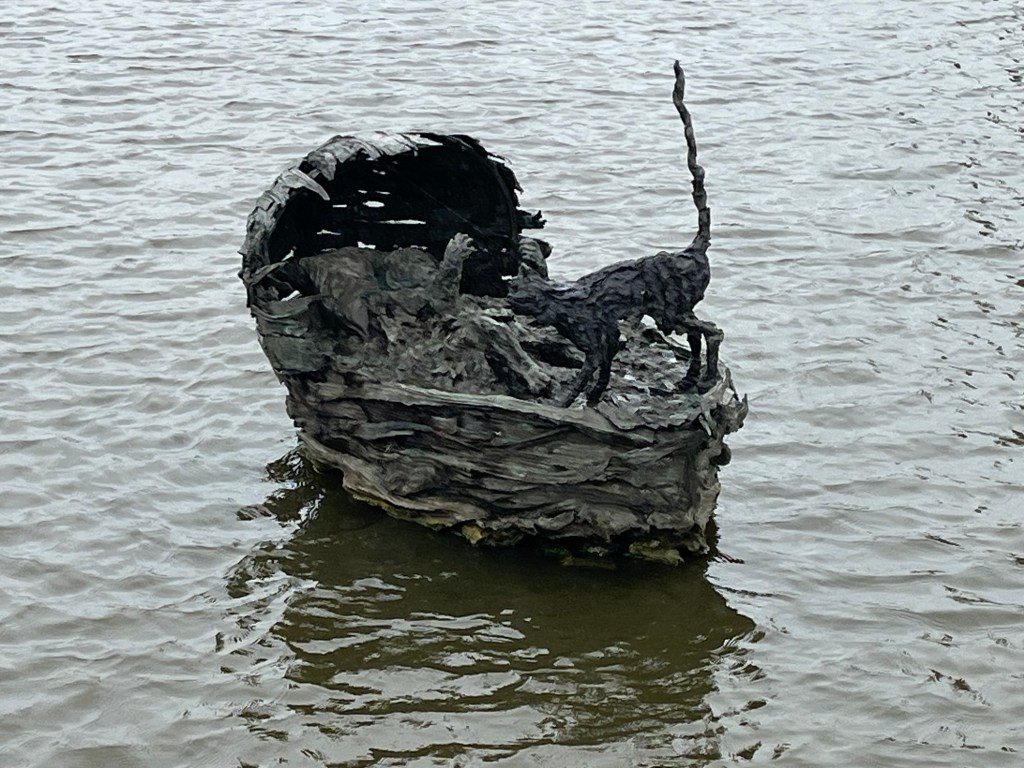
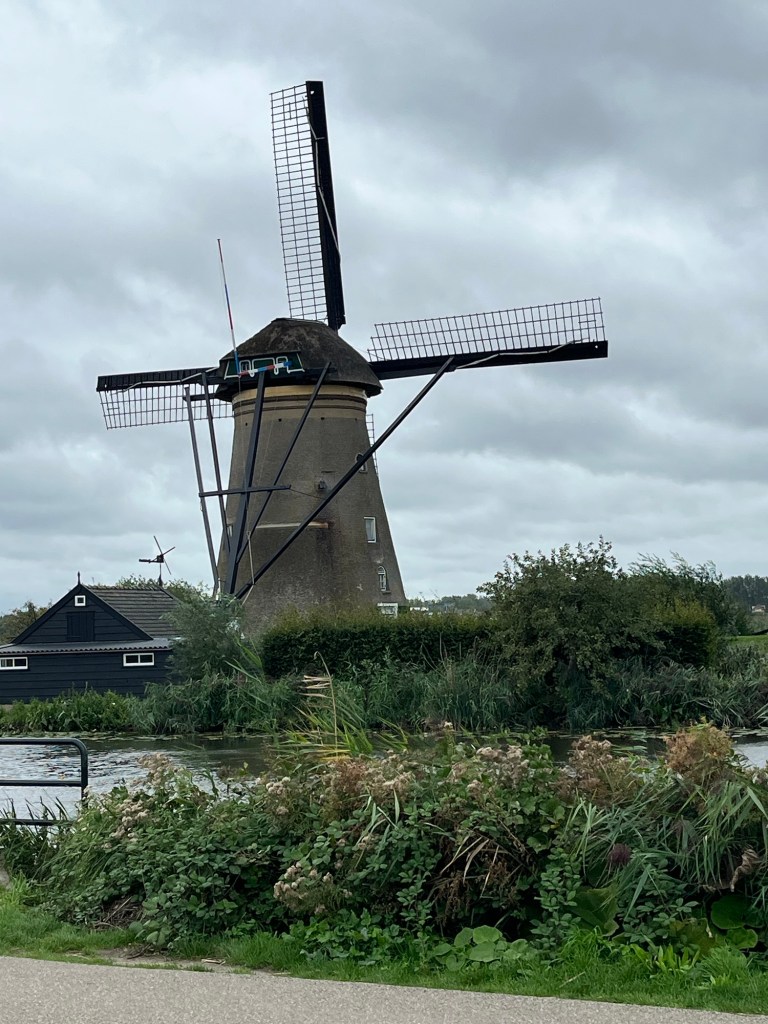
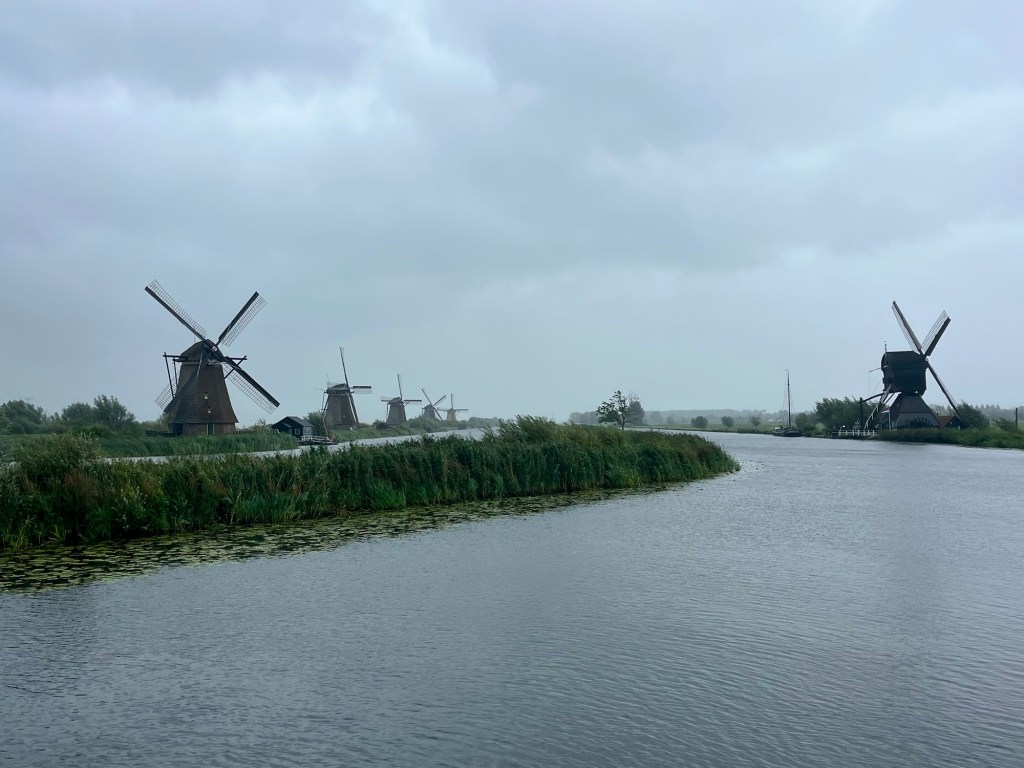
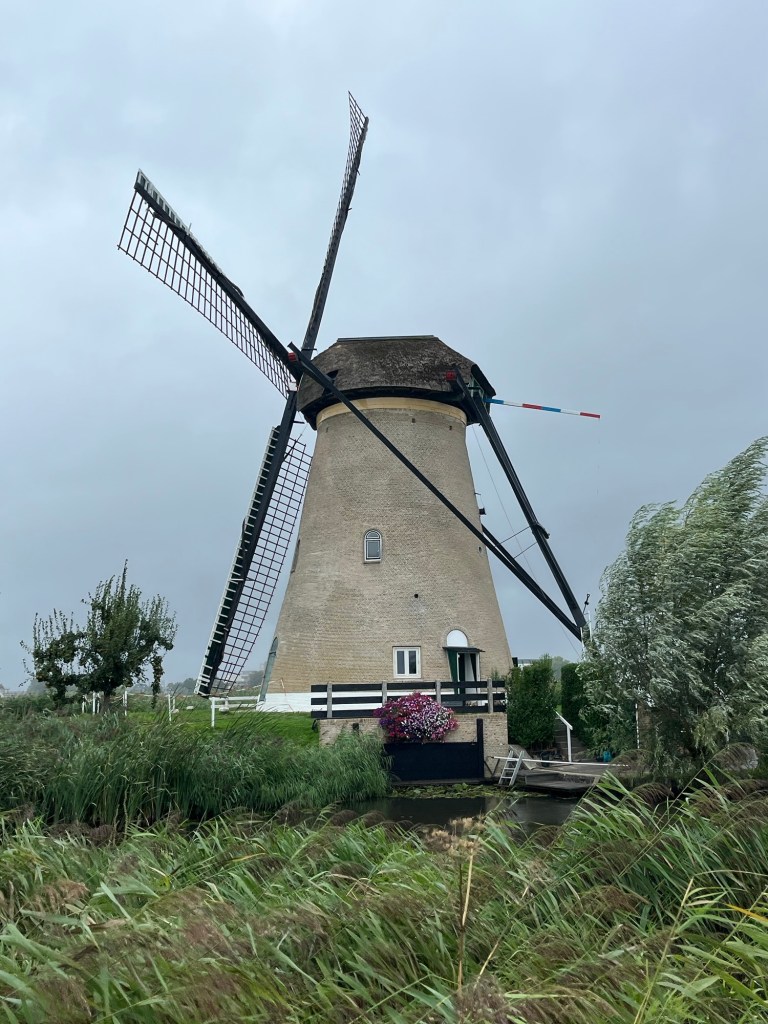
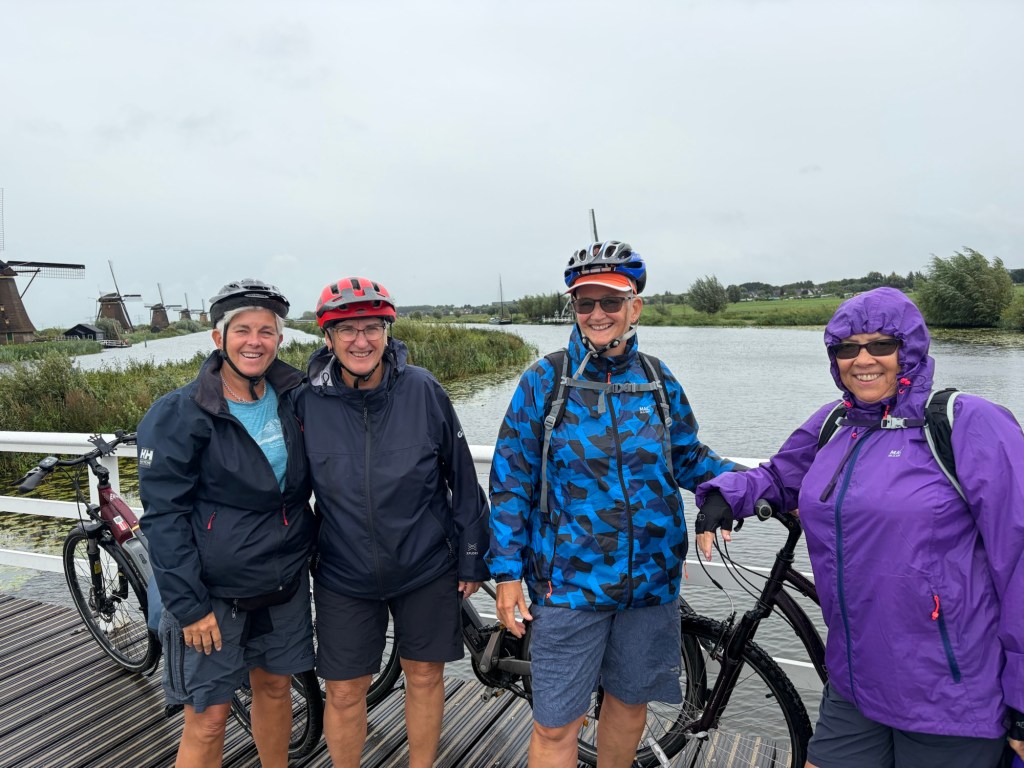
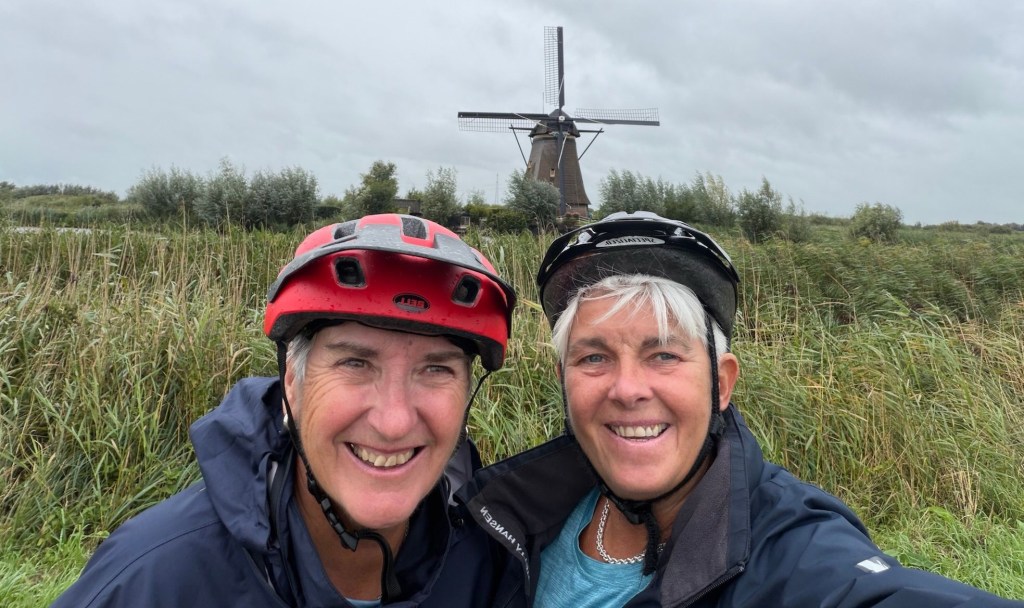
We drove about half an hour to the windmills of Kinderdijk. The car park was about a 30 minute walk from the windmills so we got the bikes out and cycled there in storm force winds. Still, it was easier than walking. The windmills are a series of 19 windmills which were used to keep the area from flooding. Before the great St Elizabeth Day’s Flood of 1170 there were only dykes to keep the river and rainwater at bay. When the flood broke those defences and hundreds lost their lives, they realised they needed a method of drawing the water out, as the land was well below sea level. The first windmill was built in the 17th century and the others around 1740. The name Kinderdijk comes from the legend of a baby girl in a wicker basket being saved from the floods with a cat balancing the basket through the torrential waters.

It rained most of the morning so we did all look like drowned rats at times but the windmills were fascinating. All bar three of them are still lived in by millers. To supplement their income, they harvested the reeds as well as the peat.

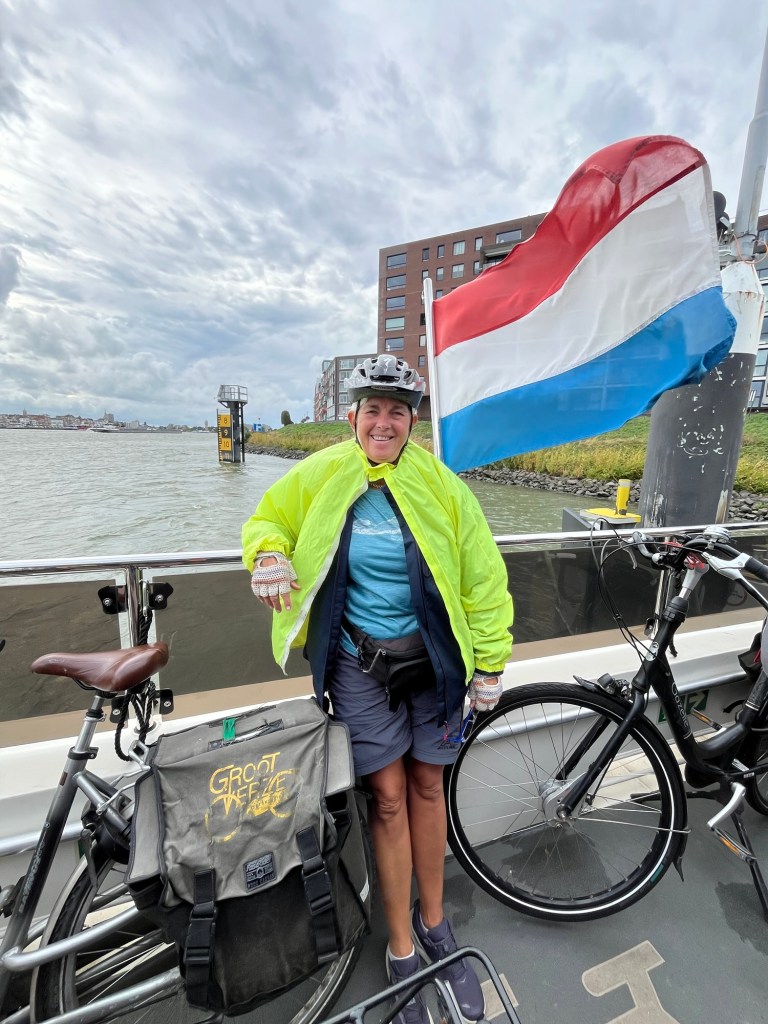
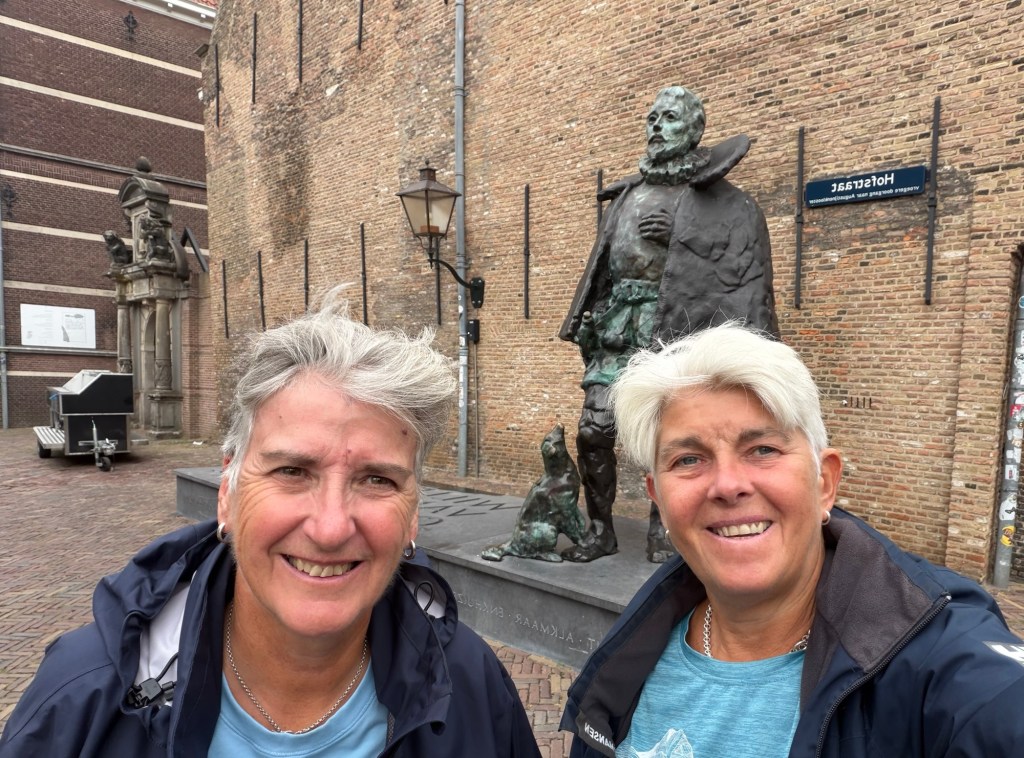
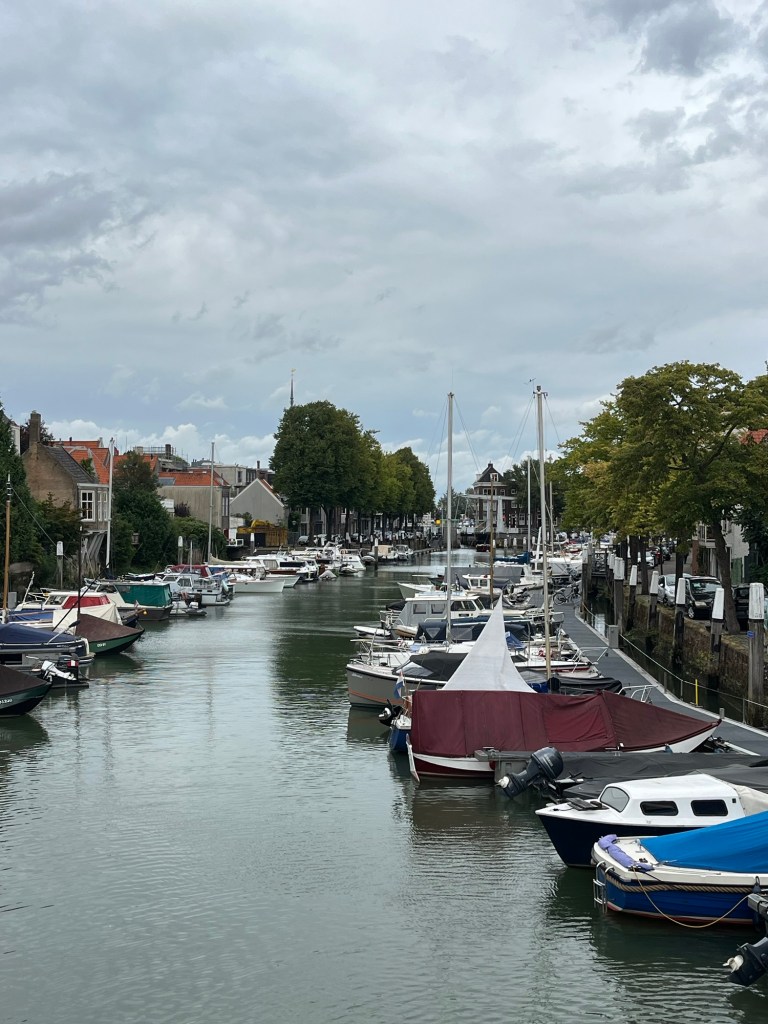
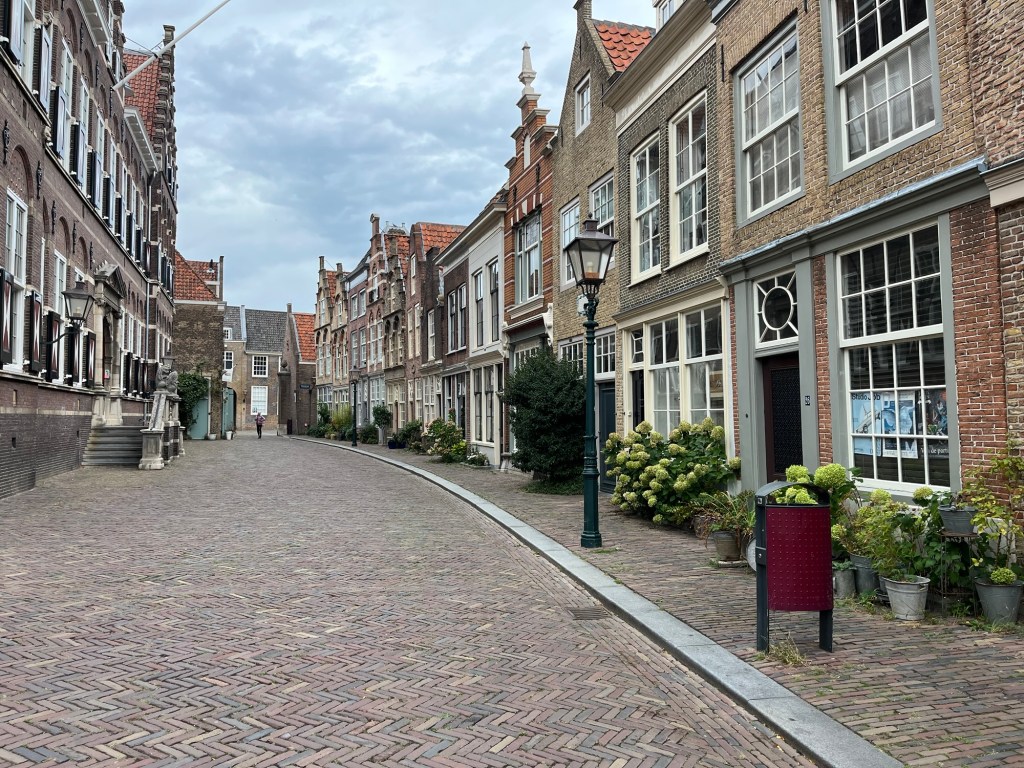
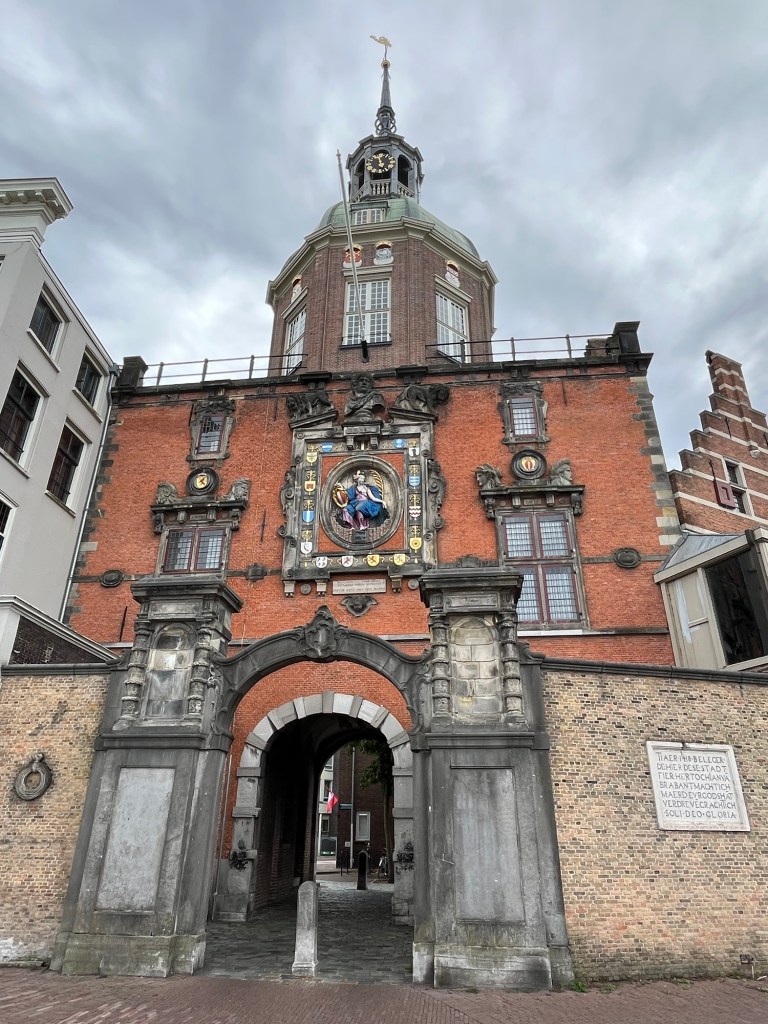
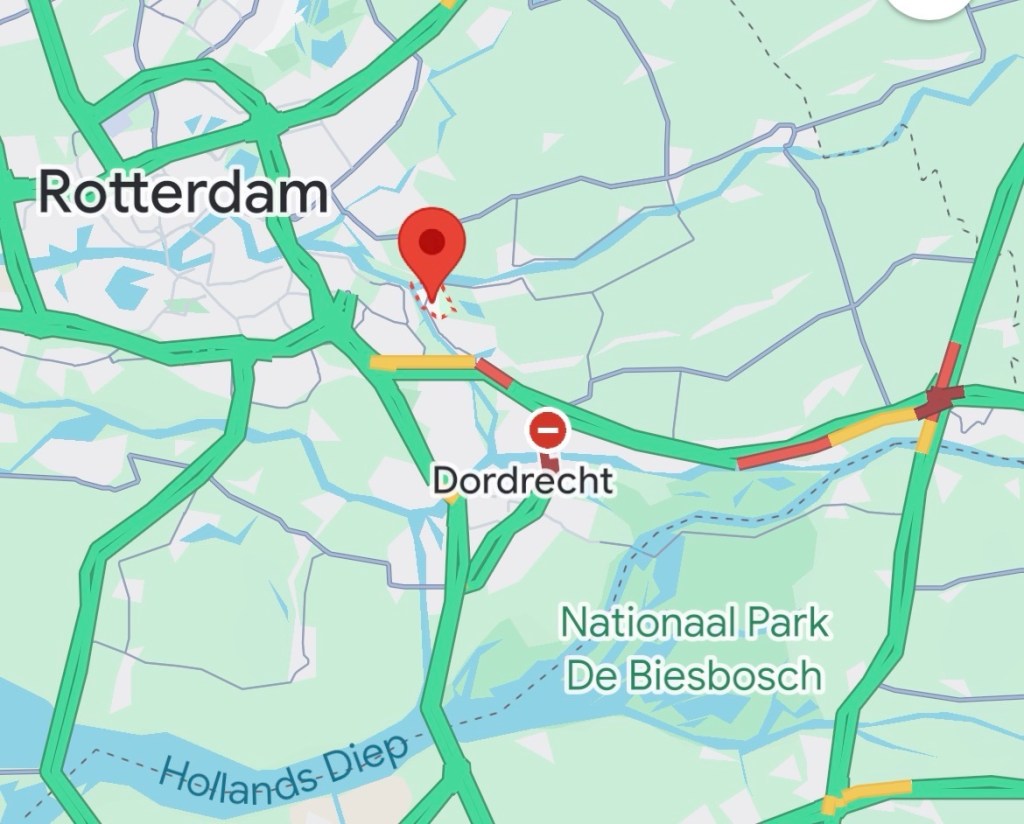
We left the windmills to make our way a few miles towards Dordrecht, the oldest town in the Netherlands. We had found a camperplaats, called Kinderdijk (P4N#385169) where, whilst basic, was perfect for exploring the area. Once sorted, we jumped on our bikes and cycled into Dordrecht about 6 miles away. Part of the journey was by ferry for the princely sum of €4 return and bikes go free! We had a lovely wander around the old part of the town before a quick beer and heading home to supper on board. The statue of William of Orange shows his devoted dog who, according to legend, wasted away after his master’s assassination and was buried with him.

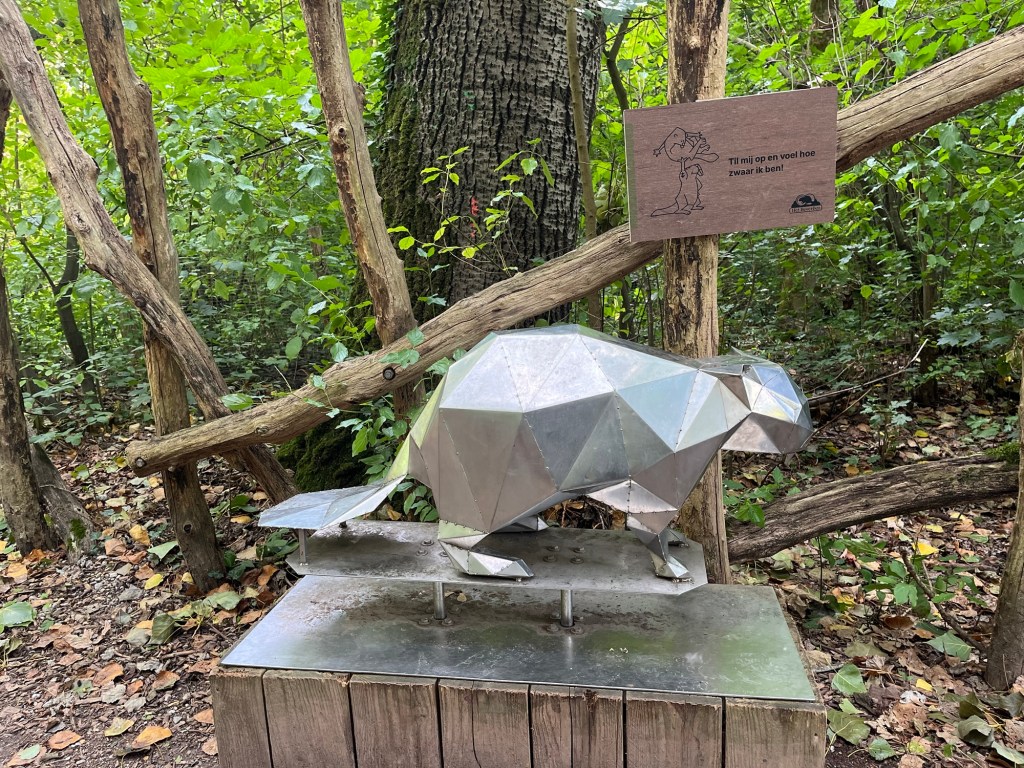
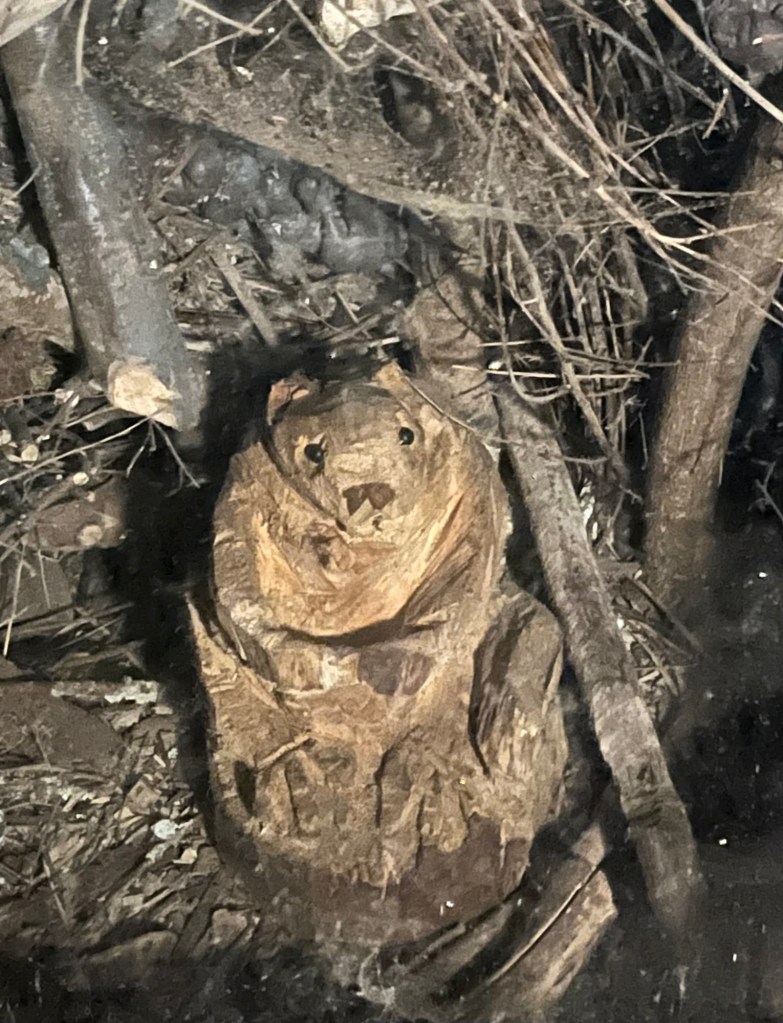
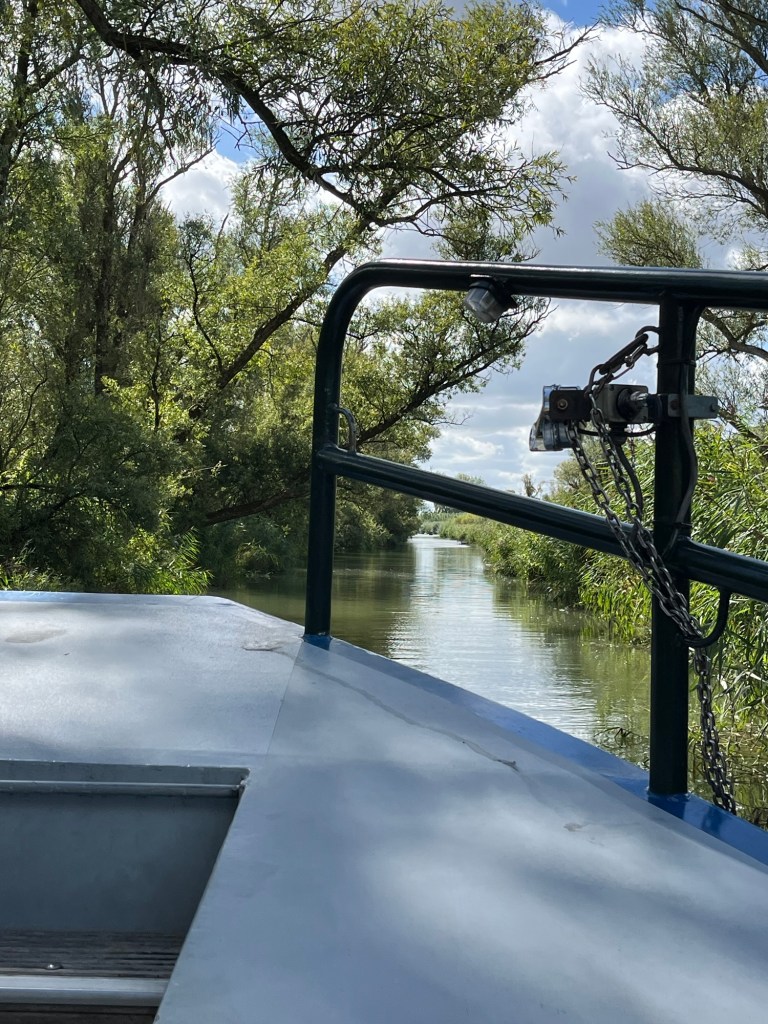
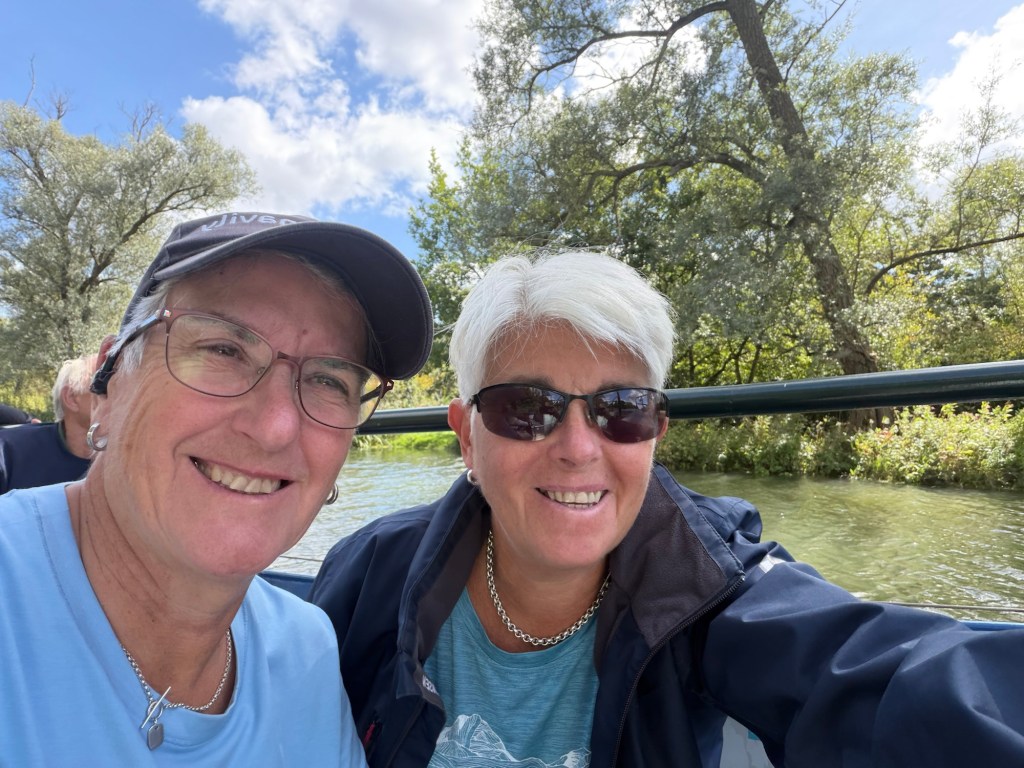
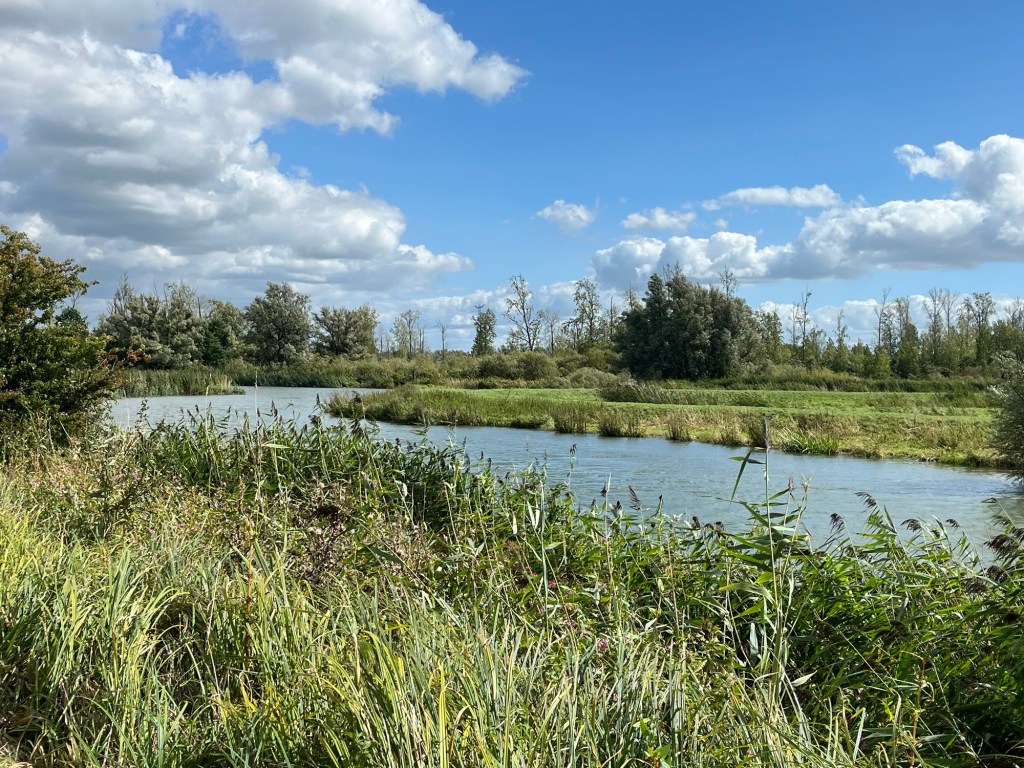
We had booked a river cruise for the Saturday lunchtime at the Biesbosch nature reserve. This is a series of creeks and rivers that make up the wetlands of Biesbosch. The name means forest of reeds as reeds and willow were harvested by hand from there in what must of been back breaking work. The river tour was all in Dutch but luckily Google live translation came to the rescue. Beavers became extinct in the area by the 1900s as they were trapped for their meat and fur. In the 1980s, German beavers from the Ruhr valley were reintroduced and there are now some 500. We didn’t see any on our tour but we did see two sea eagles soaring above us. It was lovely just walking along the paths enjoying the quiet and being with nature.

We departed Biesbosch around 14.45 to drive north to continue our adventures but that’s for the next blog!

Campsite at Kinderdijk marked

Miles this trip: 170

Miles this blog: 54

Delft

We finally managed to leave home around 16.30 on Tuesday, September 1st. We weren’t sure we would even make it away with various family medical emergencies in the previous couple of weeks. However, we did. We drove across to Harwich and parked up at the ferry terminal for the 09.00 crossing the next day. Stena Line kindly allow you to stay overnight by the check in so that you are virtually in the queue when it opens at 07.00. We are travelling with our friends, Maria and Jane, in their Adria Twin so it was an easy way to meet up.

The crossing itself was uneventful but long as it takes 7 hours. The entry into The Netherlands was easy enough as we had already submitted our biometric data back in June when we visited Spain. They just checked our passports and we were on our way. Our first stop was a lovely campsite just outside Delft which we had booked the day before. Camping de Drie Morgen (P4N#196346) was just a few kilometres outside of the town so a perfect spot to explore from.

Camping de Drie Morgen

It seems that in The Netherlands you can’t really wild camp. You can only stopover where they explicitly say it is allowed. Consequently, I think that we will be on recognised sites and aires for our two weeks here. It’s not that much of a hardship although you don’t tend to get the same views you can find wild camping. However, what they have invested in is zillions of bike paths. Everywhere. So far, we have only had to be on a road, a minor one at that, for about 5 minutes. Wonderful and the traffic stops for cyclists at roadabouts and most junctions.

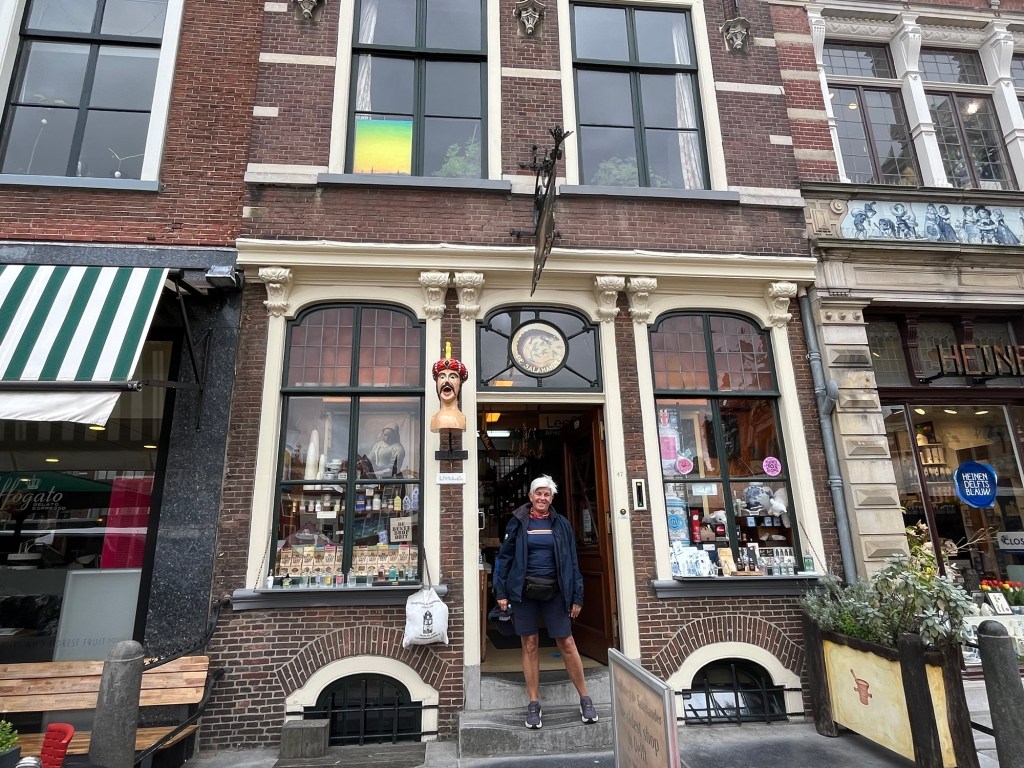
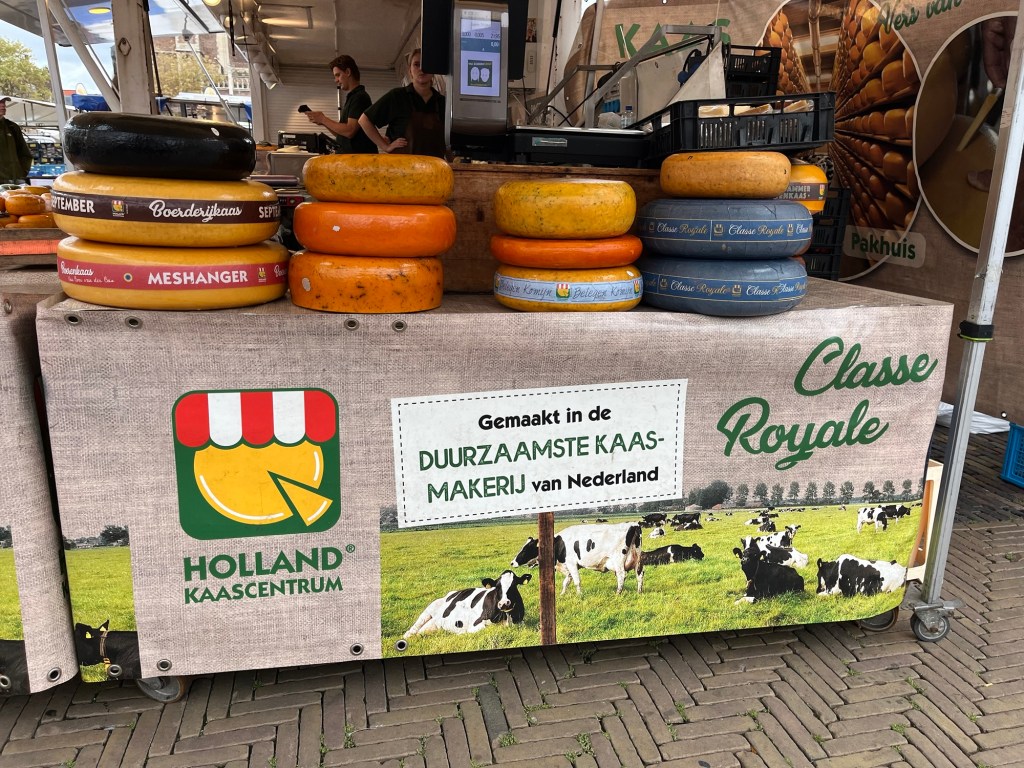
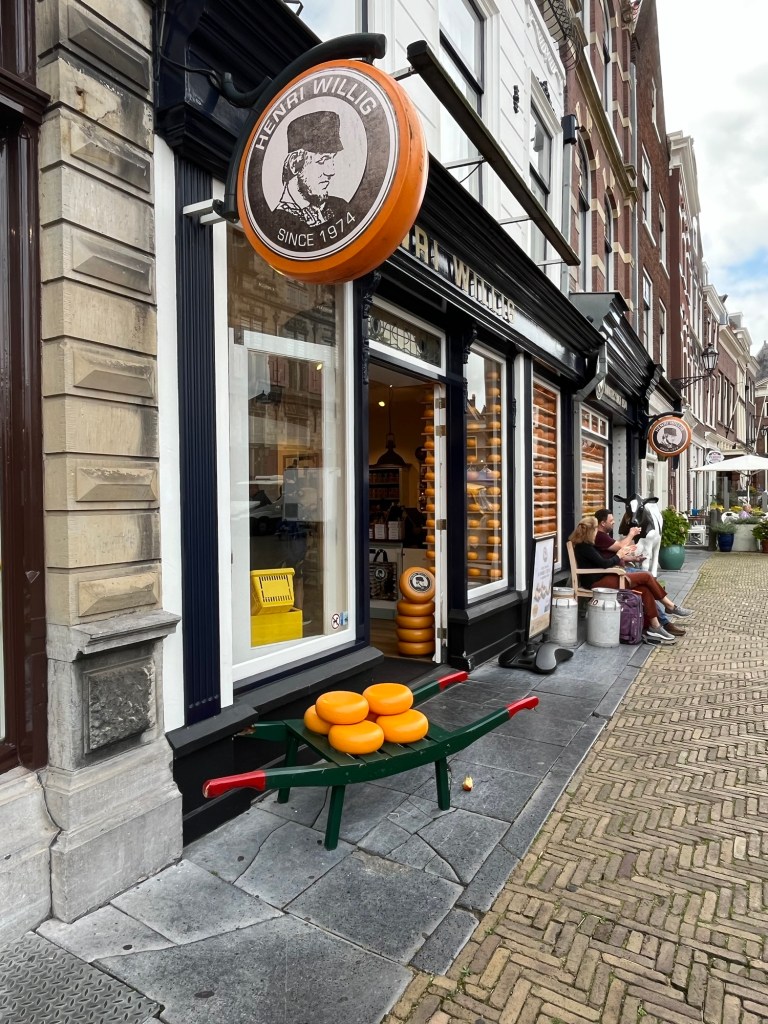
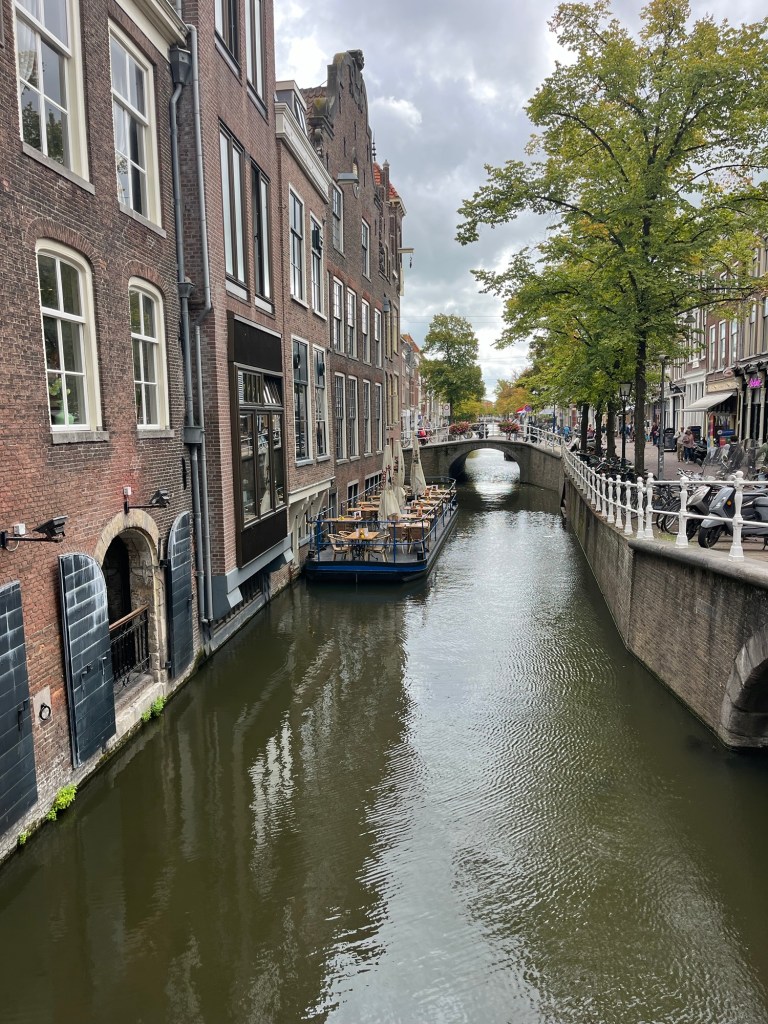
Anyway, back to Delft. It would have been a 30 minute cycle into Delft and the weather had been atrocious overnight and during the morning. We had booked a walking tour for 13.00 so we all chickened out and caught an Uber taxi into town late morning. There was a lovely market in the main square so we stocked up on fresh vegetables, a cooked chicken and, of course, cheese! We even found the oldest shop in Delft (1782) which is a chemist and it sold salted liquorice by the kilo!

De Salamander chemist

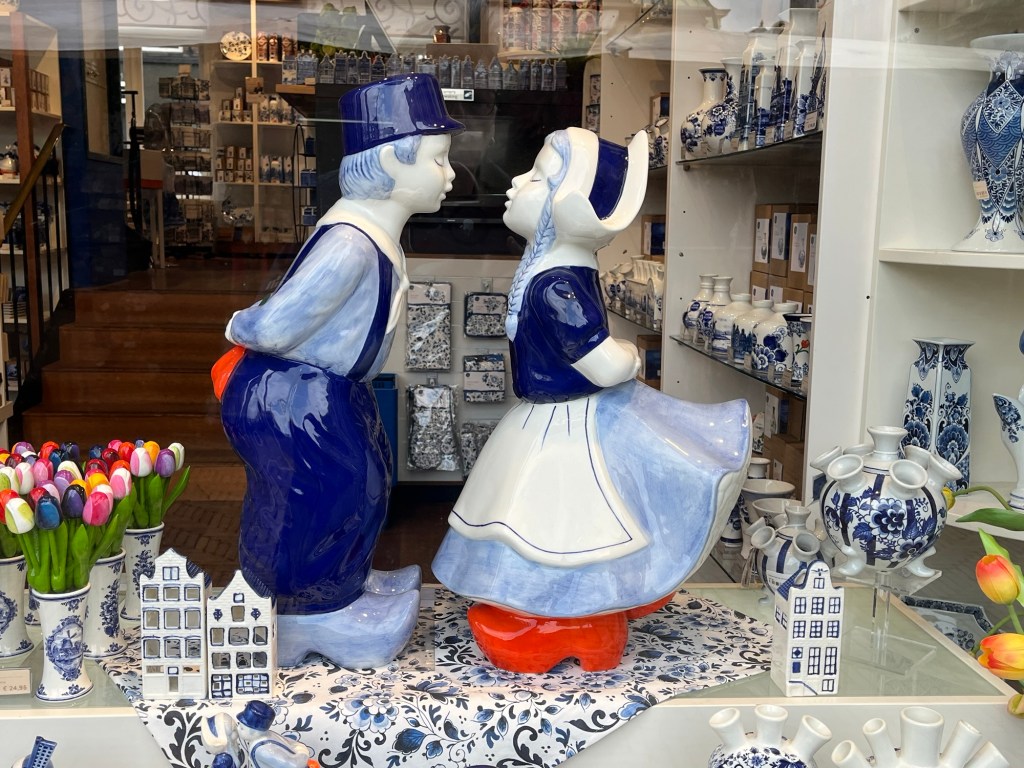
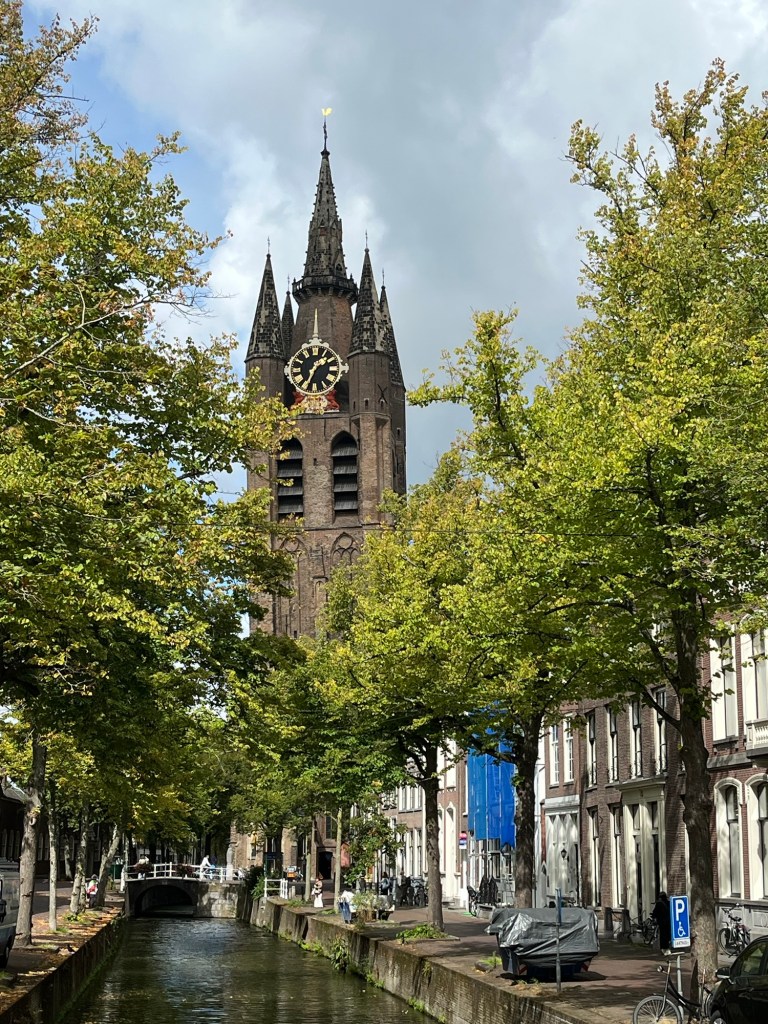
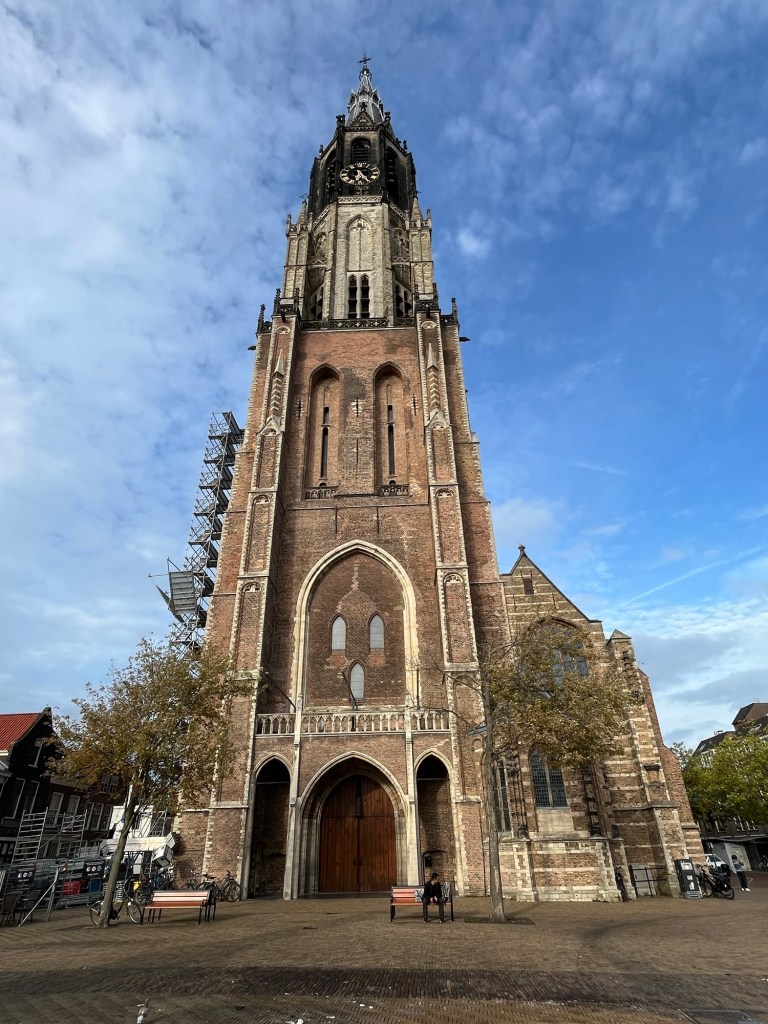
The walking tour by a lovely woman called Astrid was highly informative covering both the famous ceramics as well as the murder of William of Orange (father of the nation) in 1584 during the 80 years war with Spain to gain their independence. The town has two churches, the new one built in 1381, with imposing spires although the Oude Kerk is definitely at a jaunty angle. Delft is also famous as the birthplace of Johannes Vermeer but sadly the painting of the Girl with the Pearl Earring is on loan at the moment.

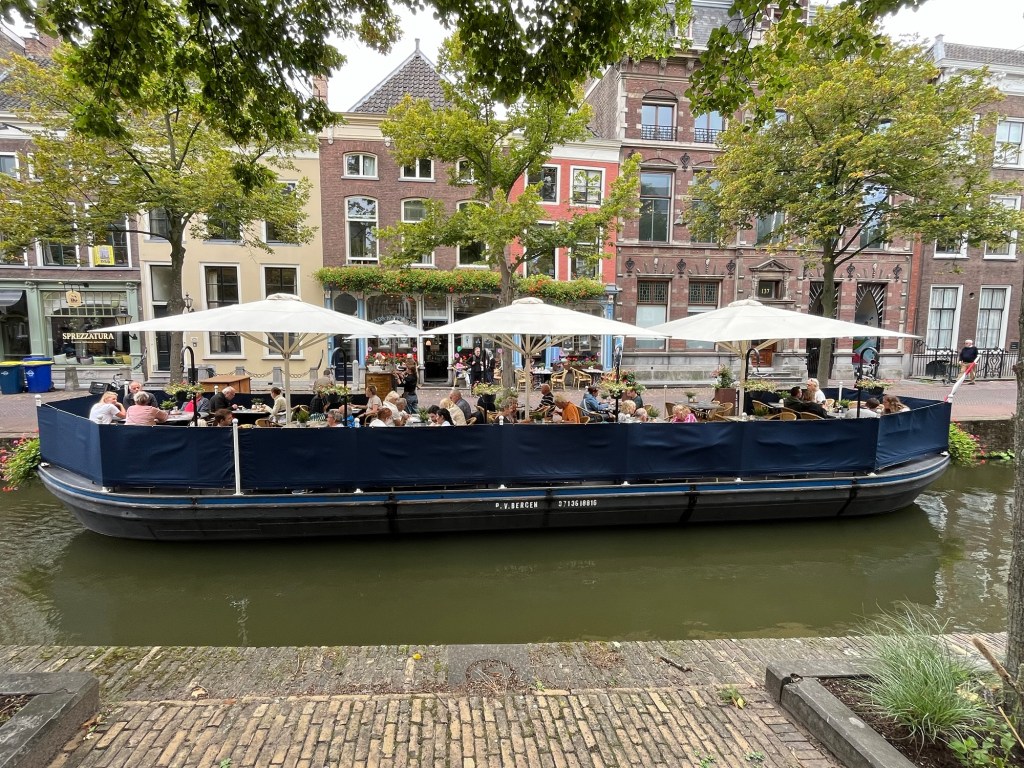
After the tour we needed a beer or two at the local microbrewery, naturally, before having an early dinner at a canal-side restaurant. Apparently, there were over 200 breweries in the 16th and 17th centuries when the water was unfit to drink. Back to the vans and a relatively early night as we wanted an early start in the morning.

Miles this trip: 116

Thomastown to Home

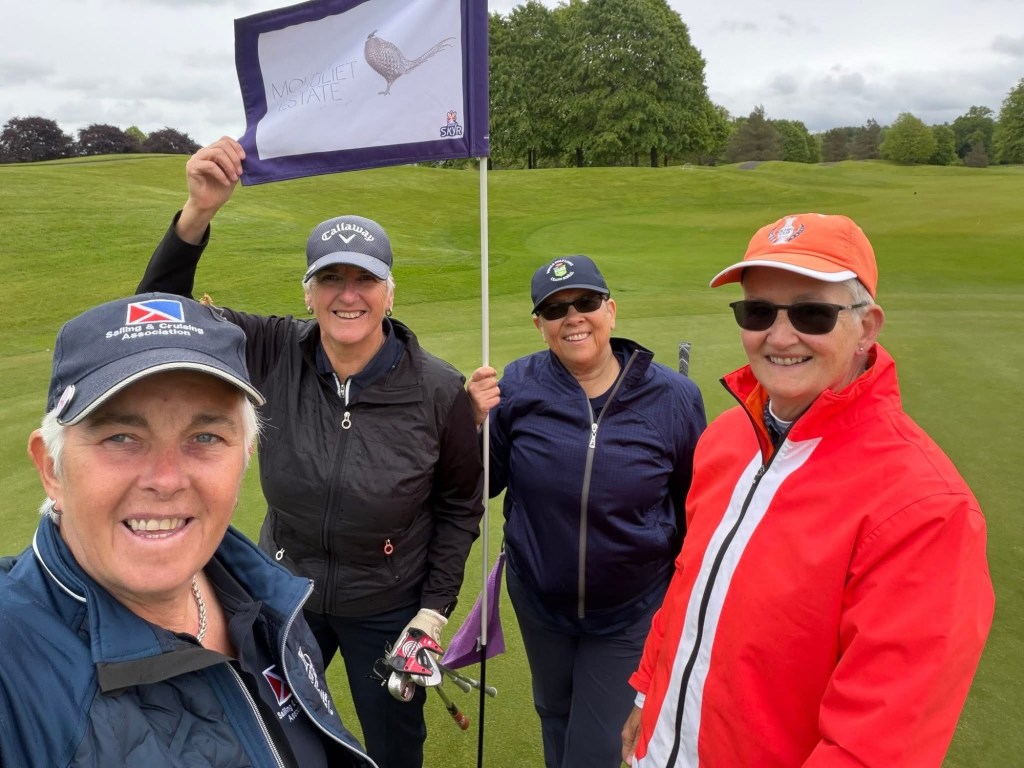
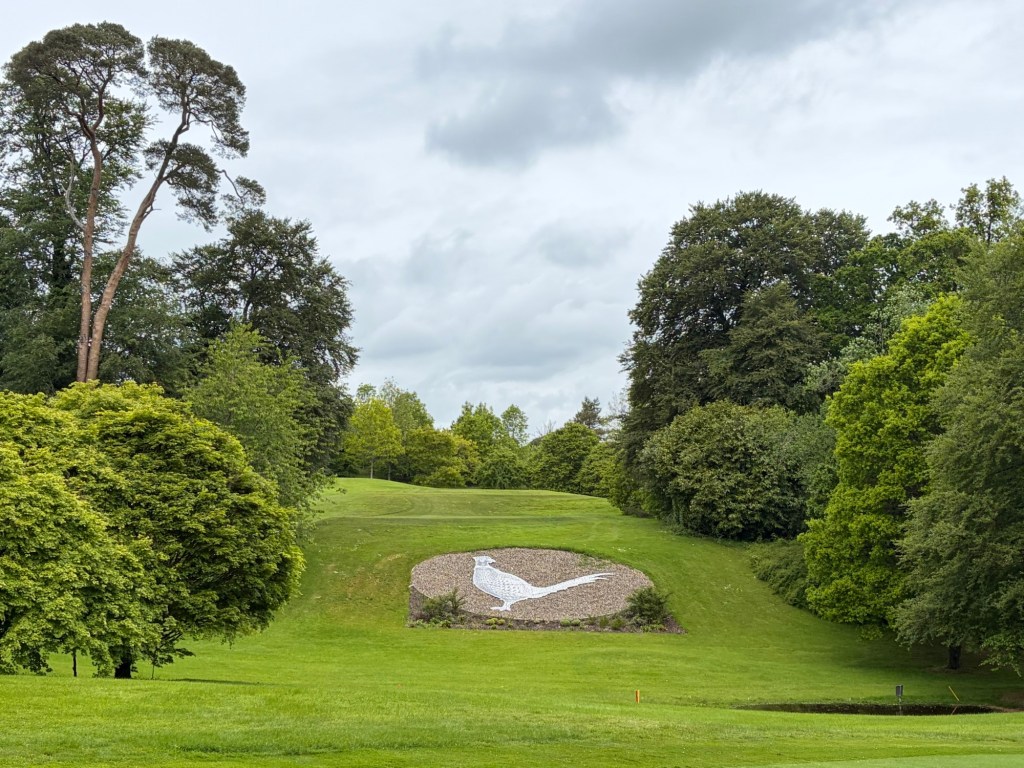
We had swapped our tee time at Mount Juliet Golf Course from the afternoon to early morning on Monday, May 18 as the weather forecast was due to get worse as the day progressed. The golf course was very grand, having been designed by Jack Nicholas. Half way round, we received an email to say that Stena Ferries had cancelled all ferries from Rosslare until May 23! Once we had finished our golf, we quickly booked ourselves on the Dublin to Holyhead route on the same day we had originally booked. Phew!

Continue reading →

Galway City

What a vibrant place! It’s like Dingle on steroids. Having parked in the railway station car park we wandered into town to find a restaurant. Galway is known for its music scene, food and bars. Being a Friday night, of course, all the notable restaurants were fully booked. We had found a Portuguese restaurant on Google that got good reviews so we booked a table. We arrived there to find that there were doing a special three course set menu with paired wines. It all sounded delicious.

Continue reading →

The Burren

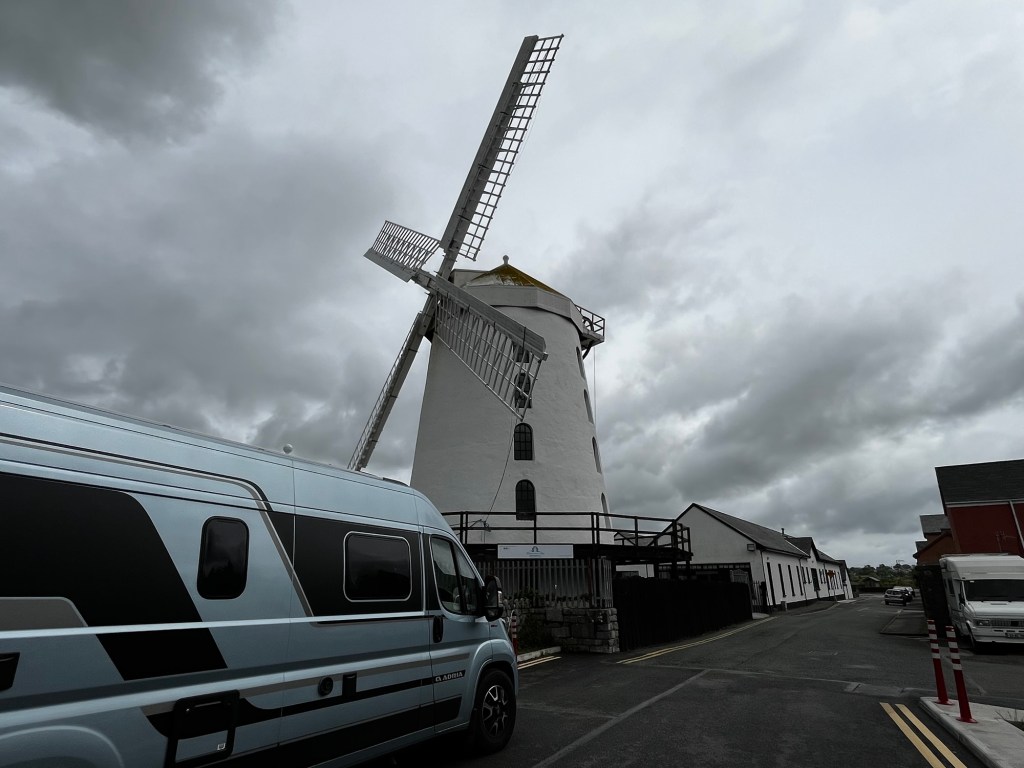
We left Dingle on Thursday, May 14 to head north to County Clare and Galway. On the way we stopped at the Blennerville to look at the windmill there.

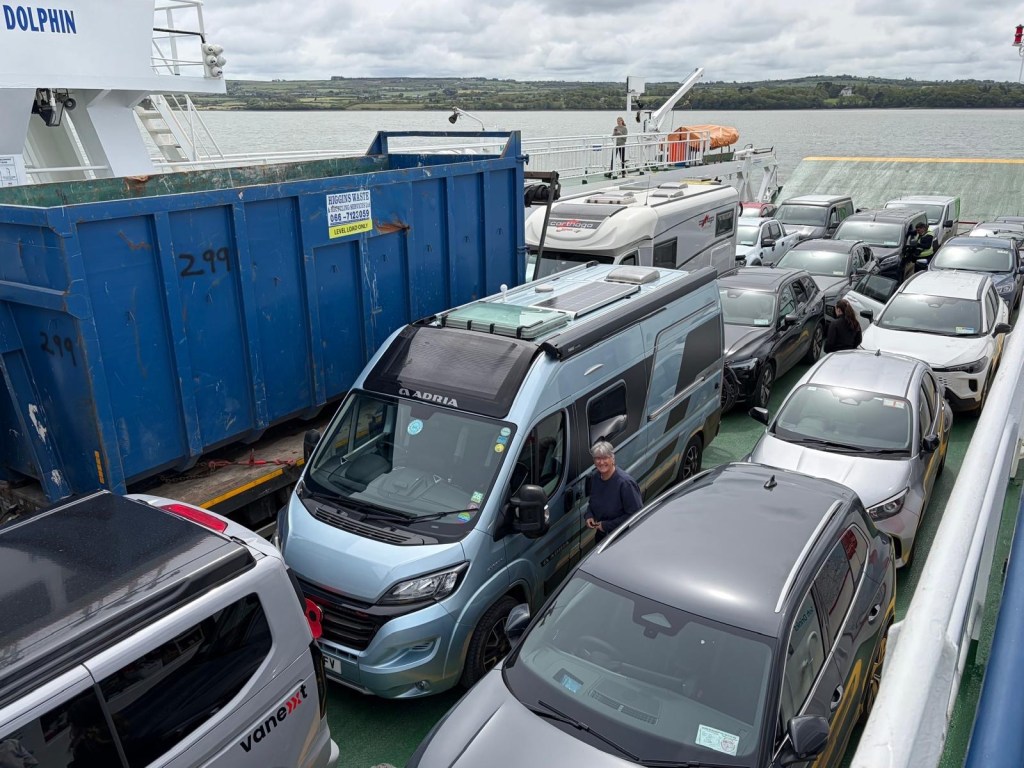
We had booked the ferry from Tarbert to take us over the River Shannon but it was first come first served so it didn’t matter when we turned up. This time we did manage to get onto it without any mishaps, thank goodness, as it was a long way round by road!

All safely onboard!
Continue reading →

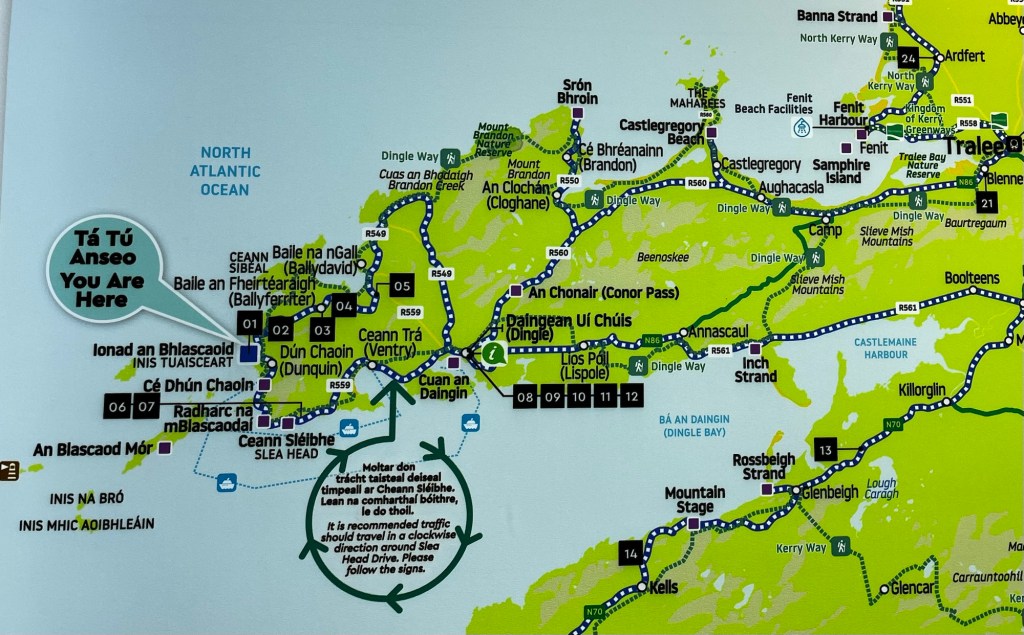
Dingle Peninsula

Wednesday, May 13 started off horrible with more lashing rain and extremely windy. However, we were not deterred as we wanted to drive the Slea Head Drive. This is done clockwise as that’s the way the buses go and the roads are extremely narrow. Of course, you had some numpties who decide to go the other way and create chaos and bedlam. It’s a 24 mile loop from Dingle so we needed to drive around 20 minutes to get to the start. We also used the drive through Dingle town to decide on where to stay the night when we had finished as we fancied a meal out and some proper Irish music in a pub.

Dingle Peninsula

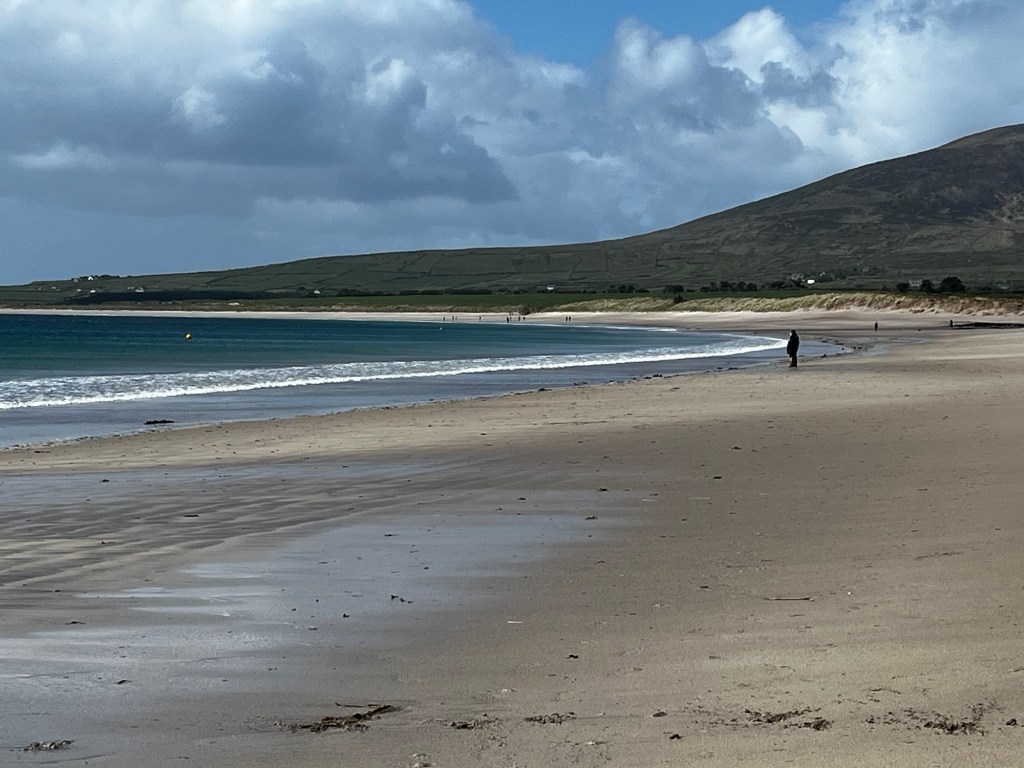
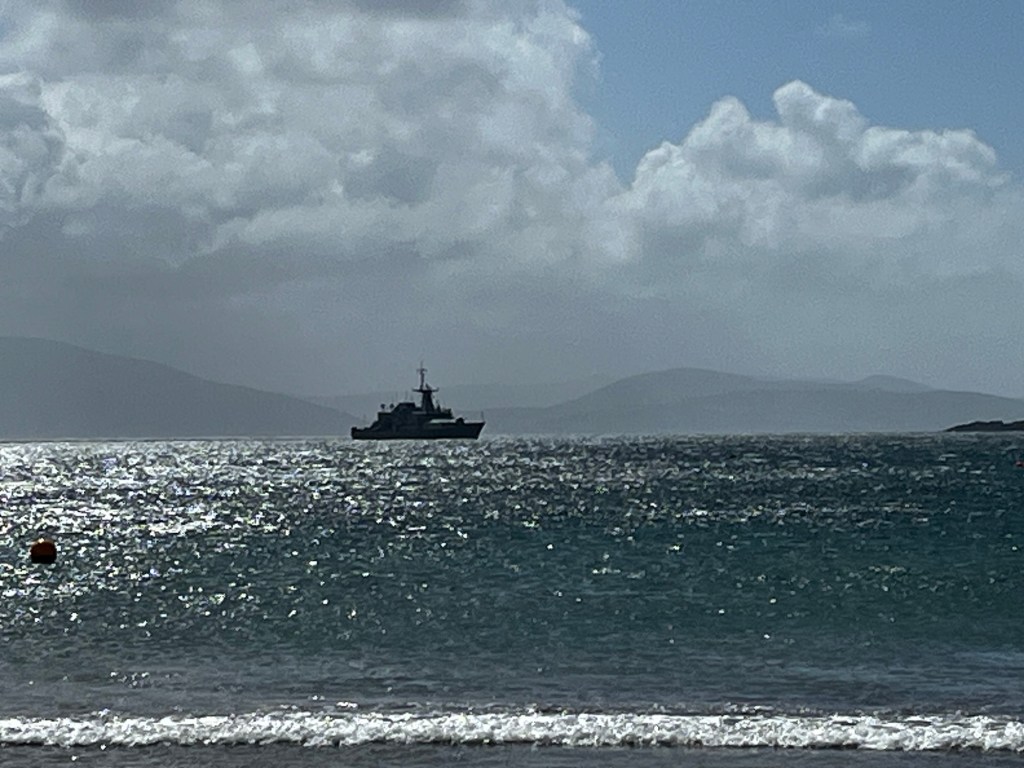
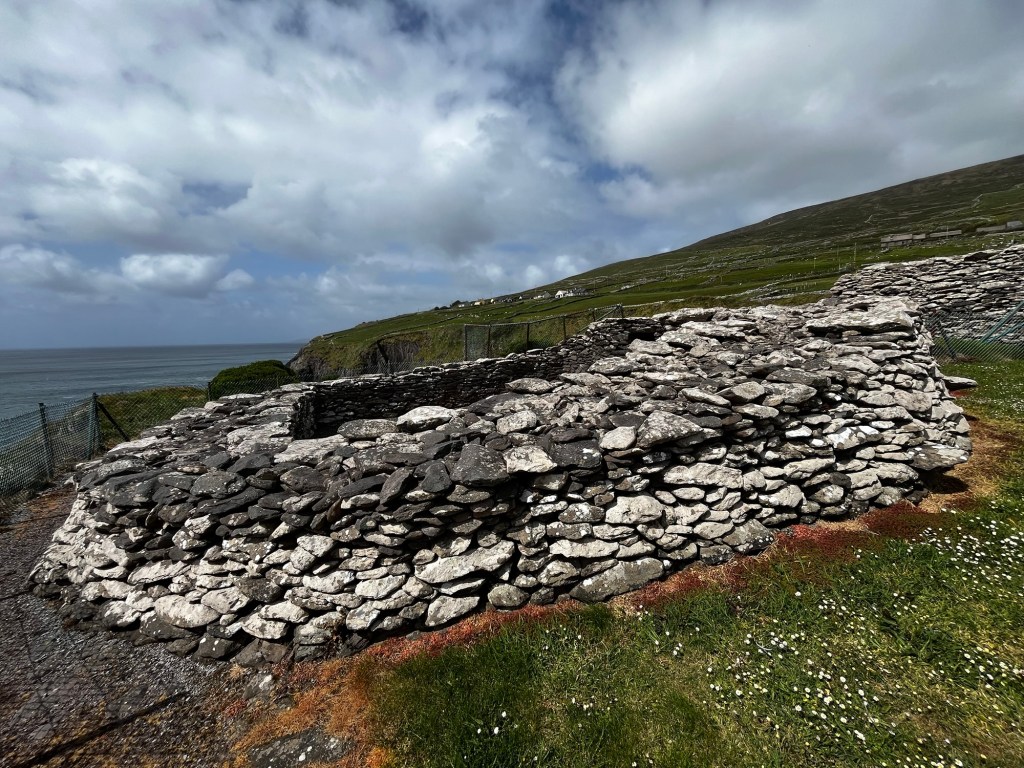
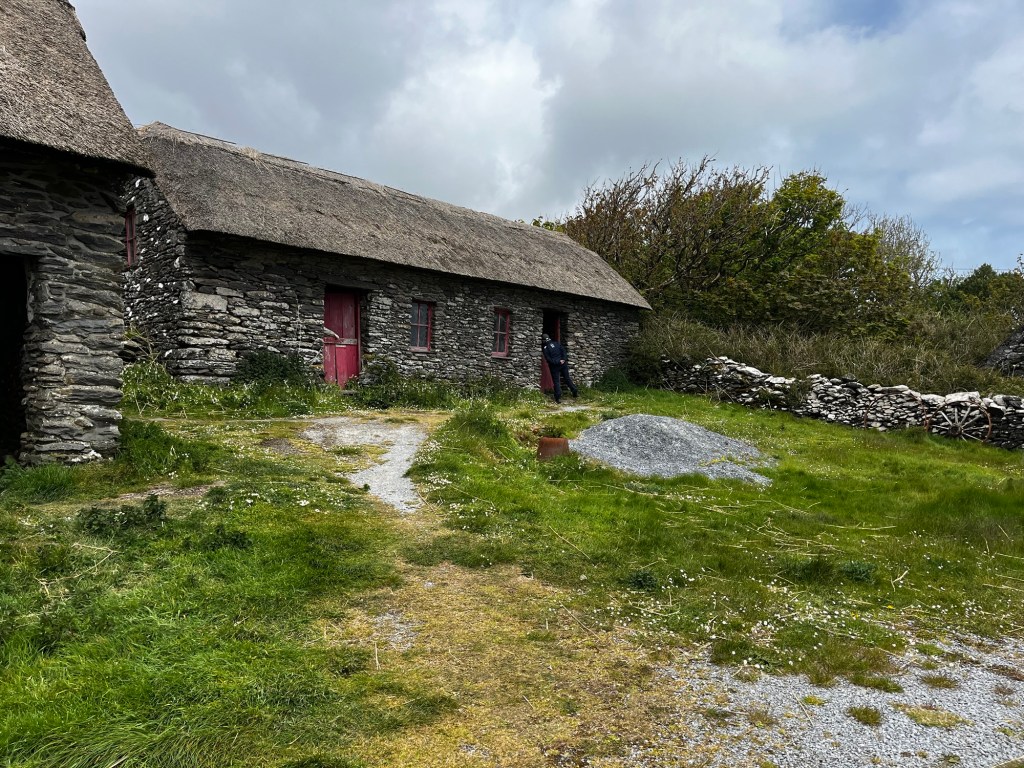
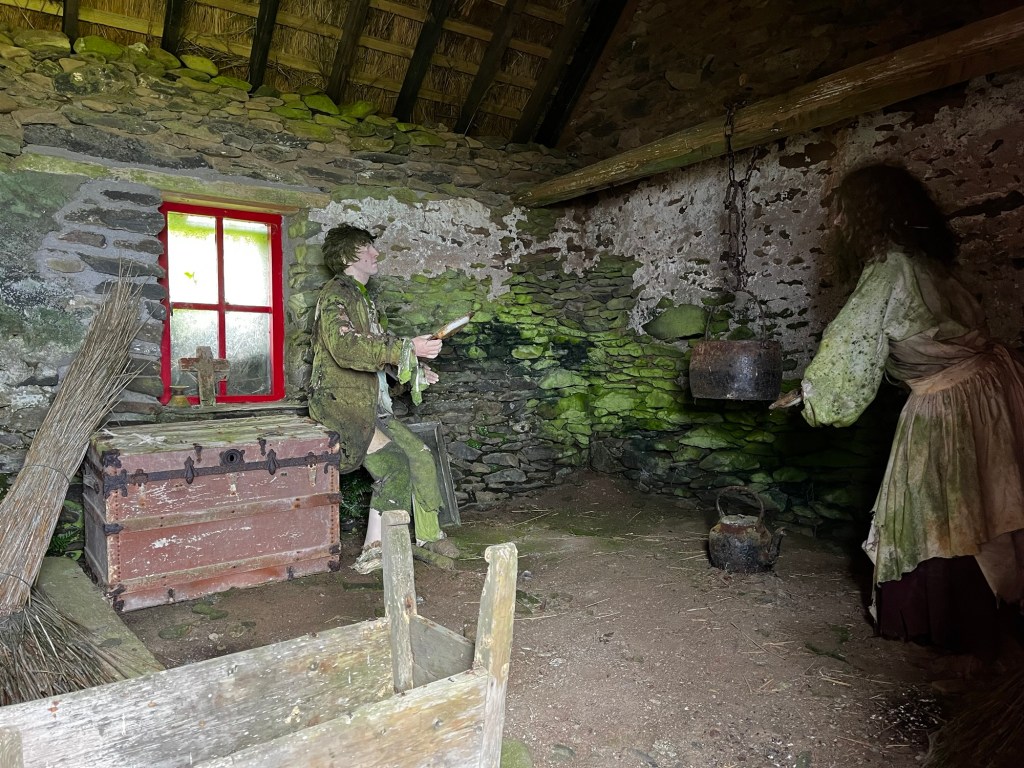
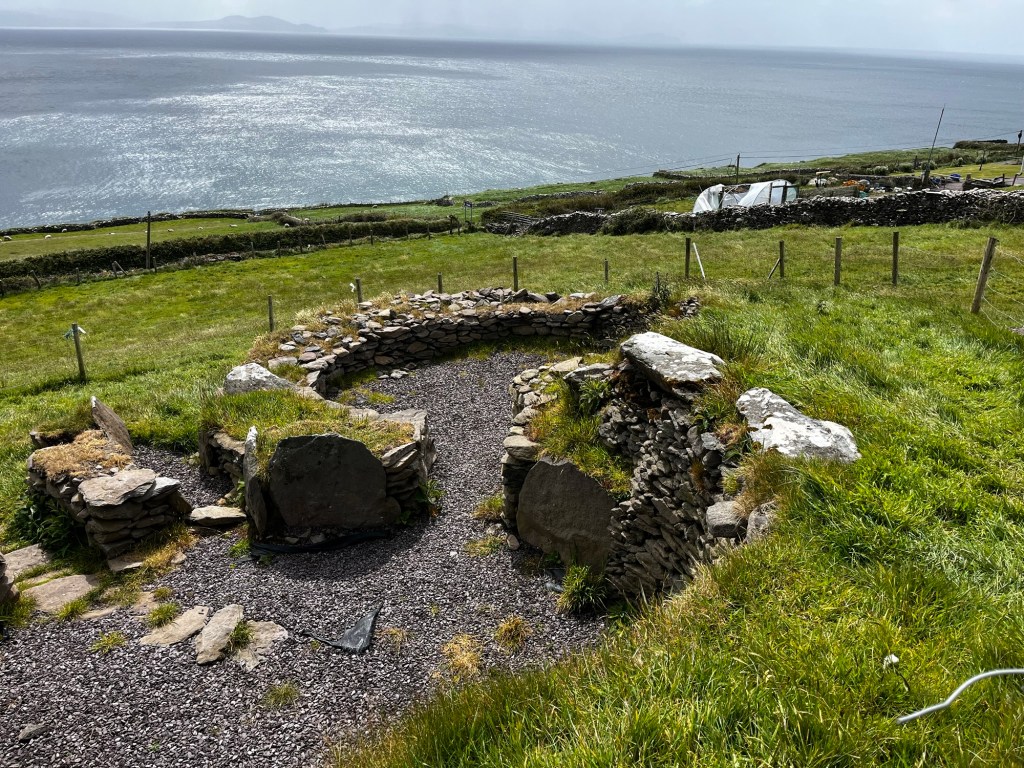
First stop was Ventry Beach, which was lovely but strangely had an Irish warship anchored in the bay. This was followed by some quite dodgy tourist attractions. Dun Beag Fort had collapsed a few years ago, the Famine Cottages weren’t bad but the Beehive Huts were a rip off.

Continue reading →